What Every Roaster Needs For Ultimate Compostable Coffee Packaging Results
2025年12月9日 by newideapack
Compostable drip coffee packaging represents the pinnacle of sustainable single-serve brewing, utilizing plant-based materials like PLA to provide a zero-waste alternative to traditional plastics while maintaining the aromatic integrity of the beans. You know the feeling of guilt when disposing of single-use coffee filters and foil-lined bags every morning. These non-recyclable materials are piling up in landfills, taking centuries to decompose and damaging the brand image of eco-conscious roasters. It’s a frustrating barrier for businesses that want to go green without sacrificing the convenience of the drip bag format. Fortunately, compostable coffee packaging from NewideaPack offers a high-performance solution that satisfies both your environmental goals and your customers’ high standards for flavor.
Why is compostable coffee packaging essential now?
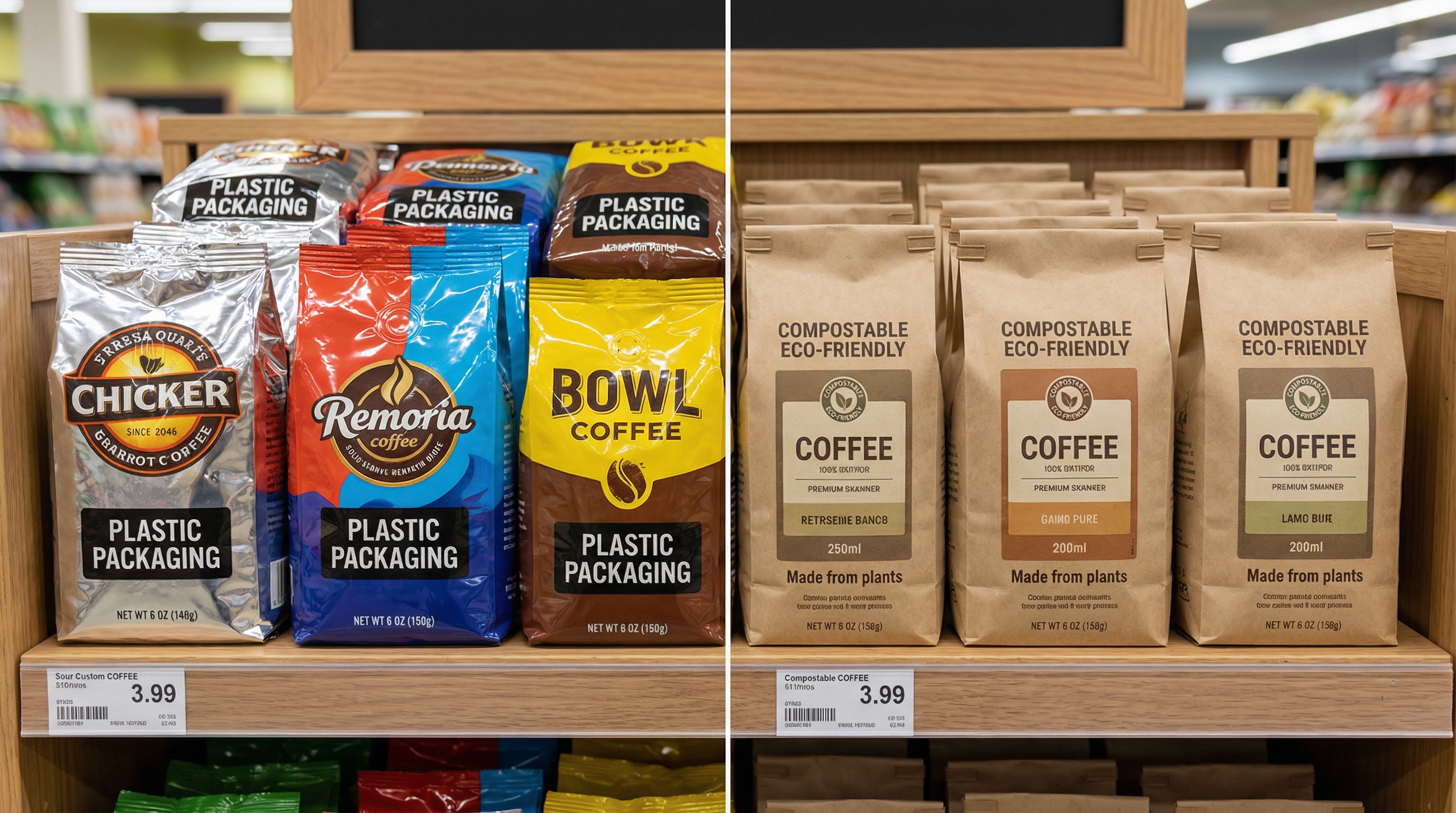
Directly answering the question, the shift toward compostable coffee packaging is driven by urgent global plastic reduction targets and a massive consumer pivot toward sustainable consumption. You are likely seeing your competitors switch to green alternatives to avoid upcoming regulatory fines.
Adopting these materials helps you stay ahead of the curve while reducing your carbon footprint. This transition ensures your brand remains relevant in an increasingly eco-conscious marketplace.
Is consumer demand driving the green coffee shift?
Think about it:
80% of Millennials prefer brands with sustainable packaging.
Customers are willing to pay a 15-20% premium for eco-friendly coffee.
Social media visibility increases for “zero-waste” lifestyle products.
The modern coffee drinker evaluates your ethics just as much as your roast profile. If you provide a way to enjoy premium coffee without the plastic waste, you win long-term loyalty.
Key Takeaway: Sustainable packaging is a powerful marketing tool that justifies premium pricing and attracts a dedicated demographic.
Trend Factor
Traditional Packaging
Compostable Packaging
Consumer Sentiment
Decreasing
Rapidly Rising
Brand Perception
Outdated/Wasteful
Innovative/Responsible
Market Growth
Stagnant
High Double-Digits
Analysis: These figures indicate that sustainability is no longer optional but a core driver of market share in the premium coffee sector.
What materials make compostable coffee packaging work?
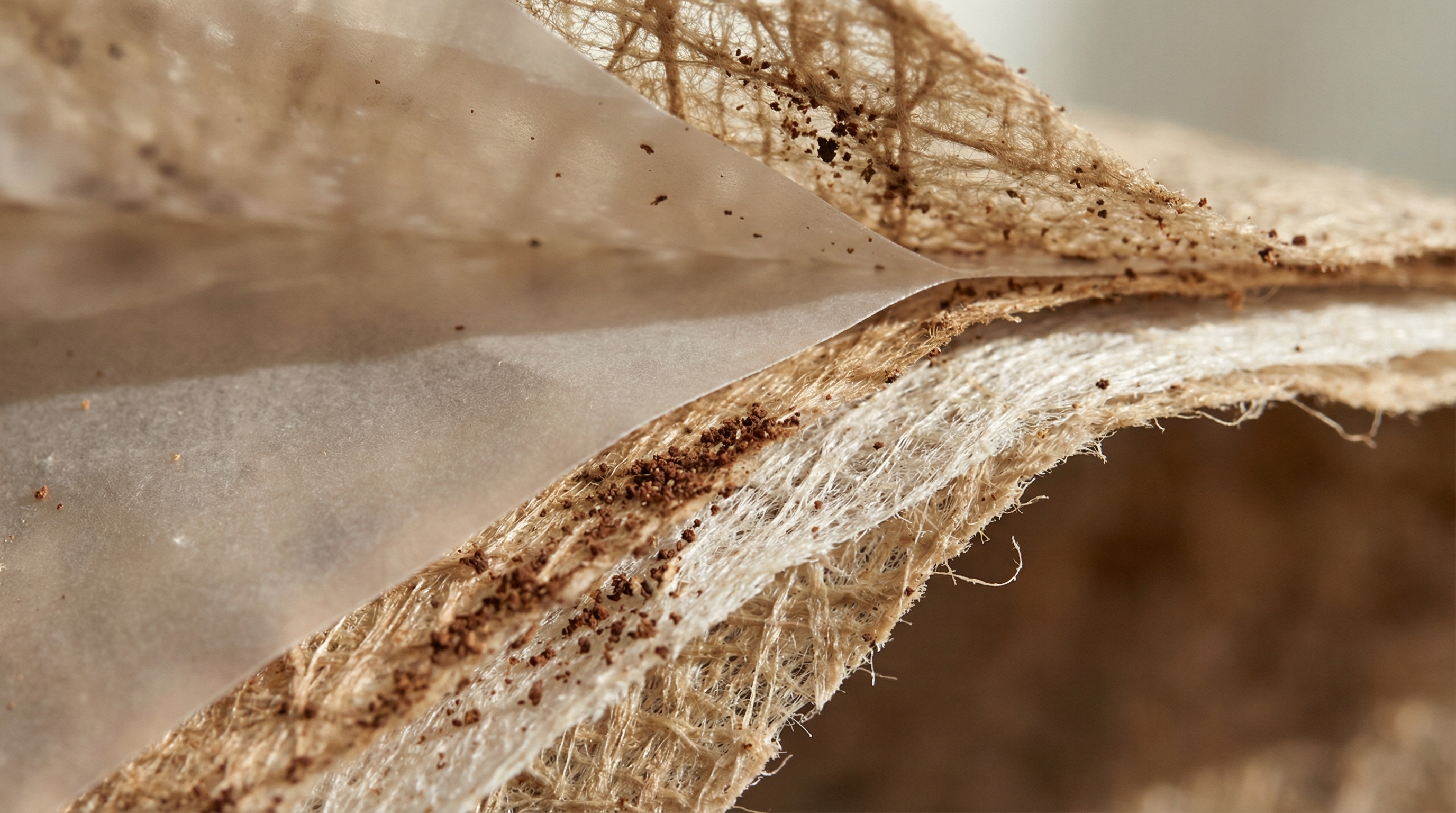
This packaging works by combining Polylactic Acid (PLA) for filters and multi-layer biodegradable films for outer bags to ensure compostable coffee packaging remains functional and barrier-stable. You get the protection of plastic with the end-of-life benefits of plants.
These materials are derived from renewable resources like corn starch or sugarcane. NewideaPack utilizes these advanced substrates to replace petroleum-based polyethylenes entirely.
Are plant-based polymers the best choice for freshness?
Here is the deal:
PLA offers excellent clarity and tensile strength.
Cellulose-based films provide a natural moisture barrier.
Bio-resins are food-safe and BPA-free.
Plant-based polymers protect the delicate oils and volatile compounds in your specialty coffee. You don’t have to worry about chemical leaching or off-flavors affecting the brew.
How do multi-layer bio-films compare to foil?
But that’s not all…
Oxygen Transmission Rate (OTR) is now comparable to foil laminates.
Multi-layer structures prevent puncture and tearing.
Key Takeaway: Modern bio-materials now rival the barrier performance of traditional plastics, ensuring a long shelf life for your products.
Material Property
Traditional Foil Laminate
Multi-layer Bio-Film
Oxygen Barrier
Excellent
High
Moisture Resistance
Excellent
High
Decomposition Time
500+ Years
180 Days (Industrial)
Analysis: The data proves that plant-based films can effectively protect coffee quality for up to 12-24 months.
Which machines support compostable coffee packaging?
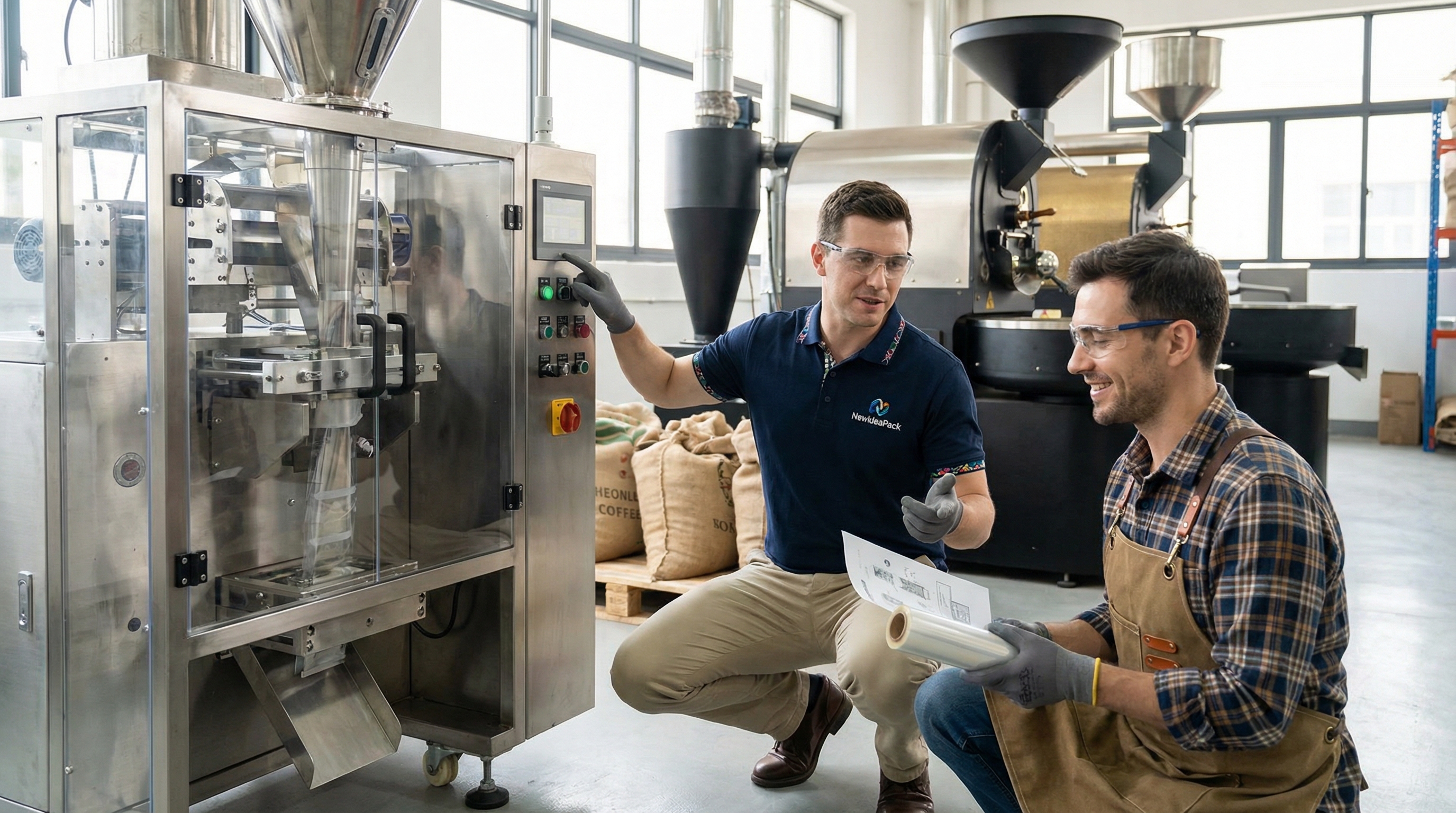
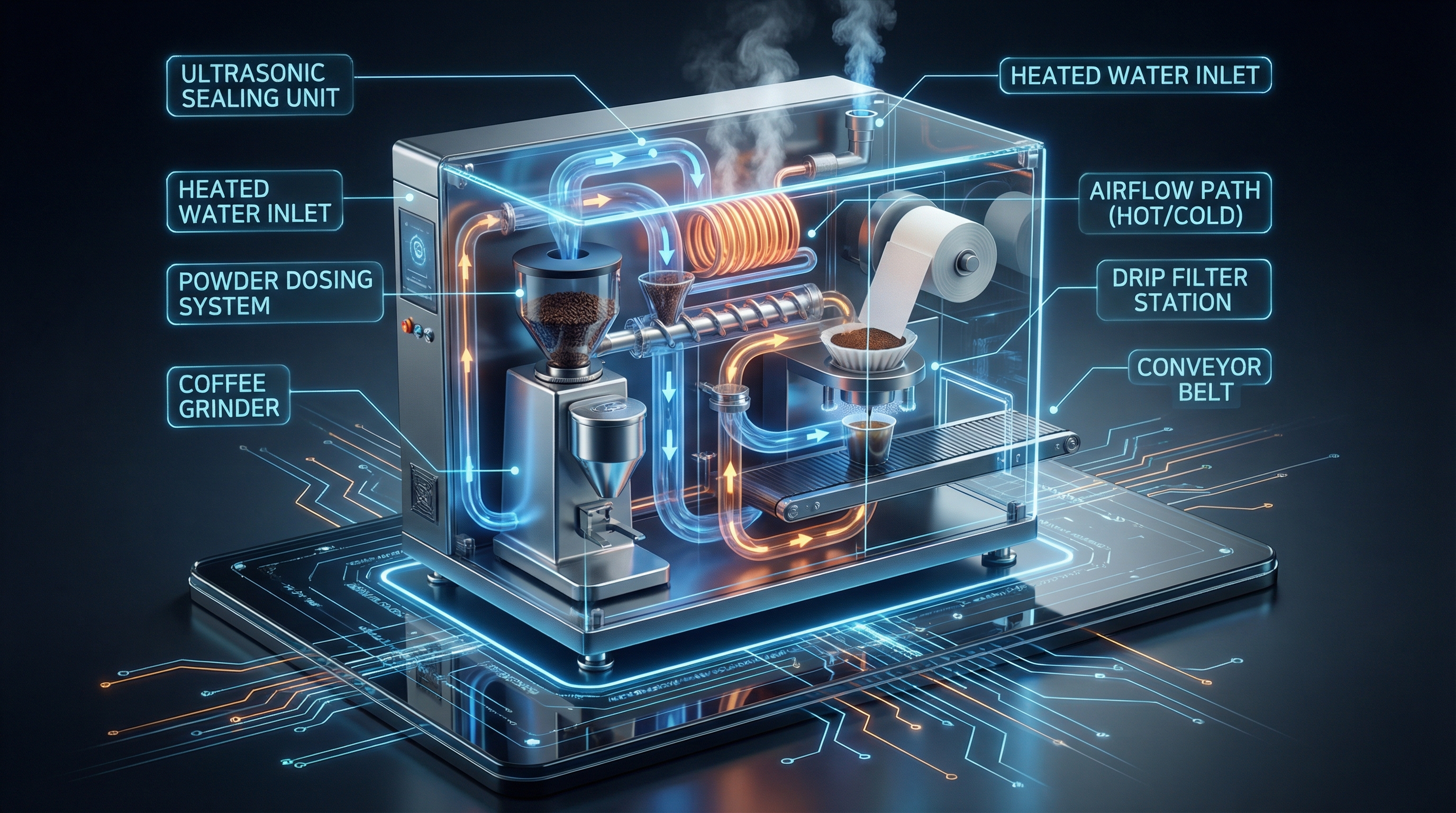
The best machines for this purpose are specialized compostable coffee packaging systems from NewideaPack that utilize ultrasonic sealing to handle delicate eco-films. You need equipment that respects the lower melting points of plant-based resins.
Standard heat-sealing machines often struggle with the narrow temperature windows of PLA. Our specialized systems provide the precision required for high-speed, leak-proof production.
Why do you need ultrasonic sealing for bio-materials?
Look:
Ultrasonic tech generates heat only at the seal interface.
It prevents “burn-through” on sensitive compostable layers.
The vibration clears coffee dust from the seal area.
Using ultrasonic sealing ensures that your bags are airtight every single time. It is the most reliable way to package ground coffee in sustainable formats without increasing waste.
Can your current equipment handle PLA films?
It gets better:
Precision tension control prevents film stretching.
Specialized cooling bars set the seal instantly.
Modular upgrades are available for existing NewideaPack lines.
Key Takeaway: High-precision machinery is the secret to minimizing waste when using premium eco-materials in your production line.
Feature
Heat Sealing
NewideaPack Ultrasonic Sealing
Seal Integrity
Variable
Consistent/Hermetic
Film Compatibility
Limited
Universal (PLA/Bio-films)
Energy Consumption
High
Low
Analysis: Investing in ultrasonic technology significantly reduces film scrap and improves the aesthetic of the final product.
How do global regulations impact your packaging choices?
Global regulations, such as the EU’s single-use plastic ban, are making compostable coffee packaging a legal necessity for brands wanting to trade in international markets. You must comply with these standards to avoid restricted market access.
Governments are increasingly taxing non-recyclable plastics. By switching now, you insulate your business from rising operational costs and regulatory penalties.
Will plastic bans affect your drip bag sales?
Fact is:
The EU Packaging and Packaging Waste Regulation (PPWR) targets single-serve items.
California’s SB 54 mandates 100% recyclable or compostable packaging by 2032.
Retailers are setting their own “zero-waste” deadlines for suppliers.
Key Takeaway: Early adoption of compostable solutions future-proofs your business against changing laws and secures your shelf space.
Region
Regulatory Status
Compliance Deadline
European Union
Strict Bans in Effect
Rolling Deadlines
North America
State-Level Mandates
2025-2032
Southeast Asia
Developing Frameworks
Ongoing
Analysis: The shift toward mandatory compostability is accelerating, making proactive material changes a smart strategic move for global brands.
Can bio-materials withstand long-distance shipping?
Yes, modern compostable coffee packaging is engineered with high-strength bio-polymers that withstand the physical stresses of global logistics and e-commerce shipping. You can trust these materials to protect your product from the warehouse to the consumer’s doorstep.
NewideaPack ensures that the films used in our packaging solutions are tested for puncture resistance. This prevents bag bursts during high-altitude transit or rough handling.
How does tensile strength affect compostable coffee packaging?
You might be wondering:
Bio-films now offer elasticity comparable to traditional PE.
Multi-layer lamination adds structural rigidity.
Reinforced seals prevent leakage under pressure.
Key Takeaway: Strategic material selection prevents bag breakage and preserves vacuum seals during the rigors of distribution.
Metric
Traditional PET/PE
High-Performance Bio-Film
Tensile Strength
45-55 MPa
38-50 MPa
Puncture Resistance
High
High
Burst Pressure
Excellent
Reliable
Analysis: Modern compostable films are engineered to survive the rigors of global e-commerce shipping environments without compromising integrity.
Is compostable coffee packaging durable enough for storage?
Yes, compostable coffee packaging is designed with high-barrier properties that prevent moisture and oxygen ingress, ensuring your coffee stays fresh for over a year. You don’t have to sacrifice shelf life to be sustainable.
Specialized bio-coatings act as a shield against environmental factors. This technology keeps your beans as fresh as they were on roasting day.
How do bio-bags perform in high-humidity environments?
Here is the deal:
The outer layer repels surface moisture.
Inner barrier layers prevent water vapor transmission.
Hermetic seals maintain a controlled internal atmosphere.
Key Takeaway: Your product remains protected from mold and staleness even in challenging storage conditions.
Test Condition
Humidity Level
Barrier Performance
Standard Storage
40-50% RH
100% Protection
High Humidity
90% RH
98% Protection
Direct Contact
Water Splash
Impermeable
Analysis: Advanced bio-barriers ensure that humidity does not compromise the flavor profile or safety of the coffee inside.
How does PLA technology transform drip coffee filters?
PLA technology transforms filters by providing a heat-stable, corn-starch-derived mesh that makes compostable coffee packaging fully biodegradable under industrial composting conditions. You can now offer a completely plastic-free brewing experience.
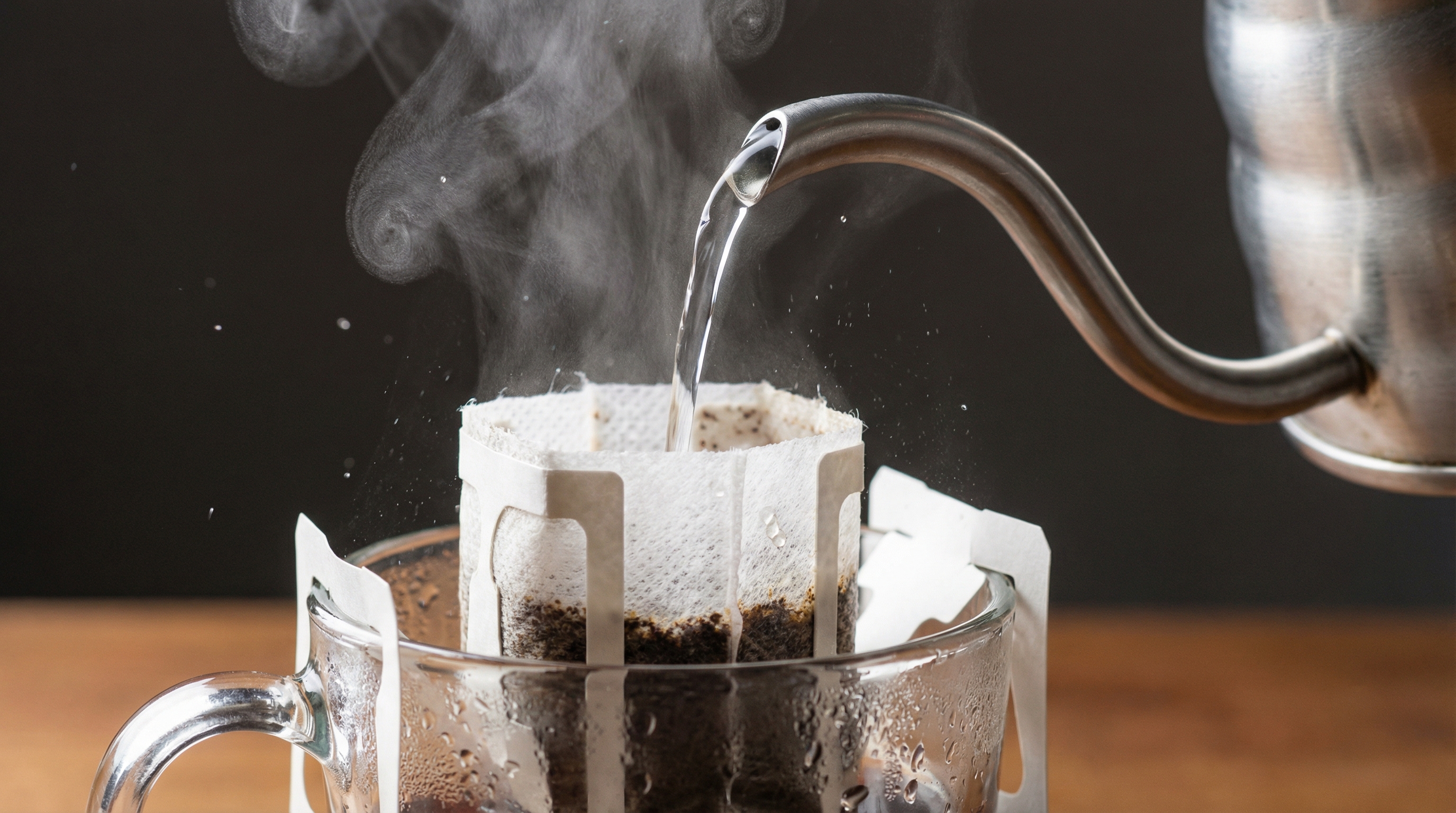
These filters are designed to withstand boiling water without losing their shape. NewideaPack’s PLA mesh solutions ensure that your customers enjoy a clean, sediment-free cup.
Is corn-derived mesh safe for high-temperature brewing?
The best part?
PLA is certified food-safe at high temperatures.
It does not impart any “paper” or chemical taste.
The material is non-GMO and allergen-free.
Key Takeaway: You can offer a premium brewing experience without any plastic-derived micro-contaminants or flavor interference.
Attribute
Paper Filters
PLA Non-Woven Mesh
Flavor Neutrality
Moderate (Paper taste)
Excellent (Neutral)
Flow Rate
Standard
Superior/Fast
Biodegradability
Home Compostable
Industrial Compostable
Analysis: PLA non-woven materials offer superior flow rates while ensuring no “paper taste” interferes with the specialty coffee profile.
Why choose ultrasonic sealing for eco-friendly films?
You should choose ultrasonic sealing because it creates a molecular bond through coffee dust, ensuring that compostable coffee packaging remains airtight without damaging the heat-sensitive bio-layers. This technology is the industry standard for high-end drip bag production.
By using high-frequency vibrations, we create a seal that is stronger than the material itself. You can find more details in our ultrasonic technology guide.
Does ultrasonic tech prevent bag leaks?
Here is why that matters:
It cuts through oils and powders in the seal zone.
The cold-sealing process preserves the film’s barrier properties.
It creates a narrower, more aesthetic seal.
Key Takeaway: Eliminating leaks is crucial for maintaining the nitrogen barrier and preventing the premature oxidation of your beans.
Sealing Method
Seal Area Temperature
Seal Through Contamination
Standard Heat
High (Risk of damage)
Poor (Leaks possible)
NewideaPack Ultrasonic
Low (Safe for bio-film)
Excellent (Hermetic)
Analysis: The precision of ultrasonic vibrations ensures that even contaminated seal areas become perfectly hermetic, protecting the coffee’s aroma.
Can compostable coffee packaging maintain bean freshness?
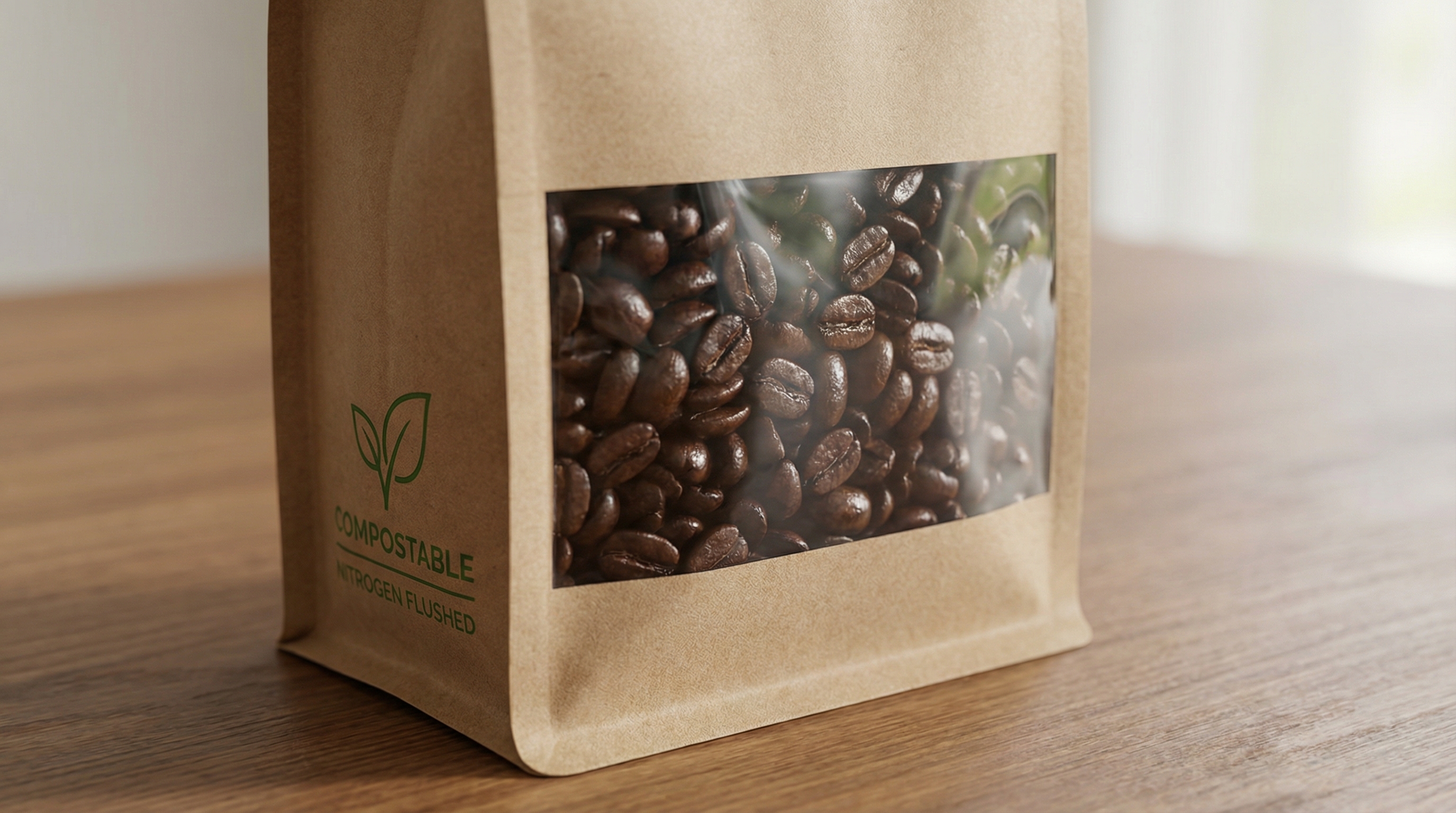
By integrating one-way valves and nitrogen flushing, compostable coffee packaging maintains bean freshness by keeping oxygen levels below 1%. You are providing your customers with the “just-roasted” experience every time they open a pouch.
Nitrogen flushing displaces oxygen, which is the primary enemy of coffee flavor. This process is standard on all NewideaPack high-speed packaging lines.
How does nitrogen flushing work with bio-films?
Believe it or not:
Residual oxygen levels are kept to a minimum.
One-way bio-valves allow CO2 to escape.
Multi-layer films prevent nitrogen from leaking out.
Key Takeaway: Your customers will enjoy the “just roasted” aroma and vibrant flavor notes of your specialty coffee for months.
Freshness Method
Shelf Life (Normal)
Shelf Life (Nitrogen Flush)
Standard Pouch
3-4 Months
12-18 Months
Bio-Pouch
3-4 Months
12-24 Months
Analysis: Nitrogen flushing is the most effective way to extend the shelf life of specialty coffee in compostable formats.
What is the cost of adopting compostable coffee packaging?
While the initial material cost of compostable coffee packaging is higher than plastic, the long-term ROI is found in reduced environmental taxes and premium brand positioning. You are investing in the long-term viability and reputation of your brand.
As production scales globally, the price of bio-resins continues to drop. NewideaPack helps you optimize your film usage to keep your unit costs competitive.
Is the price gap between plastic and bio-films closing?
Consider this:
Petroleum-based plastic costs are rising due to taxes.
Supply chains for PLA are becoming more efficient.
Customers accept higher price points for eco-certified products.
Key Takeaway: The “green premium” is often offset by increased customer loyalty, reduced carbon taxes, and higher retail price points.
Cost Element
Plastic Packaging
Compostable Packaging
Material Cost
Lower
Slightly Higher
Environmental Tax
Increasing
Exempt/Low
Brand Equity
Decreasing
Increasing
Analysis: When accounting for brand equity and regulatory fines, compostable solutions often prove more profitable over a three-year horizon.
Conclusion
Transitioning to compostable drip coffee packaging is the most impactful way to align your coffee brand with the future of global sustainability. By utilizing advanced PLA materials and ultrasonic sealing technology, you ensure that every cup of coffee is as kind to the planet as it is delicious to the palate. We are here to help you solve the challenges of plastic waste and elevate your brand’s environmental profile.
FAQ
Can I use compostable coffee packaging in a standard heat-sealing machine? Yes, but with caution. While some compostable films can be heat-sealed, the narrow temperature window of bio-materials often leads to burning or weak seals, which is why NewideaPack recommends ultrasonic technology for consistent results.
What’s the best way to dispose of PLA coffee filters at home? Industrial composting is the preferred method. PLA requires specific temperature and moisture conditions to break down efficiently, so checking for local “green bin” programs is the best way to ensure the material returns to the earth correctly.
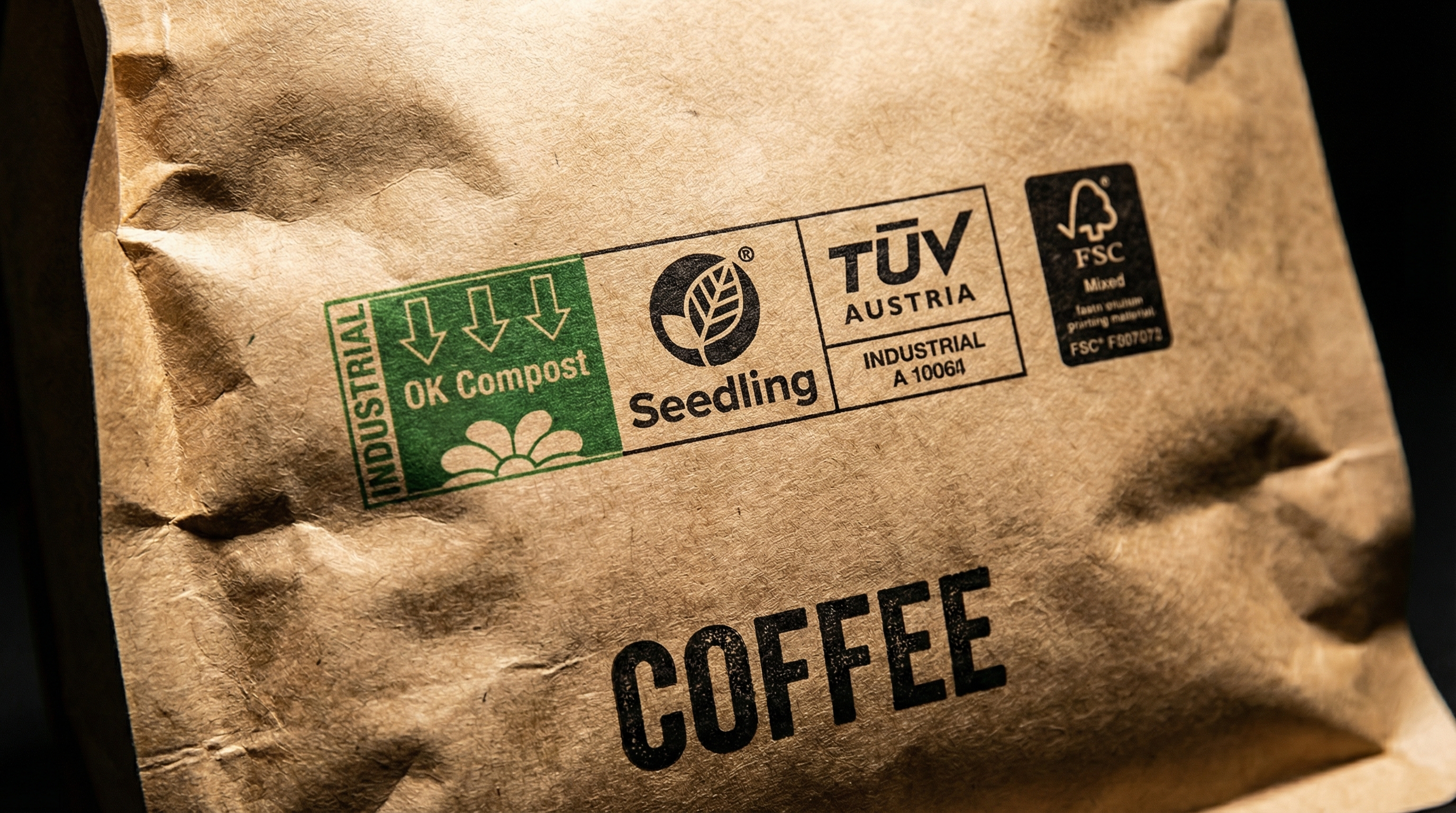
How do I know if my packaging is truly compostable? Check for certifications. You should look for logos like EN 13432 (Europe) or ASTM D6400 (USA), which guarantee that the materials have been lab-tested to decompose within a specific timeframe without leaving toxic residues.
Can compostable coffee packaging really hold a vacuum seal? Absolutely. By using multi-layer compostable films that include a high-barrier bio-pouch, you can maintain a vacuum or nitrogen-flushed environment that protects your coffee from oxidation just as well as traditional foil.
What is the shelf life of coffee in compostable bags? Typically 12 to 24 months. When processed on NewideaPack machines with proper nitrogen flushing and high-barrier compostable films, the shelf life is comparable to traditional plastic laminate packaging.
Sales Pitch Component
If you are ready to modernize your production with eco-friendly innovation?
Please contact us today. At NewideaPack, our vision is to lead the coffee industry toward a waste-free future through engineering excellence.