What is the Best Way to Manage Static electricity in powder Issues
2025年9月15日 by newideapack
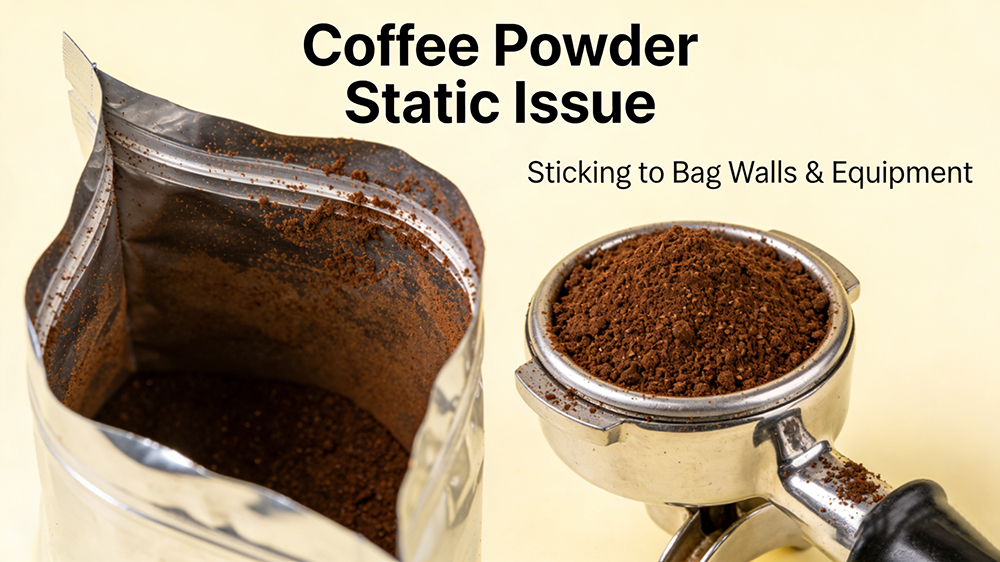
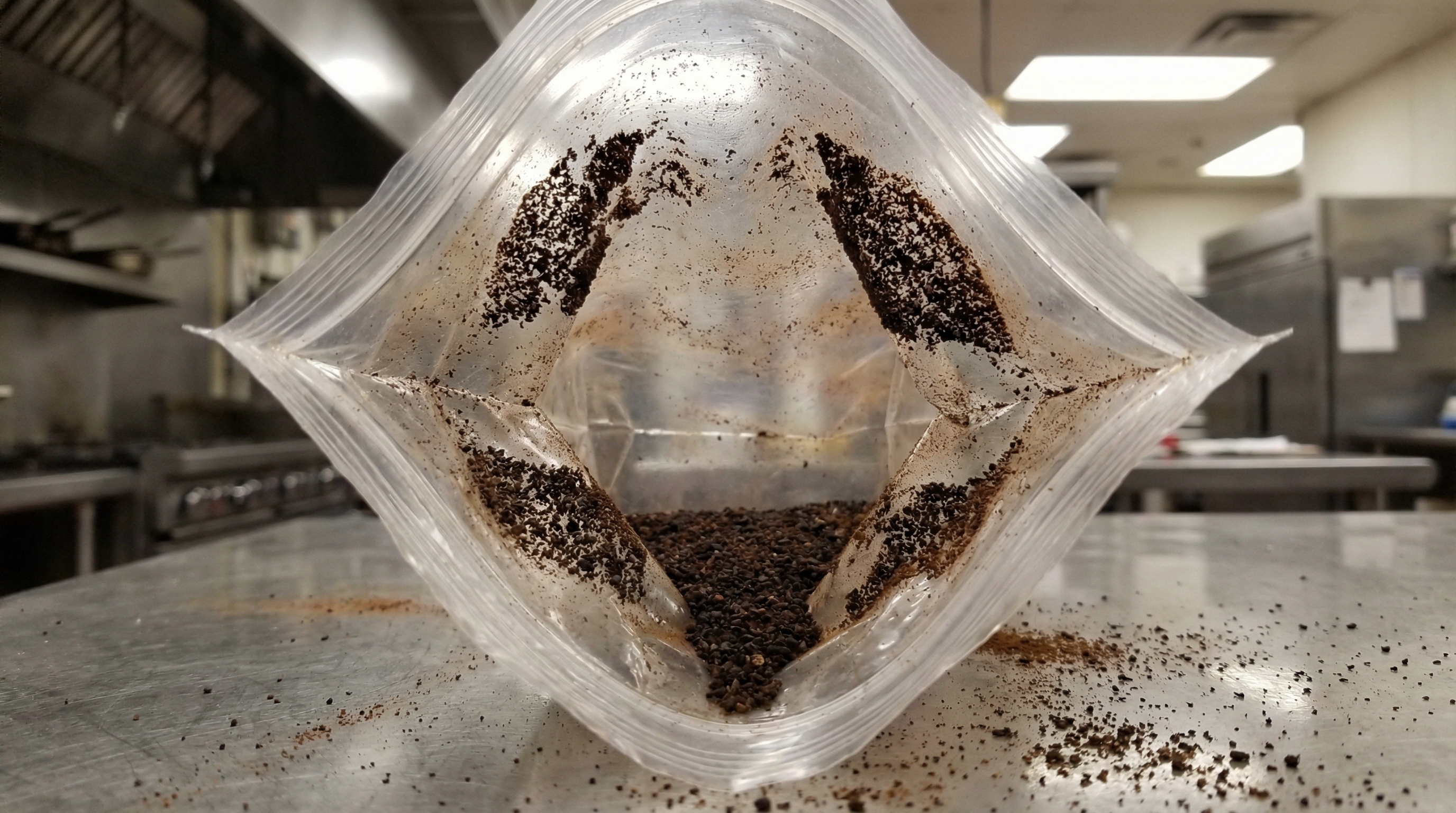
Ground coffee sticks to packaging primarily due to the friction generated during grinding and the resulting electrostatic charge that builds up on dry particles. If you are a coffee producer, you know the frustration of seeing expensive grounds clinging to bag seals, causing leaks and creating significant product waste. This inefficiency agitates your production schedule and eats into your profit margins with every bag processed. Fortunately, Newideapack specializes in mitigating static electricity in powder through advanced engineering and integrated anti-static technologies designed for high-speed lines.
How does static electricity in powder affect coffee packaging?
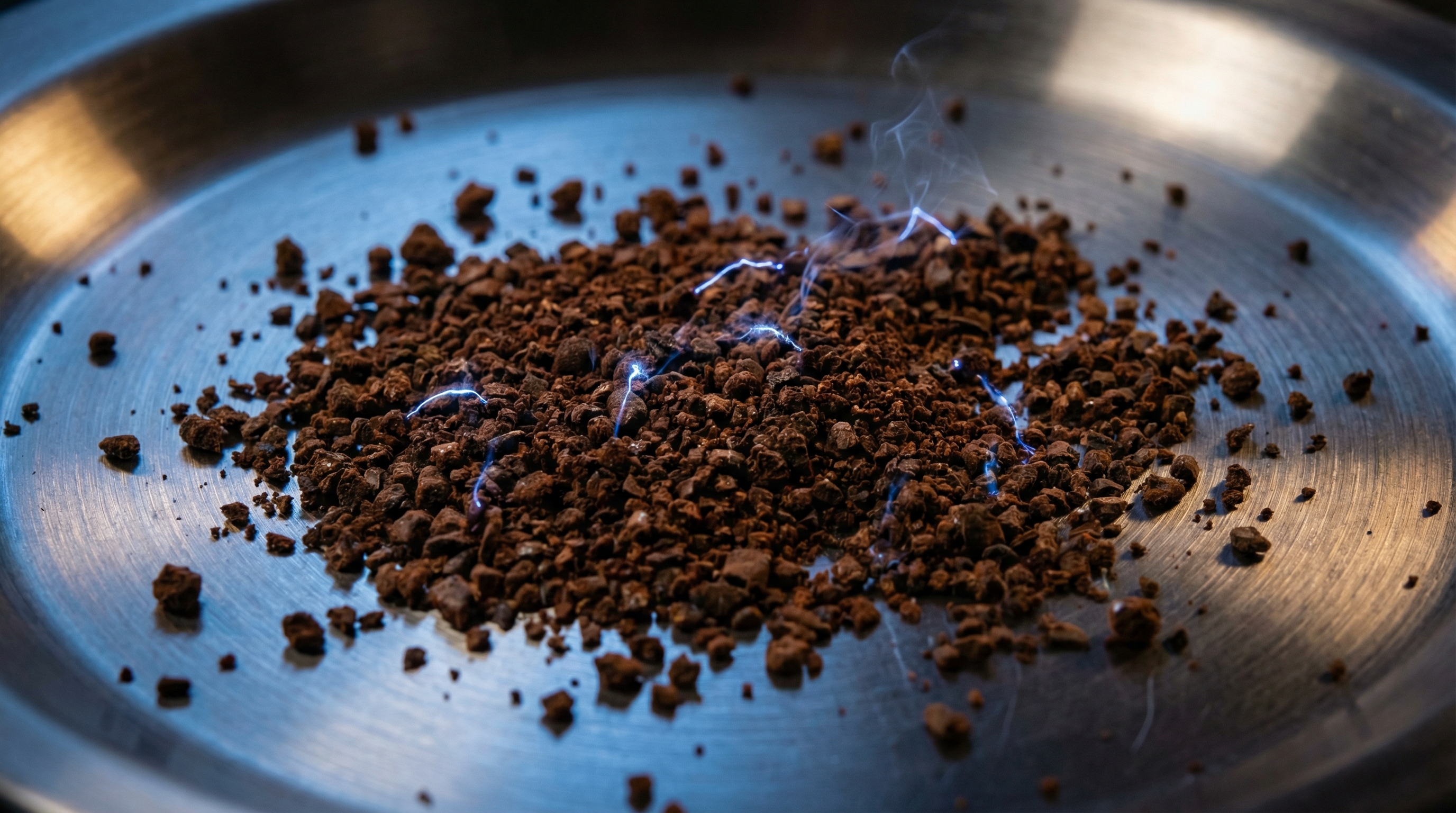
Static electricity in powder causes fine coffee particles to act like magnets, clinging to the interior walls of your bags and filling equipment. This phenomenon occurs when electrons are transferred between surfaces, leaving particles with a charge that seeks neutralization. When you try to fill a pouch, these charged particles jump toward the film instead of settling at the bottom.
The Impact on Seal Integrity
You might notice that dust consistently migrates to the top of the pouch where the heat sealer operates. If these particles get trapped in the seal, the bag will not be airtight, leading to oxidation and stale coffee.
Look:
Charged dust prevents a clean heat bond.
Micro-leaks allow oxygen to enter the package.
Consumer trust drops when bags feel “soft” or leaking.
The result? You end up with a high rejection rate and wasted packaging materials.
Key Takeaway: Controlling charge is essential to ensure that every bag reaches the consumer with a perfect, hermetic seal.
Variable
Static Impact
Packaging Result
Particle Size
Fines (Dust)
High migration to seal area
Fill Velocity
High Speed
Increased friction/charge
Seal Quality
Contaminated
Weak or non-existent bond
Why is static electricity in powder higher in dry environments?
Low humidity levels significantly increase static electricity in powder because the dry air acts as an insulator rather than a conductor for electrical charges. In a moist environment, a thin layer of water on surfaces helps dissipate these charges safely. Without that moisture, the friction from your machinery creates a buildup that has nowhere to go but onto your product.
Humidity and Production Stability
When your facility drops below 40% relative humidity, you will likely see a spike in “clumping” and “jumping” coffee grounds. This inconsistency makes it nearly impossible to maintain the precise dosing required for premium retail bags.
Here is the kicker:
Dry air prevents natural charge dissipation.
Plastic films become highly reactive in low humidity.
Product flow becomes erratic and unpredictable.
The solution? Many roasters integrate humidity controls or specialized Newideapack equipment to stabilize the environment.
Key Takeaway: Managing the ambient moisture in your packaging room is one of the most cost-effective ways to reduce triboelectric charging.
Humidity Level
Static Potential
Production Effect
< 20% RH
Extreme
Severe sticking and sealing issues
40% – 50% RH
Minimal
Smooth flow and clean seals
> 60% RH
Low
Risk of clumping due to moisture
Does grinding speed increase static electricity in powder?
Increasing your grinding speed directly increases the friction between beans and burrs, which dramatically heightens the level of static electricity in powder. The faster the movement, the more electron transfer occurs, leaving the freshly ground coffee with a massive positive or negative charge. This is why high-volume industrial grinders often struggle more with static than smaller, slower units.
Friction and Fine Particles
You will find that the “fines” or the smallest particles generated during high-speed grinding are the most susceptible to charging. These tiny grains have a high surface-area-to-mass ratio, making them easy to manipulate via electrostatic forces.
Think about this:
Rapid friction strips electrons from the bean surface.
Heat from the motor can exacerbate particle behavior.
Discharge often occurs in the discharge chute, causing “volcanoing.”
The result? Your dosing becomes inaccurate as product sticks to the internal hopper walls.
Key Takeaway: Balancing throughput speed with heat management is critical for minimizing the electrical activity of the coffee powder.
Grinding Speed
Friction Level
Static Intensity
Low (Manual/Small)
Low
Minimal
Medium (Batch)
Moderate
Manageable
High (Industrial)
Extreme
Severe – Requires Ionization
Can static electricity in powder cause bag sealing failures?
Yes, static electricity in powder is a leading cause of bag sealing failures because it attracts fine dust particles to the sealing surface. Even a microscopic layer of coffee dust can act as a barrier between the two layers of packaging film. This prevents the heat and pressure from creating a molecular bond, leading to bags that pop open during shipping.
The Cost of Rework
If your quality control team finds leaking bags at the end of the conveyor, you are looking at significant rework costs and lost time. You must manually inspect, empty, and re-pack the product, which is both labor-intensive and wasteful.
Here is the kicker:
Static pulls dust exactly where you don’t want it.
Contaminated seals lead to shelf-life reduction.
Shipping vibration can cause weak seals to fail.
The result? Increased customer complaints and potential returns from retailers.
Key Takeaway: Clean seals are only possible when the electrostatic charge of the powder is neutralized before it reaches the filling station.
Seal Condition
Cause
Consequence
Contaminated
Static Dust Attraction
Leaking/Open Bags
Over-Heated
Attempting to melt through dust
Brittle film/Melting
Optimized
Neutralized Powder
100% Hermetic Bond
How do ionizer bars reduce static electricity in powder?
Ionizer bars reduce static electricity in powder by flooding the packaging area with a balanced stream of positive and negative ions. As the charged coffee particles pass through this “ionic cloud,” they attract the opposite charge needed to become neutral. This allows the powder to fall straight into the bag rather than clinging to the equipment or the film.
Active Neutralization Technology
Unlike passive methods, active ionizer bars integrated into Newideapack machines can handle the high-speed demands of modern coffee production. These bars are placed at strategic points, such as the unwinding station for the film and the discharge nozzle of the filler.
Look:
Bars emit high-voltage ions to neutralize surfaces.
They prevent the film from attracting dust like a magnet.
The product flow becomes laminar and controlled.
The result? A much cleaner packaging environment and more consistent fill weights.
Key Takeaway: Active ionization is the “gold standard” for companies looking to eliminate static-related downtime.
Method
Type
Effectiveness
Ionizer Bars
Active
High (Continuous)
Anti-Static Brushes
Passive
Low (Contact-based)
Tinsel/String
Passive
Very Low
Why is grounding vital for static electricity in powder control?
Proper grounding is vital for static electricity in powder management because it provides a direct, low-resistance path for excess electrons to dissipate into the earth. Without a solid ground connection, your machinery acts as a giant capacitor, storing energy until it discharges in the form of a spark or a massive surge into your product. This grounding ensures that the metallic components of your filler don’t carry a charge that could repel or attract the coffee.
Ensuring a Safe Path to Earth
You must verify that all parts of your packaging line, including the hopper, auger, and conveyor frame, are bonded together and connected to a reliable earth ground. Even a single ungrounded roller can generate enough static to disrupt the entire filling process.
Consider this:
Ungrounded parts store charge until a spark occurs.
Static shocks can damage sensitive machine electronics.
Proper grounding is a safety requirement for dusty environments.
The result? A safer work environment and more stable machine performance.
Key Takeaway: Mechanical grounding is the foundation of any effective anti-static strategy in industrial packaging.
Component
Grounding Method
Purpose
Machine Frame
Copper Wire to Earth
Total Charge Dissipation
Auger Screw
Conductive Bushings
Prevent shaft charge buildup
Film Rollers
Grounded Bearings
Neutralize film friction
Does film material impact static electricity in powder buildup?
The type of packaging film you use has a massive impact on static electricity in powder because different plastics have varying levels of surface resistivity. Synthetic materials like polypropylene (PP) and polyethylene (PE) are excellent insulators, meaning they hold onto static charges for a long time. When these films unwind at high speeds, they generate thousands of volts of static through triboelectric charging.
Selecting the Right Packaging Materials
If you are struggling with static, you might want to look for films that contain anti-static additives or conductive layers. These specialty materials allow the charge to bleed off more quickly, preventing the “clinging” effect that ruins your seals.
Here is the kicker:
Standard clear films are often high-static offenders.
Metallized films provide better conductivity and protection.
Anti-static coatings can be applied during the lamination process.
The result? Your machine runs faster with fewer product jams and seal failures.
Key Takeaway: Your choice of packaging film is just as important as the machinery itself when it comes to managing static.
Film Material
Static Propensity
Suitability for Powder
BOPP (Standard)
Very High
Low (Needs Ionization)
Metallized PET
Moderate
Good
Anti-Static PE
Low
Excellent
How does an auger filler manage static electricity in powder?
An auger filler manages static electricity in powder by providing a fully enclosed and grounded path for the product to move from the hopper to the bag. Because the auger screw is usually made of high-grade stainless steel, it can help dissipate charges as the powder is being dosed. Newideapack designs these fillers with tight tolerances to prevent excessive agitation, which is a primary driver of static generation.
Precision Dosing in a Closed System
By using a vertical auger, you minimize the distance the powder has to “fall” through the air, which is where most static-induced migration happens. The enclosed tube keeps the dust contained, ensuring that the charge doesn’t cause the particles to scatter across your facility.
Look:
Enclosed tubes prevent dust from escaping.
Stainless steel construction naturally dissipates charges.
Servo-driven motors allow for “soft starts” to reduce friction.
The result? High-accuracy fills with virtually no dust contamination on the outside of the bag.
Key Takeaway: Vertical auger fillers are the most effective dosing method for ground coffee because they control product flow in a grounded environment.
Filler Type
Dust Control
Static Management
Auger Filler
Excellent
High (Enclosed/Grounded)
Volumetric Cup
Poor
Low (Open to Air)
Vibratory Scale
Moderate
Low (High Agitation)
Can ionized air rinse help static electricity in powder?
Ionized air rinses are an effective way to knock loose particles and dissipate static electricity in powder within the filling hopper. By blowing a gentle stream of ionized air over the coffee as it enters the dosing system, you can neutralize the charge before it becomes a problem. This prevents the “ratholing” or “bridging” that occurs when charged particles cling to the side of the hopper.
Cleaning and Neutralizing Simultaneously
This technology is particularly useful for fine espresso grinds or flavored coffees that tend to be stickier. The air movement keeps the product fluid and moving, while the ions ensure that the powder doesn’t stick to the metallic surfaces of the machine.
Think about this:
Air movement prevents product stagnation.
Ions neutralize the deep-seated charges within the powder.
It reduces the need for frequent manual hopper cleaning.
The result? More consistent flow and fewer interruptions for maintenance.
Key Takeaway: Integrating ionized air into your hopper ensures that your coffee stays free-flowing from the start of the process.
System Component
Action
Benefit
Air Nozzles
Blow Ionized Air
Break Static Bonds
Agitator Blade
Mechanical Stirring
Prevent Compaction
Static Sensors
Monitor Charge
Auto-adjust ion levels
How does Newideapack solve static electricity in powder issues?
Newideapack solves static electricity in powder issues by integrating multi-point ionization systems and precision-engineered auger fillers into every coffee packaging line. We understand that static isn’t just a nuisance; it’s a barrier to production efficiency and product quality. Our machines are built with high-conductivity materials and advanced sensors to ensure that electrostatic charges are neutralized before they can cause bag leaks or inaccurate fills.
Integrated Anti-Static Solutions
When you choose a Newideapack system, you get a machine that is designed specifically for the challenges of ground coffee. From the grounded film unwinding station to the ionized filling nozzle, every step of our process is optimized to keep your coffee in the bag and off the seals.
Look:
Multi-point ionizers come as a standard option.
Precision augers reduce friction-based charging.
Our “Dust-Free” filling technology eliminates seal contamination.
The result? You can run at higher speeds with total confidence in your seal integrity.
Key Takeaway: Partnering with an expert like Newideapack allows you to automate your coffee packaging without the headache of static-related waste.
Newideapack Feature
Benefit
ROI Impact
Integrated Ionizers
Zero Dust Attraction
Lower Rejection Rate
Precision Auger
Accurate Fills
Less Product Waste
Grounded Frame
Machine Safety
Lower Maintenance Costs
Conclusion
Managing static electricity in ground coffee is a multifaceted challenge that requires a combination of environmental control, material selection, and advanced engineering. By neutralizing charges through ionization, ensuring robust grounding, and using precision filling technology, you can eliminate the waste and sealing failures that plague many coffee roasters.
At Newideapack, our vision is to empower coffee producers with the world’s most reliable and efficient packaging technology. We don’t just sell machines; we provide comprehensive solutions that ensure your product reaches the consumer in perfect condition every time.
FAQ
Can I use a standard powder machine for ground coffee? While possible, it is not recommended without specific anti-static modifications. Standard machines often lack the necessary grounding and ionization required to handle the high static charges generated by ground coffee.
What’s the best humidity level for a coffee packaging room? The ideal range is between 40% and 50% relative humidity. Keeping the room within this window provides enough atmospheric moisture to help dissipate static without causing the coffee grounds to clump together.
How do I know if my bags have seal leaks from static dust? Perform a simple squeeze test or use a vacuum chamber to look for air bubbles escaping the seal area. If you see fine coffee dust visible within the transparent part of the heat seal, static is likely the culprit.
Can I add moisture to my coffee beans to reduce static? Yes, some roasters use the “Ross Droplet Technique” (RDT) by adding a tiny mist of water to beans before grinding. However, for industrial-scale packaging, active ionization on the machinery is a more scalable and reliable solution.
What is the role of an ionizer bar on a VFFS machine? The ionizer bar neutralizes the static charge on the packaging film as it passes over the forming tube. This prevents the film from “grabbing” the coffee dust as it falls through the tube, ensuring a clean fill and a perfect seal.