Scale Your Roastery: The Ultimate Guide to Custom Coffee Bag Printing
2026年2月15日 by newideapack
Mastering your custom coffee bag printing strategy is the definitive way to bridge the gap between a local roastery and a national brand. Whether you are launching a single-origin roast in small batches or scaling a flagship blend through mass production, your packaging serves as your most powerful silent salesperson.
You’ve poured your heart into roasting the perfect bean, yet you’re staring at a screen full of expensive packaging quotes that just don’t fit your budget. It’s frustrating to feel stuck between “too small to matter” and “too big to afford” when all you want is for your brand to look professional on the shelf. At New Idea Pack, we see this struggle every day, which is why we’ve mastered the balance between flexibility and scale. This guide explores how Custom coffee bag printing can transform your business from a local roastery into a recognizable national brand.
Custom coffee bag printing is the process of applying your unique brand designs, logos, and roast information directly onto specialized barrier films or pre-made pouches. This allows you to bypass generic labels and create a cohesive, professional look that instantly communicates quality to your customers.
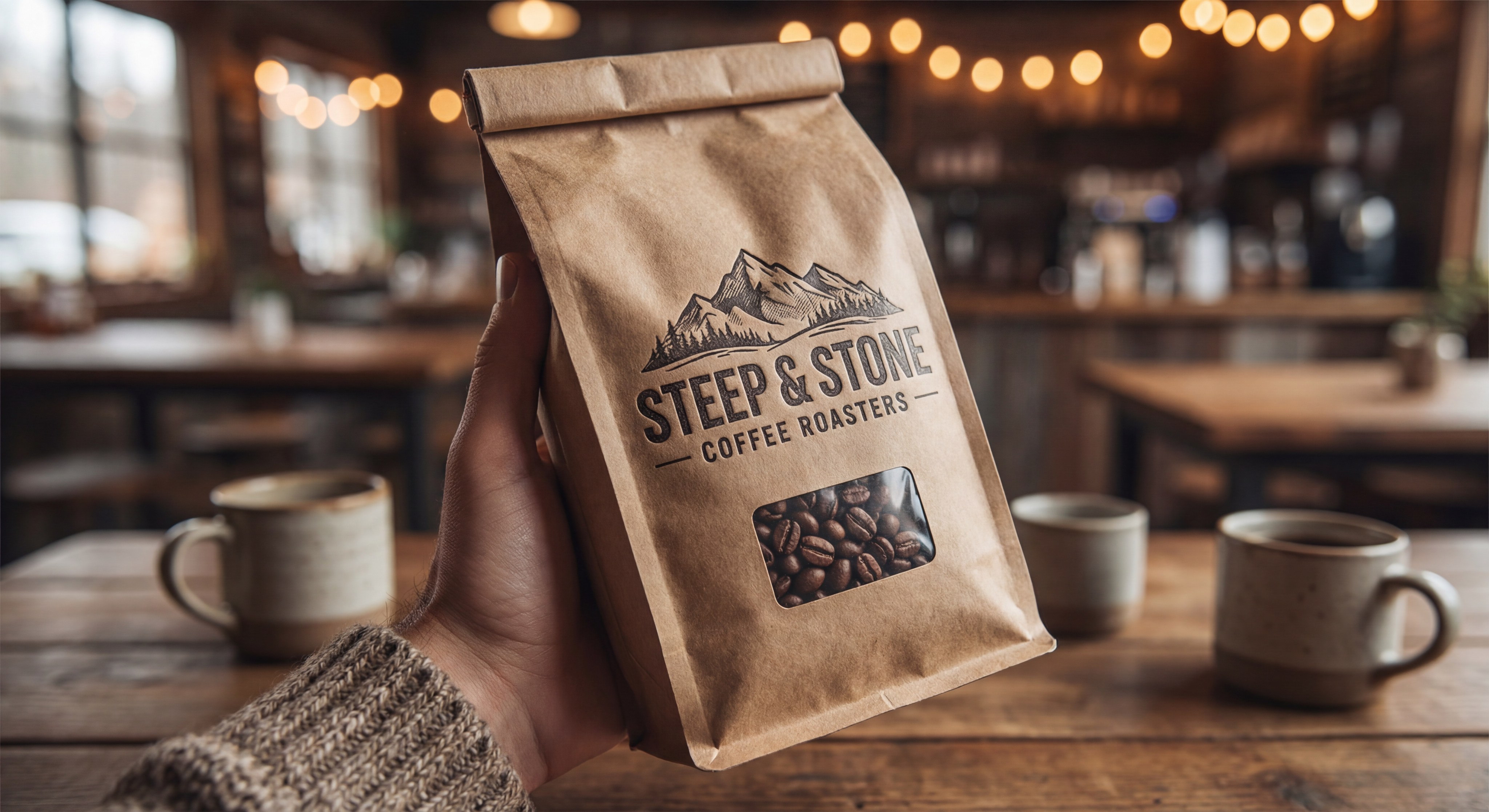
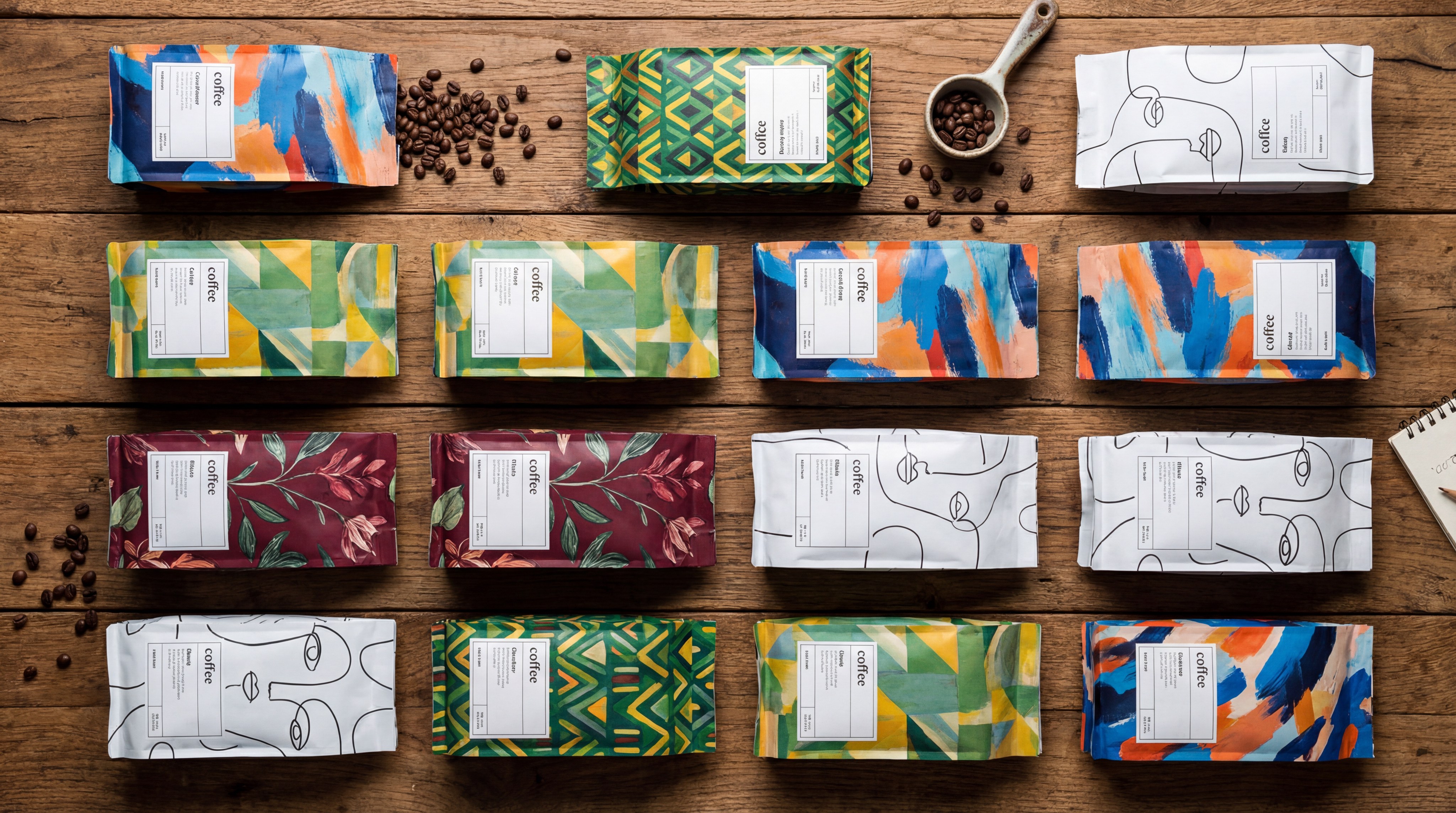
Your packaging is often the first physical touchpoint a customer has with your product. At newideapack, we believe that high-quality printing establishes immediate trust and helps you stand out in a crowded supermarket aisle.
Does branding drive consumer trust?
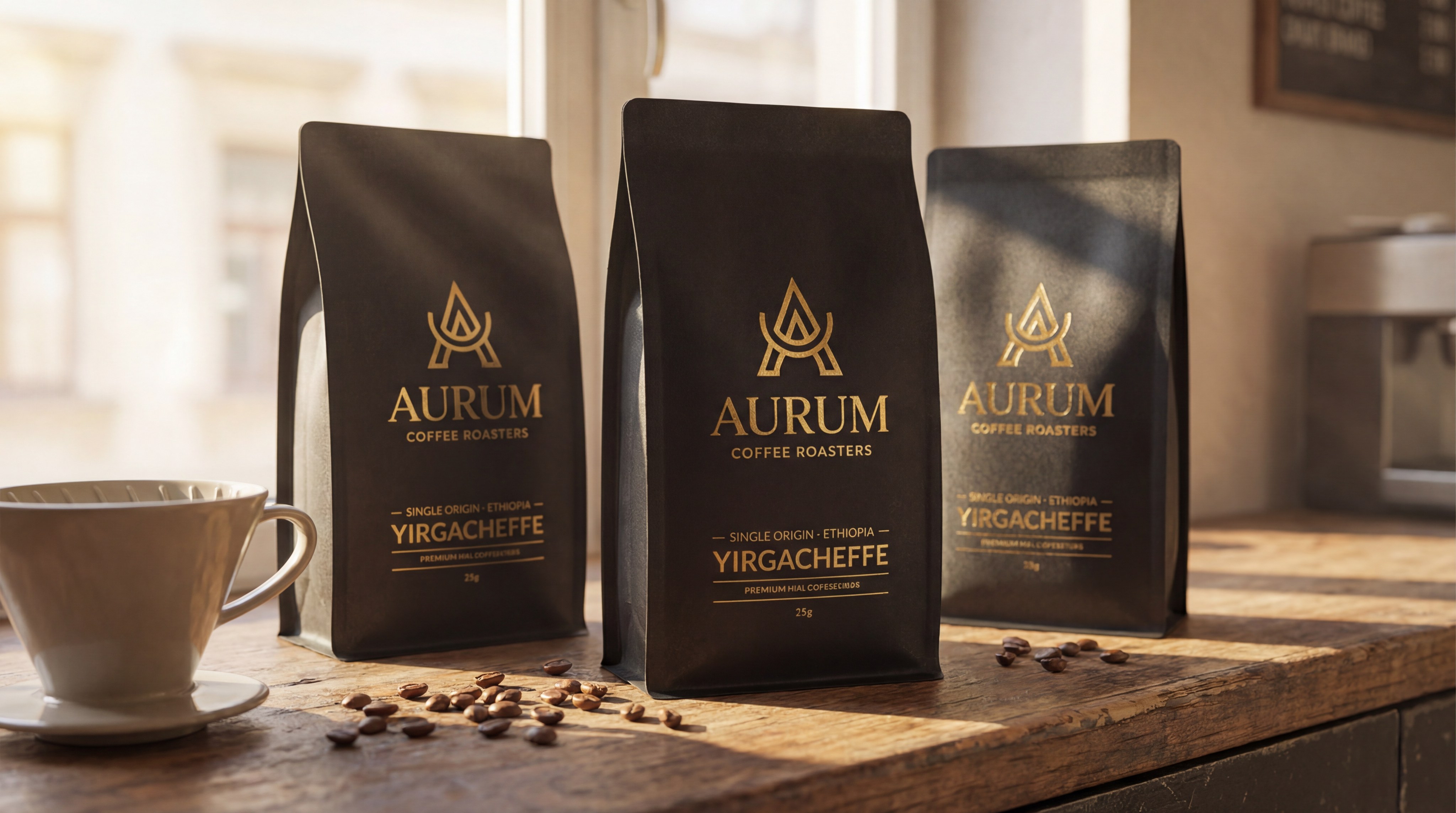
Professional finishes suggest a premium product inside. You only get one chance to make a first impression, so you must make it count with sharp graphics.
Matte finishes often signal artisanal, small-batch quality.
Glossy surfaces can highlight vibrant colors and modern energy.
Clear text ensures your origin story is easy to read.
Key Takeaway: Professional printing elevates your coffee from a simple commodity to a luxury experience that customers are willing to pay a premium for.
Aspect
Small Batch Printing
Mass Production Printing
Primary Goal
Flexibility & Testing
Cost Efficiency
Design Detail
High (Digital)
Extremely High (Gravure)
Brand Impact
Unique/Exclusive
Consistent/Professional
The table above illustrates how the printing approach shifts based on your specific business goals and growth phase.
Is small batch custom coffee bag printing right for you?
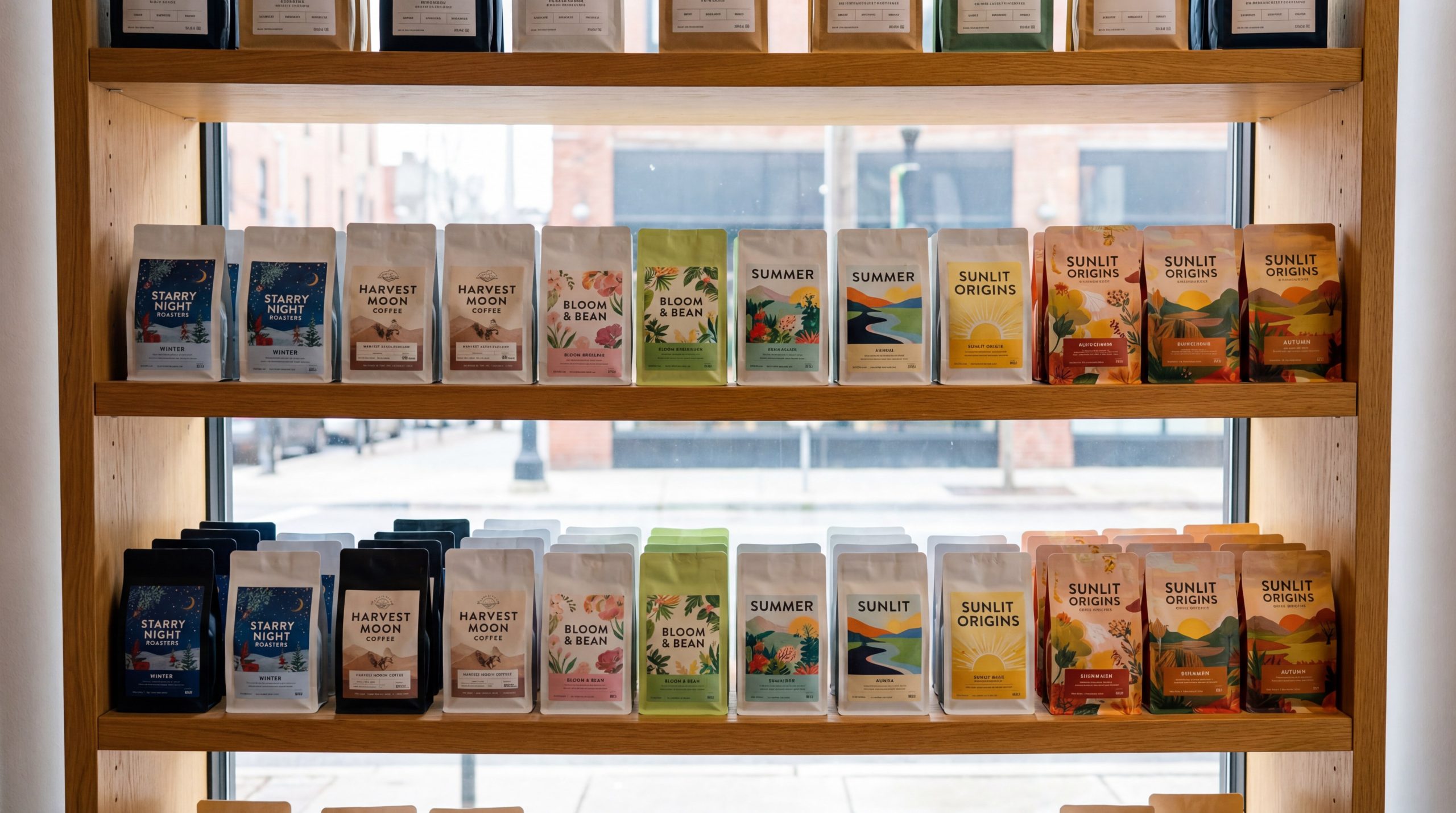
Custom coffee bag printing in small batches allows you to pivot your marketing strategy without being weighed down by thousands of dollars in unused inventory. You can experiment with seasonal blends or limited-run single origins while maintaining a high-end look that matches your larger competitors.
Starting with smaller quantities means you don’t have to tie up all your capital in packaging materials. You avoid the risk of obsolete designs if you decide to rebrand after six months.
Can small runs reduce your financial risk?
This lean approach is perfect for startups finding their feet in a competitive market. Think about this: smaller stock levels mean you preserve your cash flow for buying better green beans.
Avoids the cost of expensive physical printing plates.
Reduces the need for massive climate-controlled storage space.
Allows for testing multiple bag sizes with minimal commitment.
Key Takeaway: Small batches provide the agility needed to react to market trends and customer feedback in real-time without financial strain.
Factor
Small Batch Benefit
Risk Mitigation
Capital
Low upfront investment
Preserves cash flow
Inventory
Low stock levels
No wasted materials
Marketing
High customization
Easy to change designs
Choosing small batches is the smartest way to scale your brand while keeping your financial exposure remarkably low.
How does digital custom coffee bag printing save money?
Custom coffee bag printing via digital technology eliminates the need for expensive physical plates, making high-quality graphics accessible at low minimums. It works much like a high-end office printer but for industrial-grade materials, offering stunning resolution and color depth.
Because there is no plate manufacturing involved, the lead times for digital orders are incredibly short. You get the same quality as the big guys without the massive bill for setup.
Why are no-plate costs a game changer?
Traditional printing requires an expensive plate for every color in your design, which is a huge barrier for small orders. But wait, there’s more: digital printing allows you to change designs between bags instantly.
Zero setup fees for complex, multi-color logos.
Small roasters can finally afford “boutique” packaging.
Fast turnaround means you go from design to finished bags in days.
Key Takeaway: Digital printing is the ultimate tool for roasters who value speed and high-fidelity graphics over sheer volume.
Feature
Digital Printing
Traditional Plate Printing
Setup Cost
Zero to minimal
High (per color plate)
Turnaround
1-2 weeks
4-6 weeks
Min. Order
Very Low
High
This comparison highlights why digital printing is the go-to choice for modern, agile coffee businesses looking to stay competitive.
When to scale with mass custom coffee bag printing?
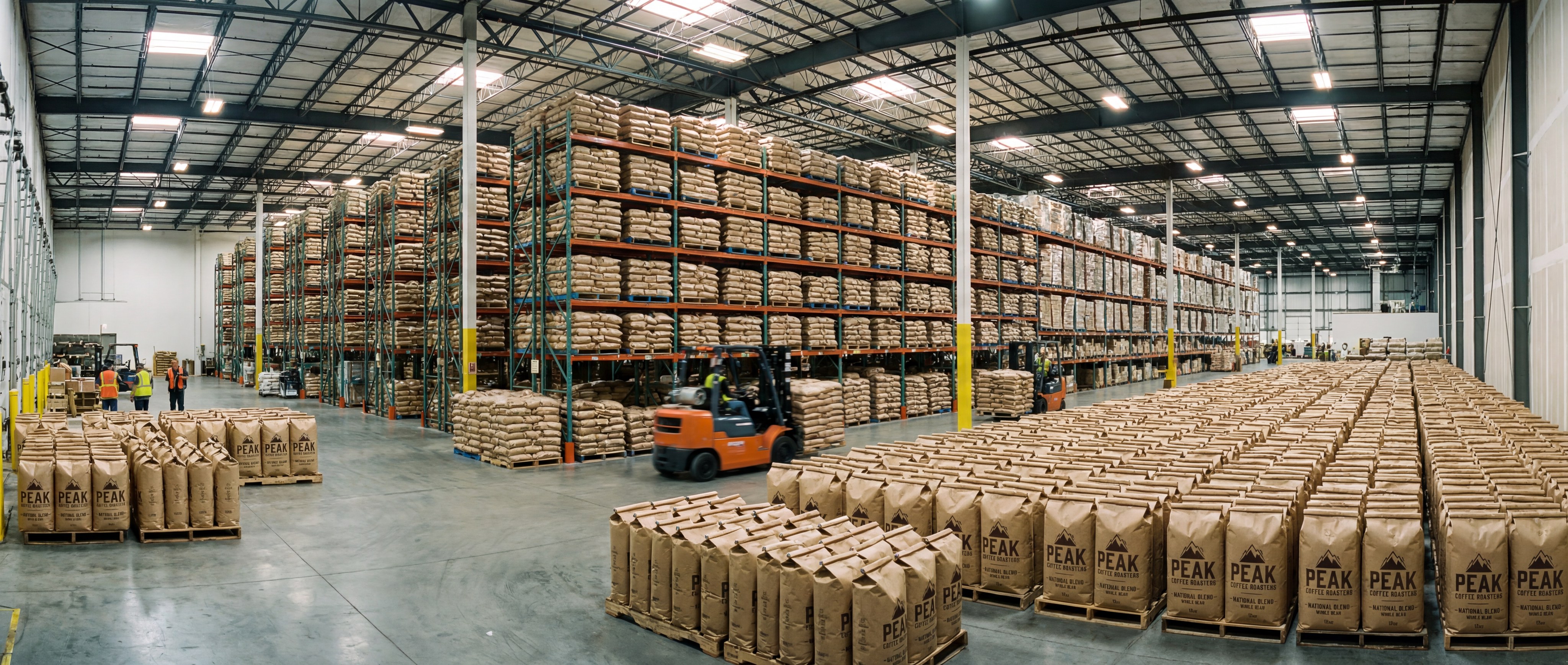
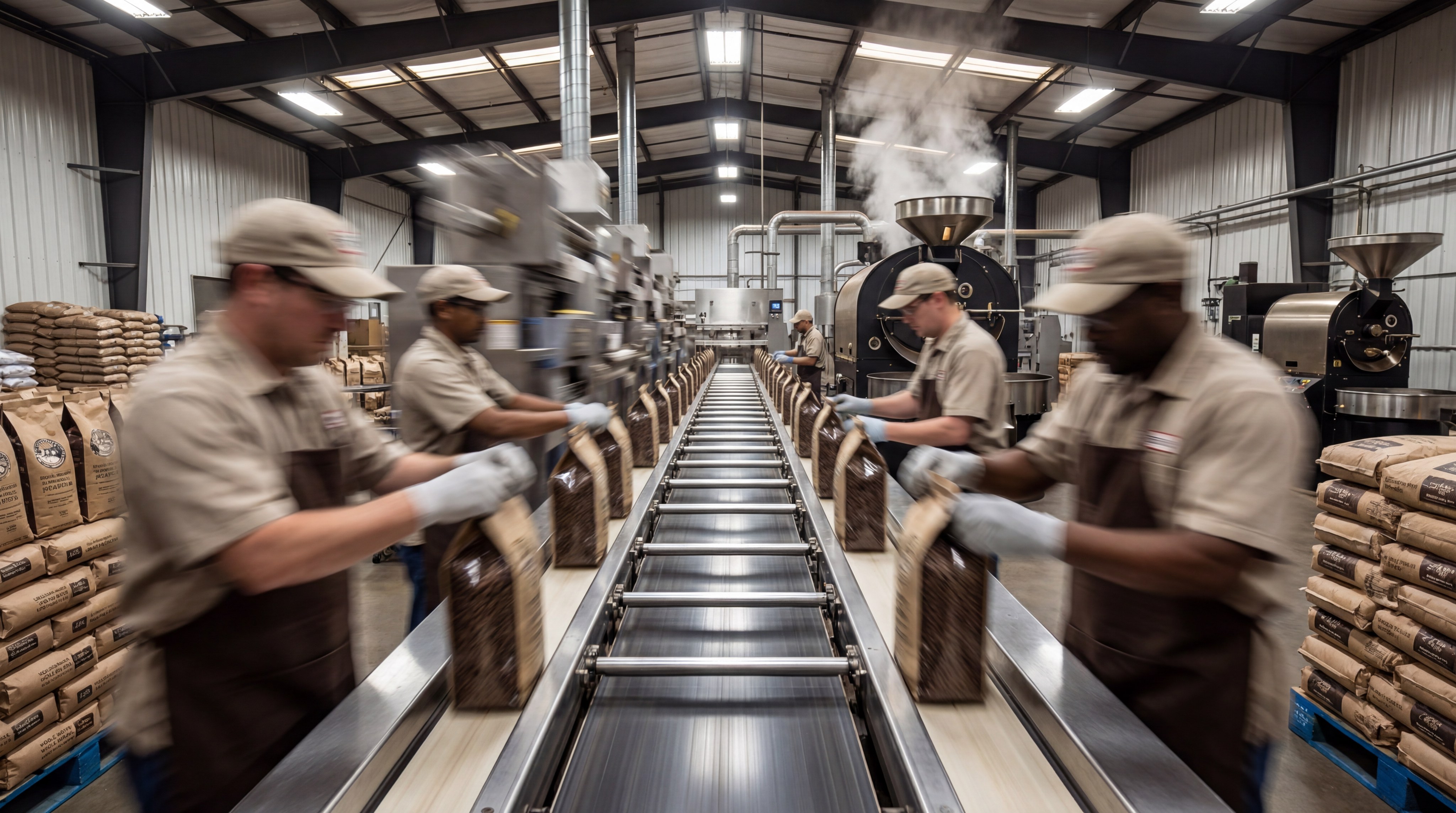
Custom coffee bag printing shifts toward mass production when your monthly sales volume consistently exceeds several thousand units. Once you have a “flagship” blend that sells predictably, the cost-per-bag benefits of large-scale printing become too significant to ignore.
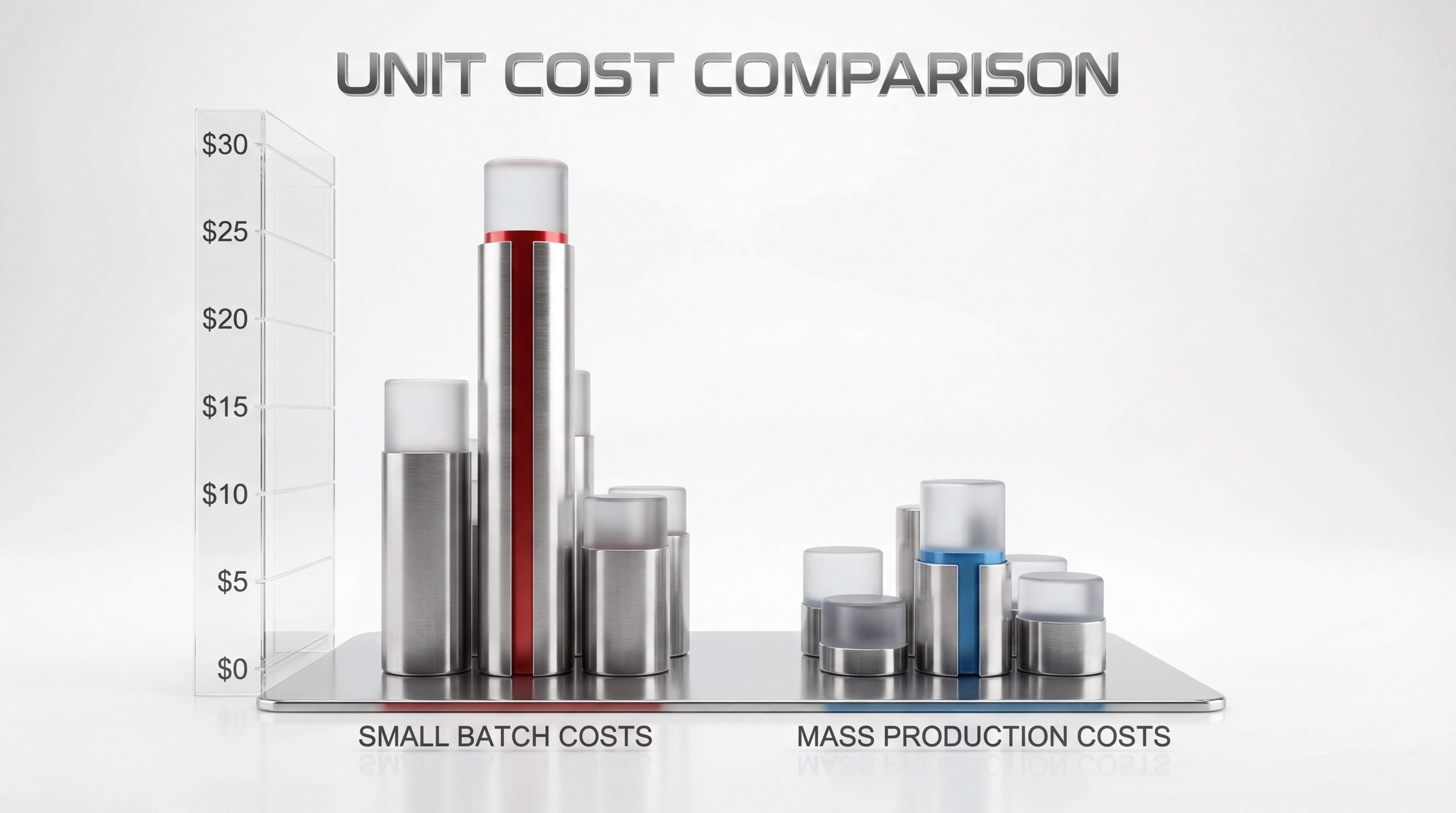
While plates are expensive upfront, they become incredibly cheap once you spread that cost over 50,000 bags. Mass production is a sign of business maturity, ensuring long-term profitability and brand stability.
Does your volume justify plate setup fees?
It’s all about the “economy of scale” math where your per-unit price can drop by 50% or more. Look at it this way: the initial investment pays for itself within just a few production cycles.
Drives down the total cost of goods sold (COGS).
Enables competitive pricing for large wholesale accounts.
Provides months of inventory to prevent stockouts.
Key Takeaway: Transitioning to mass production is the key to unlocking higher profits as your brand gains national traction and stability.
Volume Level
Recommended Method
Cost Trend
< 1,000 bags
Digital
Fixed per Unit
1,000 – 5,000
Hybrid Approach
Decreasing
10,000+
Mass Production
Lowest per Unit
Moving to mass production is the essential step for roasters who have successfully identified their high-volume market winners.
Which methods dominate mass custom coffee bag printing?
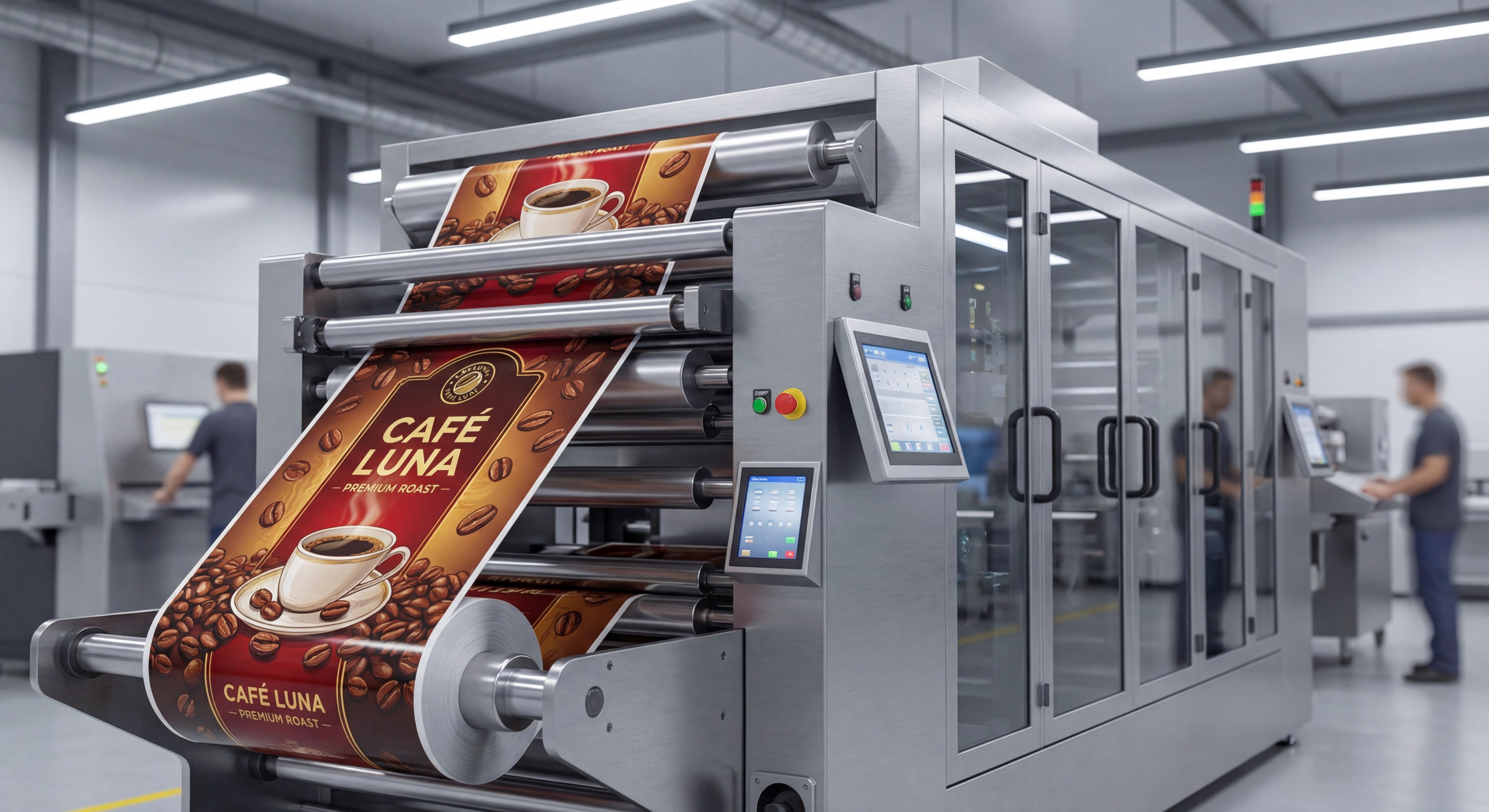
Custom coffee bag printing for massive orders typically relies on rotogravure or flexographic printing technologies. These methods are designed for high-speed efficiency, using rotating cylinders to apply ink to long rolls of packaging material with incredible precision.
Rotogravure uses engraved metal cylinders that hold ink in tiny recessed cells for a very rich finish. It is the gold standard for luxury coffee brands worldwide who demand the absolute best look.
What makes rotogravure the king of quality?
This method produces the most vibrant, photo-quality images possible with perfect color consistency. The best part? The cylinders are extremely durable and can be reused for years of consistent production.
Unmatched depth of color and clarity.
Fastest output for massive volume requirements.
Works best on high-barrier plastic films and foils.
Key Takeaway: For large-scale operations, choosing rotogravure ensures your brand maintains a premium, world-class aesthetic that never varies between batches.
Method
Quality Level
Best Use Case
Rotogravure
Premium / Photo
High-end flagship products
Flexographic
Standard / Sharp
High-speed, simple designs
Digital
High / Detailed
Short runs and prototypes
Understanding these industrial methods helps you communicate more effectively with your packaging partners like New Idea Pack as you grow.
Do MOQs impact your custom coffee bag printing costs?
Custom coffee bag printing is governed by Minimum Order Quantities (MOQs), which dictate the smallest number of bags a manufacturer will produce. These limits exist because setting up large industrial machines requires time and material waste that must be covered by the order size.
High MOQs often force you to buy more packaging than you can sell in a reasonable timeframe. This can tie up cash that could be used for buying better green beans or roasting equipment.
Can you balance inventory and storage costs?
Managing the sweet spot between “too few” and “too many” is the key to a healthy supply chain. Check this out: lower MOQs allow for “just-in-time” inventory management that keeps your brand fresh.
Reduces the risk of material degradation during storage.
Allows for quicker label updates to meet new regulations.
Keeps your warehouse lean and organized.
Key Takeaway: Negotiating lower MOQs or choosing digital providers helps you keep your coffee business lean, responsive, and financially healthy.
Order Size
Cash Flow Impact
Storage Need
Low MOQ
Positive (Flexible)
Minimal
Medium MOQ
Neutral
Moderate
High MOQ
Negative (Tied up)
Significant
By managing your MOQs carefully, you ensure your coffee business remains profitable at every stage of its brand evolution.
How does automation help custom coffee bag printing?
Custom coffee bag printing works best when paired with high-speed filling and sealing machinery. Hand-filling bags is fine for a hobby, but as you grow, automation becomes the only way to maintain consistency and meet demand.
Modern packaging lines can often apply “on-demand” printing for roast dates and batch numbers directly onto your custom bags. This integration ensures every bag has perfectly accurate data without the need for messy stickers.
Why integrate printing with filling machines?
Automation speeds up the entire process from roasting to shipping while reducing human error to nearly zero. Look at this: a single machine from newideapack can do the work of five people, allowing you to focus on roasting.
Ensures consistent seal strength for every bag.
Reduces product giveaway through highly accurate weighing.
Allows you to scale output without doubling your staff count.
Key Takeaway: Automation is the functional bridge between a small-scale artisanal roastery and a high-volume national coffee powerhouse.
Process
Manual Speed
Automated Speed
Filling/Sealing
2-3 bags/min
30-60 bags/min
Weighing Accuracy
Variable
±0.1g Precision
Date Coding
Hand-stamped
Precise Integrated Inkjet
Automation doesn’t just make your production faster; it makes your entire brand more precise, professional, and scalable.
What materials protect custom coffee bag printing quality?
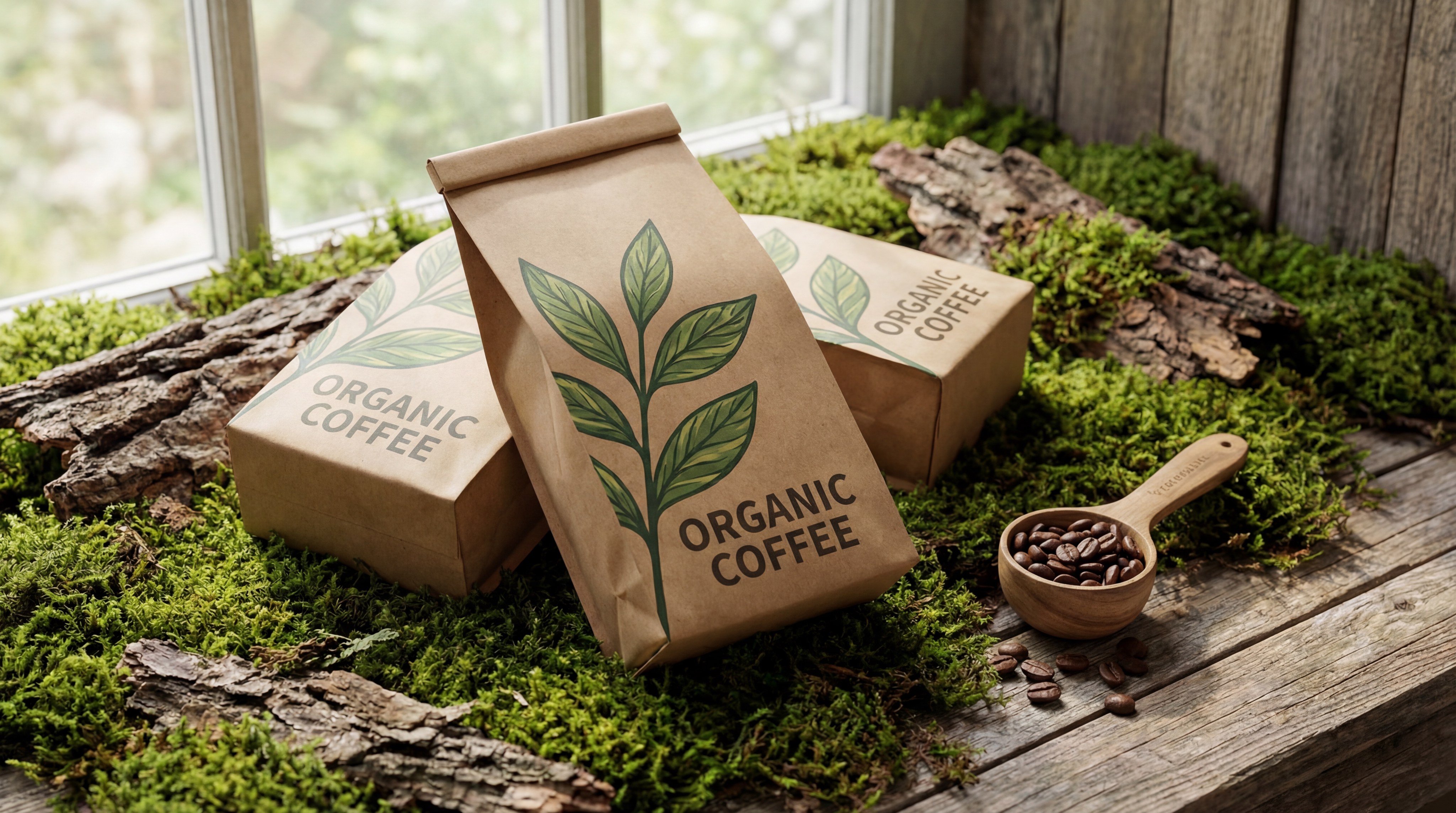
Custom coffee bag printing must be performed on high-barrier materials to prevent your roasted beans from going stale. Oxygen, light, and moisture are the “holy trinity” of coffee destruction, and your choice of bag structure is your first line of defense.
The best bags use multi-layer laminates, often including a thin layer of aluminum or specialized plastics like EVOH. Your material choice directly dictates the shelf life and quality of your product in the consumer’s kitchen.
Which materials offer the best oxygen barrier?
Foil-lined bags offer the absolute best protection against light, which is crucial for preserving delicate oils. Think about this: even modern compostable barriers are catching up in performance to keep your beans fresh.
Aluminum Foil: The gold standard for light and oxygen blocking.
Metalized PET: A great balance of cost and barrier strength.
Recyclable PE: Modern eco-friendly options for sustainable brands.
Key Takeaway: The best-looking bag in the world won’t save your brand if the coffee inside is stale; always prioritize high-barrier materials.
Barrier Type
Light Protection
Oxygen Protection
Aluminum Foil
Excellent
Excellent
Metalized PET
Good
Very Good
Recyclable PE
Moderate
Good
High-performance materials are the essential “insurance policy” that protects the flavor profile of your hard-earned coffee roasts.
Can features improve your custom coffee bag printing ROI?
Custom coffee bag printing isn’t just about the ink; it’s about the functional hardware like degassing valves and zippers. Adding high-tech features to your custom bags tells the customer that you care about the science of coffee.
Freshly roasted coffee releases CO2, which can cause a sealed bag to puff up and eventually burst without a valve. Zippers provide a way for customers to keep their coffee fresh in the original, branded packaging.
Are resealable zippers worth the extra cost?
Zippers keep your brand in front of the customer every morning rather than them pouring it into a generic jar. The best part? They provide a satisfying tactile “click” that confirms the beans are protected from oxygen.
Degassing Valve: Essential for gas release without oxygen entry.
Resealable Zipper: Enhances consumer convenience and brand loyalty.
Tear Notch: Provides an easy, professional opening experience.
Key Takeaway: Functional features turn a simple bag into a high-performance storage tool that customers value and respect.
Feature
Primary Function
Brand Perception
Degassing Valve
Freshness / Gas release
Expert / Professional
Resealable Zipper
Convenience / Storage
Premium / Caring
Tear Notch
Easy Opening
Accessible / Standard
Investing in these small details ensures that the quality of the coffee inside is protected and respected by every single user.
How to finalize your custom coffee bag printing strategy?
Custom coffee bag printing is not a “one-size-fits-all” solution, and the right strategy changes as your brand grows. Identifying whether you are in the “Discovery,” “Expansion,” or “Dominance” phase will help you decide between small batches and mass production.
For brands in the early stages, digital printing is almost always the correct choice for market testing. As you find your voice, you can scale into mass production for your most popular, high-volume flagship products.
Should startups stick to digital printing?
Start small, look big, and learn fast by changing your brand story as you find your target audience. Check this out: you don’t get stuck with thousands of bags if you decide to change your logo or name.
Startups: Focus on digital for low-risk market testing.
Established: Use a hybrid approach for seasonal and core lines.
Large Scale: Shift to rotogravure to maximize net profit margins.
Key Takeaway: Matching your packaging strategy to your current growth phase ensures you never overspend or underserve your market.
Growth Stage
Preferred Strategy
Main Focus
Startup
Digital / Small Batch
Market Testing
Established
Hybrid / Medium Run
Efficiency
Large Scale
Rotogravure / Mass
Profit Maximization
Analyzing your current sales data is the most reliable way to determine when to flip the switch from small-batch agility to mass-production power.
Conclusion
We have explored the critical differences between small-batch agility and the massive efficiency of high-volume production. Whether you are launching your first single-origin or scaling a nationwide brand, your packaging is the silent salesperson that defines your coffee’s value on the shelf. At newideapack, we bridge this gap by providing professional machinery and expert advice tailored to your specific journey.
Key Takeaway: Start with digital small batches to find your market fit, then scale to mass production to secure your margins.
FAQ
Can I print different designs in the same small batch? Yes, digital printing allows for multiple designs within a single run, which is perfect for variety packs or seasonal offerings.
What’s the best way to transition from small batch to mass production? The best way is to monitor your “core” SKU sales; once you hit consistent 5,000+ bag orders, it’s time to invest in plates.
How do I know if my design is too complex for flexo printing? If your design has photo-realistic details or gradients, digital or rotogravure is usually a better choice than standard flexographic printing.
Can I use eco-friendly materials for mass-produced bags? Absolutely, many high-volume manufacturers now offer recyclable PE or compostable films that work perfectly with mass-production machinery.
What is the standard lead time for mass-produced custom bags? You should typically expect 4 to 8 weeks for mass-produced bags, as the creation of custom metal cylinders takes significant time.
Sales Pitch Component
If you’re ready to elevate your shelf presence and streamline your production line
partner with us today to build a packaging solution that grows with your business. We help roasters transform their vision into a professional reality, ensuring every bean is protected and every brand is noticed.