How to Improve Filling Speed with Proper coffee grind size packaging
2025年10月26日 by newideapack
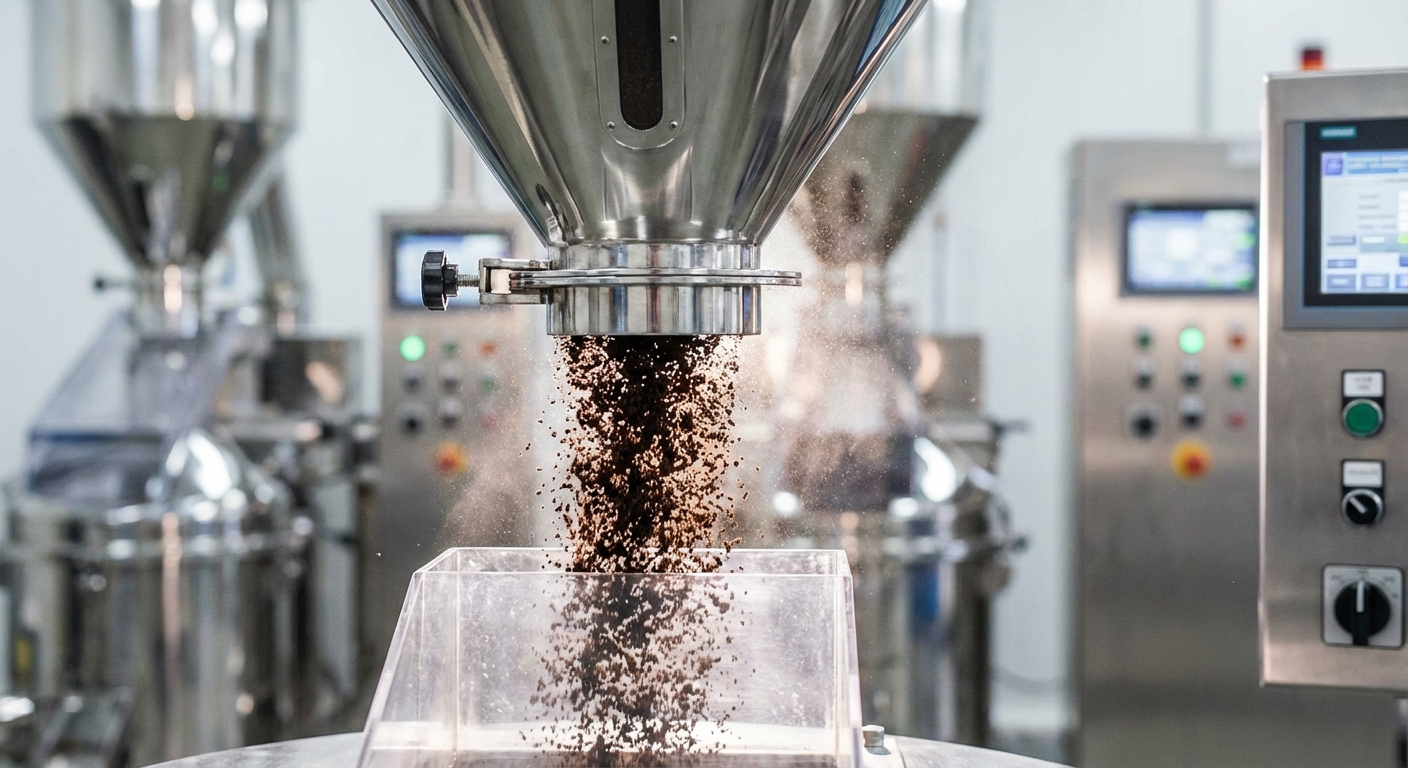
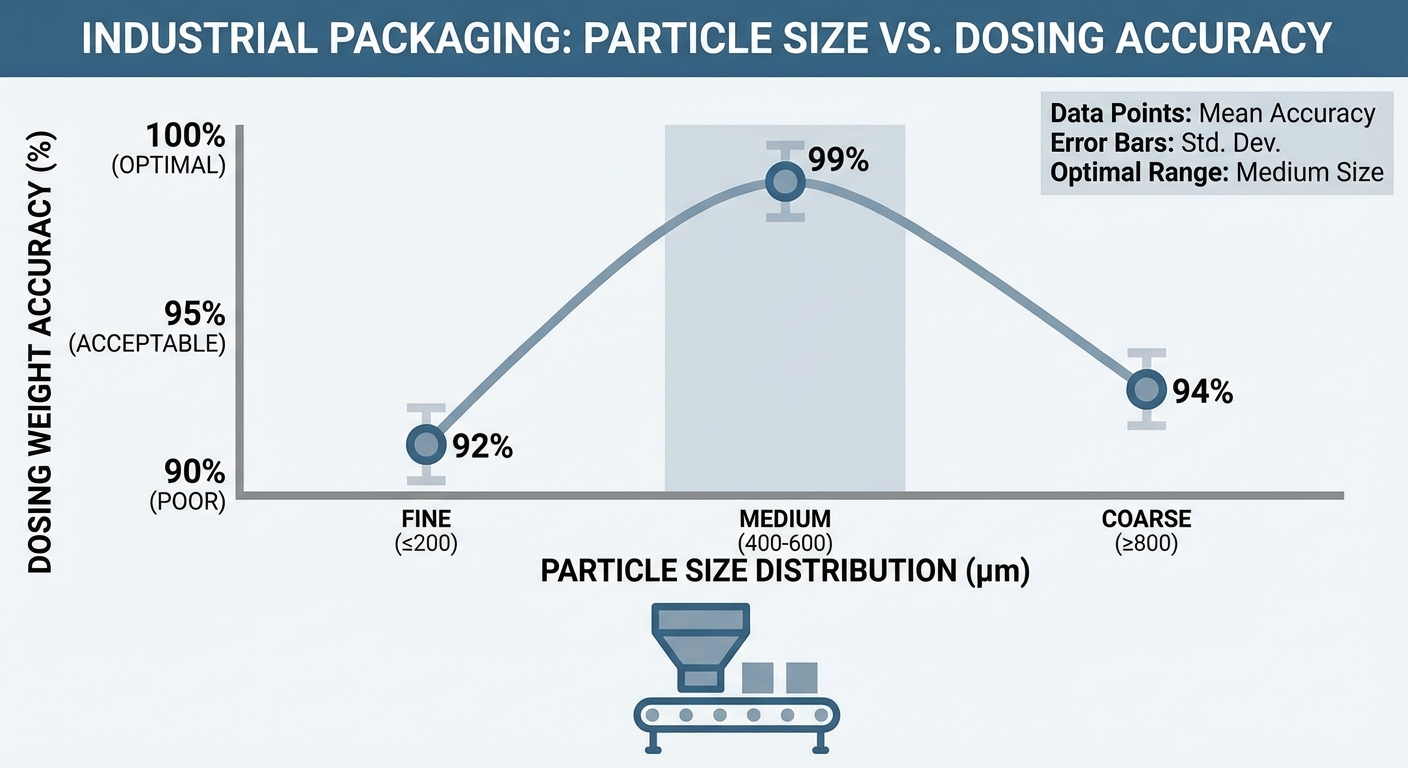
Grind size dictates how efficiently coffee moves through your filler, directly affecting both the output speed and the precision of every dose. Many roasters face the frustrating reality of inconsistent bag weights and constant machine downtime because their equipment isn’t tuned to their specific grind. By optimizing your coffee grind size packaging strategy, you can eliminate these bottlenecks and protect your production margins. Newideapack provides the engineering expertise to help you bridge the gap between a high-quality roast and a high-performance packaging line.
Grind size determines flowability because smaller particles increase the internal friction and cohesion within the coffee mass. In the world of coffee grind size packaging, understanding this “flowability” is essential for preventing product bridging in the hopper. Smaller grains tend to stick together due to physical interlocking and surface oils.
Why do fine particles resist movement?
Fine coffee particles have a much larger surface area-to-volume ratio, which leads to increased static and physical cohesion. Look at it this way:
Smaller grains “stick” together through van der Waals forces.
Fine dust fills air gaps, creating a dense, sluggish mass.
Increased surface oil on fine grinds adds to the “clumping” effect.
Does particle shape impact the flow?
The jagged edges of burr-ground coffee flow differently than the rounded particles found in lower-quality grinds. The best part?
Uniformity reduces the risk of material “bridging” in the hopper.
Consistent shapes allow for predictable “settling” in the bag.
Irregular particles increase the chance of mechanical blockages.
Key Takeaway: Improving flowability through grind consistency allows your Newideapack machine to run at higher speeds without clogging.
Grind Type
Flow Characteristic
Packaging Difficulty
Coarse
High (Free-flowing)
Low
Medium
Moderate
Medium
Fine
Low (Cohesive)
High
Analyze these flow characteristics to determine if your current hopper vibration settings are sufficient for your specific grind.
Why Does Espresso Grind Slow Down Filling?
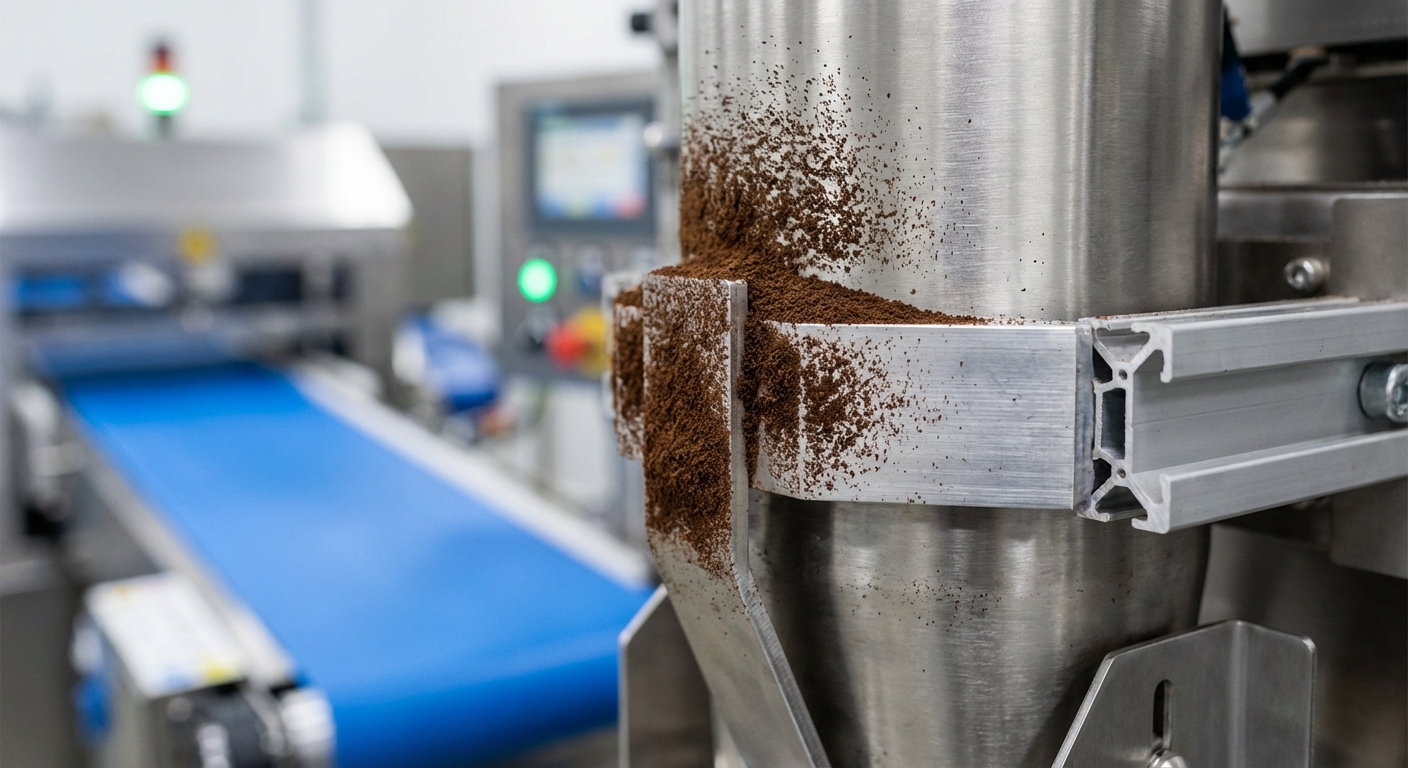
Espresso grinds slow down filling because their high density and oily surfaces require lower auger RPMs to prevent compression errors. In coffee grind size packaging, the finer the powder, the more control the machine must exert over the material. High speeds can cause the coffee to cake inside the tube.
Why must auger speeds be limited?
If you spin an auger too fast with fine espresso grounds, the friction creates heat that can melt coffee oils. Think about it:
High speeds cause fine dust to billow into sensors.
Rapid rotation can over-compress coffee in the discharge tube.
Slower speeds ensure the dose is captured accurately in the flights.
How does servo control help fine grinds?
Using a servo-driven Newideapack system allows you to precisely control the acceleration and deceleration of the auger. It gets better.
Servo motors maintain torque at lower speeds for thick powders.
Precise stopping prevents the “dribble” effect after a cycle.
Programmable ramps reduce the impact of density shifts.
Key Takeaway: Slowing down for fine grinds actually increases your net yield by reducing “reject” bags and cleaning intervals.
Variable
Espresso Impact
Adjustment Needed
Auger RPM
High Friction
Decrease Speed
Dose Timing
Extended
Increase Dwell Time
Dust Level
High
Enable Suction
Properly timing the auger cycle prevents the weight inaccuracies that often plague fine-grind packaging lines.
Can Coarse Grinds Improve Your Packaging Speed?
Coarse grinds can significantly improve packaging speed because they behave like free-flowing granules that drop rapidly into bags. When managing your coffee grind size packaging line, larger particles are generally the easiest to handle at high volumes. These grinds clear the chute quickly without sticking to the walls.
Why is volumetric filling faster for coarse coffee?
Coarse coffee doesn’t “clump,” meaning it can drop into measuring cups or bags almost instantly via gravity. Here is the deal:
Gravity does most of the work for you.
There is minimal dust to settle before sealing.
The machine cycles faster because the product clears the chute.
Are there risks with high-speed coarse filling?
While fast, Newideapack often recommends integrated weighers to ensure “boulder” size variations don’t cause weight drift. But wait, there’s more:
Consistent particle size prevents volume fluctuations in cups.
Large grains require wider seal areas to avoid trapping.
High speed must be balanced against bag integrity.
Key Takeaway: If your market allows for coarser grinds, you can maximize the ROI of your equipment through sheer volume.
Feature
Coarse Grind Benefit
Production Result
Discharge Speed
Near Instant
Higher Bags Per Minute
Dust Management
Minimal
Cleaner Seals/Less Waste
Flow Stability
Very High
Consistent Machine Rhythm
High-speed VFFS machines thrive on the free-flowing nature of coarse grinds, often reaching double the output of fine-grind lines.
Is Auger Precision Dependent on Coffee Fines?
Auger precision is heavily dependent on coffee fines because these tiny particles fill the voids between larger grinds. In coffee grind size packaging, the ratio of fines to boulders is the primary enemy of weight consistency. When fines increase, the coffee becomes denser and heavier.
How do fines cause weight fluctuations?
Fines can sift to the bottom of the hopper during vibration, leading to inconsistent product density. Consider this:
Fines create an unpredictable “pack” in the auger flights.
More fines usually mean more “drip” after the motor stops.
Variations in fines lead to bags that are unexpectedly heavy.
Can you stabilize the fine-to-coarse ratio?
Maintaining a stable grinder output is the first step to achieving the sub-gram accuracy Newideapack machines offer. The reality is:
Sharp burrs produce fewer erratic fines during a shift.
Hopper agitation prevents fines from settling at the bottom.
Consistent grinding ensures the volumetric dose remains stable.
Key Takeaway: Controlling your grinder’s consistency is just as important as the packaging machine settings for weight precision.
Factor
Effect of Fines
Solution
Bulk Density
Increases
Use Density Compensation
Drip Potential
High
Add a Spinner Plate
Accuracy
Decreases
Stabilize Grinder Output
Monitoring the “fines” percentage in your roast batches is essential for maintaining the high precision your brand requires.
Does Bulk Density Variation Ruin Weight Accuracy?
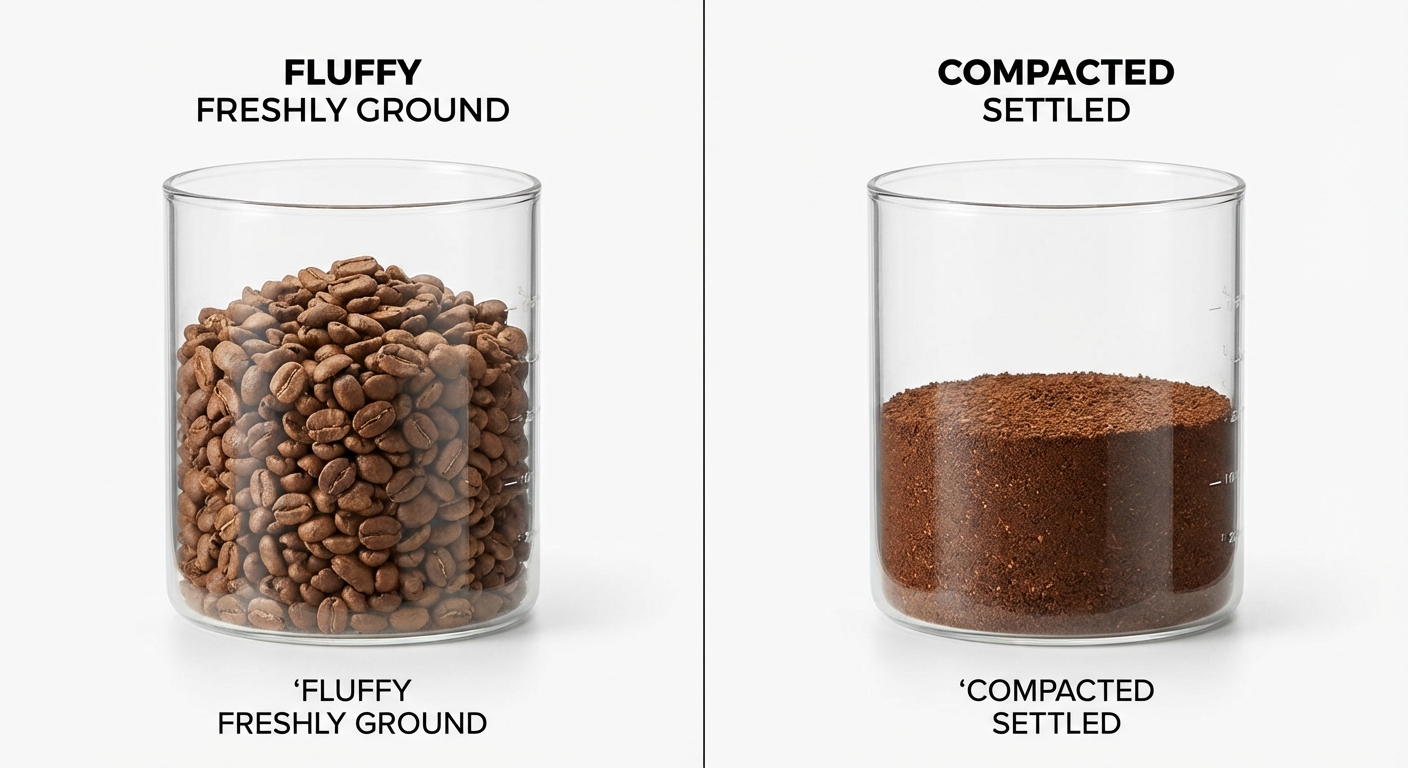
Bulk density variation ruins weight accuracy because most machines dose by volume, and if density shifts, the weight changes. Successful coffee grind size packaging requires a deep understanding of how “fluffy” or “compact” your coffee is. Density shifts as coffee degasses or as grinder temperatures fluctuate.
Why does density change during production?
Freshly ground coffee is naturally “fluffier” and less dense than coffee that has sat in a hopper. You should know:
Vibrations in the hopper “settle” the coffee over time.
Different roast levels (Dark vs. Light) have different base densities.
Degassing releases CO2, which physically changes the grind volume.
How do you compensate for density shifts?
Using a Newideapack system with integrated check-weighing feedback allows the machine to auto-adjust rotations. Think about it:
Real-time feedback corrects weight drift within seconds.
Integrated scales identify “heavy” or “light” bags early.
Automatic adjustments maintain profitability by reducing give-away.
Key Takeaway: Automating density compensation is the only way to maintain accuracy in a 24/7 coffee packaging environment.
Density State
Filling Volume
Impact on Profit
Aerated (Fluffy)
High Volume
Risk of Under-filling
Settled (Compact)
Low Volume
Product Give-away
Consistent
Stable Volume
Maximum Profitability
Using density-aware dosing ensures your bags remain consistent even as the physical state of the coffee changes.
How Do You Tune Newideapack Machines for Fines?
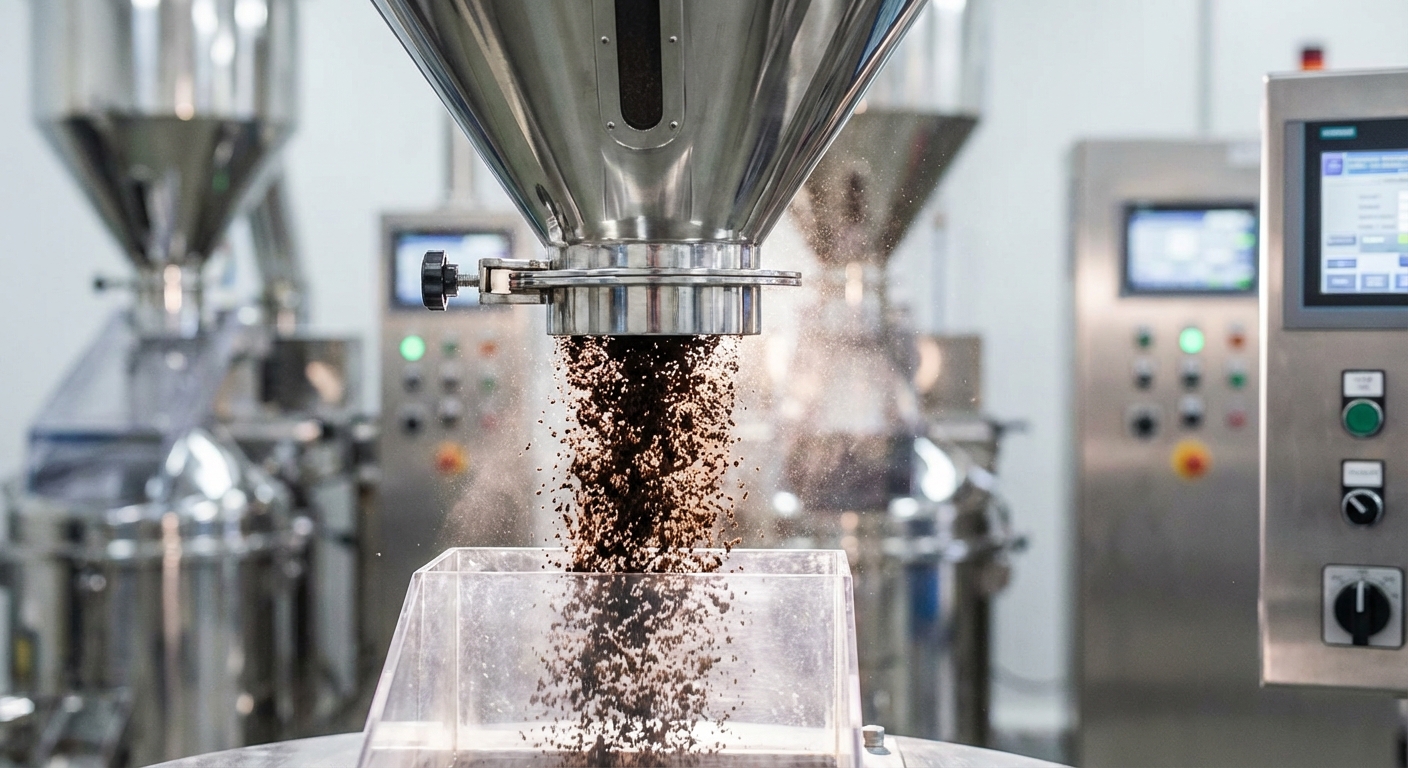
Tuning machines for fines involves adjusting the auger pitch and installing anti-drip components for dusty powders. In coffee grind size packaging, the right hardware configuration is just as critical as the software settings. Fines require a tighter physical “grip” within the machine.
What hardware is best for fine grinds?
For very fine grinds, you need an auger with a narrow pitch to keep the product moving without over-compression. Here is the secret:
Spinner plates prevent the “after-flow” of dust once the cycle ends.
Tighter flighting provides more surface area to grip the powder.
Slow-speed agitators prevent the coffee from bridging in the hopper.
Why is sealing temperature different for fines?
When packaging fine grinds, dust can contaminate the seal area, requiring higher temperatures to bond. Let’s be honest:
Dust reduces the thermal conductivity of the heating bars.
Higher heat is needed to “cut through” the fine particles.
Precision timing ensures the seal is made before dust settles.
Key Takeaway: Proper hardware selection for fine grinds reduces “leaker” bags and ensures a professional, dust-free package.
Tuning Element
Fine Grind Setting
Purpose
Auger Pitch
Narrow/Tight
Precise Volumetric Control
Agitator Speed
Consistent/Low
Prevent Bridging & Heat
Sealing Temp
Slightly Higher
Cut Through Potential Dust
Customizing these mechanical touchpoints ensures your Newideapack machine operates at peak efficiency for your specific product.
Will Dust Control Impact Your Hourly Throughput?
Dust control significantly impacts hourly throughput because excessive coffee dust requires frequent cleaning stops and slower speeds. In coffee grind size packaging, managing the “cloud” is the difference between a clean shop and a fire hazard. Dust that gets into the seal zone leads to wasted bags.
How does dust slow down the sealing?
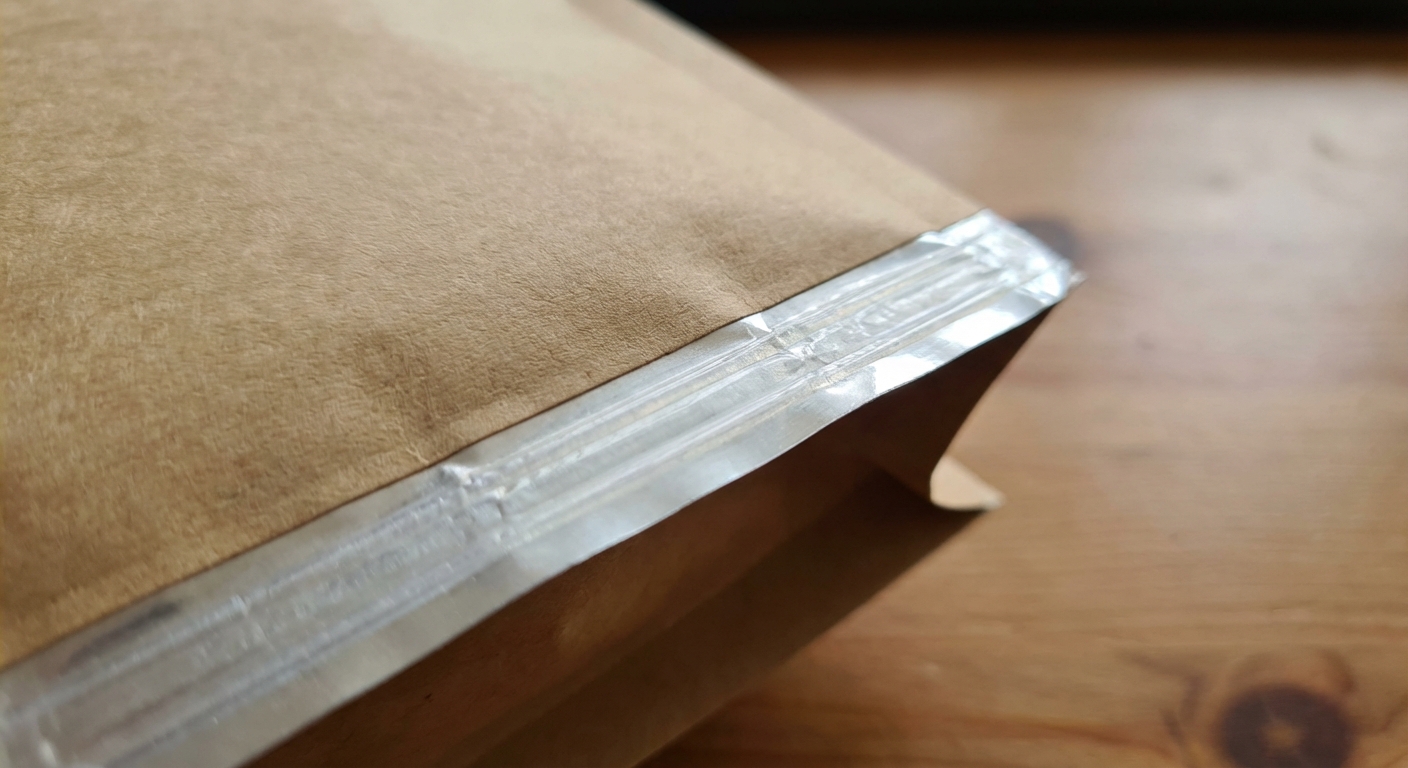
If coffee dust gets into the “seal zone” of your bag, the film won’t bond correctly, leading to leaks. Keep in mind:
Dust acts as a barrier between the two layers of plastic.
High-speed filling creates “puffs” of air that carry dust.
Frequent cleaning intervals reduce your total “up-time” hours.
Can vacuum systems improve your speed?
Integrating a high-quality dust collector to your Newideapack line can actually increase your production capacity. The best part?
Vacuum hoods capture dust before it reaches the seals.
Cleaner equipment runs longer without manual intervention.
Better seal integrity allows for faster cycle times.
Key Takeaway: Effective dust management isn’t just about cleanliness; it’s a direct driver of your hourly production capacity.
Dust Level
Sealing Speed
Cleaning Frequency
Minimal (Coarse)
100% Speed
Once Per Shift
Moderate (Drip)
85% Speed
Twice Per Shift
Severe (Espresso)
70% Speed
Hourly Check
Managing dust effectively allows your line to run at its mechanical limits without compromising bag quality.
Why Is Static Electricity a Packaging Nightmare?
Static electricity is a nightmare because it causes fine grinds to cling to the filling tube and bag walls. Within the realm of coffee grind size packaging, static is the invisible force that ruins weight accuracy. Fine grinds generate massive charges as they rub against metal parts.
How does grind size influence static?
Fine grinds have more surface area to generate friction, which increases the likelihood of a high static charge. You’ll notice:
Coffee “climbs” up the sides of the hopper.
Particles “jump” onto the bag’s seal area unexpectedly.
The product “sticks” inside the auger, causing inconsistent drops.
How do you neutralize static charges?
By installing ionizing bars or using anti-static coatings, you can keep the coffee moving exactly where it belongs. It gets better.
Ionizing air nozzles blow away the charge in the discharge chute.
Grounding the machine prevents charge buildup in the hopper.
Anti-static liners reduce friction-based heat and charge.
Key Takeaway: Don’t ignore static; addressing it with Newideapack’s anti-static options will immediately stabilize your consistency.
Static Level
Effect on Product
Recommended Solution
Low
Minimal Clinging
Standard Grounding
Medium
Seal Contamination
Ionizing Air Nozzles
High
Weight Inconsistency
Anti-Static Chute Liners
Neutralizing static ensures that every gram you dose ends up inside the bag instead of stuck to the machine.
Does Grind Temperature Change Filling Results?
Grind temperature changes results because warm coffee is more oily and cohesive, leading to “caking” in the dosing system. In coffee grind size packaging, the thermal state of the bean is often overlooked but highly critical for flow. Heat causes natural oils to migrate to the surface.
Why does heat affect the flow?
As coffee heats up during grinding, the grinds become “sticky” and prone to clumping within the machine’s auger. Watch for these signs:
Coffee build-up on the auger screw increases over the shift.
Flowability decreases as the grinder warms up.
Bulk density shifts as oils expand the particle volume.
How do you maintain a cool grind?
Allowing coffee to cool before packaging or using jacketed hoppers ensures a consistent physical state for the product. The truth is:
Cooler coffee flows more predictably through the auger.
Stable temperatures prevent the “creeping” weight errors.
Maintenance issues from oil build-up are significantly reduced.
Key Takeaway: Managing the temperature of your grinds protects your machine’s precision and prevents oil-induced maintenance.
Temperature
Oil State
Packaging Impact
Cool (<25°C)
Stable
Best Flow & Accuracy
Warm (30-40°C)
Migrating
Increased Clumping
Hot (>45°C)
Active/Sticky
Significant Accuracy Loss
Maintaining thermal stability ensures that your dosing technology remains accurate from the first bag to the last.
How to Pick the Best Coffee Grind Size Packaging?
Picking the best system requires matching your specific particle profile to the dosing technology that offers the highest precision. Choosing the right coffee grind size packaging setup is the final step in mastering your high-speed production line. The machine must work with the coffee’s physics.
Which dosing system should you choose?
Your choice depends entirely on whether your grind is free-flowing (coarse) or cohesive (fine) in nature. Here is the breakdown:
Auger Fillers: The “Gold Standard” for fine powders and espresso.
Volumetric Cups: The fastest choice for consistent, coarse grinds.
Linear Weighers: Ideal for whole beans or very large particles.
Why test your grind with Newideapack?
At Newideapack, we help you test your specific grind to ensure the configuration we deliver is optimized for speed. Think about it:
Testing identifies the ideal auger pitch for your roast.
Custom agitation settings prevent bridging before it happens.
Dust and static requirements are determined before installation.
Key Takeaway: The “best” packaging is the one that accounts for your grind’s unique flow, density, and dust profile.
Product Type
Recommended Filler
Accuracy Level
Espresso/Turkish
Newideapack Auger
±0.5%
Drip/Filter
Auger or Volumetric
±1.0%
Cold Brew/Coarse
Volumetric or Weigher
±1.5%
Selecting the right dosing method is the most important decision you will make for your production line’s long-term success.
*
Frequently Asked Questions
Can I use one machine for all grind sizes? Yes, but you will likely need to swap out the auger or dosing components. A Newideapack machine is versatile, but a “one-size-fits-all” hardware setup usually sacrifices accuracy at the extreme ends of the grind spectrum.
What’s the best way to handle oily dark roasts? Use a servo-driven auger with a specialized “non-stick” coating. Dark roasts are prone to clumping, so consistent agitation in the hopper is required to prevent the product from bridging.
How do I know if my auger is the wrong size? If you see significant “dribbling” after the cycle or if the motor is straining to reach speed, your auger is likely mismatched. The diameter and pitch must be calibrated to the specific flow rate of your coffee.
Can I reduce dust during high-speed filling? Yes, by integrating vacuum-assisted dust hoods and ensuring your discharge chute is as close to the bag bottom as possible. This minimizes the distance the “dust cloud” has to travel.
What’s the best setting for espresso packaging? Low RPM with high-precision servo control. Espresso requires a slow, deliberate “pack” into the auger flights to ensure that density variations don’t ruin your weight targets.
*
Summary and Brand Vision
Grind size is the silent director of your packaging efficiency, influencing everything from static buildup to the final seal integrity of your bags. By aligning your coffee grind size packaging strategy with Newideapack’s advanced dosing technology, you eliminate the guesswork that leads to wasted product and sluggish production. Whether you are dealing with the stubborn cohesion of espresso or the rapid flow of coarse grinds, the right machine configuration ensures that consistency isn’t just a goal—it’s your daily reality.
At Newideapack, we don’t just build machines; we engineer the perfect flow for your brand’s success. Your coffee deserves a package that is as precise as your roast.
Sales Pitch Component
If you are ready to stop fighting your materials and start maximizing your throughput
contact us today to discuss a custom solution for your facility.