How to Master Packaging Machinery for Maximum Production Efficiency
2025年12月30日 by newideapack
Manual packing methods often create massive bottlenecks that limit your daily production capacity. These labor-intensive processes cause inconsistent seal quality along with high product giveaway rates. Transitioning to automated Packaging Machines from NewIdeaPack provides the technical precision required for eliminating waste. These mechanical systems integrate weighing, forming, and sealing into a single high-speed operation. My analysis of industrial workflows indicates that the right equipment turns a complex logistics struggle into a streamlined profit center. Precision engineering ensures that every unit meets strict quality standards while reducing your total overhead costs.
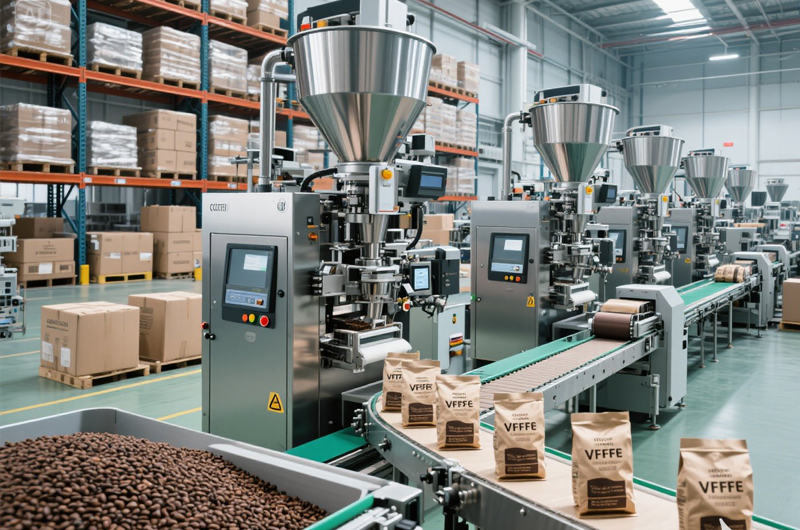
Packaging Machines include vertical form-fill-seal units, rotary pouch systems, and liquid filling stations designed for specific material handling. You typically find these Packaging Machines in facilities that require high-speed wrapping or precise dosing for dry granules. These mechanical systems utilize advanced sensors along with robust actuators for maintaining a steady production flow. But here’s the kicker: choosing the wrong architecture leads to massive material waste during every shift change. Most engineers suggest checking your product viscosity before purchasing any stainless steel equipment for your line. An automated solution improves your daily throughput while keeping your variable overhead expenses significantly lower.
Primary Packaging Equipment Functions
● Filling and dosing of raw materials. ● Sealing and closing of primary containers. ● Labeling and coding for product identification.
Reliable equipment integrates these functions into one continuous movement. This prevents the gaps in timing that often plague manual assembly lines in smaller factories. Modern designs favor modular components because they allow for faster repairs without stopping the entire facility for long periods. What’s the real story? Total consistency becomes your strongest asset when scaling your brand across international markets. Using standardized parts ensures that your maintenance team can swap wear items quickly.
Machine Type
Primary Action
Material Suitability
VFFS
Vertical Bagging
Powders and Granules
HFFS
Horizontal Wrapping
Solid Bars and Trays
Rotary
Pouch Filling
Pre-made Bags
Technical alignment between your product and the machine geometry prevents downtime during high-volume runs.
Key Takeaway: Selection depends on your specific container type and the physical properties of your product.
2. How do automatic Packaging Machines improve efficiency?
Automatic systems improve efficiency by performing repetitive tasks at speeds human operators cannot realistically maintain for eight hours. Integrating modern Packaging Machines into your facility removes the variability caused by worker fatigue. These systems use programmable logic controllers for synchronizing mechanical movements with high-precision measurements. Ready for the good part? Automation allows your staff to focus on quality oversight rather than performing mundane physical labor. You gain a competitive edge by fulfilling larger B2B contracts without hiring additional warehouse staff. Precision timing ensures that every seal remains airtight while maximizing your total machine uptime.
Core Efficiency Drivers
● High-speed cycle times per minute. ● Reduced product giveaway via precision scales. ● Automated error detection and rejection.
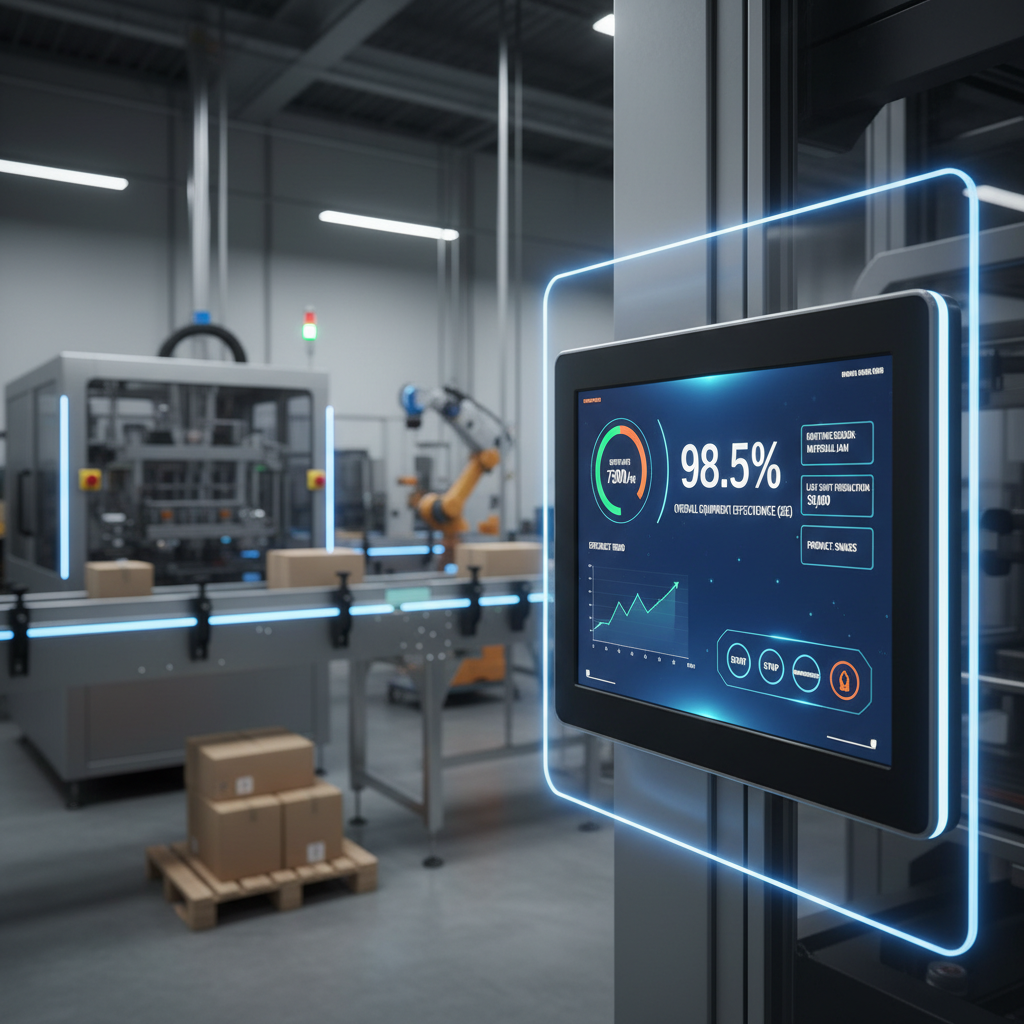
Every cycle completes in less than one second on premium equipment. This rapid pace guarantees that your inventory levels stay ahead of client demand. This is where it gets interesting: smart sensors detect missing labels or underweight bags before they ever reach the shipping pallet. Reducing these defects saves your brand from expensive product recalls or customer dissatisfaction. Most facilities report a massive jump in their overall equipment effectiveness after moving away from manual sealing.
Efficiency Metric
Manual Baseline
Automated Output
Bags Per Minute
8-12 bpm
60-120 bpm
Accuracy
±2.0 grams
±0.1 to 0.5 grams
Staff Required
4-6 Workers
1 Operator
Automated lines provide a fixed cost structure that simplifies your long-term financial forecasting and labor management.
Key Takeaway: Automation replaces human inconsistency with mechanical precision to drive higher revenue per square foot.
3. Which Packaging Machines are best for liquid products?
Liquid products require specialized filling and sealing machines equipped with anti-drip nozzles along with sanitary pumps. You must select Packaging Machines that handle your specific viscosity whether it resembles water or thick industrial paste. Modern systems for health solutions utilize high-grade stainless steel components that meet strict hygiene standards for safety. Ready for the good part? Piston fillers offer exceptional accuracy for gels while gravity fillers work perfectly for free-flowing beverages. These machines often include Clean-in-Place systems to minimize cross-contamination between different batches. Maintaining a sterile environment remains the top priority for pharmaceutical and food grade operations.
Filling Technology Categories
● Piston fillers for high viscosity. ● Gravity fillers for thin liquids. ● Vacuum fillers for foamy products.
Choosing the right pump technology prevents aeration and foaming during the filling process. This ensures that every bottle contains the exact volume specified on the label without any spills. Here is the deal: no-drip nozzles keep the exterior of your containers clean during the entire production run. This reduces the need for secondary cleaning stations and improves the final presentation of your goods. Reliable liquid equipment also features overflow sensors for preventing messy tank situations.
Liquid Type
Ideal Pump
Throughput Rate
Juices / Water
Gravity
High (150+ bpm)
Creams / Gels
Piston
Medium (40-60 bpm)
Chemicals
Diaphragm
Variable
Viscosity-matched equipment reduces the mechanical stress on your seals and extends the overall life of the machine.
Key Takeaway: Fluid dynamics and hygiene requirements dictate the specific pump and nozzle architecture your facility needs.
4. Why should B2B buyers invest in Packaging Machines?
Investing in machinery allows you to secure your market position by lowering your total per-unit production cost. High-quality Packaging Machines reduce the physical footprint of your line while increasing your total daily capacity. Believe it or not, labor availability remains unpredictable but a machine provides a fixed asset for your business. You gain a massive competitive advantage by offering faster lead times than your manual competitors can manage. Precision dosing means you give away less product through overfilling during every single shift. This tiny saving per unit adds up to thousands of dollars in annual material recovery.
Strategic Investment Benefits
● Scalability for large wholesale contracts. ● Enhanced brand image via consistent packaging. ● Lower long-term operational expenditures.
Machinery allows you to take on larger contracts without the need for hiring temporary workers. You can simply increase the machine’s running hours for meeting any seasonal spikes in demand. What’s the catch? The initial capital expenditure might seem high but the payback period usually lasts less than eighteen months. My research shows that a comprehensive equipment plan helps you identify where automation provides the fastest financial return. Reliable machines act as a hedge against rising material costs and labor shortages.
Investment Factor
Manual Operation
Machinery Asset
Labor Dependency
Extremely High
Very Low
Quality Control
Subjective
Objective / Sensor-based
Scalability
Limited by Staff
Limited by Speed
Current technology investments provide the stability required for growing your business in a volatile global market.
Key Takeaway: Mechanical assets convert variable labor costs into predictable fixed expenses with much higher output potential.
5. What are the best ways to maintain your industrial packaging machines?
Industrial machines require a strict schedule of daily cleaning along with monthly mechanical inspections for preventing downtime. You should focus your efforts on lubricating moving bearings and checking the wear on your heating elements. But here’s the kicker: most catastrophic failures start as tiny vibrations that were ignored during your routine checks. Using Packaging Machines effectively requires your staff to follow the manufacturer’s maintenance manual without any deviations. Regular calibration of your weighing sensors ensures that your accuracy remains within the tightest possible tolerances. A clean machine runs cooler and lasts much longer than one covered in product dust.
Essential Maintenance Tasks
● Daily wipe-downs of sealing jaws. ● Weekly lubrication of drive chains. ● Monthly inspection of PLC batteries.
Preventive maintenance involves tracking the total cycles of every critical component. Replacing a belt before it snaps is significantly cheaper than stopping a 24-hour production shift unexpectedly. What’s the real story? Your staff must know how to perform basic troubleshooting for keeping the line moving. Quick adjustments during a shift can fix minor alignment issues without calling in a senior engineer. Training your team is just as important as the physical maintenance of the hardware itself.
Maintenance Level
Frequency
Key Focus Area
Level 1
Daily
Cleanliness / Debris
Level 2
Weekly
Lubrication / Tension
Level 3
Quarterly
Sensors / Calibration
A well-documented service history increases the resale value of your equipment and ensures consistent performance over time.
Key Takeaway: Consistent preventive care is the only reliable way to ensure your equipment reaches its full lifespan.
6. What are the latest trends in Packaging Machines?
Latest trends focus on AI-driven diagnostics along with the integration of sustainable recyclable films for modern brands. You are seeing a shift toward smart Packaging Machines that alert operators to potential issues via mobile applications. It gets better: new machines are being engineered for handling thinner eco-friendly materials without tearing or jamming the line. Industry 4.0 integration allows you to track your production data from any location using a cloud-based dashboard. This visibility helps you identify bottlenecks in your workflow and optimize your total energy consumption. Sustainability has become a core requirement for brands aiming to meet modern environmental regulations.
Packaging Machinery for Maximum Production Efficiency
Modern Technological Trends
● IoT sensors for remote monitoring. ● Cobot integration for safe packing. ● Multi-material sealing technology.
Smart machines feature sensors that collect data on every single mechanical cycle. This information helps you optimize the temperature and pressure settings for your specific film type. Think about it: if your machine predicts a motor failure three days in advance you can schedule a repair. This proactive approach saves your company from the chaos of emergency breakdowns during peak shipping weeks. Modular designs also allow you to add or remove stations as your product line expands.
Tech Trend
Operational Benefit
Complexity
AI Sensors
Predictive Maintenance
High
Paper-film Jaws
Sustainable Packaging
Medium
Remote Support
Faster Troubleshooting
Low
Staying current with technology ensures your facility remains compatible with the next generation of eco-friendly materials.
Key Takeaway: Modernization involves adopting digital monitoring and supporting green materials to satisfy evolving consumer demands.
7. How to calculate ROI for new Packaging Machines?
You calculate ROI by comparing the total cost of ownership against the labor savings along with increased capacity. You must look beyond the initial purchase price for seeing the reduction in product giveaway and rejected units. Here is the deal: if a machine saves the cost of four employees it usually pays for itself very quickly. My research indicates that Packaging Machines provide a much faster payback when your production volume exceeds a certain threshold. You should also factor in the “opportunity gain” from taking on larger orders that were previously impossible. Reductions in material waste contribute significantly to your bottom line over several years of use.
ROI Calculation Elements
● Annual labor cost reduction. ● Value of saved raw materials. ● Extra revenue from higher speed.
Start by calculating the total wages and benefits of the staff the machine will replace. Subtract the machine’s annual electricity and maintenance costs for finding your net annual savings. But here’s the kicker: the increase in quality often leads to fewer customer complaints and less rework. These hidden savings are difficult to quantify but they have a massive impact on your brand reputation. A comprehensive financial audit helps you justify the investment to your company’s board of directors.
ROI Component
Manual Cost (Year)
Machine Cost (Year)
Direct Labor
$120,000
$25,000
Product Waste
$18,000
$2,000
Net Savings
$0
$111,000
Most industrial grade machinery achieves a complete return on investment within twelve to twenty-four months of operation.
Key Takeaway: ROI is realized through a combination of labor reduction and the elimination of expensive product waste.
8. Where can you find high-speed Packaging Machines?
You can find high-speed machines by contacting specialized manufacturers who offer custom engineering along with factory testing. It is vital to work with a partner providing Packaging Machines that have been rigorously tested with your actual product. Ready for the good part? Choosing a supplier with remote diagnostic capabilities is critical for minimizing your future technical downtime. Look for companies that provide detailed operation manuals along with comprehensive spare parts kits for every purchase. Visiting trade shows allows you to see the build quality of different frames and control systems side-by-side. Direct communication with engineers ensures that the equipment fits your specific facility layout perfectly.
Supplier Evaluation Criteria
● Local technical support availability. ● Custom engineering capabilities. ● Proven track record in your industry.
Buying directly from a factory often gives you access to the team who actually designed the system. This allows for deep customization for meeting your specific bag dimensions or container shapes. What’s the real story? A low price often means poor after-sales support which can cost you thousands in lost production time. Prioritize reliability and engineering expertise over the initial sticker price for ensuring long-term success. Most top-tier manufacturers offer video consultations for reviewing your current production floor plan.
Sourcing Option
Pros
Cons
Direct Manufacturer
Best Support / Price
Shipping Distance
Local Distributor
Fast On-site Service
Higher Markup
Used Equipment
Lowest Entry Cost
No Warranty
Building a long-term relationship with a reputable manufacturer ensures that you have access to upgrades as your volume grows.
Key Takeaway: Prioritize suppliers who offer direct engineering support and proven performance with your specific packaging materials.
9. Which Packaging Machines suit small-scale production?
Small-scale production is best served by semi-automatic or benchtop machines that offer flexibility without requiring a massive floor footprint. You can start with standalone Packaging Machines before moving to a fully integrated and automated production line. You might be wondering: can a small machine still provide industrial grade results for your growing boutique brand? The answer is yes as long as the sealing and dosing components are built to professional standards. These machines allow you to test new product formats without committing to a massive capital expenditure. Compact units are perfect for facilities with limited square footage or shared workshop spaces.
Compact Machine Advantages
● Low initial capital investment. ● Simple setup and easy operation. ● Flexible for multiple product types.
Semi-automatic fillers require an operator to place the container but they handle the precise dosing automatically. This provides a perfect middle ground for startups that need accuracy without the cost of full conveyors. This is where it gets interesting: modular benchtop units are easy to move if you need to reconfigure your workspace. They provide a professional finish that helps your products compete with larger national brands on retail shelves. Scaling your business becomes much easier when you have a reliable mechanical foundation.
Production Level
Typical Output
Budget Range
Startup
5-10 bpm
Low
Growing SME
20-30 bpm
Moderate
Small Industrial
40-50 bpm
High
Entry-level machines provide the necessary accuracy for meeting regulatory standards without breaking your company’s bank account.
Packaging Machinery for Maximum Production Efficiency
Key Takeaway: Small-scale machines allow for professional quality results without the high initial capital investment of full lines.
10. Can smart Packaging Machines reduce operational costs?
Smart machines reduce operational costs by optimizing energy consumption along with identifying film wasting errors in real time. These systems use vacuum sensors and tension controls to ensure no material is wasted during Packaging Machines startups. What’s the catch? The initial cost for smart features is slightly higher but the reduction in utility bills offsets this cost. High-efficiency motors and variable frequency drives ensure that your equipment only uses the power it actually needs. Real-time monitoring prevents product spills by stopping the line instantly if no container is detected at the station. This proactive error prevention saves your staff hours of cleaning time every single week.
Cost Reduction Features
● Energy efficient VFD motor drives. ● No-bag-no-fill sensor technology. ● Remote diagnostic support features.
Intelligent systems track the performance of every shift for helping you identify your most efficient operators. This data allows you to replicate best practices across your entire facility for lowering your total cost per unit. Ready for the good part? Remote troubleshooting means you can fix software issues without waiting for an on-site technician to arrive. This significantly reduces your average repair costs and keeps your production line running during critical orders. Smart technology turns your equipment into a self-optimizing asset that actively hunts for savings.
Smart Feature
Savings Source
Impact Level
Energy Monitor
Utility Bills
Moderate
Auto-Calibration
Material Waste
High
Error Alerts
Labor Downtime
Very High
Investing in smart technology provides the data-driven insights required for maximizing your facility’s total profitability and efficiency.
Key Takeaway: Intelligent features turn your machinery into a self-optimizing asset that identifies and eliminates operational waste.
*
Choosing the right equipment represents a strategic decision that dictates your production ceiling for the next decade. By focusing on the intersection of speed and maintenance you can transform your packing line into a major profit center. Please contact us today to discuss your specific technical requirements and receive a customized machinery blueprint. We are dedicated to providing the stability and precision your global brand requires for long-term success.
Frequently Asked Questions
Q1: Can I use the same machine for different product sizes? Yes. Most industrial systems utilize adjustable grippers or specific change parts for handling multiple container dimensions within a set range.
Q2: What’s the best way to determine my required speed? Calculate your target daily output and divide it by your total running hours while adding a twenty percent buffer for growth.
Q3: How do I know if I need a VFFS or an HFFS machine? Vertical systems work best for loose granules or powders while horizontal machines are ideal for solid items like cookies or trays.
Q4: Can I integrate a metal detector into an existing line? Absolutely. Most modern conveyors feature modular sections where you can easily install checkweighers or metal detectors for enhanced quality control.
Q5: How do I know if my film is compatible with a machine? You should send a sample of your film to the manufacturer for testing on the sealing jaws before finalizing your purchase.