The Ultimate Guide to Coffee Automation Timing: 5 Signs It’s Time to Upgrade Your Roastery
2026年2月14日 by newideapack
You should upgrade your roastery to automation when your labor costs consistently exceed 15% of your total operational budget or when manual packaging throughput creates a backlog that delays shipments by more than 24 hours. Many owners struggle with the Coffee automation timing because they fear the upfront capital, yet they ignore the “hidden tax” of manual labor: fatigue-driven errors, bean waste from overfilling, and high staff turnover. As your production scales, these inefficiencies compound, eating away at the margins you need to reinvest in specialty beans or marketing. By identifying the specific triggers for an upgrade, you can transform your facility from a labor-intensive workshop into a high-efficiency production powerhouse that maintains the artisan quality your customers love. NewIdeaPack provides the technology necessary to bridge this gap, ensuring that your transition to automation is as smooth as your best light-roast espresso.
Why Is Coffee Automation Timing Vital for Your Growing Roastery?
Coffee automation timing is vital because it determines whether your business can scale profitably or if it will be crushed under the weight of its own success. If you wait too long to implement systems, you risk employee burnout and inconsistent product quality that can tarnish your brand’s reputation. Establishing the right Coffee automation timing allows you to stay ahead of the curve and meet wholesale demands with ease.
Are manual processes stifling your creative growth?
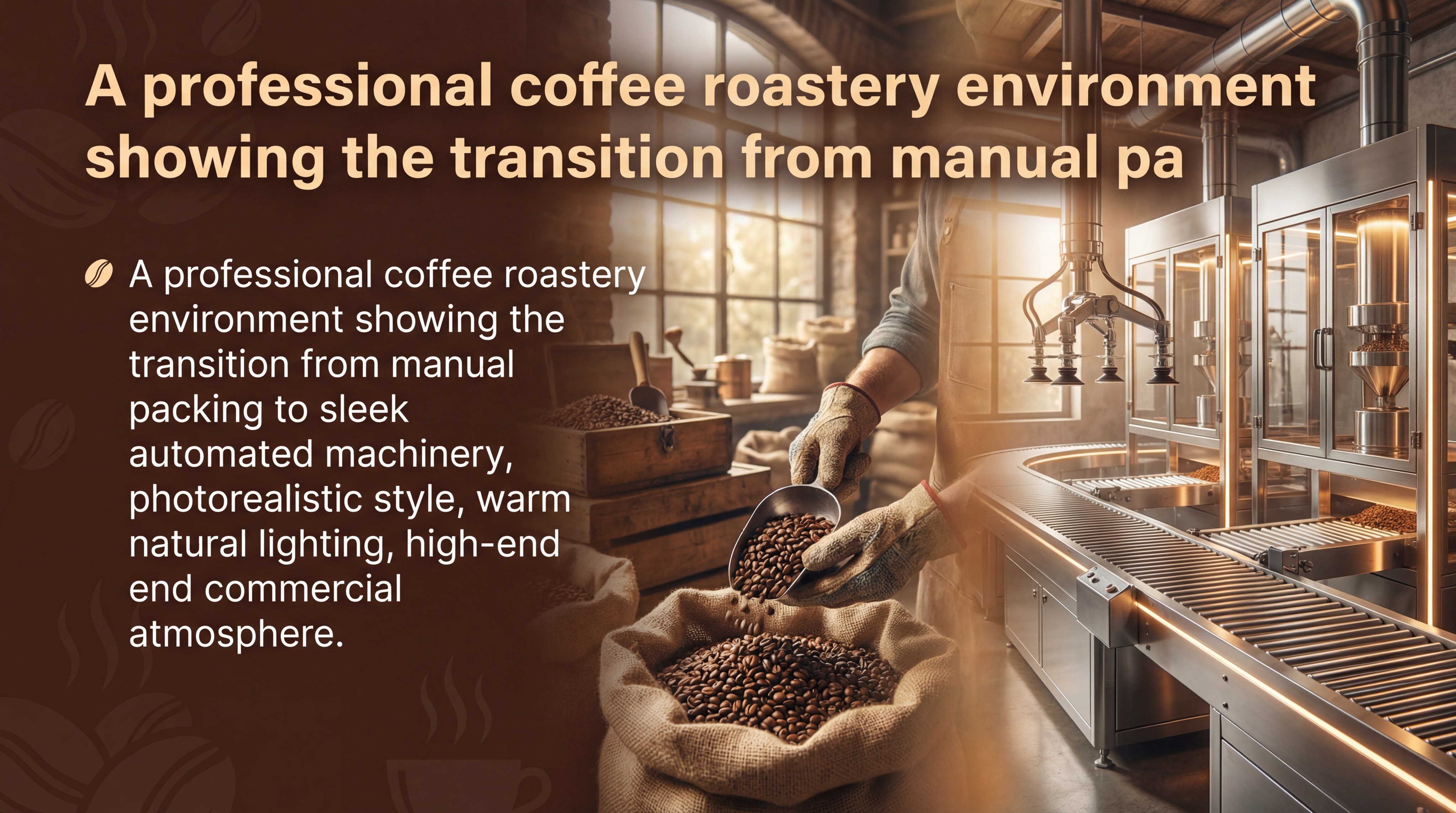
When your team spends the entire day hand-scooping and weighing, they have zero time for sensory analysis or roast profile development.
Manual labor is a fixed time cost that never improves.
Creative tasks drive value, while repetitive bagging consumes it.
Automation frees your best talent for high-impact work.
Think about it.
Your head roaster shouldn’t be a human scale; they should be the architect of your flavor profiles.
Growth Phase
Labor Dependency
Scalability Potential
Micro-Roastery
80%
Low
Scaling Boutique
50%
Moderate
Industrial Leader
<15%
High
Analyzing the shift in labor dependency shows that automation is the primary lever for increasing your facility’s total output capacity.
Key Takeaway: Correct timing ensures your staff focuses on coffee quality rather than mechanical repetition.
How Do Rising Labor Costs Influence Coffee Automation Timing?
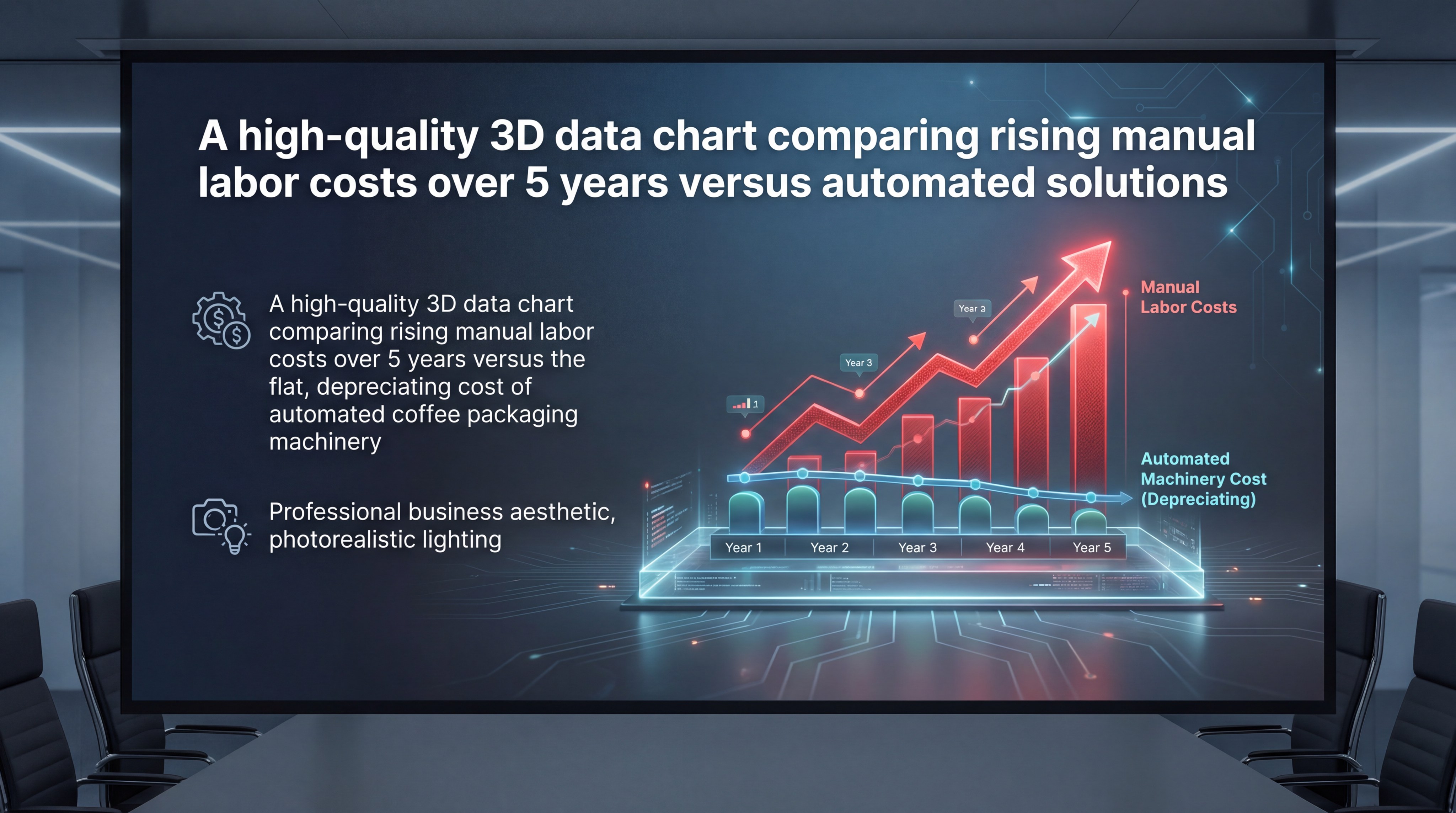
Rising labor costs directly accelerate your Coffee automation timing by shortening the period it takes for a machine to pay for itself. As minimum wages increase and the competitive market for skilled roasters tightens, the cost of manual packaging becomes a liability that limits your ability to compete on price. Monitoring your payroll versus production output is the best way to track your Coffee automation timing needs.
Is turnover costing you more than machinery?
The constant cycle of hiring and training new packaging staff is a massive drain on your resources and institutional knowledge.
Training costs can exceed $3,000 per new hire.
High turnover leads to frequent errors in bag sealing and labeling.
Machines require minimal training and never call in sick.
Look.
Every time a trained packer leaves, they take a piece of your efficiency with them, which automation permanently fixes.
Expense Category
Manual Labor (Yearly)
Automation (Financed)
Wages & Benefits
$45,000+
$12,000
Training/Recruitment
$6,000
$500
Error/Waste Loss
$2,500
$200
This comparison demonstrates that financing a machine is often significantly cheaper than the true cost of a full-time manual laborer.
Key Takeaway: Increasing labor expenses make automation a defensive necessity to protect your bottom line.
Does Output Volume Dictate Your Coffee Automation Timing?
Output volume is the most objective metric for determining your Coffee automation timing because every machine has a clear “sweet spot” for maximum ROI. Once your daily production consistently hits 200–500 bags, the manual effort required starts to exceed the capacity of a small team. Integrating a Coffee automation timing strategy helps you decide when to switch from semi-auto to fully integrated lines.
When does a bottleneck become a business threat?
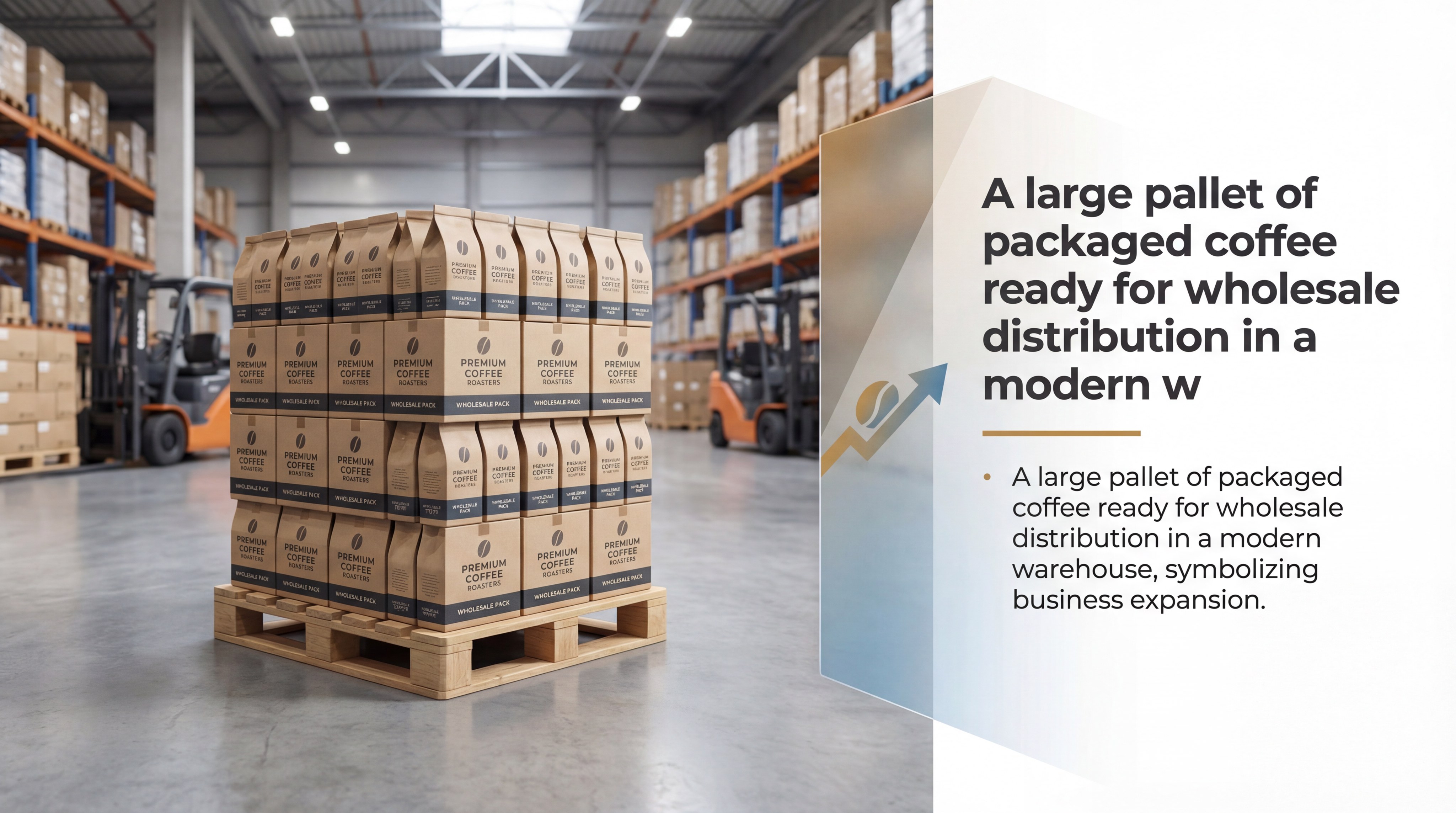
A packaging bottleneck prevents you from taking on larger wholesale accounts or expanding into grocery retail.
Wholesale buyers expect rapid fulfillment cycles.
Manual lines cannot scale “up” instantly for holiday rushes.
Delayed orders result in lost accounts and negative reviews.
Simply put.
If your roasting capacity is 500kg but your packing capacity is only 200kg, you are leaving money on the table every single day.
Production Goal
Manual Limit
Machine Capacity
500 Bags/Day
Requires 3 People
1 Machine / 1 Operator
2,000 Bags/Day
Impossible/Unstable
1 Automated Line
Error Margin
+/- 5 grams
+/- 0.2 grams
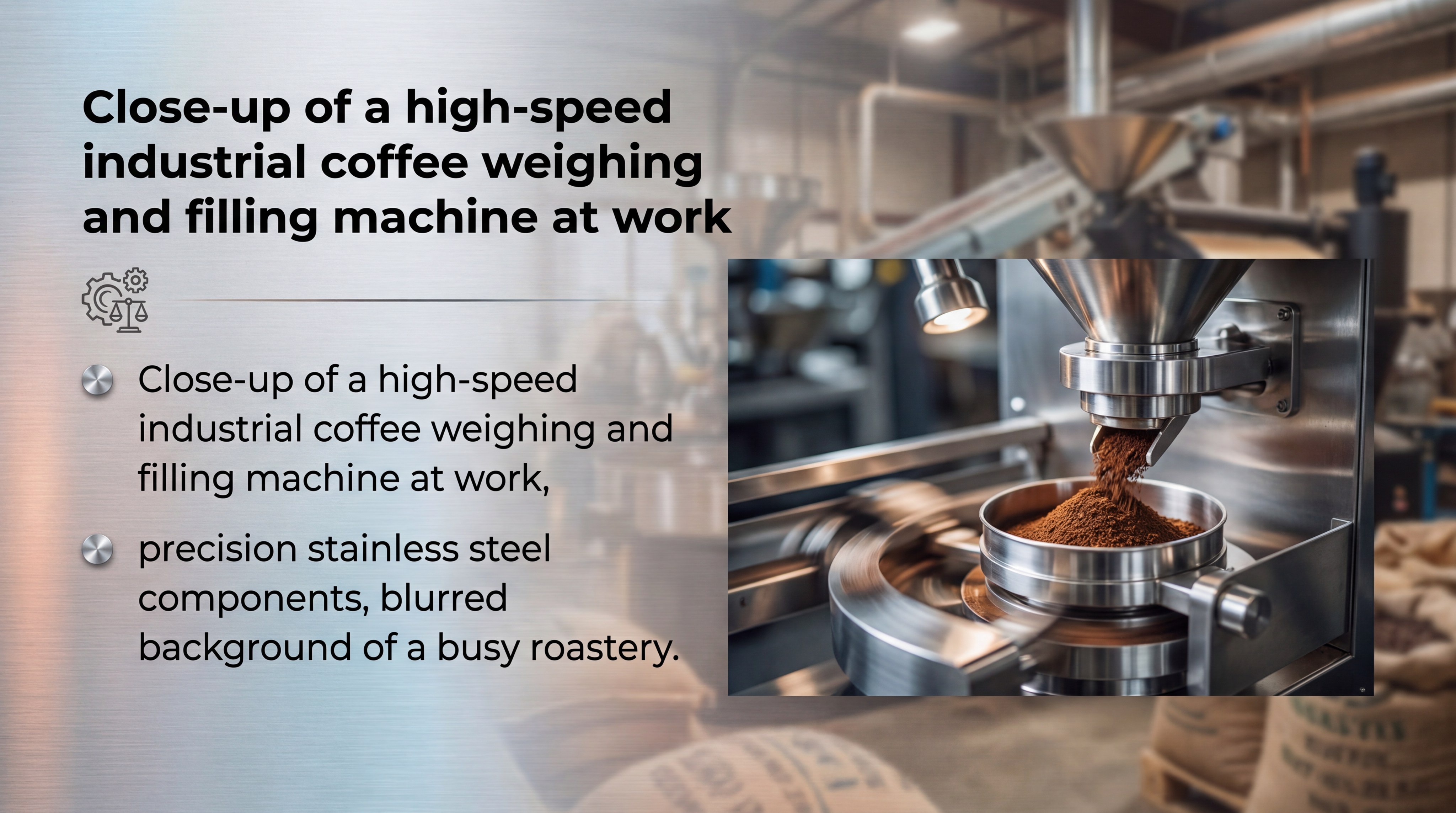
High-volume production requires the precision and speed that only automated weighing and filling can provide.
Key Takeaway: Scale your equipment according to your sales forecast to avoid being trapped by production ceilings.
Which ROI Metrics Should Define Your Coffee Automation Timing?
ROI metrics should define your Coffee automation timing by providing a clear financial “go” or “no-go” signal based on bag cost reduction. You must calculate the cost-per-bag of manual labor versus the amortized cost of a NewIdeaPack system to find your break-even point. This data-driven approach to Coffee automation timing removes the emotional hesitation from making a major capital investment.
Can you afford the “hidden cost” of overfilling bags?
Human error in weighing often leads to “over-filling” bags by a few grams to ensure customers don’t feel shortchanged.
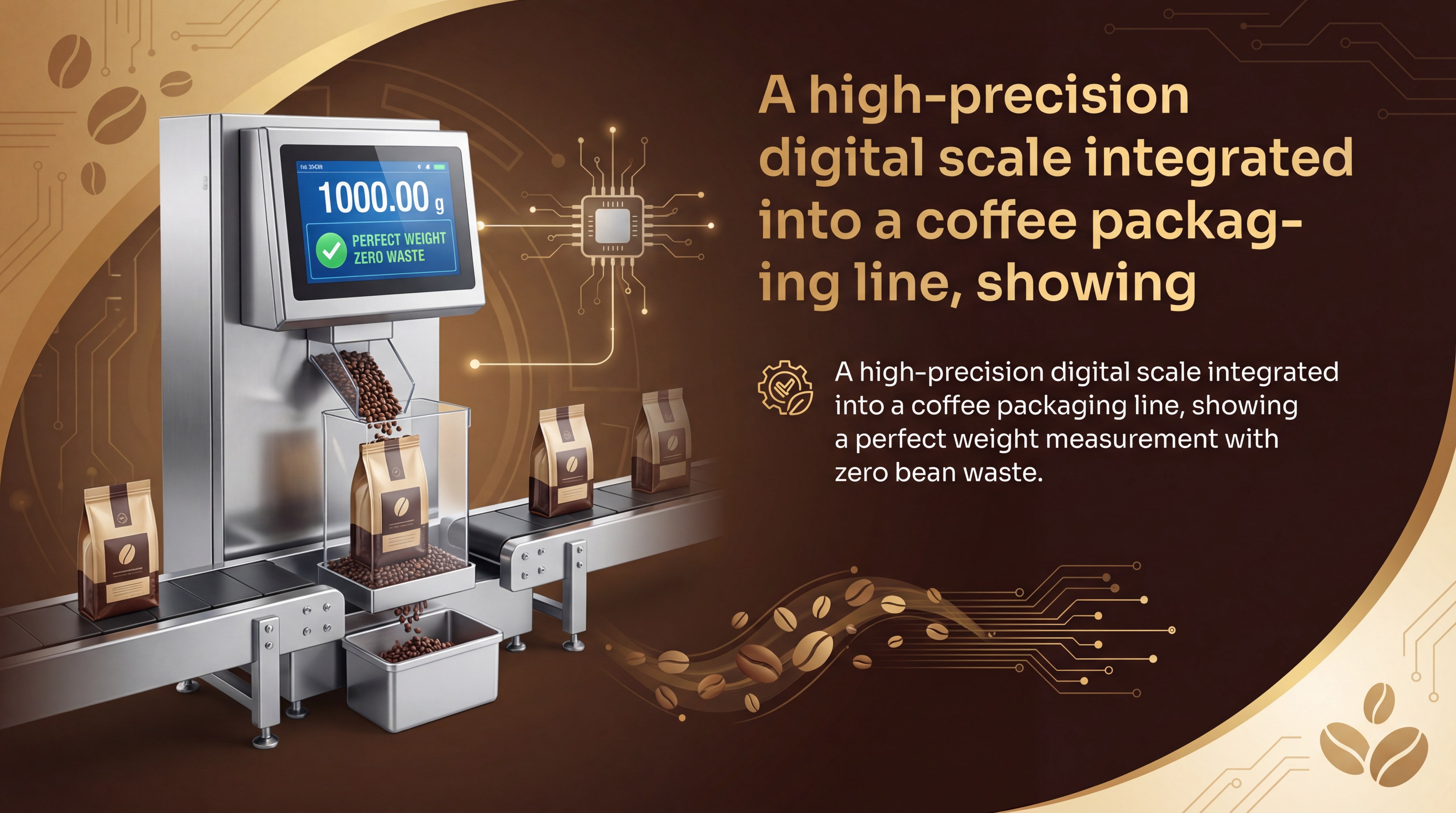
5 grams of overfill per bag equals 5kg lost every 1,000 bags.
At $20/kg, that’s $100 in “lost” coffee per thousand bags sold.
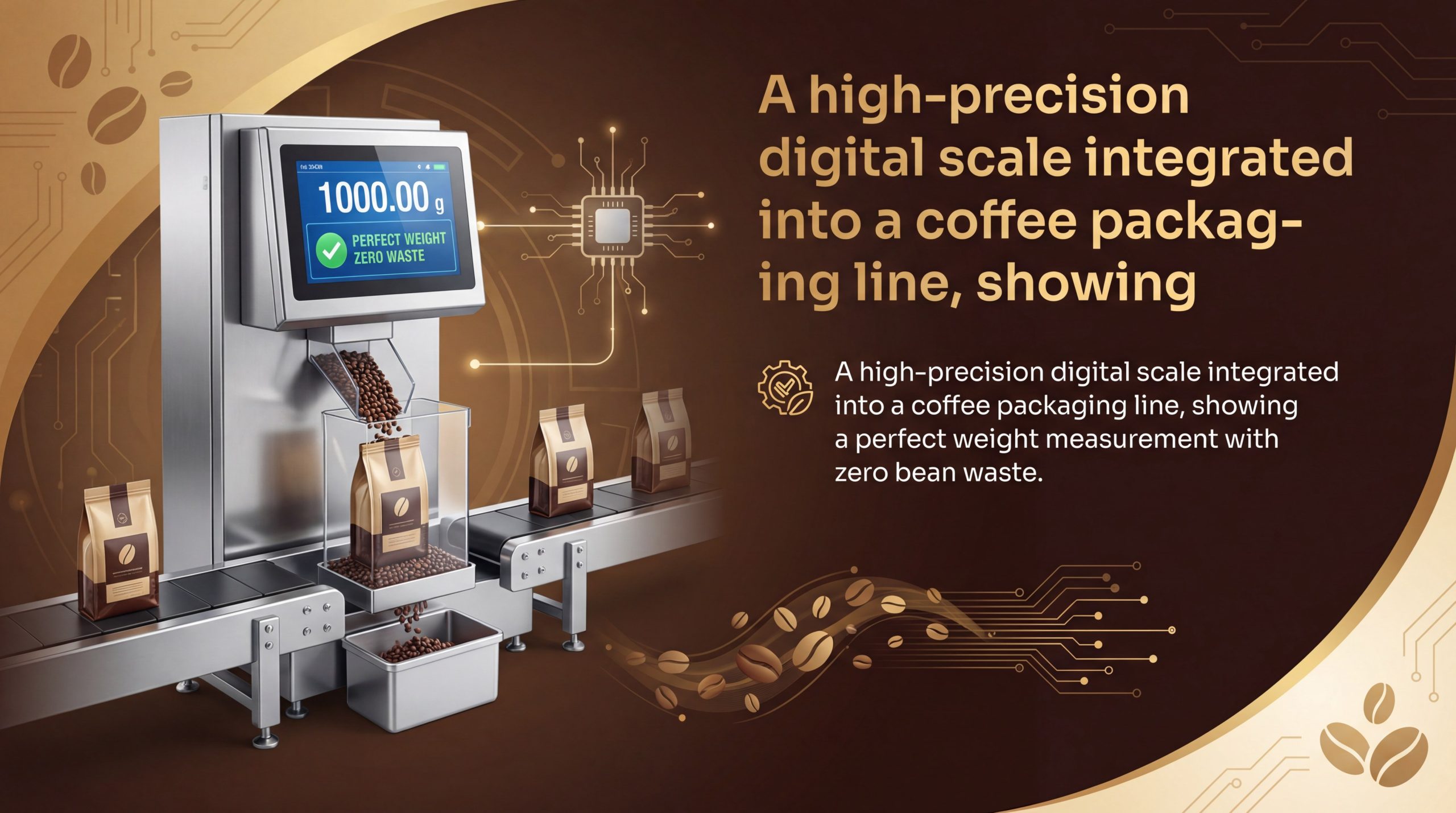
Automation eliminates this waste through high-precision load cells.
Want to know a secret?
Most roasters find that the bean savings alone can cover a significant portion of their monthly equipment lease.
ROI Factor
Manual Impact
Automation Impact
Cost Per Bag
$0.45 – $0.75
$0.05 – $0.12
Waste %
2-4%
<0.5%
Payback Period
N/A
12 – 18 Months
Analyzing the cost-per-bag reveals that automation paybacks are remarkably fast for mid-sized roasteries.
Key Takeaway: Use precise weighing and reduced labor costs to justify your automation investment timeline.
Is Consistency the Secret Signal for Coffee Automation Timing?
Consistency is a subtle but powerful signal for Coffee automation timing because retail customers and wholesalers value uniformity above all else. If your seal integrity varies or your weights are inconsistent, it signals a lack of professionalism that can hinder your growth into premium markets. Reviewing Coffee automation timing through the lens of quality control ensures your brand stays top-tier.
Is your brand’s reputation tied to seal quality?
A single poorly sealed bag can ruin a customer’s experience and lead to stale coffee before it even hits the shelf.
Consistent heat application ensures a hermetic seal every time.
Professional packaging increases “shelf appeal” in competitive retail environments.
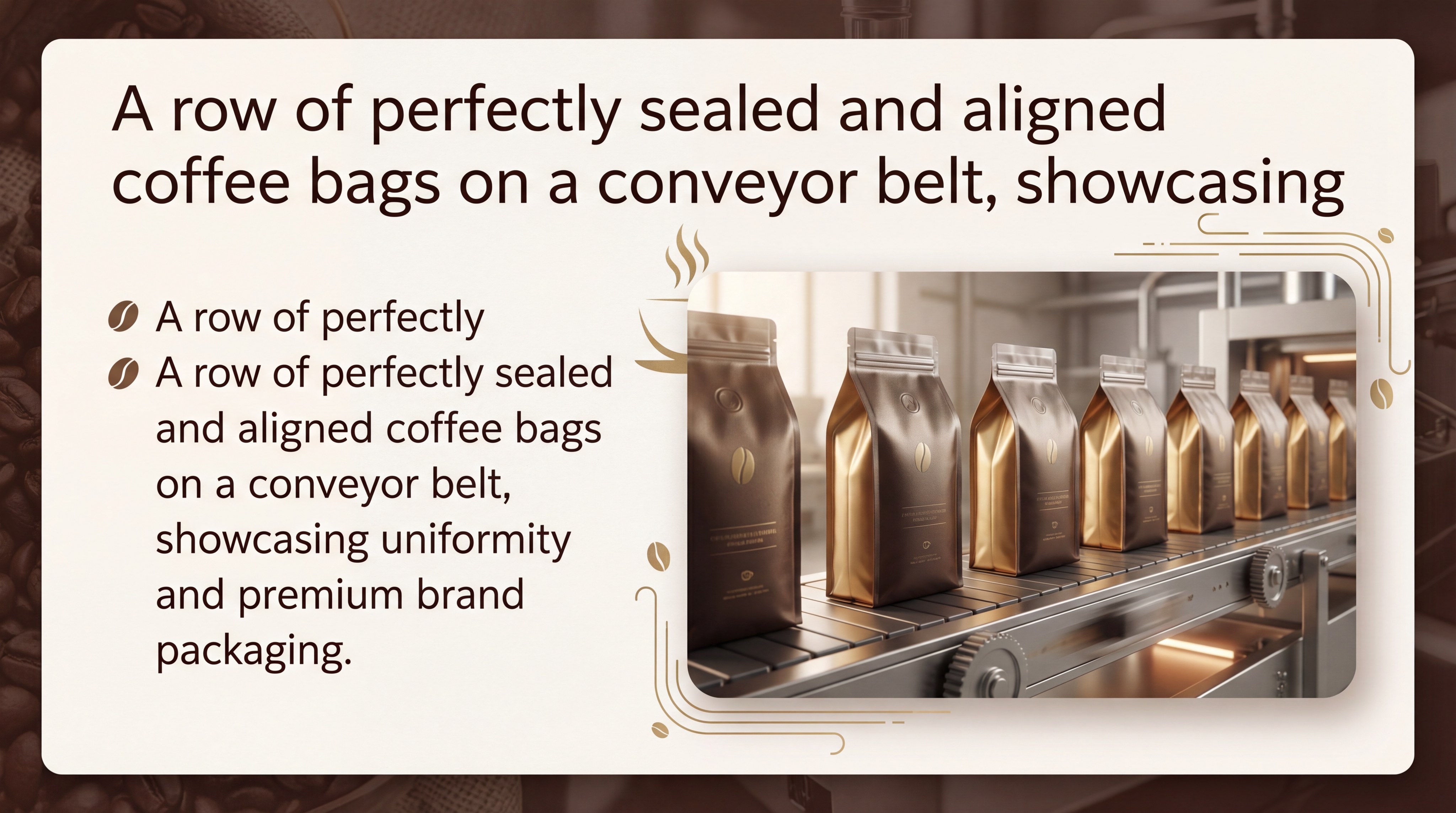
Automated systems provide uniform label placement for a premium look.
Here is the truth.
In the specialty coffee world, the packaging is the first promise of quality you make to your customer.
Quality Metric
Manual Result
Automated Result
Seal Strength
Variable
Uniform/High
Label Alignment
Human Variance
Fixed Position
Freshness Window
Shorter (Air)
Longer (Gas Flush)
Moving to automation allows for advanced features like nitrogen flushing, which significantly extends product shelf life.
Key Takeaway: Automation guarantees that every bag looks and performs like a premium specialty product.
When Should Growth Pains Impact Your Coffee Automation Timing?
Growth pains like missed shipping windows or floor space congestion are signs that your Coffee automation timing has already reached a critical point. When your storage area is cluttered with unsealed bags waiting for a packer, you are losing efficiency and increasing the risk of product contamination. Recognizing these physical signals is essential for managing your Coffee automation timing effectively.
Are you losing floor space to inefficient manual stations?
Manual packing often requires multiple large tables and several people, taking up valuable square footage in your roastery.
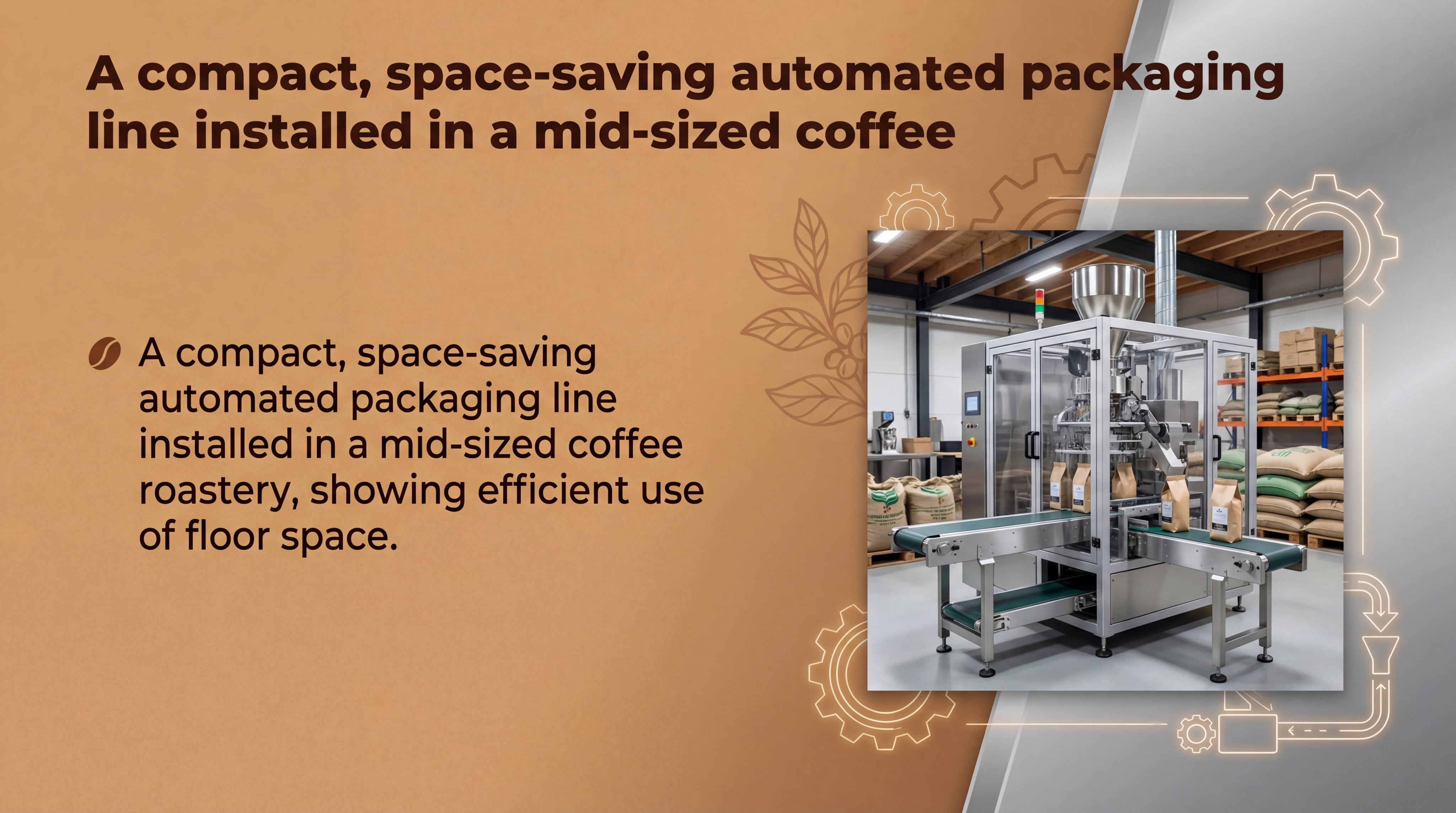
One compact machine can replace three manual packing stations.
Vertical space is utilized more efficiently with automated hoppers.
A cleaner floor plan improves safety and general workflow logic.
The best part?
A streamlined automated line allows you to fit more roasting capacity into the same building footprint.
Space Factor
Manual Setup
Automated Setup
Personnel Count
4-6 people
1 operator
Footprint
200+ sq ft
50-80 sq ft
Workflow Speed
Intermittent
Continuous
Automated systems maximize your facility’s “throughput-per-square-foot,” delaying the need for an expensive move.
Key Takeaway: Physical bottlenecks are the universe telling you it’s time to upgrade your packaging technology.
How Does Staff Retention Affect Coffee Automation Timing?
Staff retention improves significantly when you align your Coffee automation timing with the elimination of back-breaking, repetitive tasks. Employees who enjoy their work are more likely to stay, and few people enjoy the physical strain of manual scooping for eight hours a day. Transitioning your Coffee automation timing helps pivot your team from manual laborers to skilled machine operators.
Can automation make your roastery a better workplace?
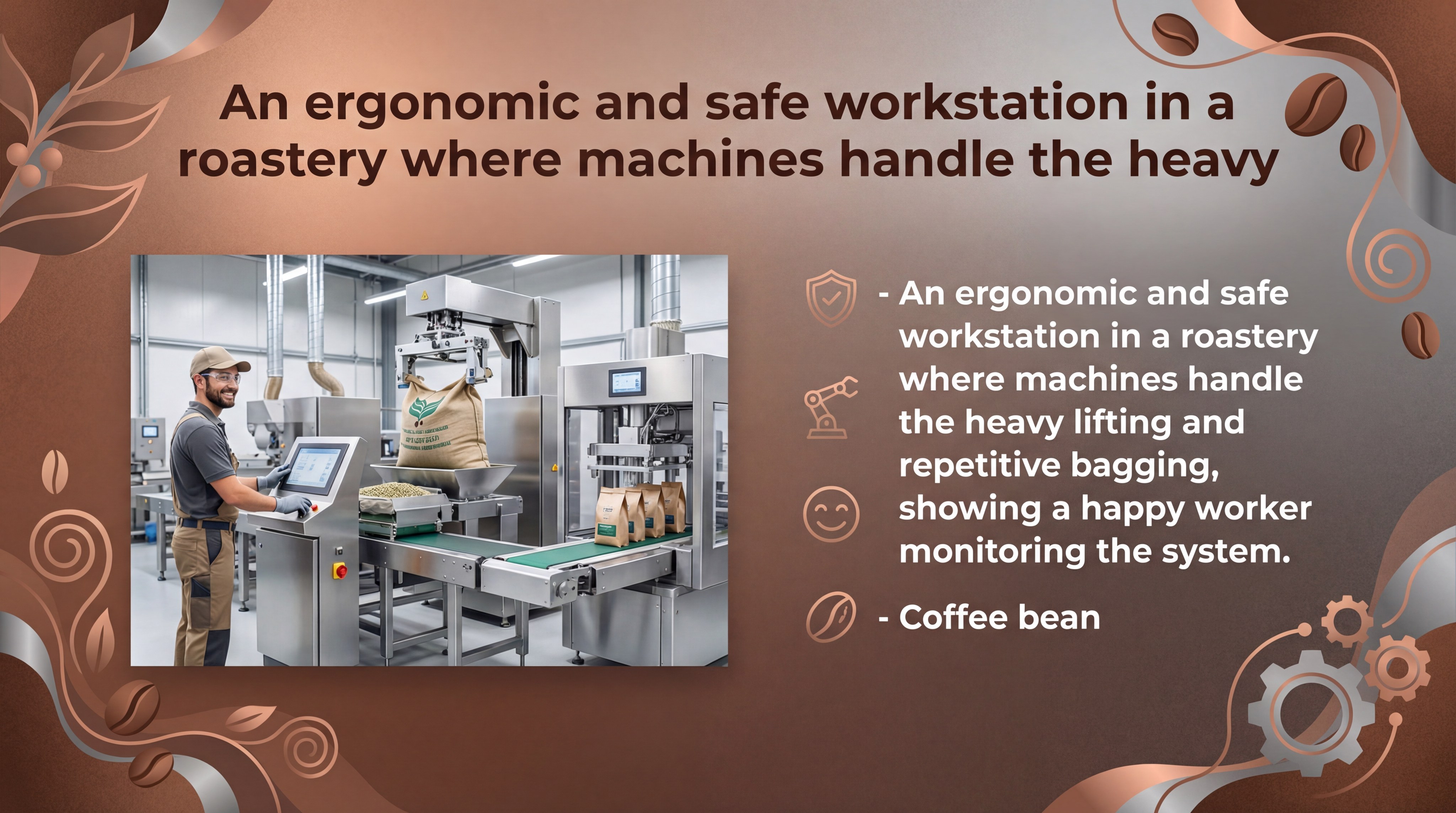
By automating the “grunt work,” you allow your team to focus on the elements of coffee that they are actually passionate about.
Reducing repetitive motion injuries lowers your insurance and liability.
Machine operation is a resume-building skill for your employees.
Higher morale leads to better customer service and attention to detail.
It gets better.
When your staff sees you investing in better tools, they feel more secure in the long-term future of the company.
Employee Factor
Manual Focus
Automated Focus
Primary Task
Repetitive Motion
System Monitoring
Physical Fatigue
High
Low
Skill Required
Low
Technical/Operational
Shifting the labor focus from physical effort to technical oversight creates a more sustainable and professional work culture.
Key Takeaway: Happy, skilled operators are easier to retain than exhausted manual baggers.
What Machine Features Help Your Coffee Automation Timing?
Machine features like ultrasonic sealing and precision weight sensors can dictate your Coffee automation timing based on your specific product needs. If you are moving into drip bags or specialized eco-friendly materials, you need hardware that can handle these challenges without compromise. Using Coffee automation timing to plan for specific feature sets ensures you don’t outgrow your investment too quickly.
Should you prioritize ultrasonic sealing for your drip bags?
Ultrasonic sealing provides a clean, glue-free bond that is essential for specialty drip bag production.
Traditional heat sealing can melt thin filter materials inconsistently.
Ultrasonic tech uses vibrations to create a perfect seal at the molecular level.
It is faster and more energy-efficient than standard heat-seal bars.
Why does this matter?
Because as consumer demand for convenience grows, your ability to produce high-quality drip bags will define your growth.
Technology
Best For
Main Advantage
Heat Seal
Standard Foil Bags
Cost-effective/Reliable
Ultrasonic Seal
Drip Bags/Eco-Film
High Strength/Zero Burn
Vacuum Loading
Whole Bean Transfer
Prevents bean breakage
The right feature set allows you to pivot your product offerings to match rapidly changing consumer trends.
Key Takeaway: Match your machine’s features to your future product roadmap, not just today’s needs.
How Do Market Shifts Change Your Coffee Automation Timing?
Market shifts toward e-commerce and single-serve options are forcing a re-evaluation of Coffee automation timing for traditional whole-bean roasters. As customers demand faster shipping and more varied packaging formats, manual systems become a liability that prevents you from capturing new revenue streams. Your Coffee automation timing should reflect the speed of the market, not just your internal roast volume.
Is the e-commerce boom forcing your hand?
Online shoppers expect their coffee to ship within 24 hours of roasting to ensure maximum freshness upon arrival.
Manual packing delays shipping by adding extra days to the production cycle.
Small e-commerce orders (1-2 bags) are labor-intensive to pack by hand.
Automated lines can process hundreds of small orders in a single afternoon.
That’s not all.
Automation allows you to maintain huge inventories for sudden viral marketing spikes or holiday sales without hiring temporary staff.
Market Driver
Manual Response
Automated Response
Holiday Surge
Overtime/Backlogs
Increased Run Time
New Product Launch
Slow Rollout
Immediate Scale
Price Pressure
Margin Erosion
Operational Efficiency
Agility is the ultimate competitive advantage, and automation provides the “elasticity” your production needs.
Key Takeaway: Speed-to-market is the new gold standard for successful specialty coffee brands.
Can NewIdeaPack Support Your Coffee Automation Timing?
NewIdeaPack supports your Coffee automation timing by offering scalable solutions that grow with your business, from semi-automatic fillers to full-scale rotary lines. We understand that every roastery has a unique journey, and our experts help you identify the exact moment when an upgrade provides the maximum financial impact. Choosing the right partner is the final step in mastering your Coffee automation timing.
How does expert training ensure a fast ROI?
Investing in machinery is only half the battle; your team must know how to operate and maintain it for peak performance.
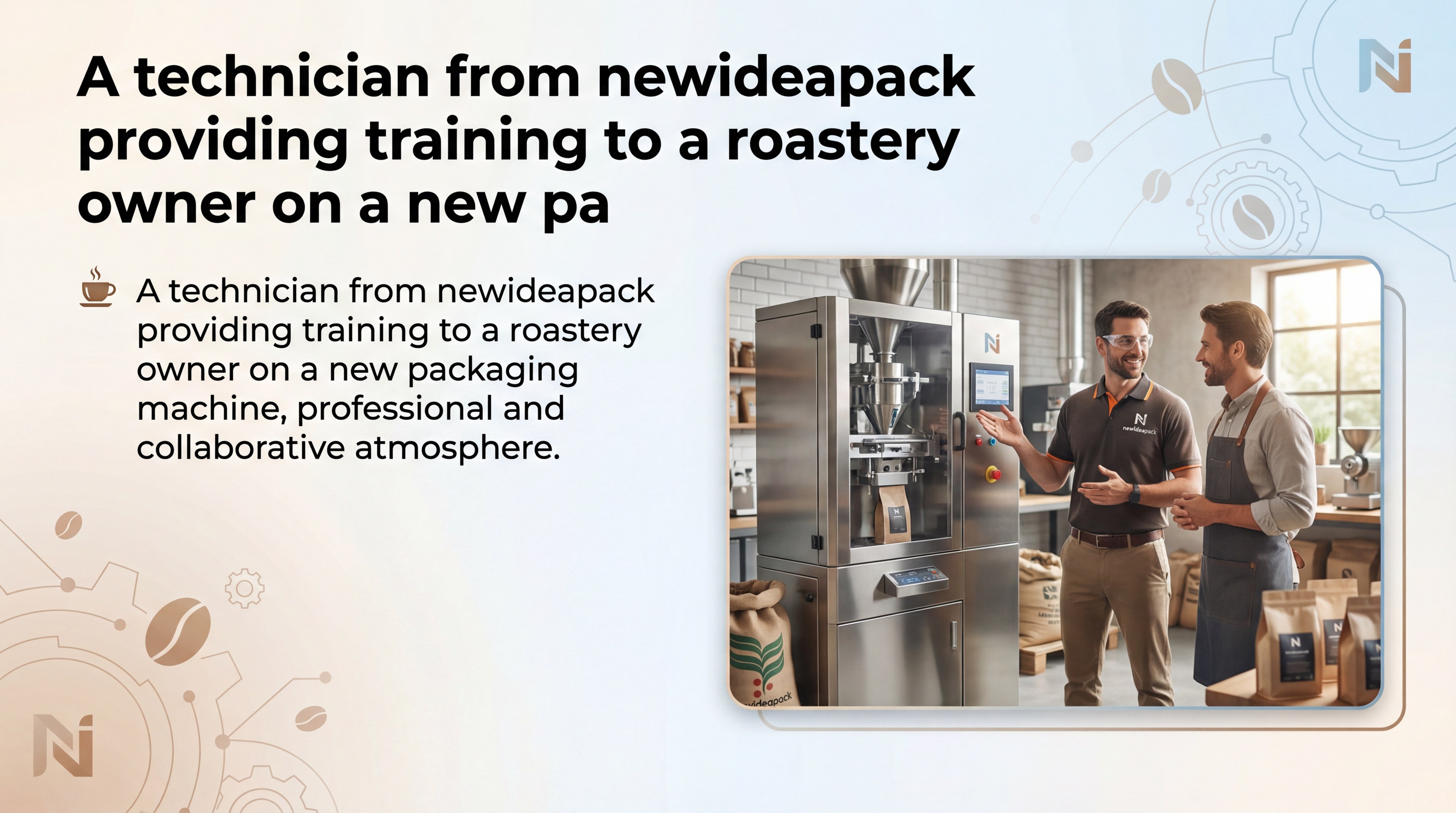
Professional onsite training reduces the initial “learning curve” dip.
Preventative maintenance schedules keep your line running 99% of the time.
Expert support helps you troubleshoot issues before they cause downtime.
You know the feeling.
The confidence that comes from knowing you have a global support network standing behind your production line.
Partnership Benefit
Value to Roastery
Long-term Impact
Custom Engineering
Perfect fit for space
No wasted square footage
Onsite Training
Immediate competence
Lower internal errors
Technical Support
Minimal downtime
Reliable wholesale delivery
A partnership with NewIdeaPack means you aren’t just buying a machine; you’re buying a scalability guarantee.
Key Takeaway: Expert support turns a hardware purchase into a long-term strategic growth engine.
Conclusion
Mastering your Coffee automation timing is about more than just buying a machine; it’s about reclaiming your time and protecting your craft. When you transition at the right moment, you transform labor costs into profit margins and manual errors into consistent quality. At NewIdeaPack, we believe that every roaster deserves tools that match the passion they put into every bean. Our brand stand is built on providing “Scalability for the Artisan,” ensuring that your growth never comes at the expense of your coffee’s soul. If your manual processes are starting to feel like a cage, it’s time to break free. automation journey.
FAQ
Can I automate if I have a very small roastery space? Yes, modern machines are designed with a “modular” footprint. NewIdeaPack offers compact vertical form-fill-seal (VFFS) systems that occupy less space than two manual packing tables.
How do I know if I should choose a semi-auto or full-auto machine? It depends on your bag volume. Semi-auto is best for roasters doing 100-300 bags/day, while full-auto is essential for anyone exceeding 500 bags/day who wants to minimize labor.
Is it difficult to switch between whole bean and ground coffee on one machine? No, most systems feature “quick-change” parts or adjustable settings. You can typically switch between product types in under 15 minutes with proper training.
Does automation affect the “hand-crafted” appeal of my coffee? Actually, it enhances it. By automating the packaging, you ensure the coffee stays fresher (nitrogen flushing) and more consistent, allowing the “hand-crafted” flavor of your roast to shine.
How long does it take to see a return on investment (ROI)? Most mid-sized roasteries see a full ROI within 12 to 18 months. This is driven by labor savings, reduced bean waste, and the ability to fulfill larger wholesale orders.
Sales Pitch Component
To explore our full range of solutions and find your perfect upgrade path
Contact us today and let’s start your automation journey.