Why Multi-head Weighter for Coffee is the Gold Standard:2026 Ultimate Guide
2026年3月11日 by newideapack
Scaling a roastery requires precision, which is why a multi-head weighter for coffee has become the industry’s gold standard for 2026. Transitioning from manual filling to automated precision isn’t just about speed; it’s about protecting your margins by eliminating product giveaway and preserving the delicate integrity of every roasted bean. In this ultimate guide, we explore how advanced combination weighing technology optimizes your production line and delivers an undeniable ROI for growing coffee brands.
The definitive solution for modern roasters is the Multi-head weighter for coffee. By leveraging advanced combination logic, these machines deliver unmatched speed and precision for high-volume production. In this guide, we explore why this technology is the essential upgrade for any coffee brand moving from local roasting to global distribution.
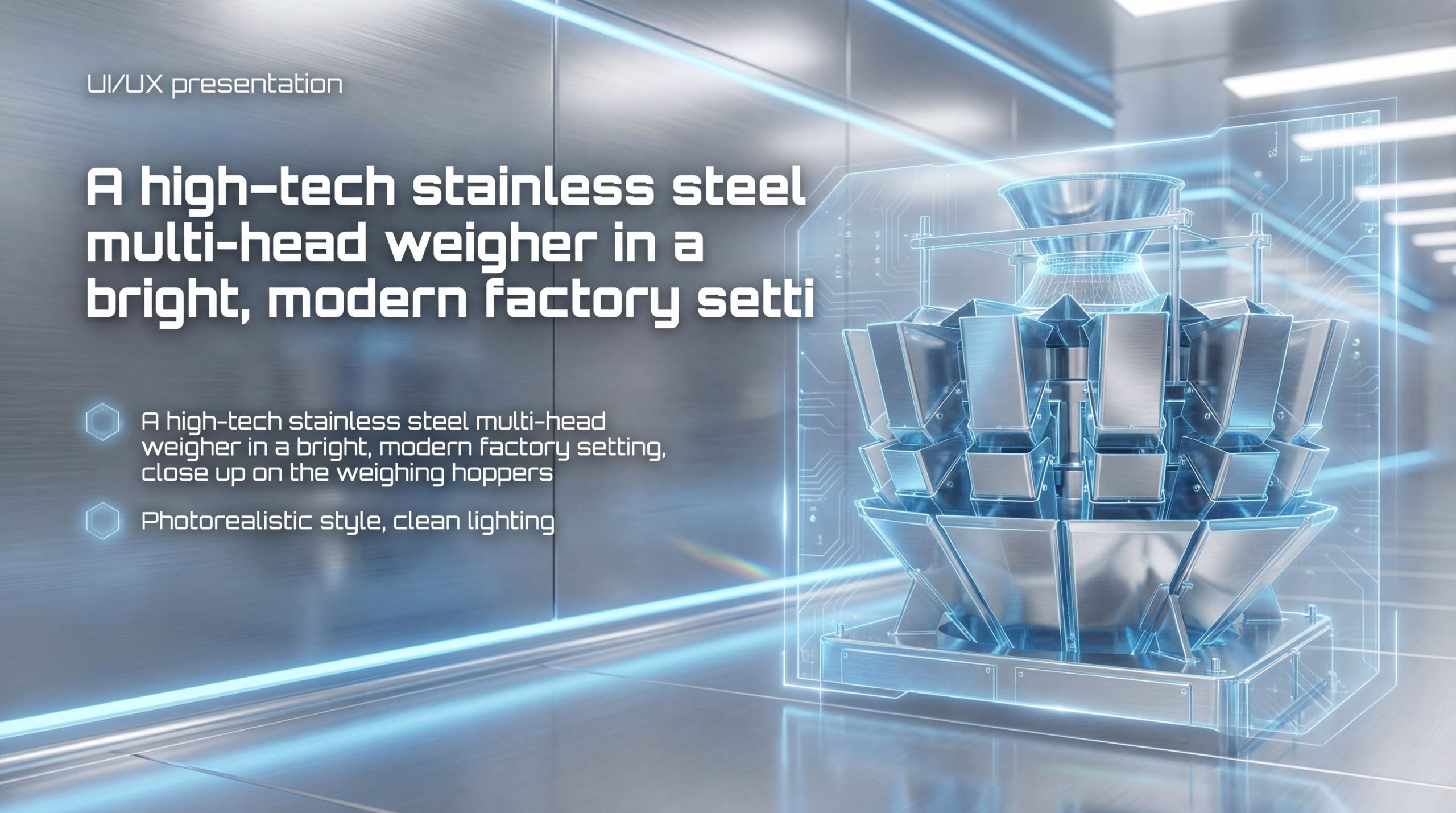
A Multi-head weighter for coffee is an advanced automated system that uses multiple weigh hoppers to calculate the mathematically perfect combination of beans to reach a target weight. Unlike linear systems that pour product until a sensor is tripped, this machine samples multiple small batches simultaneously. This process ensures that every bag is filled with extreme precision, often within a fraction of a gram.
How combination weighing logic works
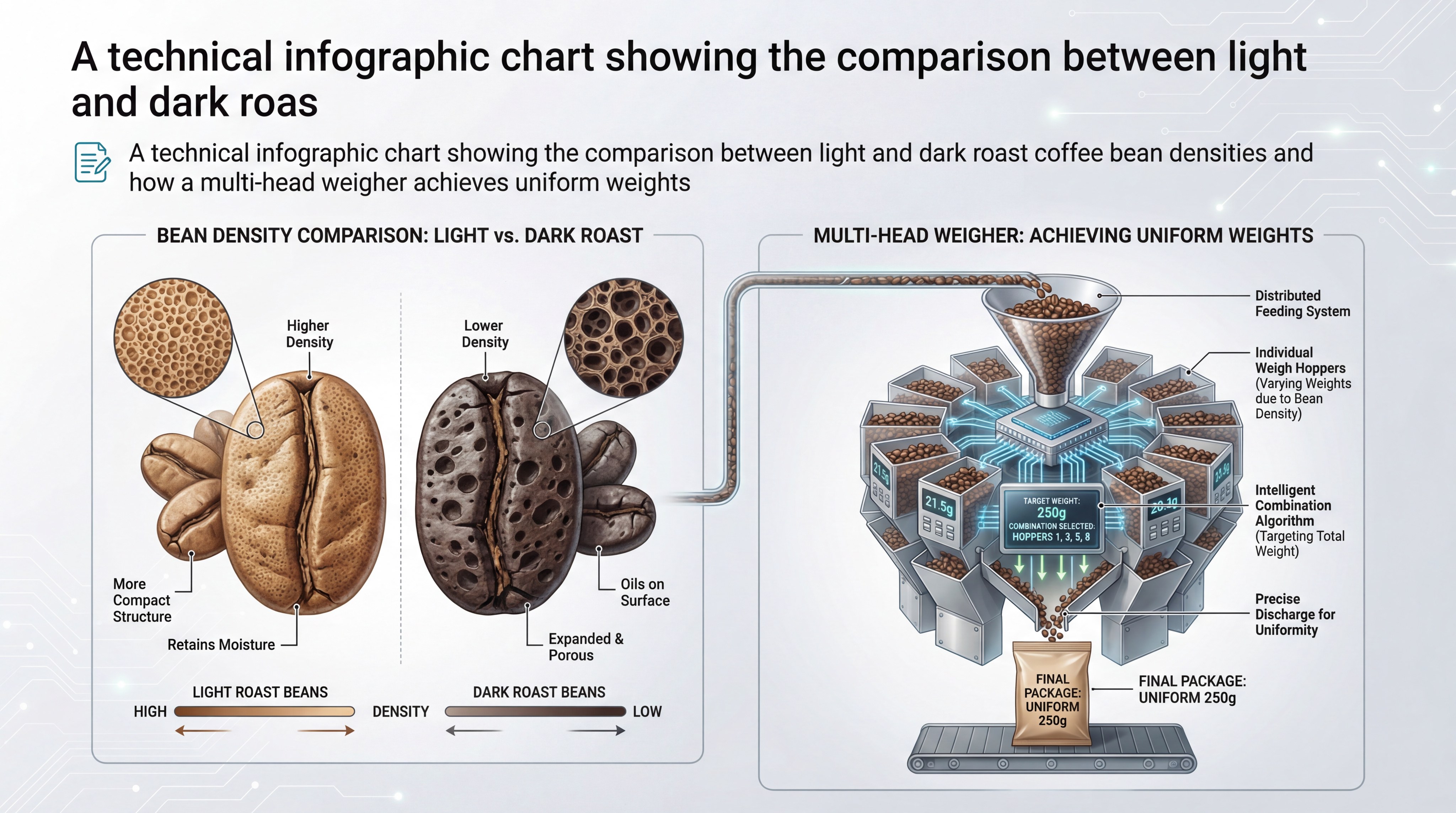
Combination weighing logic functions by distributing your beans across 10 or more individual buckets. The computer system identifies which buckets together equal the target weight most accurately. This results in nearly zero giveaway and significantly faster cycle times.
Here is the bottom line:
Multi-head systems “calculate” rather than just “pour” your product.
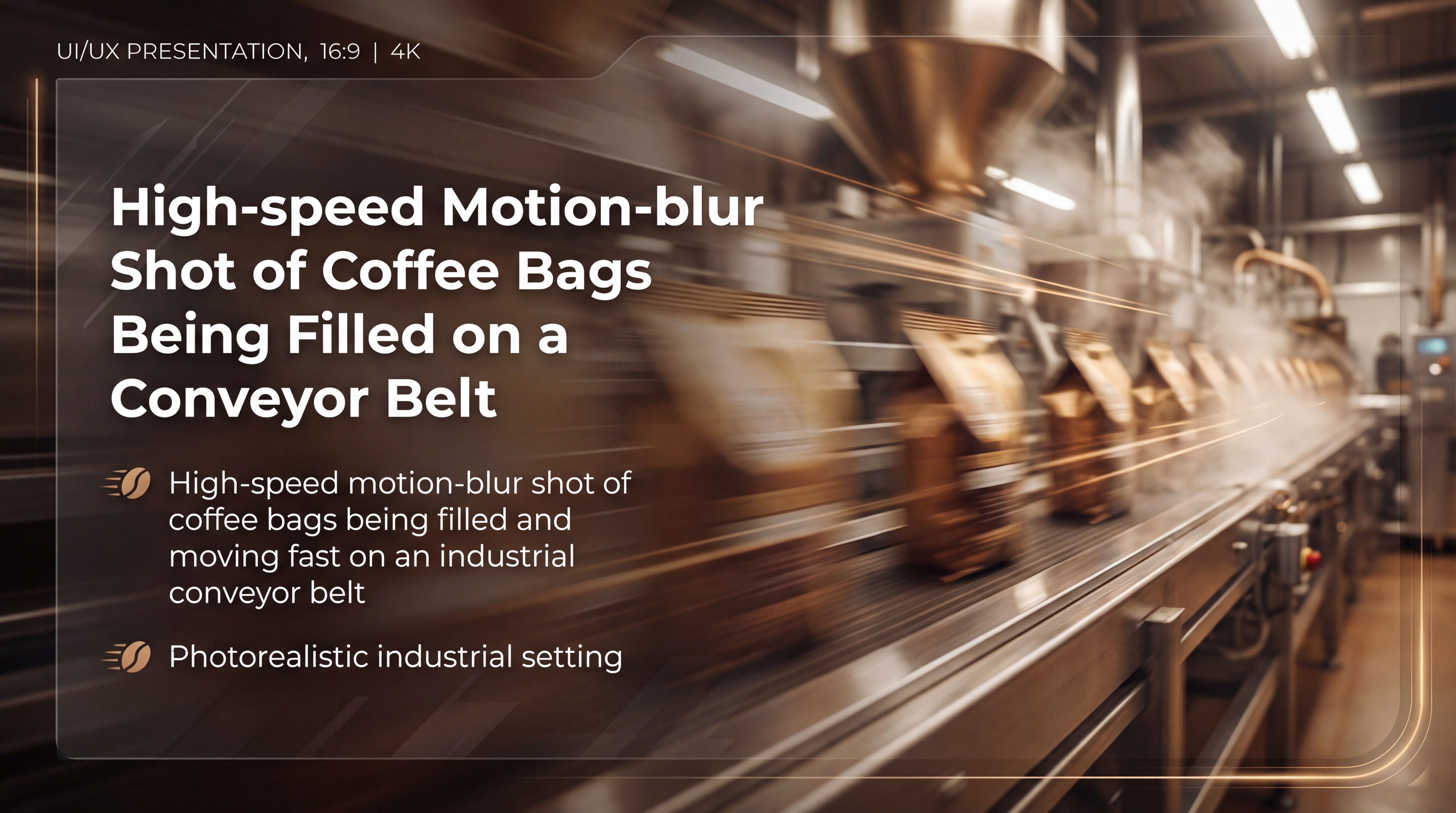
You gain the ability to process up to 200 bags per minute with industrial reliability.
The system automatically compensates for minor fluctuations in product flow.
Key Takeaway: Using a Multi-head weighter for coffee allows you to move away from volumetric errors and embrace mass-based precision.
Feature
Multi-head System
Business Benefit
Logic Type
Combinatorial Math
Extreme Accuracy
Scale Heads
10 to 24 Heads
Higher Throughput
Control
Digital Touchscreen
Easy Recipe Changes
This structural shift from linear to combination weighing ensures your production line remains both flexible and profitable.
2. Why is accuracy critical for whole bean coffee?
Accuracy is critical because it prevents profit erosion caused by overfilling and ensures your brand meets strict industrial weighing standards. Implementing a Multi-head weighter for coffee ensures you are not literally throwing your premium beans away. Over a year of high-volume production, a 2g giveaway per bag can translate into thousands of dollars in lost revenue.
Eliminating product giveaway
Consistent weights build consumer trust and ensure you are in compliance with legal trade requirements. When you roast specialty beans, every gram represents a significant investment in sourcing and labor. Using high-precision load cells allows your facility to retain more profit per bag.
Why does this matter?
Precision of ±0.5g ensures you aren’t sacrificing your margins.
Digital calibration reduces the risk of human error in the packing room.
You can guarantee a consistent product experience for every customer.
Key Takeaway: Industrial-grade precision is no longer optional for roasters aiming for a professional market presence and maximum ROI.
Metric
Multi-head Standard
Impact on ROI
Typical Accuracy
±0.5g – 1.5g
Minimizes Waste
Giveaway Rate
Under 1%
Direct Profit Retention
Speed
60+ BPM
Lower Labor Cost
Maintaining these tight tolerances is the fastest way to see a return on your equipment investment.
3. How do multi-head weighers handle density variation?
Multi-head weighers handle density variation by using mass-based combination sensors that are unaffected by the physical size or volume of the beans. A Multi-head weighter for coffee adapts instantly to the different profiles of your roast catalog. Whether you are packing a dense light roast or a porous dark roast, the weight remains identical.
Compensating for roast levels and bean origins
Dark roast beans are physically larger but lighter than light roast beans due to moisture loss during roasting. Volumetric fillers often fail here because they rely on the space a bean takes up rather than its weight. Mass-based weighing ensures a 12oz bag of Italian roast has the same weight as a 12oz bag of Ethiopian light roast.
Think about it:
A scoop of dark roast weighs less than a scoop of light roast.
Combinatorial weighing ignores volume and focuses entirely on mass.
One machine can handle your entire product lineup without mechanical changes.
Challenge
Multi-head Solution
Result
Roast Levels
Mass-based sensors
Uniform weight regardless of size
Bean Origin
Combination logic
Handles varying bean sizes
Clumping
Vibratory feeders
Smooth, consistent flow
Key Takeaway: Switching to mass-based weighing is the only way to ensure weight consistency across diverse coffee origins and roasts.
This capability allows you to scale your product offerings without worrying about individual bag weight inaccuracies.
4. Can multi-head weighers prevent bean breakage?
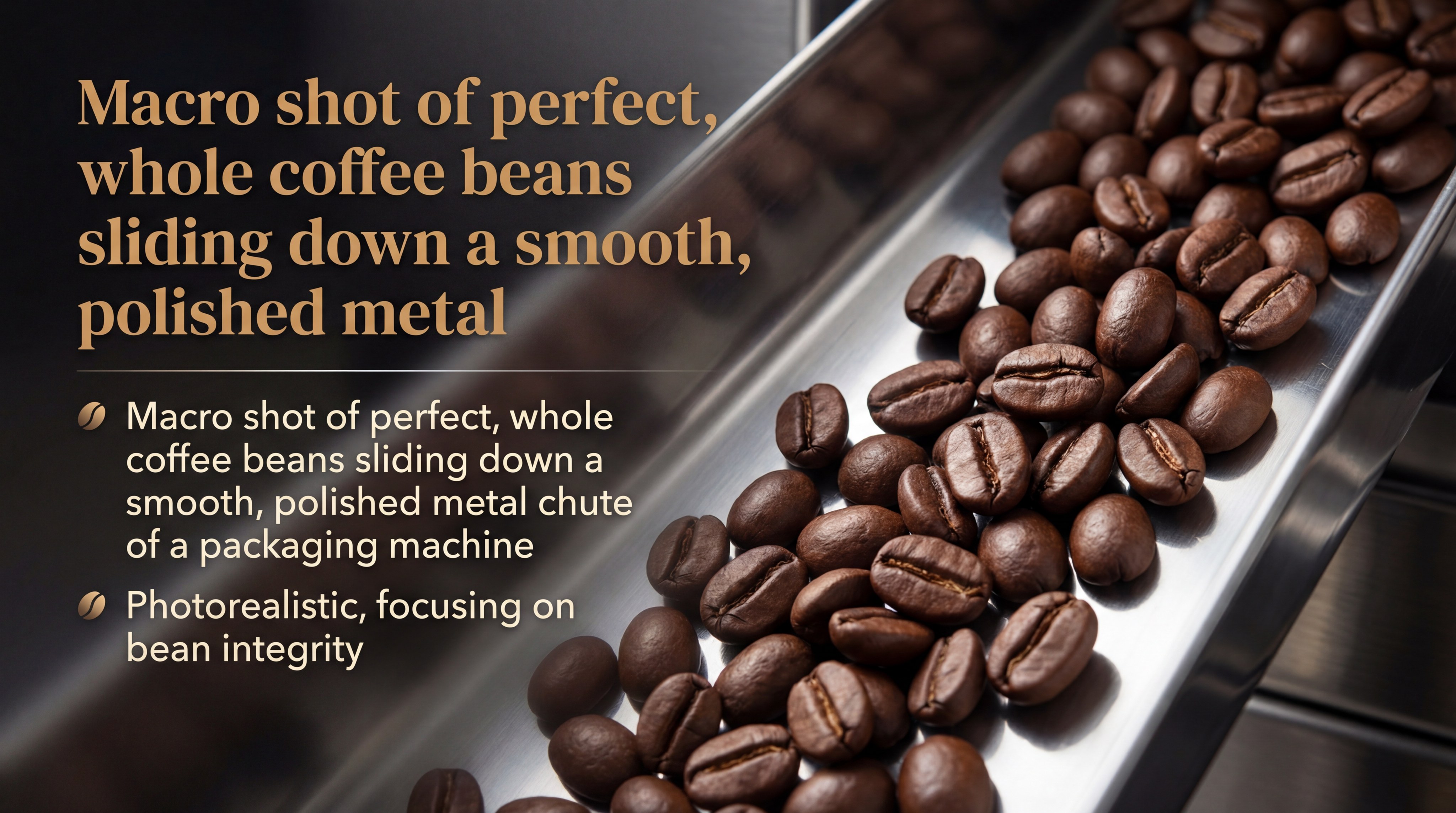
Yes, multi-head weighers prevent bean breakage by utilizing low-impact drop heights and specialized buffer liners that cushion the beans during discharge. A Multi-head weighter for coffee is designed to slide your beans rather than drop them. This preservation of structural integrity is vital for maintaining the visual appeal of premium specialty beans.
Reducing drop heights and impact forces
Modern designs use “gentle-sloped” hoppers to ensure beans move smoothly through the system. Protecting the bean surface oils and preventing chipping is essential for customer satisfaction. You spent time roasting the perfect bean, so your equipment should treat it with care.
But wait, there’s more:
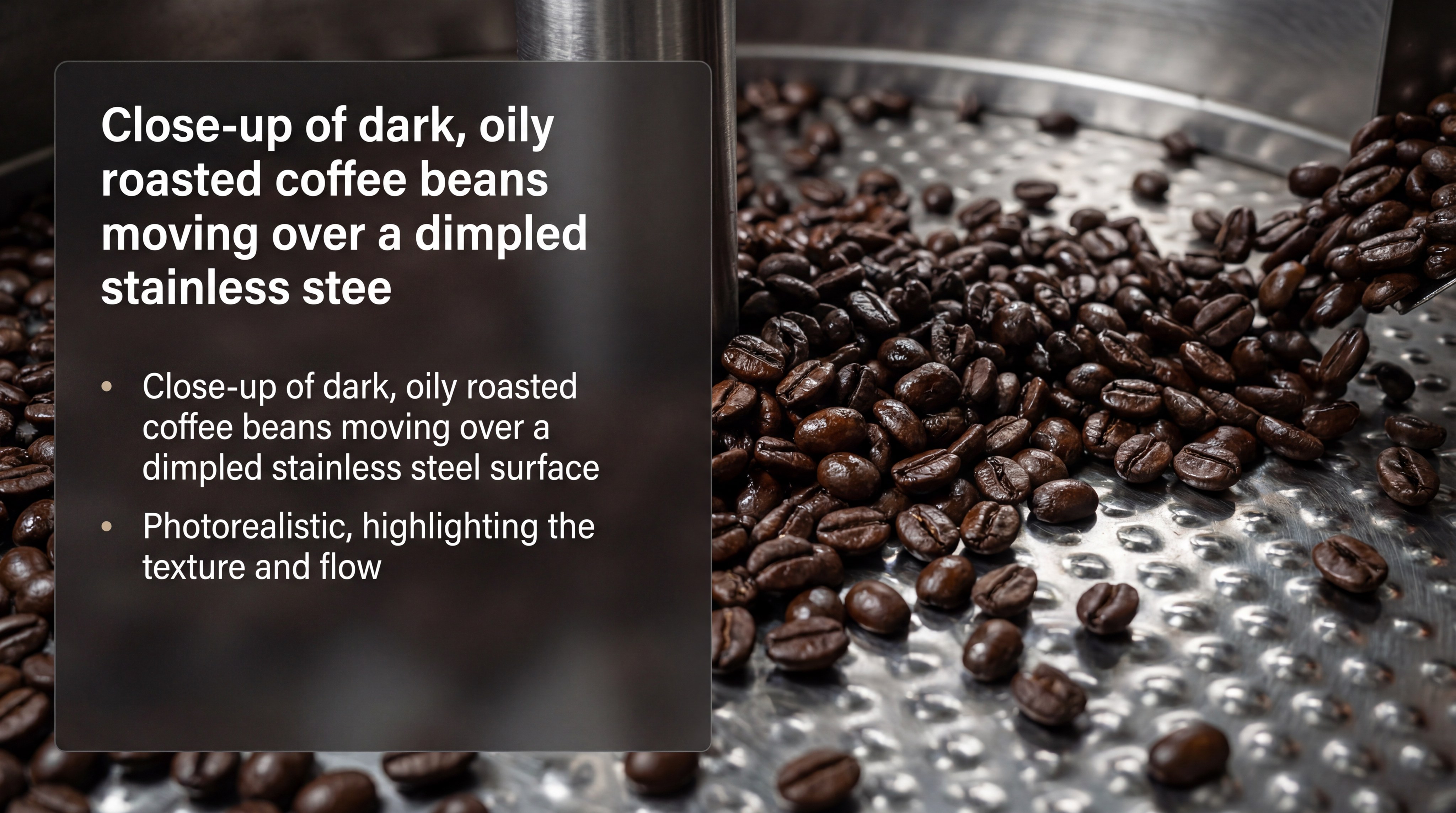
Dimpled steel surfaces reduce the surface tension for oily beans.
Controlled hopper timing prevents beans from colliding at high speeds.
Silicone liners can be added for ultra-fragile specialty micro-lots.
Handling Feature
Protection Method
Quality Benefit
Low Drop Heights
Gravity-fed chutes
Prevents bean chipping
Buffer Liners
Silicone padding
Dampens impact force
Smooth Discharge
Controlled timing
Preserves surface oils
Key Takeaway: Protecting bean integrity is just as important as the weight itself for high-end specialty coffee brands.
Preserving the “whole” in whole bean coffee ensures your customers receive the premium quality they pay for.
5. How does speed impact your coffee packaging ROI?
Speed impacts your ROI by dramatically reducing the labor cost per unit while allowing you to fulfill larger wholesale orders in half the time. A Multi-head weighter for coffee can easily double or triple the output of a traditional linear scale. Higher throughput means you can scale your business without doubling your staff headcount.
Scaling production for high-volume demands
While linear weighers typically top out at 30 bags per minute, multi-head systems can reach 120 or more. This efficiency is critical for roasters moving into grocery retail or high-volume e-commerce. You can process a day’s worth of roasting in a single afternoon shift.
It gets even better:
Automated systems don’t get tired or lose accuracy over a long shift.
You can reallocate your labor to higher-value tasks like quality control.
Faster packaging means beans spend less time exposed to oxygen before sealing.
System Type
Speed (BPM)
Recommended Scale
Linear Weigher
15–30 BPM
Small batch/Startups
10-Head Multi-head
60–80 BPM
Growing medium roasters
14-Head Multi-head
120+ BPM
Industrial enterprise
Key Takeaway: High-speed automation is the most effective way to lower your operational costs and increase your market competitiveness.
Investing in speed today ensures your facility is ready for the demands of tomorrow’s growth.
6. What role does oil content play in the process?
Oil content plays a significant role in the weighing process because it can cause beans to stick to the machine surfaces and skew weight results. When using a Multi-head weighter for coffee, you must account for the “suction” effect of oily French or Italian roasts. Specialized dimpled (embossed) stainless steel is the professional solution to this common problem.
Handling dark roasts and surface stickiness
Dimpled surfaces reduce the contact area between the oily bean and the metal hopper. This prevents the beans from clumping or lagging during the discharge phase. If your beans flow inconsistently, your weighing accuracy will suffer, leading to production delays.
You might be wondering:
What about those oily beans that stick to everything?
Specialized dimpled steel creates air pockets that prevent sticking.
This ensures a fast, clean release for every single weighment.
Material Type
Best For
Benefit
Polished Steel
Light/Medium Roasts
Easy cleaning
Dimpled Steel
Dark/Oily Roasts
Prevents clogging
Teflon Coating
Ultra-sticky beans
Maximum efficiency
Key Takeaway: If you roast dark, dimpled surface contact parts are a non-negotiable feature for consistent bean flow.
By choosing the right surface material, you ensure your line runs smoothly regardless of the roast profile.
7. Is integration with VFFS machines seamless?
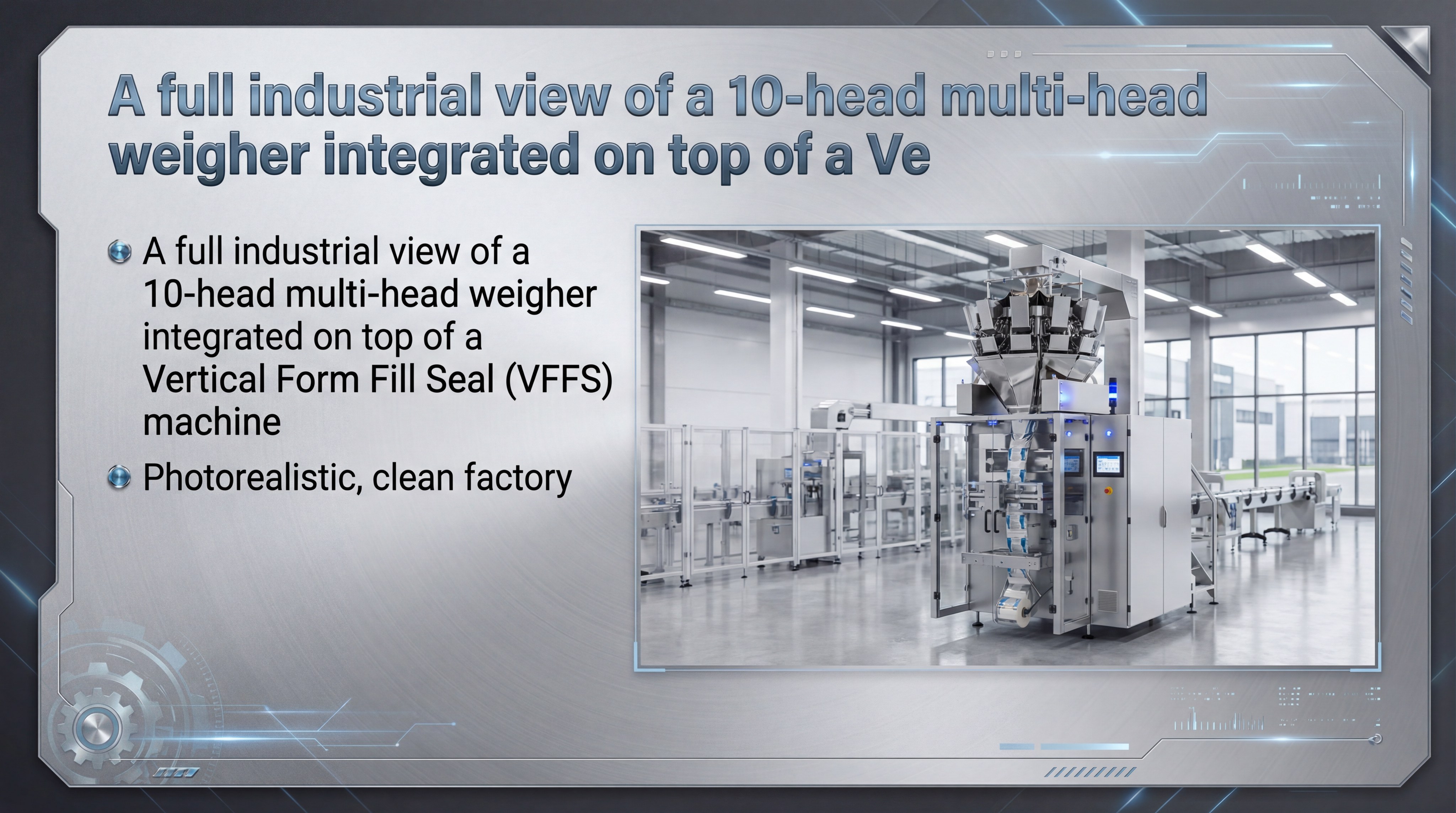
Integration is entirely seamless because modern weighers are designed to “talk” directly to Vertical Form Fill Seal (VFFS) systems through synchronized signals. Your Multi-head weighter for coffee acts as the brain of the operation, telling the bagger exactly when to seal. This creates a fully automated, “hands-off” experience for your production team.
Syncing with vertical form fill seal systems
The weigher and the bagger communicate via a digital handshake to ensure no beans are dropped until the bag is fully formed and open. This synchronization prevents product spillage and ensures a perfect seal every time. It is the most reliable way to achieve an airtight, professional retail finish.
And the best part?
One central control panel often manages both the weigher and the bagger.
The system automatically pauses if it detects a bag error or a weight variance.
You can switch bag sizes and weights in minutes through saved digital recipes.
Component
Integration Role
Automation Benefit
Comm Cable
Syncs weight & cycle
Zero product spillage
Timing Hopper
Stages beans for discharge
High-speed accuracy
Support Platform
Stabilizes equipment
Reduced vibration
Key Takeaway: A fully integrated VFFS line is the ultimate goal for any coffee roaster looking to maximize efficiency and professional packaging.
This cohesion between weighing and bagging is what allows for a truly industrial-scale output.
8. What are the latest trends in coffee weighing tech?
The latest trends involve AI-driven self-optimization and Industry 4.0 connectivity that allows for remote performance monitoring and predictive maintenance. A Multi-head weighter for coffee now offers more than just weight; it offers data. You can track your production stats, giveaway rates, and machine health from your smartphone.
AI-driven optimization and smart diagnostics
Modern software can self-adjust vibration levels to keep accuracy high as bean flow changes throughout the day. If a hopper begins to underperform, the system alerts your team before it impacts your final bag weights. This level of intelligence minimizes downtime and keeps your line running at peak performance.
Here is what is coming:
AI self-tuning for different bean densities and moisture levels.
IoT connectivity for real-time production reports across multiple facilities.
Servo-motors that offer quieter and more precise hopper control.
Technology Trend
Application
Future Value
Smart Diagnostics
Error reporting
Predictive maintenance
IoT Connectivity
Data tracking
Better planning
Servo-Motors
Precise control
Faster, quieter operation
Key Takeaway: Investing in an Industry 4.0 compatible weigher future-proofs your facility against evolving market demands.
Smart technology ensures that your packaging process is as refined as your roasting process.
9. How do you choose the right head count for coffee?
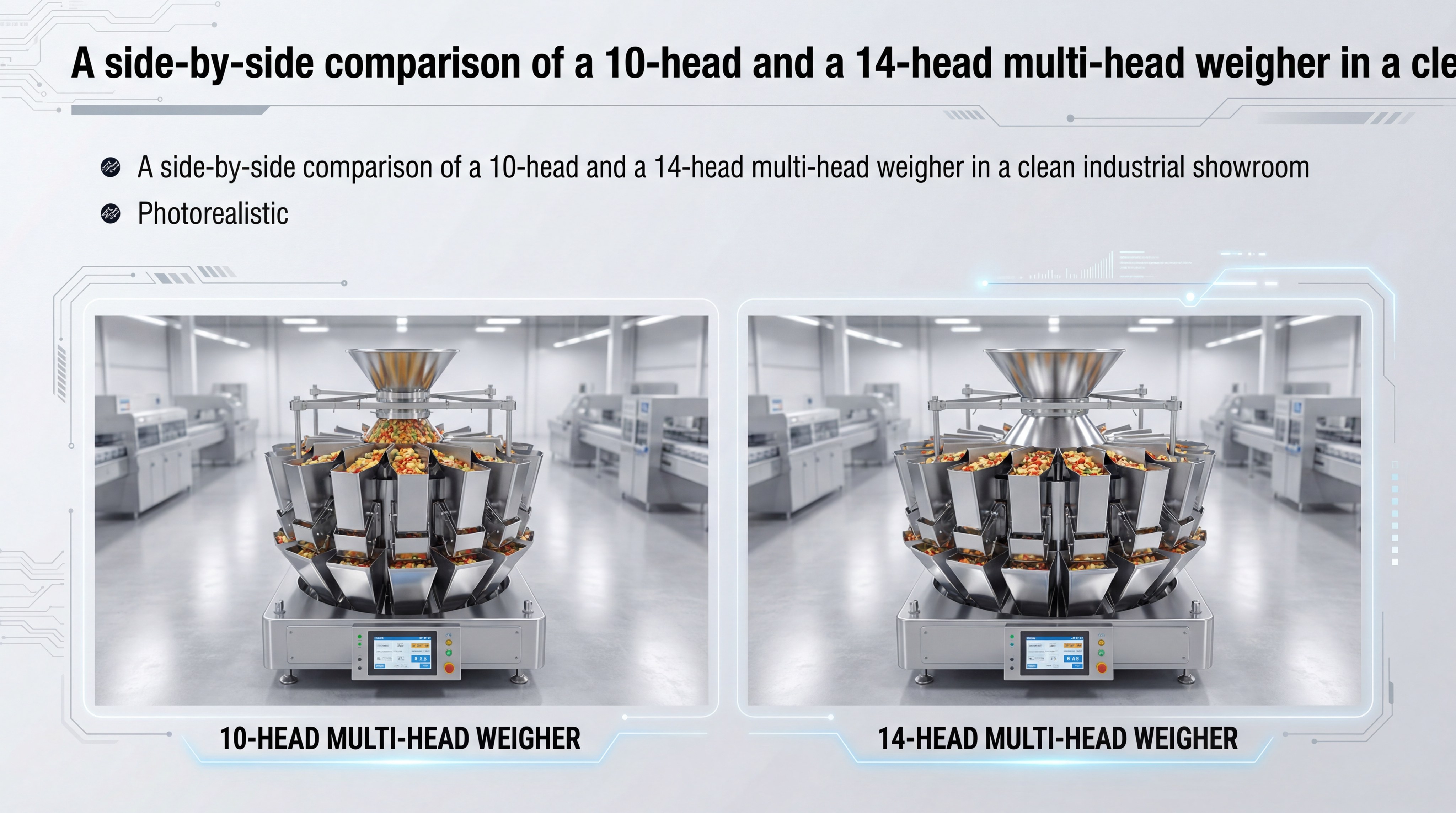
Choosing the right head count depends on your required production speed and the specific weight range of your bags. For most roasters, a 10-head Multi-head weighter for coffee is the perfect balance of cost and high-speed performance. However, if you are looking for extreme speeds or weighing complex blends, 14 heads may be necessary.
10-head vs. 14-head configurations
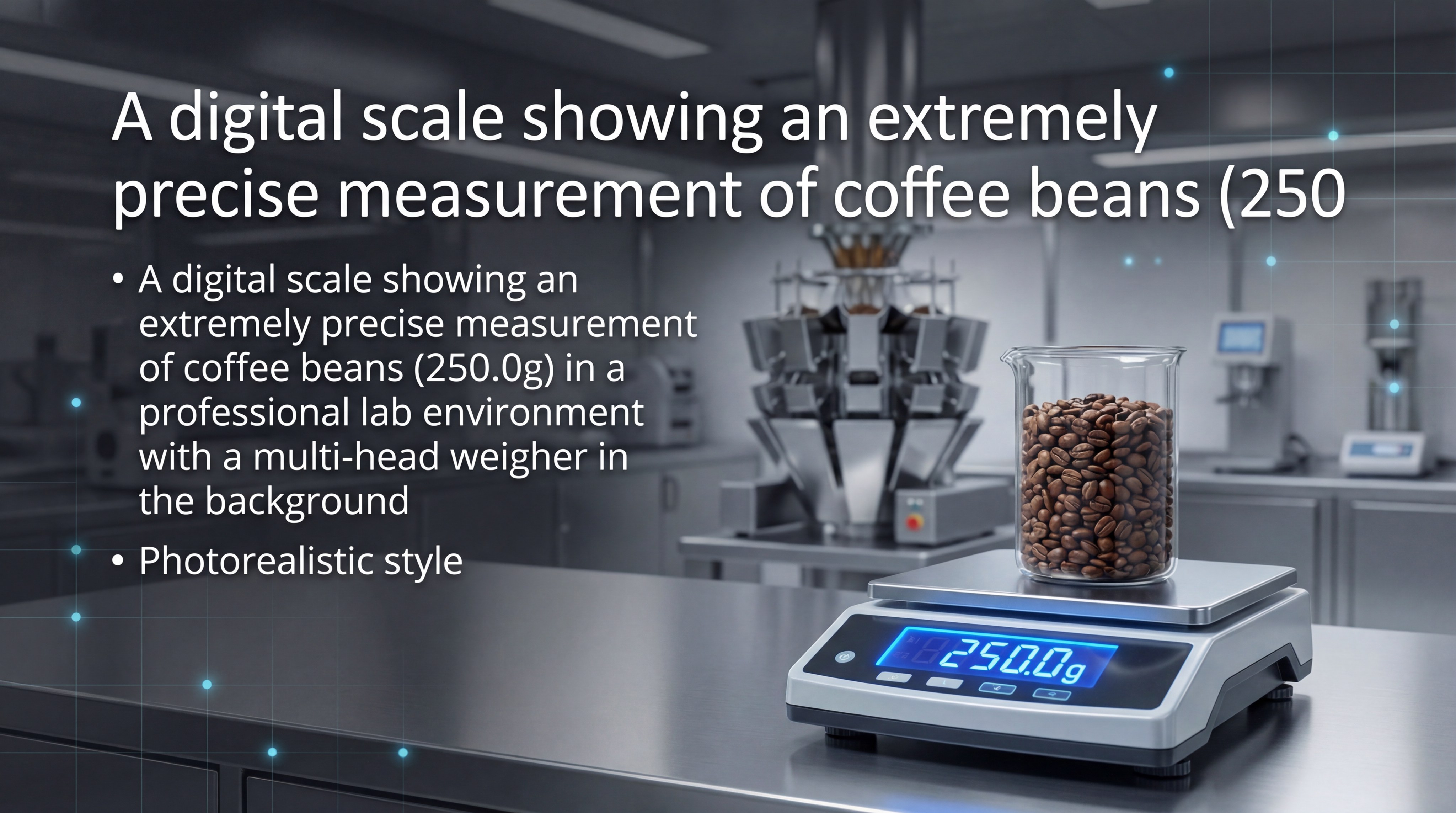
A 10-head weigher is the “workhorse” of the coffee industry, easily handling standard 250g to 1kg bags. A 14-head system offers more mathematical combinations, which translates to higher speeds and even tighter accuracy. Matching the auxiliary equipment like feeders to your head count is key to a balanced line.
Let’s break it down:
10 heads are ideal for speeds up to 70-80 bags per minute.
14 heads are better for 100+ BPM and very small weight increments.
Higher head counts provide better precision for expensive specialty beans.
Head Count
Target Weights
Best Use Case
10-Head
100g – 1000g
Standard retail bags
14-Head
50g – 2000g
High-speed retail/Bulk
20-Head
Multiple Weights
Mixed-bean bagging
Key Takeaway: For the majority of growing coffee brands, a 10-head system offers the best ROI and speed for retail packaging.
Choosing the right configuration prevents you from overpaying for unnecessary capacity or hitting a speed ceiling too early.
10. Why is Newideapack the top choice for weighers?
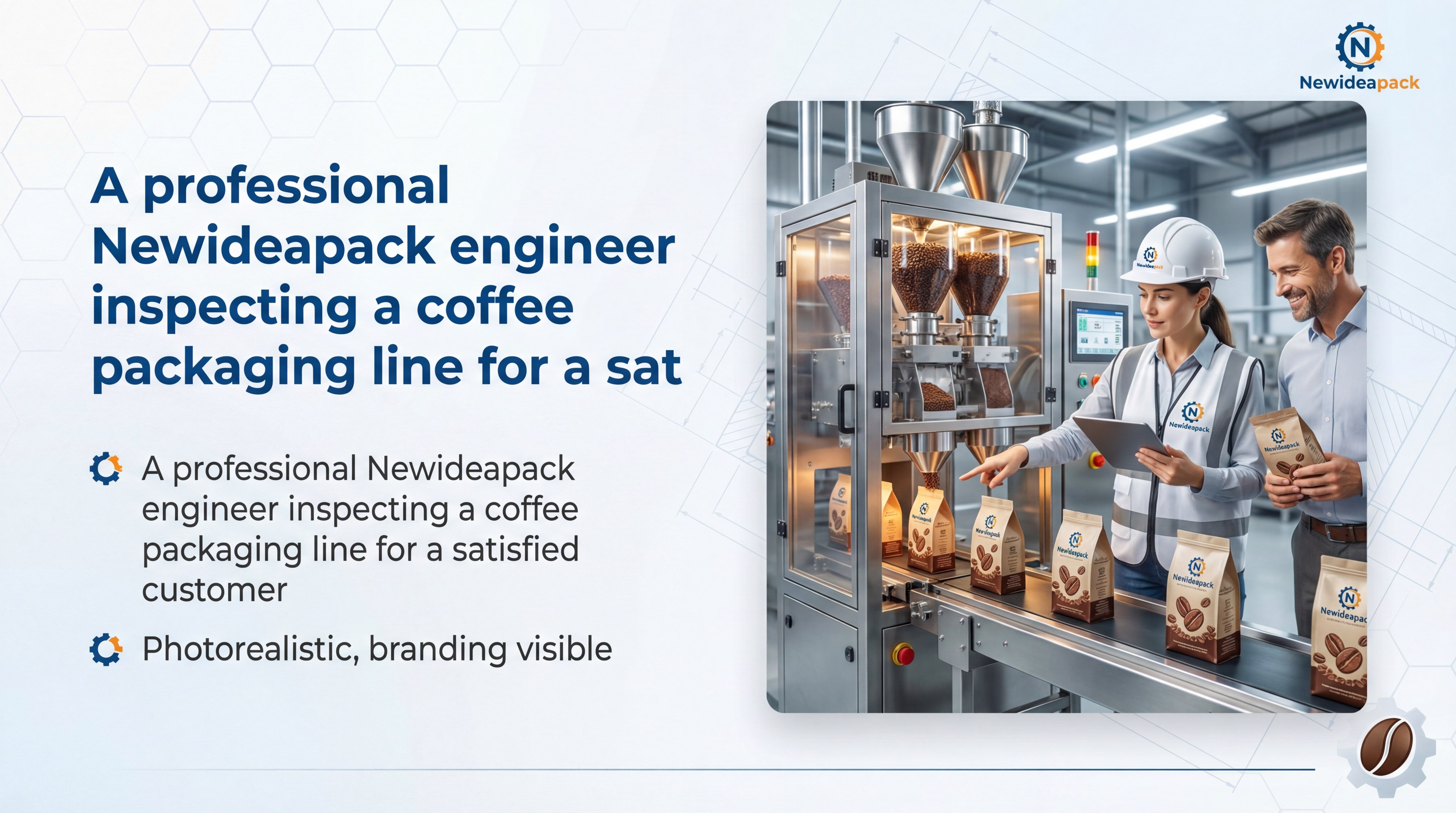
Newideapack is the top choice because we provide 18 years of technical expertise and direct engineer-to-engineer support for your unique bean profile. We don’t just sell a Multi-head weighter for coffee; we provide a custom-engineered solution. Our machines are calibrated to your specific roast levels and bag types to ensure immediate stability.
Engineering custom solutions for global roasters
We understand that every coffee brand has different needs, from oily dark roasts to fragile light roasts. Our team works with you to design a line that includes everything from the weigher to specialized pre-made bag packaging machines. We pride ourselves on 100% component traceability and global support.
What makes us different?
We offer custom-dimpled contact parts specifically for the coffee industry.
Our ±0.5g precision is backed by nearly two decades of R&D.
You gain direct access to our engineers for troubleshooting and optimization.
Service
Feature
Customer Outcome
Customization
Tailored contact parts
Optimized bean flow
Traceability
Full component tracking
Faster maintenance
Global Support
80+ countries served
Localized assistance
Key Takeaway: Partnering with Newideapack means gaining a technical ally that ensures your long-term production stability and growth.
We are dedicated to helping you scale your coffee brand with the most reliable automation technology on the market.
Conclusion
Transitioning to a multi-head weigher solves the most common bottlenecks in coffee production: speed, accuracy, and bean protection. By eliminating giveaway and labor-intensive manual filling, you can finally focus on what matters most—roasting exceptional coffee. Whether you need a 10-head workhorse or a fully integrated VFFS line, the ROI of this technology is undeniable for any brand looking to compete on a global stage.
At Newideapack, we don’t just build machines; we engineer stability. We provide the technical foundation that allows your coffee brand to scale without compromise.
Frequently Asked Questions
Can I use one multi-head weighter for different roast levels? Yes, you certainly can. Our digital control panels allow you to save multiple “recipes,” so you can switch between a dense light roast and a porous dark roast with a single tap on the screen.
What’s the best way to minimize bean breakage during weighing? The best way is to utilize a weigher with low-impact discharge chutes and optional buffer liners. Multi-head weighers are inherently better at this because they control the flow of product much more precisely than manual or linear methods.
How much product giveaway can I expect to save? Most roasters see a reduction in giveaway from 3-5g per bag down to less than 1g. Over a 100,000-bag production run, this saves you approximately 300-400kg of premium coffee.
Why should I upgrade from a linear weigher to a multi-head model? If your production exceeds 30 bags per minute or your giveaway is costing you hundreds of dollars a month, a multi-head system will typically pay for itself within 12 months through material and labor savings.
How do I know if a 10-head weighter is enough for my production? For standard retail coffee bags (250g to 1kg) at speeds up to 70 bags per minute, a 10-head system is perfect. If you need to exceed 80-100 BPM consistently, we recommend looking at a 14-head configuration.
Sales Pitch Component
If you are ready to eliminate product giveaway and double your packaging speed
contact us today for a custom consultation. Our mission is to revolutionize your packaging process through innovative technology and unwavering commitment to quality excellence.