What Proven Experts Know About Modern Compostable Coffee Packaging Tech
2025年11月25日 by newideapack
Sustainable brewing is the transition toward using biodegradable materials like PLA for single-serve coffee to reduce environmental impact, though it requires overcoming specific thermal sealing and barrier limitations. You likely want to lead the market with eco-friendly drip bags, but you are likely stuck dealing with melted films and wasted coffee beans. It is deeply frustrating when your commitment to the planet results in a pile of rejected, scorched inventory that eats your margins. By upgrading to advanced thermal logic from newideapack, you can successfully transition to compostable coffee packaging while keeping your production line running smoothly and efficiently.
Why is the shift to compostable coffee packaging accelerating?
The shift is primarily driven by global plastic bans and a massive surge in eco-conscious consumers who demand guilt-free single-serve brewing options. Brands are moving away from traditional plastics to align with corporate sustainability goals and avoid future regulatory penalties regarding waste. Transitioning to compostable coffee packaging allows you to capture the premium “green” market segment effectively while future-proofing your business against new environmental laws.
Are consumers really willing to pay more?
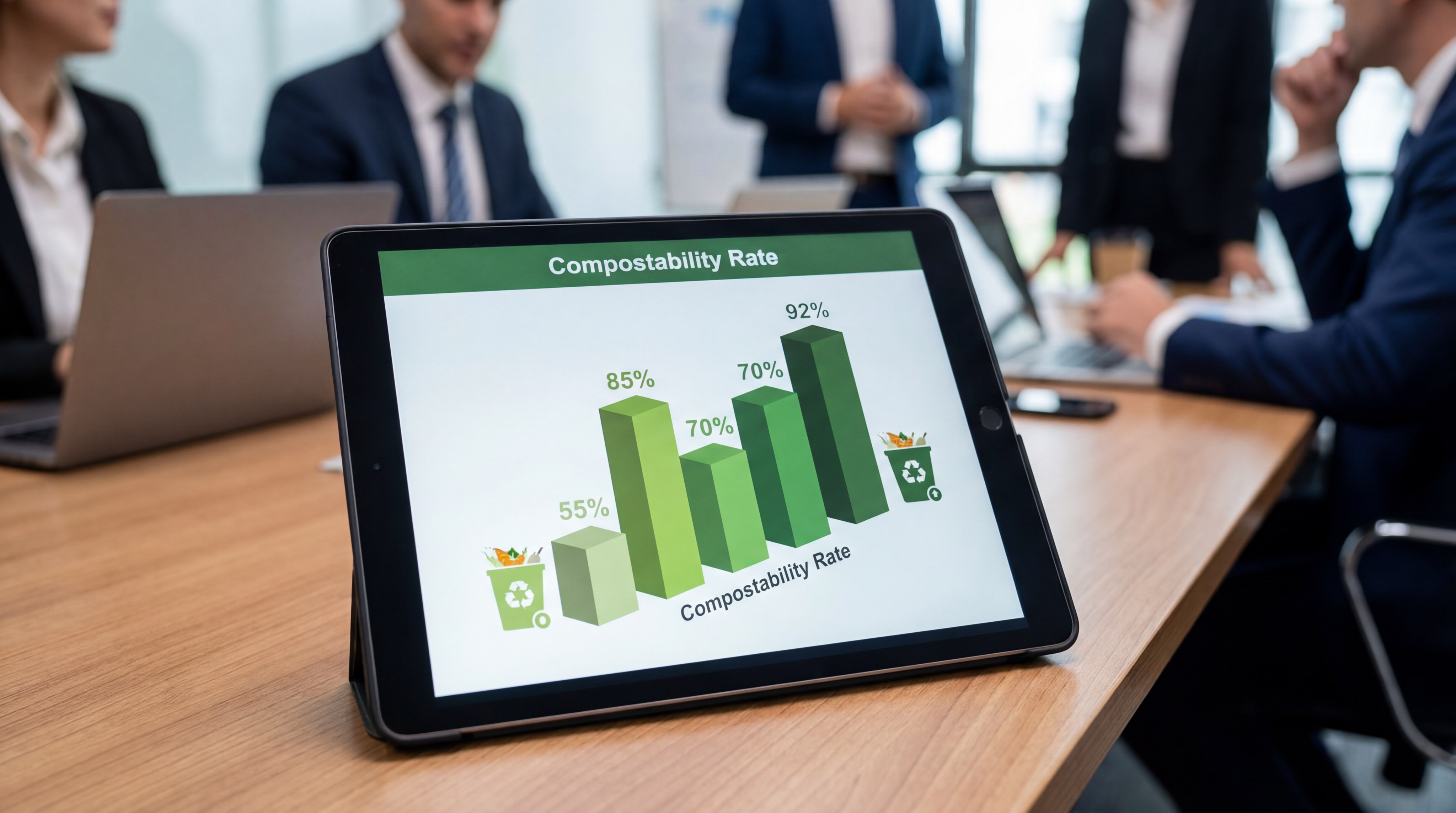
The short answer is yes, provided the quality of the brew remains consistent and the packaging feels premium. Recent market data suggests that nearly 70% of specialty coffee drinkers prefer brands using biodegradable materials over standard plastics.
Look at the facts:
Reduced environmental impact per serving.
Stronger brand loyalty among younger demographics.
Higher perceived value for artisanal products.
The truth is, sustainability has become a core part of the specialty coffee identity.
What are the main regulatory drivers?
Many regions are implementing “extended producer responsibility” laws that make you accountable for the packaging waste your brand generates. Switching to bio-materials now puts you ahead of the curve and protects your supply chain from sudden legislative changes.
Key drivers include:
European Union’s Single-Use Plastics Directive.
Increasing landfill taxes for non-recyclable materials.
Local municipal composting infrastructure growth.
Key Takeaway: Moving to compostable materials is a strategic move that secures long-term retail placement and brand trust.
Benefit Category
Impact Level
Business Value
Market Growth
High
Captures eco-conscious demographic
Compliance
Critical
Avoids plastic tax and fines
Brand Equity
High
Builds long-term consumer trust
Proactive adoption of sustainable materials creates a significant competitive advantage in the retail coffee sector.
What makes compostable coffee packaging materials so sensitive?
Bio-based films like PLA have much lower melting points than traditional plastics, making them extremely vulnerable to thermal damage during the sealing process. Understanding the molecular behavior of compostable coffee packaging is the first step in troubleshooting your production line issues. These organic polymers react poorly to the high heat settings used for PET or PE, often melting completely rather than forming a secure bond.
Why does PLA behave differently?
PLA is derived from fermented plant starch, which gives it unique organic properties that traditional petroleum-based polymers lack. Its molecular chains break down more easily under heat and moisture, which is great for the planet but hard for machines.
Think about it:
Glass transition temperature (Tg) is only around 60°C.
Melting point is significantly lower than PET.
Lower heat deflection makes it prone to warping.
Here’s the deal: you must recalibrate your heat bars for this narrow thermal window.
How does moisture affect stability?
Biopolymers are naturally more hygroscopic, meaning they absorb moisture from the surrounding environment much faster than plastic. If your storage area isn’t climate-controlled, the film may become brittle or fail to bond correctly during the sealing cycle.
Key Takeaway: Treating compostable films with thermal precision is the only way to ensure a leak-proof and professional finish.
Material Property
PLA (Compostable)
PET/PE (Traditional)
Melting Point
~150°C – 160°C
~220°C – 260°C
Heat Resistance
Low
High
Moisture Sensitivity
High
Low
Precise environmental control prevents material failure before the film even reaches the packaging line.
Can compostable coffee packaging handle high-speed sealing?
High-speed sealing is achievable, but it requires advanced technology that offers ultra-stable temperature control throughout the entire production run. Successfully scaling compostable coffee packaging production depends on your machine’s ability to maintain a narrow thermal window despite fluctuating speeds. If your temperature fluctuates by even 2-3 degrees, you will face either leaks from under-sealing or burn-through from over-exposure.
Why is dwell time so critical?
Dwell time is the secret sauce for a perfect seal on bio-films because it dictates how long heat is applied. Since PLA has a low melting point, you need a machine that can apply just enough heat over a precise millisecond range.
Consider these factors:
Shorter dwell times require slightly higher temperatures.
Longer dwell times risk melting the entire bag structure.
Inconsistent speeds lead to inconsistent seal quality.
Check this out: modern newideapack systems use servo-motors to keep this timing perfect every single time.
Does high speed always mean high waste?
Not if you use a system that synchronizes the feeding and sealing components perfectly through digital automation. Modern equipment uses intelligent sensors to adjust heat in real-time as the machine ramps up speed to maintain consistency.
Key Takeaway: High-speed production with bio-films is possible when using servo-controlled machines and precise thermal management.
Speed Variable
Impact on PLA Seal
Optimization Strategy
High Speed
Weak bond due to low heat
Use high-precision PID heaters
Low Speed
Burn-through/Warping
Reduce jaw pressure and temp
Ramp-up Phase
Variable seal strength
Automatic heat compensation
Investing in high-end automation is the only way to achieve commercial-scale output with sustainable films.
How do you prevent burn-through in compostable coffee packaging?
Preventing burn-through requires a combination of high-precision temperature sensors and specialized jaw coatings that distribute heat evenly across the film. Managing the thermal profile of compostable coffee packaging is often the most difficult part of the transition for traditional roasters. You must avoid “hot spots” on the sealing bars that can instantly liquefy the thin PLA layer before a bond can form.
What causes the film to melt?
The primary culprit is usually “overshoot,” where the heater exceeds the set temperature before cooling back down. Because bio-materials have no thermal buffer, this brief spike is enough to destroy the seal and ruin the bag.
Watch out for:
Poorly calibrated thermocouples.
Uneven pressure across the sealing jaw.
Accumulation of burnt material on the jaw surface.
The truth is, even a small residue on the bars can cause localized overheating.
Can jaw coatings help?
Using Teflon or specialized ceramic coatings on your sealing jaws can act as a heat buffer and prevent the film from sticking. This ensures a clean release and a smooth, professional-looking seal without any jagged or melted edges.
Check these benefits:
Reduced friction during the sealing cycle.
Even heat distribution across the contact area.
Easier cleaning of residual bio-resins.
Key Takeaway: Preventing burn-through is about eliminating temperature spikes and ensuring perfectly even heat distribution.
Cause of Burn-through
Solution
Temperature Overshoot
Install PID controllers
Mechanical Misalignment
Monthly jaw calibration
Surface Sticking
Apply premium Teflon coatings
Reducing heat-related waste is the fastest way to improve the ROI of your sustainable packaging initiative.
Why is PID control vital for compostable coffee packaging?
PID control is vital because it uses a complex algorithm to predict and prevent temperature fluctuations before they occur on the line. Without advanced thermal logic, your compostable coffee packaging line will suffer from inconsistent quality and high rejection rates. You need a system that learns how your specific heater reacts to the surrounding factory environment to maintain a flat temperature line.
How does PID improve consistency?
Unlike a standard thermostat that just turns “on” or “off,” a PID controller modulates the power sent to the heating element. It slows down the heating as it approaches the target to prevent any overshoot that could burn the PLA.
Think of it like this:
Proportional: Corrects the current error.
Integral: Accounts for past errors.
Derivative: Predicts future errors.
This ensures your sealing bars stay within ±0.5°C of your target temperature.
Is it hard to set up?
While it sounds technical, most modern newideapack machines come with “auto-tuning” features that do the heavy lifting for you. You simply run a test cycle, and the controller learns the thermal mass of your sealing jaws automatically.
Look at these steps:
Perform an auto-tune with the film loaded.
Monitor the “steady-state” temperature during operation.
Re-tune if you change to a different material thickness.
Key Takeaway: PID controllers provide the micro-level stability required to handle the narrow thermal windows of bio-materials.
Controller Type
Temp Stability
Suitability for PLA
On/Off Switch
±5.0°C
Poor (High waste)
Basic Digital
±2.0°C
Marginal
Advanced PID
±0.2°C
Excellent
Advanced PID logic is the backbone of any successful transition to sustainable materials.
Is ultrasonic sealing better for compostable coffee packaging?
Ultrasonic sealing is often superior because it generates heat internally through high-frequency vibrations rather than applying external heat to the film surface. This “cold sealing” method is perfect for compostable coffee packaging because it bypasses the burn-through risks entirely while saving energy. If you are struggling with thermal degradation, this technology offers a cleaner aesthetic and a much stronger bond on PLA-based non-woven filter fabrics.
How does ultrasonic sealing work?
It uses an acoustic tool called a “horn” to transmit vibrations into the material layers, causing them to rub together and melt locally. The heat is only present at the interface of the two layers, leaving the outer surfaces perfectly cool and intact.
Here are the perks:
No warm-up time required.
Seals through contaminants like coffee dust.
Extremely low energy consumption.
Believe it or not, this method eliminates 99% of seal-related rejects.
Is it worth the investment?
While the initial cost is higher than traditional heat bars, the reduction in film waste and maintenance often pays for itself within months. You also get a much more consistent seal that won’t leak during the rigors of shipping and handling.
Consider the ROI:
0% waste from burn-through issues.
Faster cycle times since no cooling phase is needed.
Stronger seals on thick compostable materials.
Key Takeaway: Ultrasonic technology eliminates the biggest headache of sustainable packaging by removing external heat from the equation.
Feature
Ultrasonic Sealing
Traditional Heat Sealing
Heat Source
Internal friction
External contact bars
Risk of Burn-through
Non-existent
High
Seal Strength
Exceptional
Dependent on temp control
Ultrasonic sealing is the gold standard for brands that refuse to compromise on package integrity.
How to use nitrogen in compostable coffee packaging?
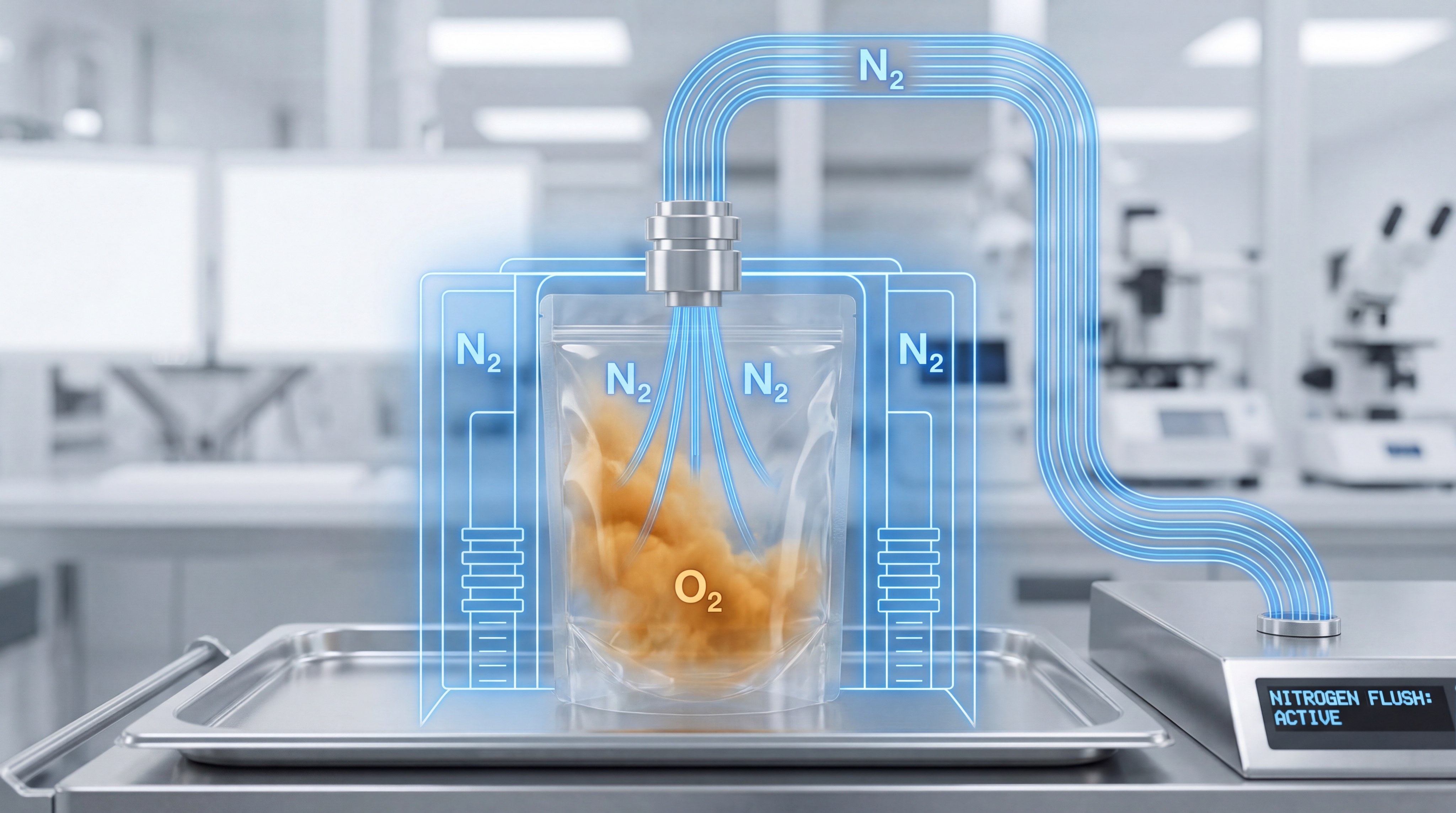
Nitrogen flushing is essential because bio-films are naturally more porous, requiring oxygen displacement to maintain the roasted coffee’s delicate flavor and aroma. Ground coffee is highly sensitive to oxidation, and within the context of compostable coffee packaging, you must use gas to push out the stale air. Without a proper nitrogen blanket, your eco-friendly coffee will lose its freshness significantly faster than it would in a traditional foil bag.
Why is oxygen the enemy?
Oxygen causes the volatile oils in coffee to go rancid, leading to a bitter or flat taste that will disappoint your customers. Since compostable materials have higher oxygen transmission rates, you must ensure the internal environment is 99% nitrogen.
Check these facts:
Nitrogen is inert and safe for food.
It displaces moisture along with oxygen.
It provides a “cushion” to protect the bag from crushing.
The truth is, without nitrogen, your shelf life is cut in half.
How do you implement it?
You need a machine with a high-purity nitrogen injection nozzle located just above the filling station to ensure the gas stays in the bag during the seal. This creates a modified atmosphere that preserves the “just roasted” scent every time a customer opens the sachet.
Key steps include:
Setting the flow rate to match your line speed.
Using high-purity (99.9%) food-grade nitrogen.
Regularly testing the residual oxygen levels.
Key Takeaway: Nitrogen flushing is the critical link between sustainable materials and specialty-grade freshness.
Preservation Method
Effect on Shelf Life
Flavor Retention
Standard Sealing
2-3 Months
Moderate
Nitrogen Flushing
6-12 Months
Excellent
Vacuum Sealing
8-10 Months
High (but risks bag tear)
Combining high-barrier bio-films with nitrogen is the only way to guarantee a premium experience.
How does moisture affect compostable coffee packaging?
Bio-films are highly sensitive to humidity and can become brittle or lose sealing integrity if they are not stored in climate-controlled environments. Managing the storage of your compostable coffee packaging is just as important as the packaging process itself to prevent material failure. If the PLA film absorbs too much water from the air, it can “bubble” during heat sealing or snap during the forming process.
Why are bio-films hygroscopic?
Unlike petroleum plastics, plant-based polymers have a molecular structure that naturally attracts water molecules. This is what allows them to break down in a compost pile, but it makes them vulnerable in a humid warehouse.
Think about this:
High humidity leads to premature degradation.
Moisture trapped in the film causes steam bubbles during sealing.
Brittle film results in high breakage rates.
You must keep your rolls wrapped in protective plastic until the moment they are used.
What is the ideal storage?
You should store your compostable rolls in a cool, dry place with a relative humidity level below 50% for maximum performance. This ensures the material remains flexible and the chemical properties don’t shift before they reach the consumer.
Look for these traits:
Temperature between 15°C and 25°C.
Avoid direct sunlight and UV exposure.
Use older stock first (FIFO system).
Key Takeaway: Proper material handling and storage are the foundations of a reliable and high-yielding production line.
Storage Condition
Impact on PLA
Recommended Range
High Humidity
Bubbling and weak seals
Below 50% RH
High Temperature
Film warping/Sticking
15°C – 25°C
Low Humidity
Brittle film/Snapping
30% – 40% RH
Controlling your warehouse environment is the easiest way to reduce downtime on the packaging floor.
Does compostable coffee packaging offer a high ROI?
While the initial material costs are higher, the ability to charge a premium and meet retail sustainability mandates creates a long-term profit boost for your brand. Investing in compostable coffee packaging is no longer just a “green” choice; it is a financial strategy that attracts high-value customers. You will find that specialty retailers are often willing to pay more for products that help them meet their own corporate ESG goals.
Are the margins sustainable?
Yes, because eco-conscious consumers are statistically proven to pay a 15-20% premium for products in biodegradable packaging. This extra margin more than covers the increased cost of PLA films and nitrogen flushing equipment.
Check this out:
Higher conversion rates in premium retail aisles.
Reduced waste taxes in regions with plastic regulations.
Massive PR value and brand differentiation.
Here’s the kicker: the cost of being “cancelled” for plastic waste is much higher.
How do you calculate the return?
Look beyond the per-bag cost and calculate the “lifetime value” of a customer who stays loyal because of your environmental values. When you use newideapack technology to reduce film waste, your actual cost per unit drops significantly over time.
Key Takeaway: Sustainable packaging is an investment in market share and brand longevity that pays dividends through customer loyalty.
Cost Factor
Sustainable (PLA)
Traditional (PET/PE)
Material Cost
Higher
Lower
Consumer Appeal
Very High
Decreasing
Regulatory Risk
Low
Very High
The long-term value of a plastic-free brand far outweighs the temporary savings of cheap materials.
What is the future of compostable coffee packaging tech?
The next generation of sustainable brewing involves AI-driven quality checks and home-compostable films that degrade even faster in backyard conditions. Staying informed about the latest compostable coffee packaging trends will give you a significant competitive edge as the market matures. We are moving toward a world where sustainable materials perform exactly like plastic, with zero compromises on barrier properties or sealing speed.
What is “Home Compostable”?
These are materials certified to break down in a standard garden compost bin within 26 weeks without requiring industrial heat. This removes the “infrastructure barrier” and makes your brand even more attractive to the average household user.
Keep an eye on:
Seaweed-based films.
Mushroom packaging inserts.
Paper-based barriers with bio-coatings.
Believe it or not, these are already in early-stage commercial testing.
How will AI change your line?
AI-driven thermal control systems will soon be able to detect the exact molecular composition of the film and adjust sealing parameters in real-time. This will eliminate human error and make the transition to sustainable materials foolproof for any operator.
Future AI features:
Predictive maintenance alerts.
Automatic waste reduction algorithms.
Real-time seal integrity scanning.
Key Takeaway: The future of packaging combines home-compostable convenience with AI-driven manufacturing precision to create a circular economy.
Future Trend
Expected Impact
Timeline
Home Compostable
100% consumer accessibility
1-3 Years
AI Thermal Logic
Zero-waste production
2-5 Years
Carbon-Negative Films
Climate-positive branding
5+ Years
The future of brewing is not just about the coffee in the cup, but the footprint left behind.
Implementing sustainable packaging doesn’t have to be a technical nightmare. By addressing the thermal sensitivity of PLA and investing in the right control systems, you can build a brand that is both profitable and planet-friendly. At newideapack, we are dedicated to helping coffee roasters transition to a greener future with reliable, high-speed automated solutions.
FAQ
Can I use my existing coffee packing machine for compostable films? Yes, you can, but you will likely need to upgrade your temperature controllers to high-precision PID units. The narrower melting window of bio-films requires far more accuracy than traditional petroleum-based plastics.
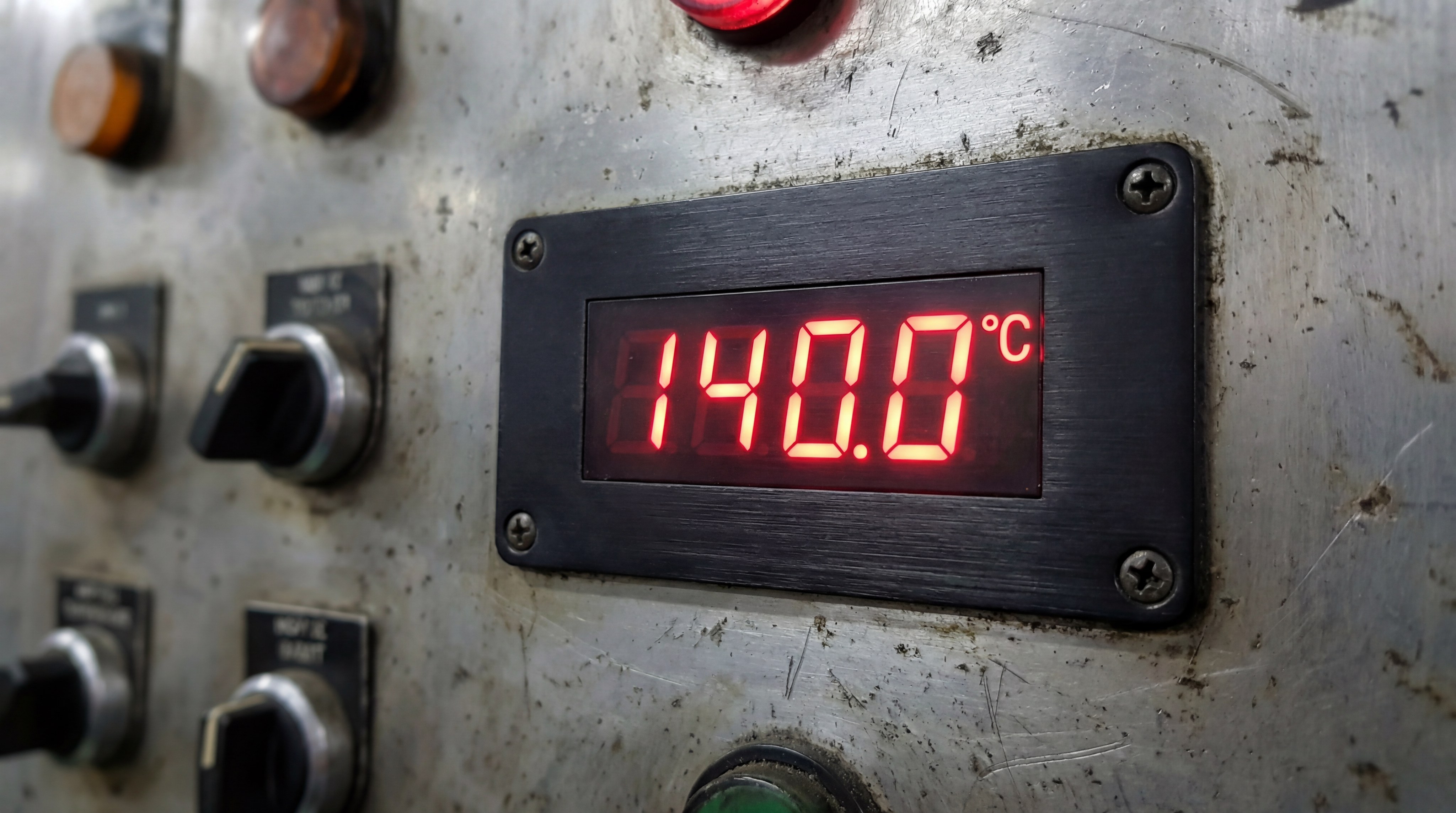
What’s the best temperature for sealing PLA drip coffee bags? Usually, the sweet spot is between 130°C and 150°C, depending on your film thickness and machine speed. You should always start at a lower temperature and work your way up to avoid immediate burn-through.
How do I know if my film is truly compostable? Always look for official certifications like BPI (USA) or TUV Austria (Europe) printed on the material specs. These logos ensure the material has passed rigorous tests for biodegradation, disintegration, and eco-toxicity.
Can I achieve a 12-month shelf life with compostable bags? Yes, it is possible if you use a high-barrier bio-film and implement a nitrogen flushing system. The nitrogen removes the oxygen that causes staling, while the barrier layer keeps the internal atmosphere stable.
How do I prevent the film from sticking to the sealing bars? The best way is to use a premium Teflon coating or a specialized “cold-touch” ultrasonic sealing system. This ensures that the film releases cleanly without leaving sticky residue that can build up and ruin future seals.
Sales Pitch Component
If you are ready to upgrade your production line or need expert guidance on the latest bio-film technology?
Please contact us today to discuss your specific needs.