What Proven Experts Know About Maintaining Bag Seal Integrity Success
2026年1月8日 by newideapack
Achieving zero leaks requires a combination of visual inspection, pressure testing, and advanced non-destructive methods to verify bag seal integrity throughout the production cycle. I’ve seen it happen a thousand times: a roaster spends months perfecting a blend, only for the customer to receive a bag of stale coffee because of a microscopic gap. Imagine your premium beans sitting on a shelf, slowly losing their aroma while oxygen creeps in through a weak corner. This isn’t just about a “bad bag”; it’s about your brand’s reputation being deflated by unhappy reviewers. Don’t worry, because I’m going to show you exactly how the pros ensure every pouch is airtight and market-ready.
Maintaining bag seal integrity is essential because it serves as the primary barrier against oxygen and moisture, which are the two greatest enemies of roasted freshness. If the seal fails, your nitrogen flush escapes, and the coffee begins to degrade immediately. Consistent testing prevents expensive product recalls and protects the complex sensory profile of your roast.
How does oxygen impact flavor?
The truth is, even a tiny leak can ruin the complex notes of a specialty roast within days. Oxygen triggers oxidation, turning those bright, fruity notes into something flat and metallic.
Think about this:
Rapid loss of volatile aromatics.
Development of rancid oils.
Immediate decrease in perceived quality.
But here is the kicker: you won’t know there’s a problem until the customer complains.
Can leaks affect your shelf life?
When you guarantee a six-month shelf life, you are essentially betting on the strength of your seals. A compromised seal reduces that window from months to just a few weeks.
Factor
Impact of Seal Failure
Shelf Life
Reduced by 70% or more
Freshness
Rapid oxidation of oils
Brand Image
Perception of low quality
This table highlights why a robust sealing process is non-negotiable for long-term storage.
How can you perform a visual bag seal integrity inspection?
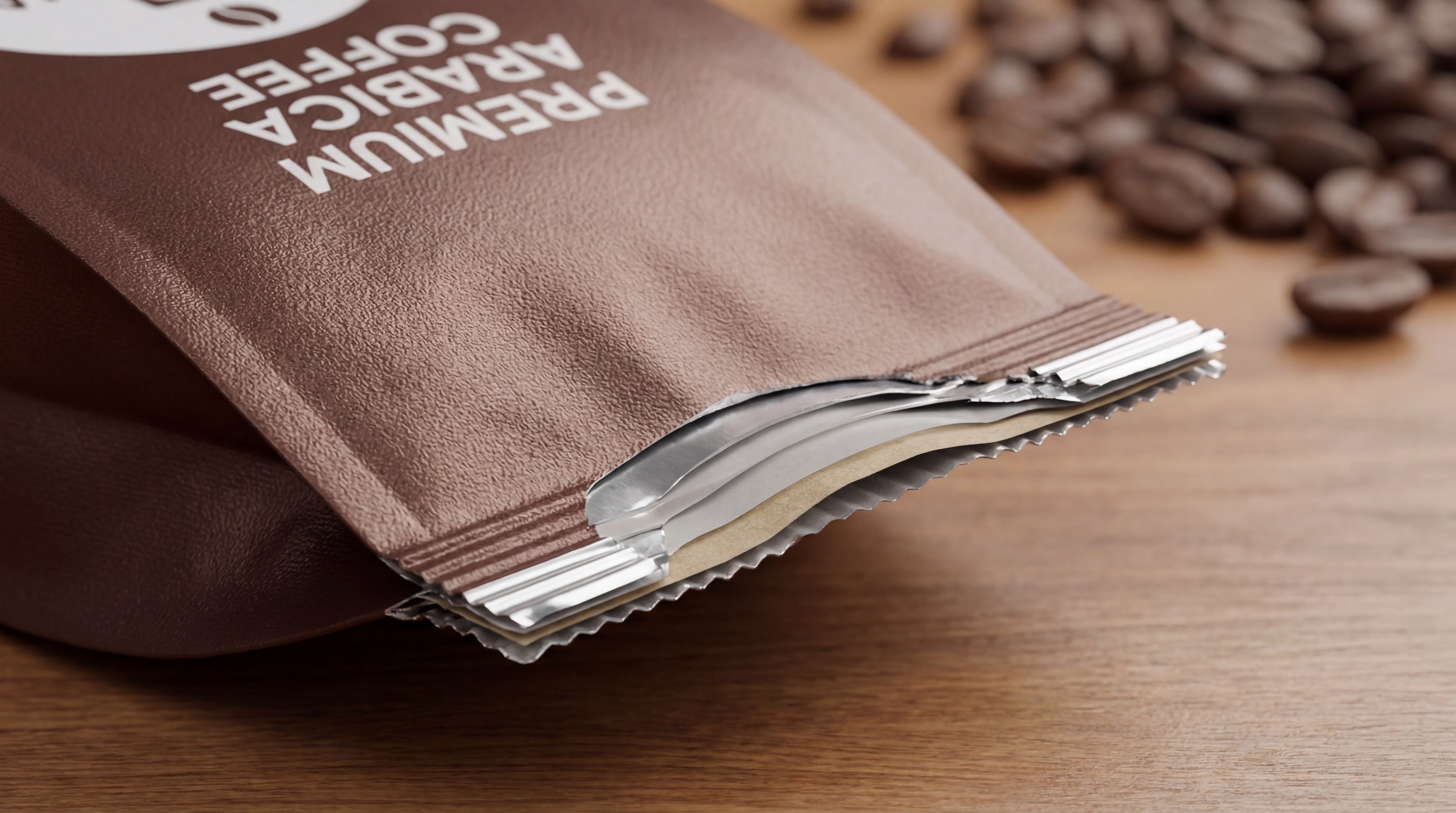
Visual inspection is the fastest way to monitor bag seal integrity on the production line without destroying your packaging. It involves checking for wrinkles, burns, or trapped coffee particles that might prevent a complete fusion of the plastic layers. This method serves as your first line of defense against mass production errors.
What should you look for during checks?
You need to train your eyes to spot the subtle signs of a failing seal before the bag leaves the conveyor. Check for “tunnels” or folds in the film where air could potentially sneak through.
Look out for:
Burn marks from excessive heat settings.
Misaligned seal patterns on the edges.
Trapped coffee grounds in the seam.
Wait, there’s more; even a perfect-looking seal can be weak if the temperature was too low.
Is manual checking enough?
While manual checks are great for catching obvious errors, they can’t detect microscopic pinholes. You should combine visual checks with more rigorous mechanical testing for total peace of mind.
Check Type
What it Detects
Visual
Wrinkles, burns, misalignment
Physical
General seal thickness and width
Detail
Trapped particles in the seam
Regular visual audits provide immediate feedback to operators for quick machine adjustments.
What is the vacuum decay method for bag seal integrity?
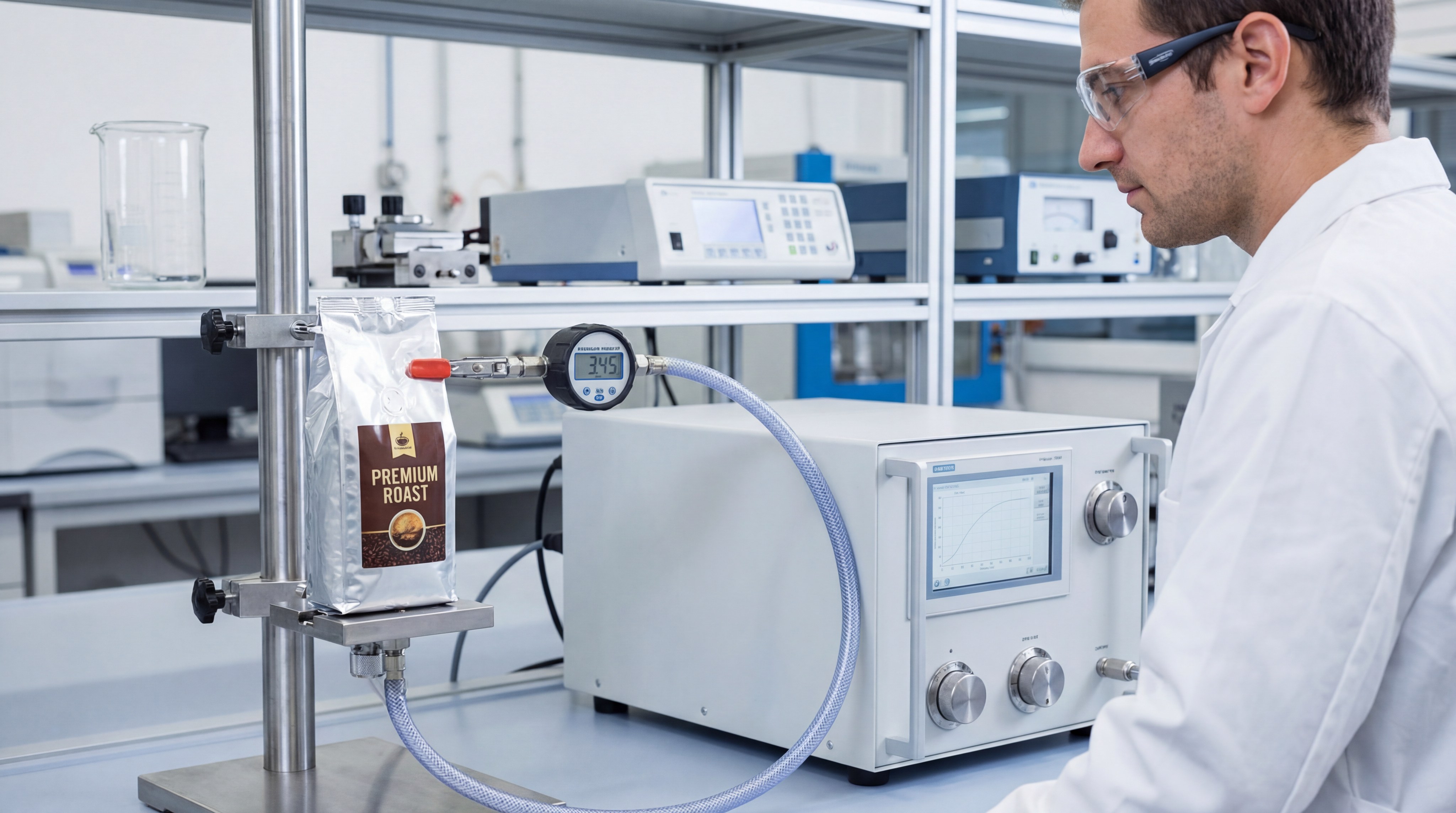
The vacuum decay method is a highly accurate, non-destructive way to verify bag seal integrity by measuring pressure changes in a sealed chamber. If the pressure rises, it means air is escaping from the bag, indicating a leak. This method is the gold standard for high-end production facilities.
Is it a non-destructive test?
One of the biggest wins here is that you don’t have to throw the bag away after testing it. Because the product remains safe for sale, you save significant money over time.
Here is the deal:
No waste of expensive coffee beans.
Faster testing cycles than water baths.
High sensitivity to tiny leaks.
This makes it a perfect daily routine for premium roasters.
Why use vacuum testing?
This method provides a definitive “Pass/Fail” result based on data, not human guesswork. It is especially useful for bags with one-way degassing valves that might confuse other tests.
Feature
Vacuum Decay Advantage
Accuracy
Detects holes as small as 5 microns
Speed
Results in under 30 seconds
Waste
Zero product loss per test
Using this data-driven approach ensures your quality control is repeatable and scientifically sound.
Does the bubble leak test find bag seal integrity holes?
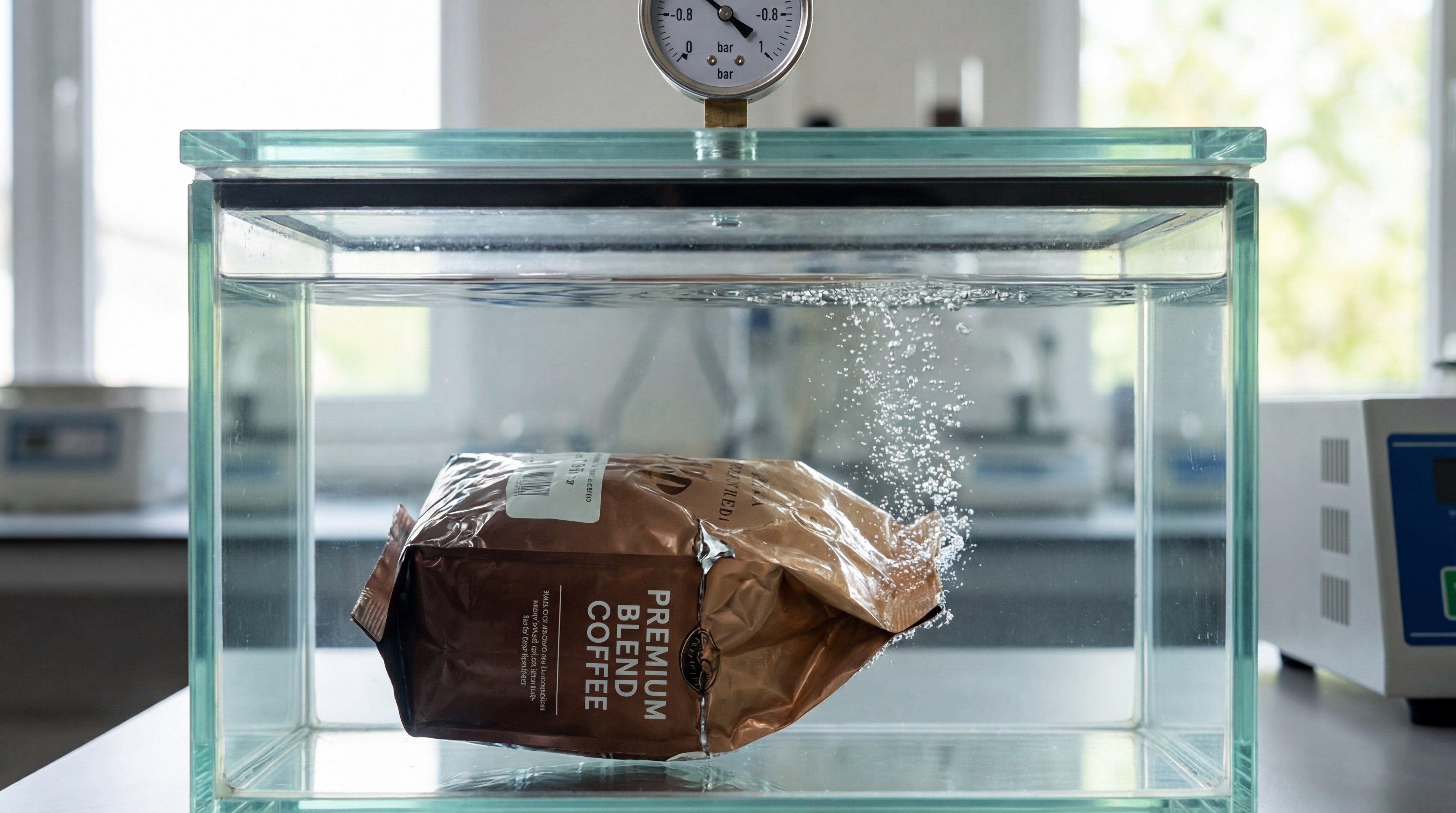
Yes, the bubble leak test is a classic, reliable way to pinpoint the exact location of a breach in bag seal integrity by submerging the bag in water. When a vacuum is applied to the tank, air is forced out of any holes, creating a visible trail. It is the best diagnostic tool for finding the “where” and “why” behind a seal failure.
How do you set up the tank?
Setting this up is actually quite simple and doesn’t require a massive investment in high-tech sensors. You just need a clear acrylic vacuum chamber filled with water and a steady eye.
The steps are simple:
Fill the chamber with clean water.
Place the coffee bag under the submerged plate.
Apply the vacuum and watch for bubbles.
But wait, don’t forget to check the degassing valve during this process!
What are the main benefits?
The biggest advantage is that you can see exactly where the leak is—whether it’s at the corner or the zipper. This helps you troubleshoot your machinery settings immediately.
Benefit
Practical Application
Visual Proof
See the physical location of the leak
Versatility
Works for any bag shape or material
Cost
Very low equipment investment
Seeing the bubbles allows your maintenance team to fix specific heater or jaw issues on the fly.
Is ultrasonic sealing better for bag seal integrity strength?
Ultrasonic sealing significantly improves bag seal integrity by using high-frequency vibrations to fuse the film rather than relying purely on external heat. This technology creates a bond that is often stronger than the surrounding material itself. It virtually eliminates “leakers” caused by particles trapped in the seam of a vffs packing machine.
How does the technology work?
Instead of heating the jaws, the machine sends ultrasonic waves through the film, causing molecules to melt from the inside out. This creates a clean, focused bond without the risk of burning the outer layers.
It’s a game changer because:
It seals through coffee dust and oils.
The jaws stay cool to the touch.
Energy consumption is much lower.
And here is the best part: it works perfectly for delicate drip coffee filters.
Why choose ultrasonic?
For many premium brands, the reliability provided by ultrasonic systems is the only way to ensure 100% success with dusty products. It is the ultimate solution for high-speed lines where contamination is a constant threat.
Comparison
Heat Sealing
Ultrasonic Sealing
Contamination
Fails with dust/oil
Seals through dust/oil
Seal Width
Wider, takes more film
Narrower, saves material
Strength
Good
Superior
Switching to ultrasonic tech often pays for itself through reduced waste and higher production speeds.
How does dye penetration reveal bag seal integrity gaps?
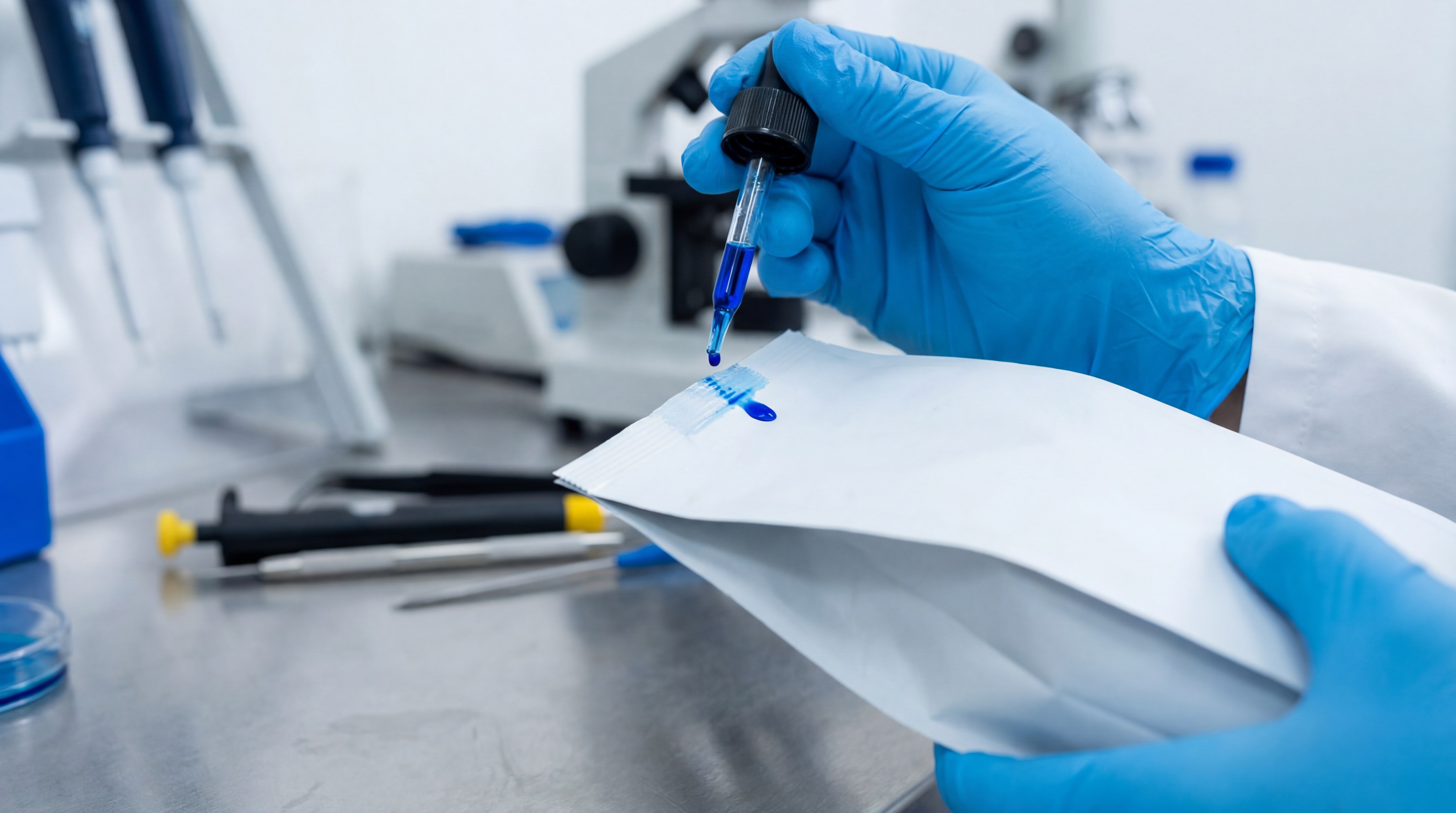
Dye penetration testing is a forensic method used to check bag seal integrity by applying a colored liquid to the seal area. If there is even a microscopic capillary path through the seal, the dye will seep through. This method is particularly effective for validating new film materials.
What are the test steps?
You typically apply a surfactant-based dye solution along the seal and wait for a specific duration. Capillary action pulls the dye into any voids that a visual check might miss.
Follow these steps:
Inject or spray the dye onto the seal.
Lay the bag flat for 20 seconds.
Inspect the opposite side for color streaks.
You might think this is overkill, but it’s essential for ensuring long-distance shipping reliability.
Is it messy to perform?
While it can be a bit messy compared to air testing, the results are undeniable and easy to document. It provides a physical record of the seal’s performance that is hard to argue with.
Aspect
Dye Penetration Details
Difficulty
Moderate (requires cleaning)
Result Type
Visual streak or stain
Sensitivity
Extremely high for thin gaps
Dye testing provides visible evidence of microscopic seal channels that air tests might miss.
Can burst testing prove your bag seal integrity limits?
Burst testing is a destructive method that verifies bag seal integrity by inflating the bag until it ruptures. This tells you the maximum internal pressure your packaging can handle before the seal fails. It helps you understand the safety margin for shipping on a coffee pod packing machine.
What is the peak pressure?
By measuring the exact PSI at which the bag bursts, you can determine if your production is consistent. It helps you understand the safety margin for shipping at high altitudes or in rough transit.
Consider these factors:
Peak pressure resistance levels.
Specific location of the break.
Uniformity of the seal bond.
Believe it or not, the bag should ideally burst in the material, not the seal.
Why test to failure?
Testing to failure reveals the “weakest link” in your packaging design. If the seal always breaks before the film, you know you need to adjust your heat or pressure settings.
Data Point
Value of Burst Testing
Burst Strength
Quantifiable seal toughness
Failure Mode
Identifies material vs. seal issues
Safety Margin
Predicts performance in transit
Quantifying your seal strength allows you to optimize material costs without risking quality.
Why use oxygen headspace analysis for bag seal integrity?
Oxygen headspace analysis is a critical post-production check for bag seal integrity that measures the concentration of oxygen inside the bag. Even if a bag is perfectly sealed, high oxygen levels mean your nitrogen flushing system isn’t working correctly. It is the final confirmation that your sealing and flushing processes are in sync.
How do sensors help?
Advanced sensors use a tiny needle to extract a sample of the gas inside the pouch. If the oxygen level is above 1%, it’s a sign that your seal or your gas flushing system is failing you.
Key benefits include:
Real-time feedback on gas flush quality.
Verification of barrier material performance.
Long-term freshness prediction.
You’re probably wondering how often you should do this; I recommend once every hour.
Is it worth the cost?
The equipment can be pricey, but the cost of one major batch of stale coffee is much higher. For roasters shipping internationally, this is the only way to truly guarantee a fresh experience.
Measurement
Ideal Coffee Target
Oxygen Level
Under 1.0%
Nitrogen Content
Over 99.0%
Test Frequency
Periodic batch sampling
Monitoring gas levels provides the ultimate proof that your coffee is protected by a chemical barrier.
How do automated sensors monitor bag seal integrity?
Automated sensors on modern production lines monitor bag seal integrity in real-time by using thermal cameras or infrared beams. This removes human error and ensures that 100% of your production is audited. Automation allows you to scale your production without scaling your risk.
Can AI detect leaks?
AI-powered vision systems are becoming the new standard in quality control. These systems can detect tiny anomalies in the seal pattern that the human eye would miss at high speeds.
Features of AI systems:
Pattern recognition for seal defects.
Immediate rejection of faulty bags.
Data logging for performance trends.
It’s like having a quality control expert watching every single bag, every single second.
Does it reduce waste?
By catching errors the moment they happen, automated sensors prevent you from running a full hour of “leakers.” This saves thousands of dollars in film and coffee costs over the month.
Sensor Type
Detection Capability
Infrared
Detects seal temperature and width
Vision System
Identifies wrinkles and particles
Pressure Check
Inline squeeze tests for leaks
In-line automation provides the only 100% inspection rate possible for high-volume coffee production.
What is the best frequency for bag seal integrity testing?
The ideal frequency for testing bag seal integrity depends on your volume, but most facilities perform at least one destructive test every hour. This ensures that any machine drift or temperature fluctuations are caught before a large batch is compromised. A regular testing rhythm is the only way to maintain a “Zero Leak” reputation.
Should you test hourly?
Testing every hour is the industry standard because it limits your “exposure” if something goes wrong. If you only test once a day, you might find out at 5:00 PM that everything since morning is faulty.
Recommended schedule:
Startup check at shift change.
Hourly visual audits on the line.
Mid-day destructive vacuum test.
Wait, there’s one more thing: always perform an extra test after changing a roll of film!
How to log your results?
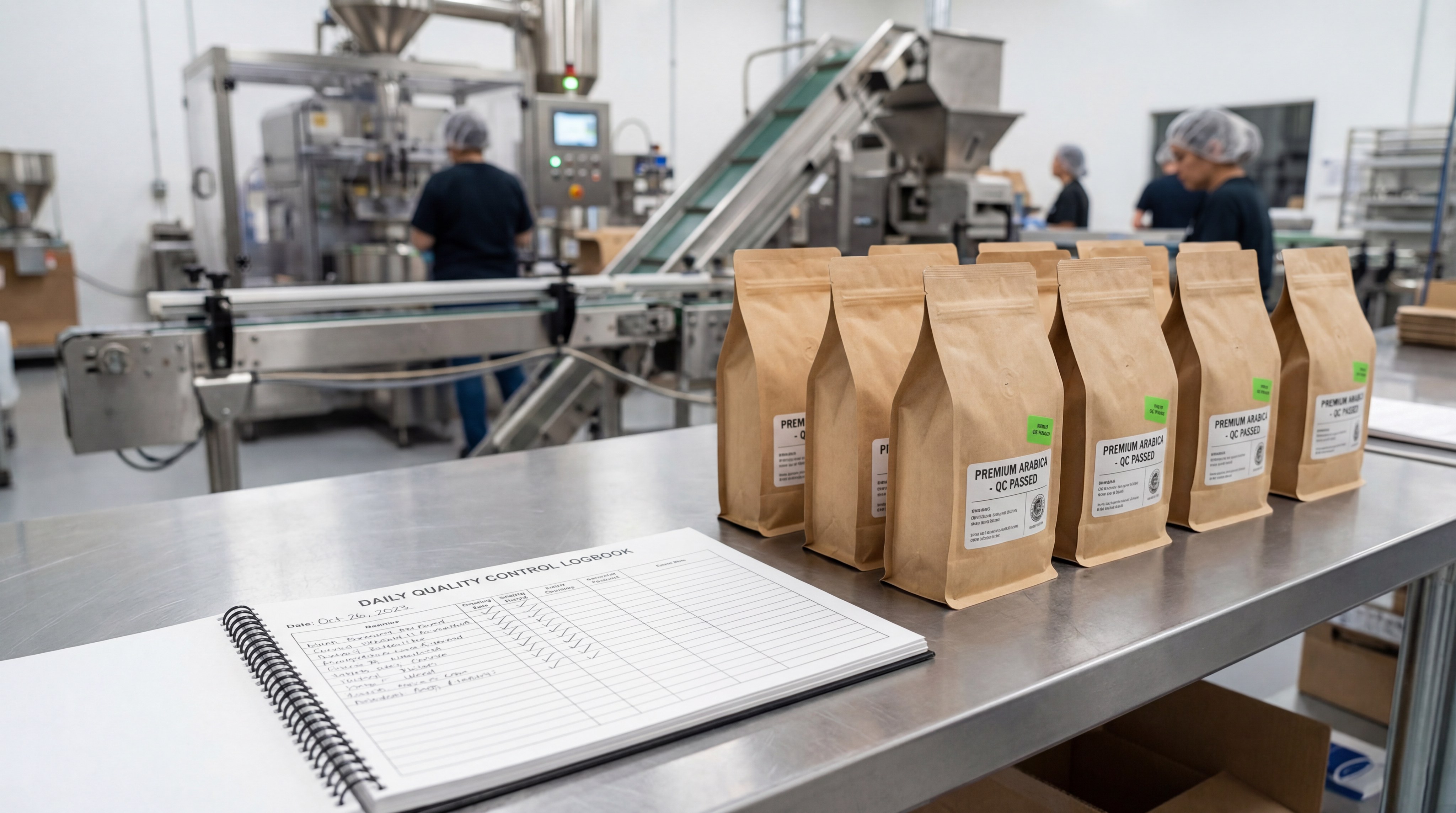
Keeping a digital or paper log of every test is vital for food safety audits and continuous improvement. It allows you to track the lifespan of your sealing jaws and predict when they need maintenance.
Timeframe
Action Required
Every 30 Min
Visual inspection of 5 bags
Every Hour
Vacuum or bubble leak test
Shift End
Full machine calibration check
A disciplined logging system turns “guessing” into a manageable, professional process for your team.
Frequently Asked Questions
Can I reuse coffee bags that fail the seal test?
Yes, provided the coffee isn’t contaminated. You can usually cut the failed seal off and run the coffee through the machine again, as long as you catch the error before oxidation sets in.
What’s the best way to test seals on a budget?
The bubble leak test is the most affordable. A simple clear tub of water and a manual vacuum pump can provide professional-level diagnostics for a fraction of the cost of electronic sensors.
How do I know if my sealing jaws are worn out?
You will see inconsistent seal patterns or “cold spots” during visual checks. If you notice that one specific side of the bag is consistently leaking, it’s a clear sign that your jaws need cleaning or replacement.
Can humidity affect my bag seal integrity?
Absolutely, high humidity can interfere with the heat transfer on certain film types. If your facility isn’t climate-controlled, you may need to adjust your sealing temperature as the weather changes.
Is one-way valve failure common in coffee bags?
It can be, but it’s often mistaken for a seal leak. Always perform a separate pressure test on the valve itself during your bubble test to ensure air isn’t escaping through the vent instead of the seam.
Conclusion
Mastering seal integrity is the difference between a thriving coffee brand and one that fades away due to inconsistent quality. By implementing the professional testing methods we’ve discussed—from simple visual checks to advanced vacuum decay—you can ensure that every bag you ship delivers the peak flavor your customers expect. At newideapack, we are committed to helping you achieve production excellence with the most reliable machinery and technical insights in the industry.
Sales Pitch Component
If you’re ready to eliminate leaks and boost your shelf life?
Contact us today to find the perfect packaging solution for your business. We don’t just sell machines; we protect your craft.