What Makes the Best Multi-lane powder packing machine for Coffee Growth
2025年9月9日 by newideapack
Scaling your ground coffee output is best achieved by implementing high-speed automation that processes multiple units in a single production cycle. You might find that your current packaging speed is the only thing standing between your artisan roast and a major retail contract, which creates a frustrating bottleneck for your business. This production ceiling agitates your growth potential and forces your team into expensive overtime just to keep up with basic demand. By integrating a multi-lane powder packing machine into your facility, you can multiply your daily throughput by up to ten times while maintaining absolute weight precision.
Why use a multi-lane powder packing machine for coffee?
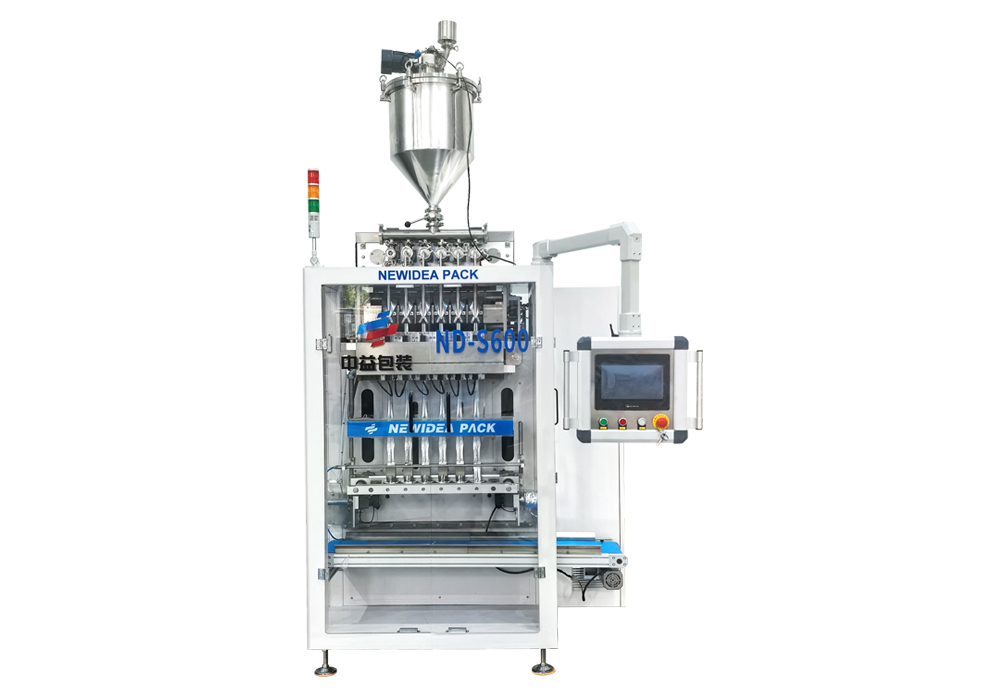
You use this equipment because it allows you to multiply your sachet production without increasing your factory footprint or labor headcount. A multi-lane powder packing machine is engineered to form, fill, and seal several bags simultaneously from a single wide film roll. This Newideapack technology ensures that your high-demand items, like single-serve ground coffee, move from the roaster to the shelf at record speeds.
Can you scale for retail demand?
Industrial output requires more than just speed; it requires reliability across every single lane. You see, when you transition to high-volume retail, your consistency must be flawless to protect your brand reputation.
Simultaneous production of 4 to 15 lanes.
Drastic reduction in cost-per-unit packaging.
Centralized control for entire production runs.
Is automation right for your roast?
Most roasters reach a point where manual or single-lane systems simply cannot compete with market pricing. Believe it or not, the ROI on a multi-lane system often realizes itself within the first year of operation.
Key Takeaway: Adopting multi-lane technology provides the necessary infrastructure to accept large-scale contracts without risking production delays.
Feature
Impact on Growth
Benefit
Output Volume
Massive scaling
Meets retail quotas
Labor Efficiency
Lower overhead
Higher profit margins
Brand Control
Consistent quality
Professional appearance
The strategic shift to multi-lane systems is the most effective way to lower your operational costs while increasing revenue.
How does a multi-lane powder packing machine boost speed?
This equipment boosts speed by utilizing a single film roll that is slit into multiple strips, allowing several bags to be formed and filled in one mechanical stroke. A multi-lane powder packing machine operates with synchronized movements controlled by a high-performance PLC system to maximize every second of uptime. This results in an output that often reaches hundreds of sachets per minute, far surpassing any single-lane alternative.
Why is synchronized movement key?
When all lanes move in perfect harmony, you eliminate the lag time associated with individual baggers. Here is the best part: the mechanical efficiency allows for higher speeds without increasing wear and tear on components.
High-speed servo motors for film pulling.
Automated slitting for precise bag widths.
Rapid sealing cycles for airtight sachets.
What are the real production numbers?
A standard 10-lane setup can easily produce over 30,000 bags per hour depending on your dose size. Check this out: that is nearly a quarter-million units in a single standard eight-hour shift.
Key Takeaway: Speed is the ultimate competitive advantage when you are looking to dominate the single-serve coffee market.
Configuration
Daily Output (8hrs)
Speed Tier
4-Lane System
~75,000 units
Mid-Range
10-Lane System
~190,000 units
High-Performance
15-Lane System
~300,000+ units
Industrial-Level
Understanding your daily target volume helps you select the correct lane count for long-term success.
Is a multi-lane powder packing machine precise for coffee?
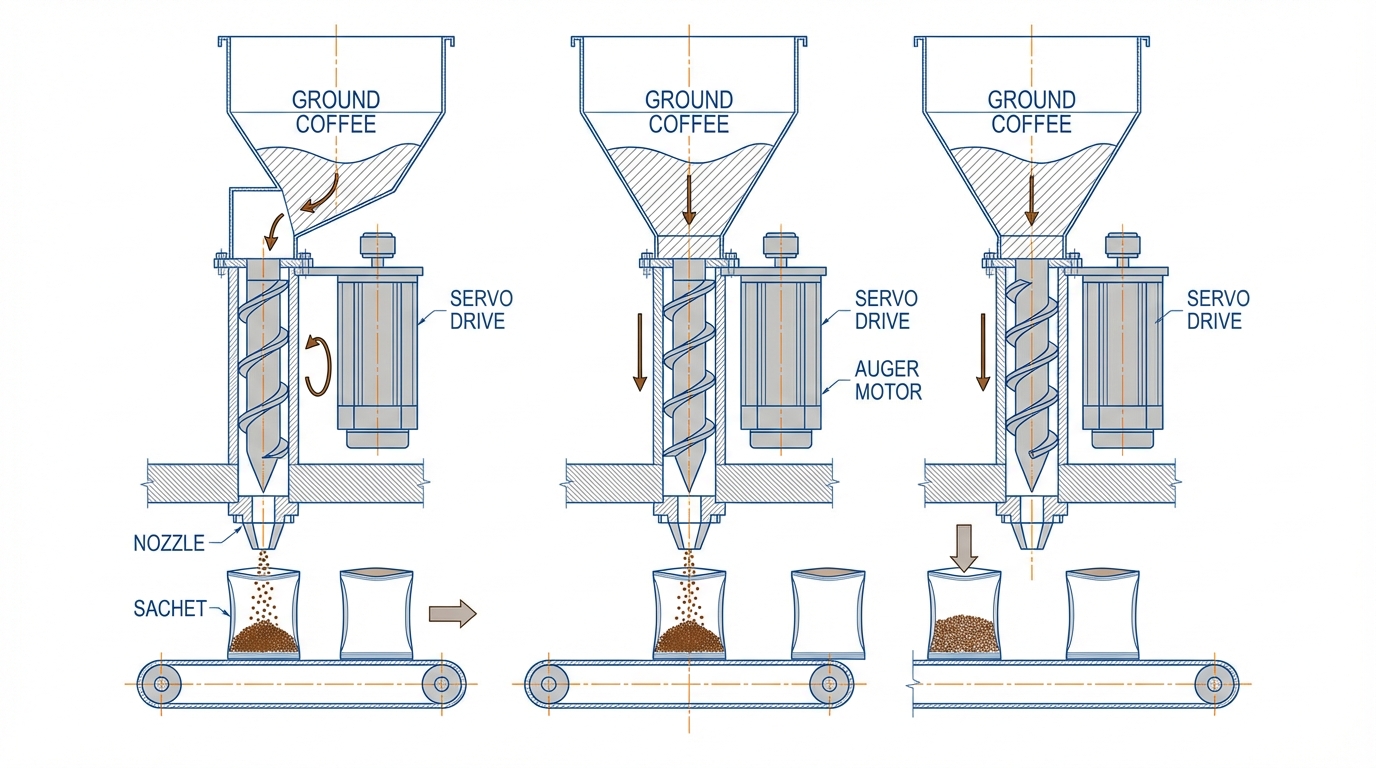
Precision is maintained through independent dosing systems for each lane, ensuring that every sachet contains the exact grammage required. A multi-lane powder packing machine typically uses servo-driven auger fillers that can be adjusted with millisecond accuracy. This level of Newideapack engineering prevents product giveaway and ensures that every customer receives the same flavor profile in every cup.
How does the auger filler work?
Individual augers rotate at specific speeds to dispense powder based on volume and density. The secret is this: high-torque servo motors provide the consistent force needed for oily or fine-ground coffee.
Precision dosing within ±0.1g to ±0.5g.
Independent lane adjustments via HMI.
Dust-free operation to protect seal integrity.
Can you handle different roasts?
Whether you are packing light, medium, or dark roasts, the machine adjusts to handle varying bulk densities. Think about it: consistent weight is the foundation of a professional consumer experience.
Key Takeaway: Precision dosing protects your profit margins by eliminating overfilling while maintaining strict product quality.
Accuracy Factor
Standard Dosing
Multi-Lane Auger
Weight Variance
±2.0%
±0.5%
Product Waste
Moderate
Minimal
Control Logic
Basic
Advanced Servo
High filling accuracy ensures that your most expensive blends are never wasted during the packaging process.
Does a multi-lane powder packing machine save space?
Yes, this machine saves a significant amount of floor space by consolidating the power and throughput of several machines into one compact frame. A multi-lane powder packing machine is designed to take advantage of vertical space, allowing you to scale your business without moving to a larger facility. This centralized design means you only need one operator station and one set of power and air connections.
Why is vertical design important?
By building the machine upwards, you maximize the utility of every square foot in your production zone. But wait, there is more: the compact nature makes the machine much easier to clean and monitor than a sprawling line.
Replaces up to 10 single-lane machines.
Centralized film and product loading areas.
Minimal footprint for maximum output density.
Is integration into small plants possible?
Even if your current facility feels cramped, a multi-lane unit can usually be positioned to streamline your existing workflow. Believe it or not, most facilities can fit a 6-lane machine in the space previously occupied by two manual benches.
Key Takeaway: Space-saving design allows you to increase your production capacity without the massive overhead of new real estate.
Facility Impact
Multiple Single-Lanes
One Multi-Lane
Floor Area
30+ Square Meters
~8 Square Meters
Utility Needs
Multiple drops
Single connection
Workflow
Complex/Fragmented
Streamlined/Linear
Consolidating your equipment footprint is a strategic move that simplifies facility management and lowers costs.
Can a multi-lane powder packing machine reduce film waste?
This technology reduces film waste by using advanced photocell sensors that ensure perfect alignment and cutting across every lane simultaneously. A multi-lane powder packing machine also features “no bag, no fill” logic to prevent messy spills and lost material if a lane fails to form. By using one wide roll of film instead of many small ones, you also reduce the amount of scrap material generated during roll changes.
How do sensors prevent waste?
The machine tracks registration marks on the film to ensure that the graphics and seals are always perfectly centered. You see, this eliminates the “trial and error” scraps often produced during the startup of older equipment.
Automatic film centering and tensioning.
Intelligent sensors to stop dosing on errors.
Precise cutting blades for zero-margin edges.
What about roll change downtime?
Changing one large roll of film is much more efficient than managing ten small rolls across ten different machines. It gets even better: you spend less time on setup and more time on actual revenue-generating production.
Key Takeaway: Minimizing film waste and product spills directly increases your net profit per bag produced.
Waste Category
Traditional Packing
Multi-Lane System
Film Scrap
High (per machine)
Low (centralized)
Product Spills
Frequent
Rare (Sensors)
Setup Loss
5-10%
<1%
Efficient material usage is essential for maintaining a sustainable and profitable coffee packaging operation.
What features define a multi-lane powder packing machine?
The defining features of this machine include its robust stainless steel construction, user-friendly HMI touchscreens, and the integration of high-performance internal components. A multi-lane powder packing machine is built to withstand 24/7 industrial operation while providing the operator with real-time data for every lane. Newideapack prioritizes hygiene and durability, ensuring that all contact parts meet the highest food-grade standards for coffee safety.
What controls the machine?
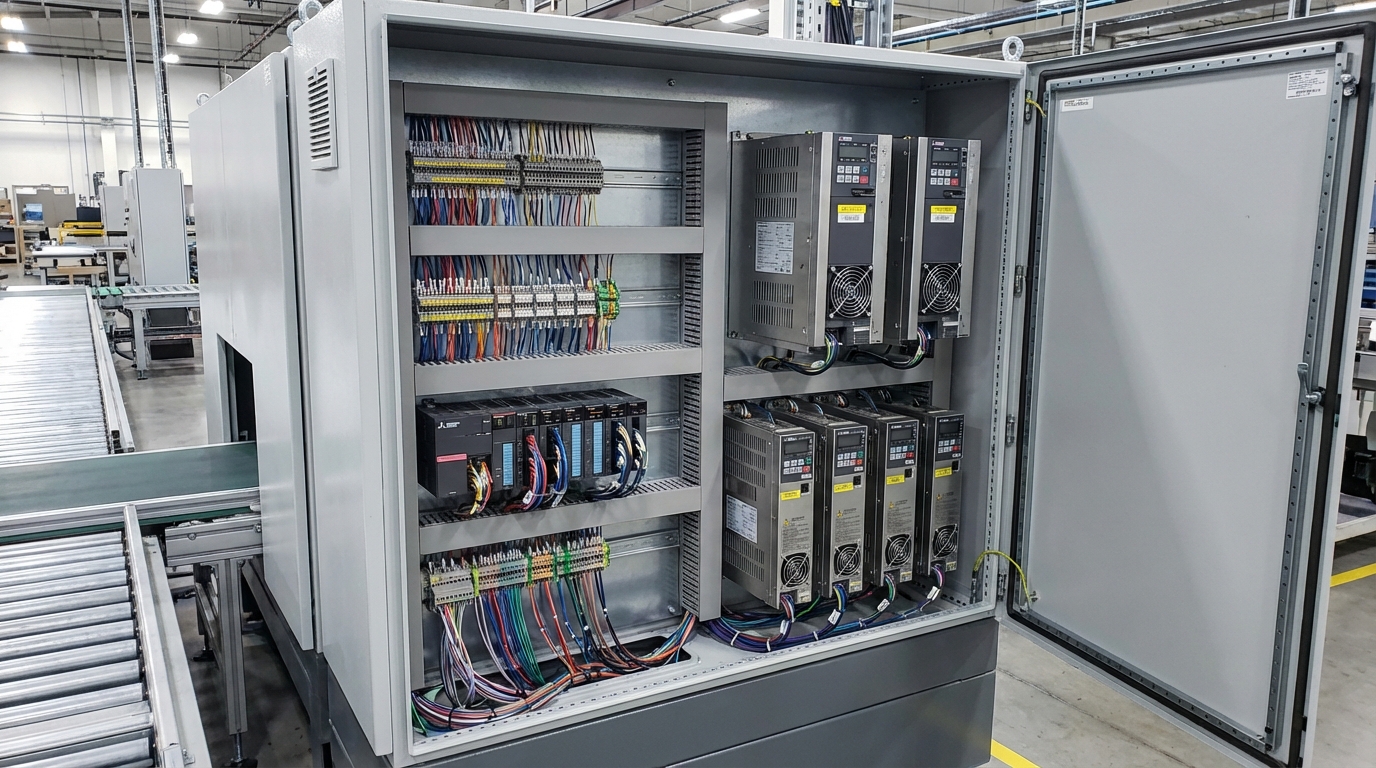
Advanced PLC systems from brands like Mitsubishi or Siemens act as the brain of the entire packaging process. Here is the key: these systems allow you to save recipes for different grinds and sachet sizes for instant changeovers.
Intuitive color touchscreen interfaces.
PID temperature control for perfect seals.
Modular components for easy upgrades.
Is the construction durable?
Industrial machines are built using high-grade stainless steel to resist the oils and fine dust produced by coffee. The truth is: a well-built machine can provide a decade or more of reliable service with minimal structural wear.
Key Takeaway: Investing in a machine with premium features ensures high uptime and reduces the need for frequent repairs.
Feature
Function
User Value
PLC Control
Logic Management
Reliable Operation
Touch HMI
Operator Input
Easy Settings
SS304 Frame
Structural Integrity
Longevity/Hygiene
Premium features are not just luxuries; they are the technical requirements for stable, high-speed production.
Is a multi-lane powder packing machine easy to maintain?
Maintenance is surprisingly simple because the machine is designed with modular parts and tool-less access points for routine cleaning and inspection. A multi-lane powder packing machine includes self-diagnostic software that alerts the operator to specific issues before they become major breakdowns. This proactive approach ensures that your coffee production line stays active during your busiest shipping seasons.
Can you clean it quickly?
Quick-release auger screws and easy-access seal bars allow your team to sanitize the machine in minutes. Check this out: keeping the machine clean is the best way to ensure consistent seal quality and product freshness.
Tool-free removal of dosing parts.
Automated lubrication systems for bearings.
Clear access to the film path for cleaning.
How does diagnostics help?
If a sensor detects an error, the HMI screen displays a specific code and a troubleshooting guide to fix it. Believe it or not, this allows your regular operators to handle 90% of maintenance tasks without an engineer.
Key Takeaway: Simplified maintenance protocols reduce your dependency on specialized technicians and keep your production moving.
Maintenance Task
Traditional Time
Multi-Lane Time
Daily Cleaning
45 Mins
15 Mins
Film Change
10 Mins
3 Mins
Fault Finding
Manual
Automatic/Digital
A machine that is easy to maintain is a machine that stays in production, maximizing your ROI.
How to choose a multi-lane powder packing machine for coffee?
Choosing the right machine involves analyzing your current daily output, your desired sachet style, and the specific flow characteristics of your ground coffee. A multi-lane powder packing machine should be selected based on its ability to handle your finest espresso grinds and your coarsest drip grinds without clumping. You should also consider future-proofing your business by selecting a machine with more lanes than you currently need.
Which sachet style is best?
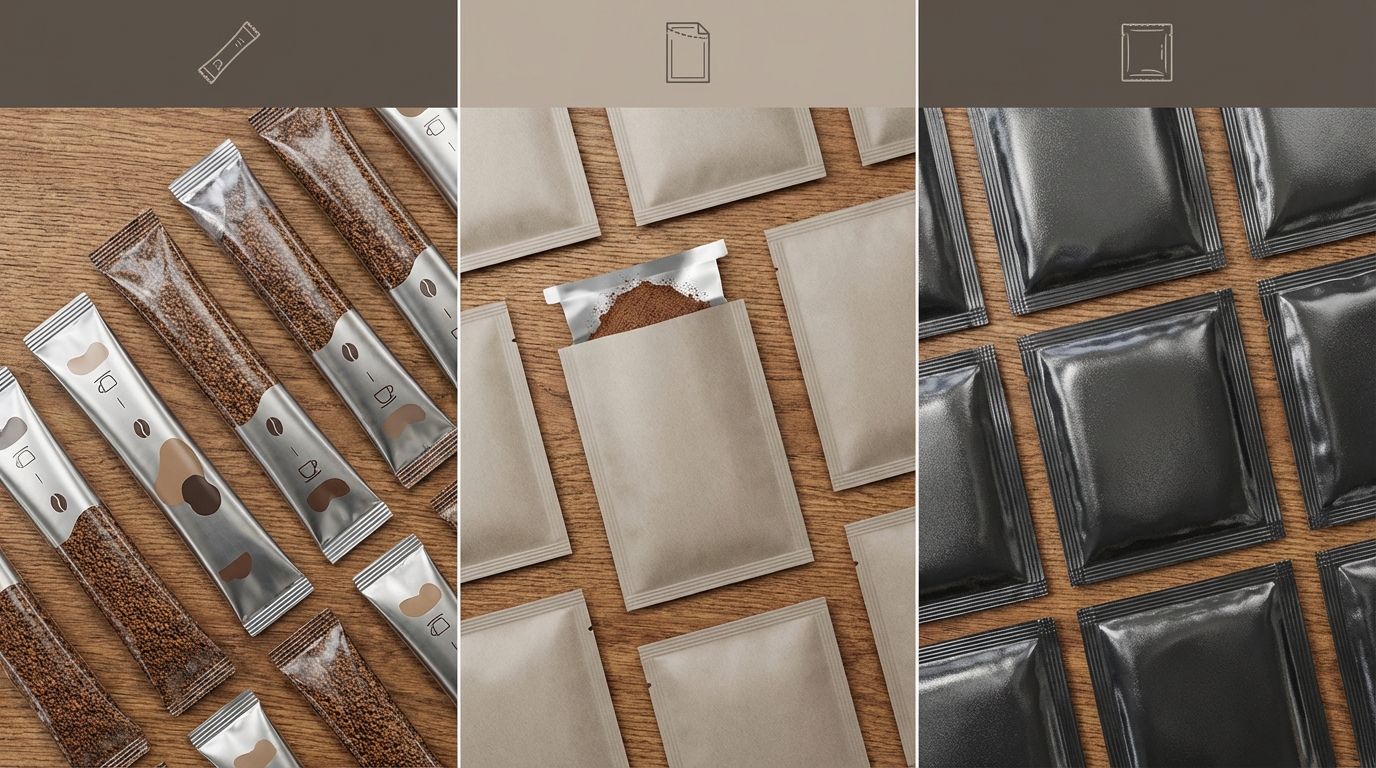
Stick packs are perfect for travel, while 4-side seal sachets provide a more premium, high-end feel for retail shelves. You should consider: your target audience’s preferences will dictate the mechanical configuration of your machine.
Stick pack vs. 4-side seal options.
Variable lane counts (4, 6, 10, 15).
Compatibility with various film materials.
Does your grind size matter?
Fine powders behave differently than granular products, so your auger flighting must be matched to your coffee. Do not miss this: testing your product with the manufacturer is the only way to guarantee filling accuracy.
Key Takeaway: Customizing the machine to your specific product and market needs ensures a seamless integration into your business.
Decision Criteria
Small Roaster
Large Roaster
Ideal Lane Count
4-6 Lanes
10-15 Lanes
Primary Goal
Consistency
Maximum Volume
Bag Style
Stick/Sachet
Sachet/Custom
Making an informed choice during the selection phase prevents the need for expensive equipment modifications later.
Will a multi-lane powder packing machine ensure freshness?
Yes, the machine ensures maximum freshness by integrating nitrogen flushing systems that displace oxygen before the final hermetic seal is made. A multi-lane powder packing machine creates airtight barriers that lock in the volatile aromas and oils that make your coffee special. This Newideapack freshness technology extends the shelf life of your ground coffee from a few weeks to over a year.
How does gas flushing work?
The machine injects food-grade nitrogen into each sachet just milliseconds before it is heat-sealed. Wait, it gets better: this process reduces oxygen levels to below 2%, effectively stopping the oxidation process.
Integrated nitrogen injection ports.
High-pressure sealing for zero leaks.
Compatible with high-barrier foil films.
Is seal integrity guaranteed?
PID temperature controllers maintain constant heat on the sealing jaws, ensuring every bag is perfectly fused. The result is simple: your customers get the “just roasted” smell every time they open a sachet.
Key Takeaway: Advanced freshness features are essential for expanding your distribution to international markets or long-term retail.
Freshness Level
No Protection
Nitrogen Flushed
Aroma Loss
High/Fast
Very Low
Shelf Life
1 Month
12+ Months
Flavor Profile
Degrades
Preserved
Providing a fresh product is the most effective way to build long-term customer loyalty and repeat sales.
Is a multi-lane powder packing machine a good investment?
This machine is one of the best investments for a growing coffee brand because it significantly lowers the labor cost per unit while increasing your total sales capacity. A multi-lane powder packing machine allows you to bid on massive contracts that were previously impossible to fulfill with smaller equipment. The ROI on these systems is typically very fast, especially when you factor in the reduction in film waste and the consolidation of your workforce.
What is the primary ROI driver?
The massive increase in throughput allows you to generate more revenue from the same facility and staff. Think about this: if you can pack 400 bags a minute instead of 40, your profit potential scales exponentially.
Significant reduction in labor overhead.
Ability to accept wholesale and retail contracts.
Long-term reliability with low operating costs.
Can it handle future growth?
By choosing a multi-lane system, you are “future-proofing” your production line for the next decade of success. The bottom line is: automation is the bridge that takes your business from local artisan to national brand.
Key Takeaway: High-speed automation is not just an expense; it is a strategic asset that fuels your company’s expansion.
Investment Metric
Single-Lane
Multi-Lane
Output Potential
Low
High
Labor Cost
High
Low
ROI Period
Longer
Shorter (at volume)
A multi-lane system is the engine that will drive your coffee brand to the next level of industrial success.
Conclusion
Scaling your ground coffee output requires a strategic shift from manual processes to the high-efficiency world of multi-lane automation. We have explored how a multi-lane powder packing machine eliminates production bottlenecks, ensures extreme weight precision, and protects the freshness of your unique roasts through nitrogen flushing. At Newideapack, we specialize in helping roasters bridge the gap between small-batch production and industrial-level distribution.
Frequently Asked Questions
Can I change the sachet size on a multi-lane machine easily? Yes, most modern machines allow for bag length adjustments through the touchscreen, though width changes may require a different forming set.
How do I know if my coffee grind is suitable for an auger filler? Yes, ground coffee is ideal for auger systems because its consistent particle size allows for highly predictable volumetric dosing.
What is the best way to handle oily dark roasts? Yes, you can use specialized coatings or agitators in the hopper to ensure the coffee flows smoothly without sticking to the machine parts.
Can I pack different flavors on different lanes at the same time? No, because all lanes pull from a single film roll and a shared hopper, you must run the same product and film across all lanes.
How many operators do I need for a 10-lane machine? Yes, a single trained operator can typically manage the entire machine, including film changes, product loading, and basic monitoring.
Sales Pitch Component
If you are ready to take control of your production future and scale your brand with confidence
Contact us today to discuss your specific requirements.