What Makes The Best Drip Bag Weight Standard For Professional Roasters
2025年11月26日 by newideapack
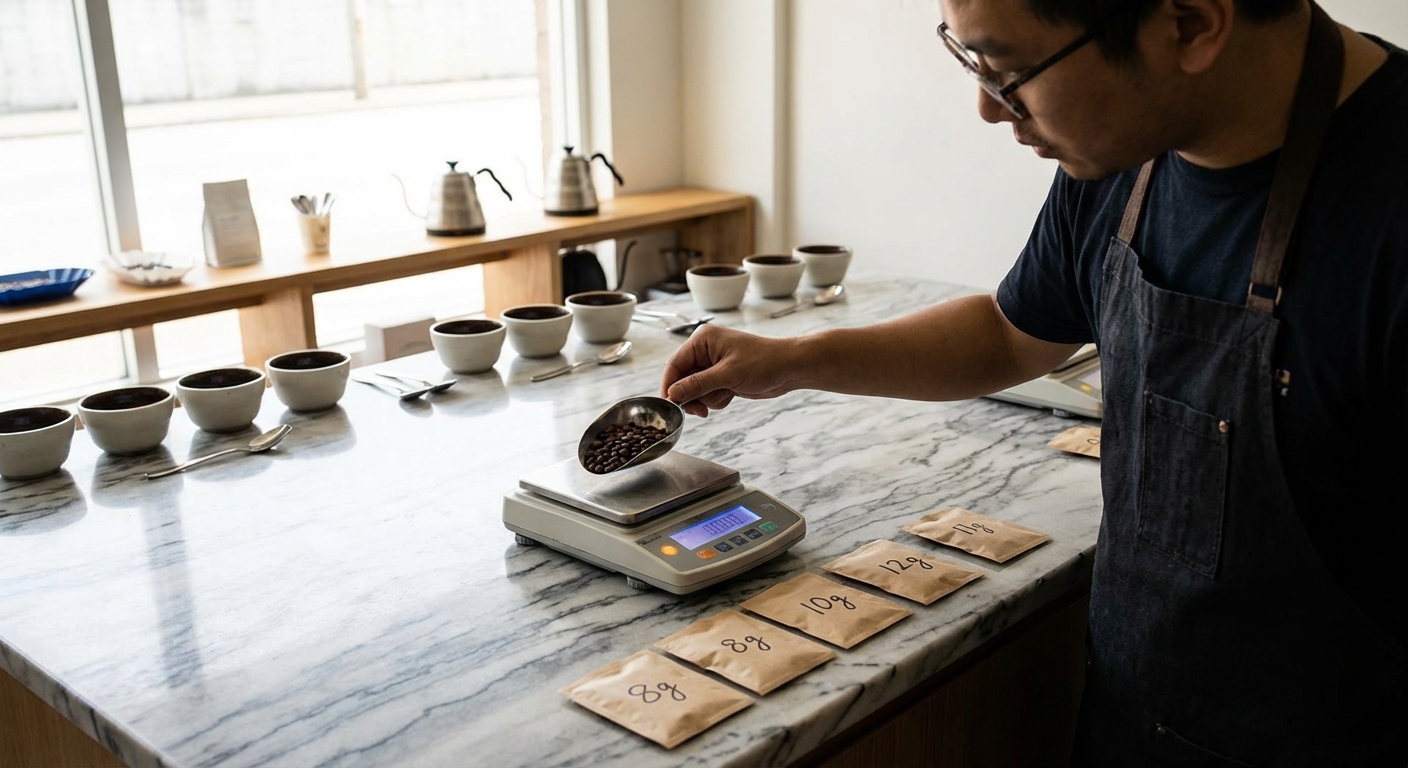
The golden weight standard for most drip coffee bags is 10g, as it provides the most balanced flavor profile for standard cup sizes while maintaining production efficiency. Imagine you are a coffee brand owner who has just launched a new line, only to receive feedback that your coffee tastes weak and watery. You’ve invested in high-quality beans and beautiful branding, but because your dose was off by just two grams, the consumer experience is ruined and your margins are shrinking due to inconsistent waste. To solve this, you need a rigorous drip bag weight standard that aligns your flavor goals with technical packaging capabilities.
Establishing a strict drip bag weight standard is essential because it serves as the foundation for flavor consistency and consumer trust in your brand. When your dosing is standardized, you ensure that every customer experiences the exact profile your roast master intended.
Does consistency impact your brand reputation?
Consistency is what separates professional coffee roasters from amateurs in the eyes of the consumer. If one bag is 8g and the next is 10g, the strength of the brew will vary wildly, leading to negative reviews.
It ensures a repeatable brewing experience for the user.
It builds a perception of premium quality and precision.
It allows for accurate caffeine and nutritional labeling.
Think about this:
Can weight influence your total production costs?
Small deviations in weight can lead to thousands of dollars in lost product over a single production year. At NewIdeaPack, we help clients optimize their dose to ensure they aren’t “giving away” expensive specialty coffee through overfilling.
Precise dosing protects your profit margins on high-end beans.
It prevents material waste caused by overfilled bags bursting.
Standardized weights simplify your shipping and logistics calculations.
But here is the kicker:
Key Takeaway: A defined weight standard is a strategic business tool that stabilizes both your flavor profile and your bottom line.
Factor
Impact of 8g
Impact of 10g
Impact of 12g
Flavor Profile
Delicate / Tea-like
Balanced / Versatile
Bold / Intense
Material Cost
Lowest
Moderate
Highest
Target Market
Mass Market
Premium / Specialty
Ultra-Premium
Analyzing these metrics allows you to select a weight that aligns with your specific market positioning and financial targets.
Is 8g coffee enough for a satisfying cup?
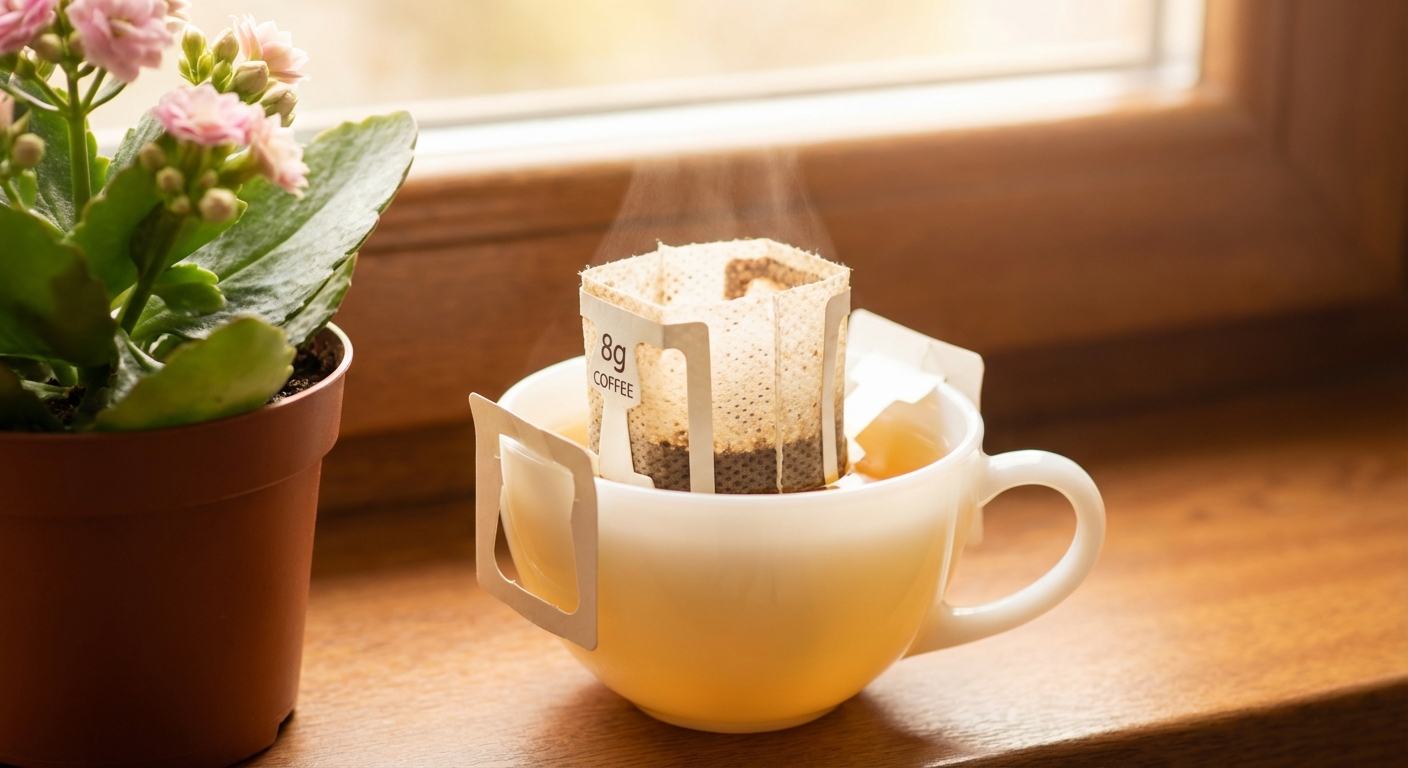
An 8g dose is sufficient for creating a lighter, more delicate cup of coffee that appeals to casual drinkers or those who prefer a tea-like consistency. Implementing this drip bag weight standard is the most cost-effective path for brands targeting high-volume retail or hotel amenities.
Is 8g ideal for the “Daily Drinker” market?
This weight is perfect for consumers who use smaller cups (120ml-150ml) and want a quick, clean caffeine boost. It is highly effective for breakfast blends where a subtle flavor is preferred over intense bitterness.
It allows for the lowest retail price point per unit.
It fits easily into the smallest standard filter bag sizes.
It is ideal for subscription samplers and gift boxes.
Does that sound like your audience?
How do you prevent an 8g bag from tasting weak?
The secret to a successful 8g bag lies in the grind size; you must use a finer grind to increase the contact time between water and coffee. This ensures that the water doesn’t simply “pass through” without extracting the essential oils and flavors.
Recommend a lower water volume on your packaging instructions.
Utilize a medium-fine grind to slow down the flow rate.
Focus on high-aroma beans to compensate for the lower dose.
Wait, it gets better:
Key Takeaway: The 8g standard is a powerful entry-level option, provided you educate your customers on the correct water-to-coffee ratio.
The 10g drip bag weight standard is the industry favorite because it provides the ideal 1:15 to 1:18 coffee-to-water ratio for a standard 180ml mug. This weight delivers a full-bodied mouthfeel that satisfies both casual drinkers and specialty enthusiasts alike.
Why is 10g the most versatile weight option?
Most professional coffee packaging machines are optimized for this specific volume, ensuring the highest speeds and lowest reject rates. It offers enough “body” for medium and dark roasts without requiring oversized filter bags.
It provides a “standard” coffee strength that most consumers expect.
It works across almost all coffee origins and processing methods.
It fills the filter bag to a visually “complete” level for consumers.
Why does this matter?
Can 10g improve your manufacturing efficiency?
At 10g, you hit a “sweet spot” where the coffee volume doesn’t interfere with the sealing jaws of the machine. This allows for faster production cycles and cleaner seals compared to overstuffed bags.
It reduces the risk of coffee dust contaminating the seal.
It leaves enough headspace for nitrogen to displace oxygen effectively.
It maximizes the throughput of your automated packaging line.
But there is a catch:
Key Takeaway: The 10g golden ratio is the safest and most efficient standard for brands looking to scale without sacrificing quality.
10g Benefits
Manufacturing Impact
Bag Headspace
Optimal (~30%)
Seal Integrity
High / Clean
Consumer Rating
Generally Highest
The 10g standard is the benchmark for reliability, balancing flavor quality with technical machine performance.
Should you upgrade to 12g for specialty coffee?
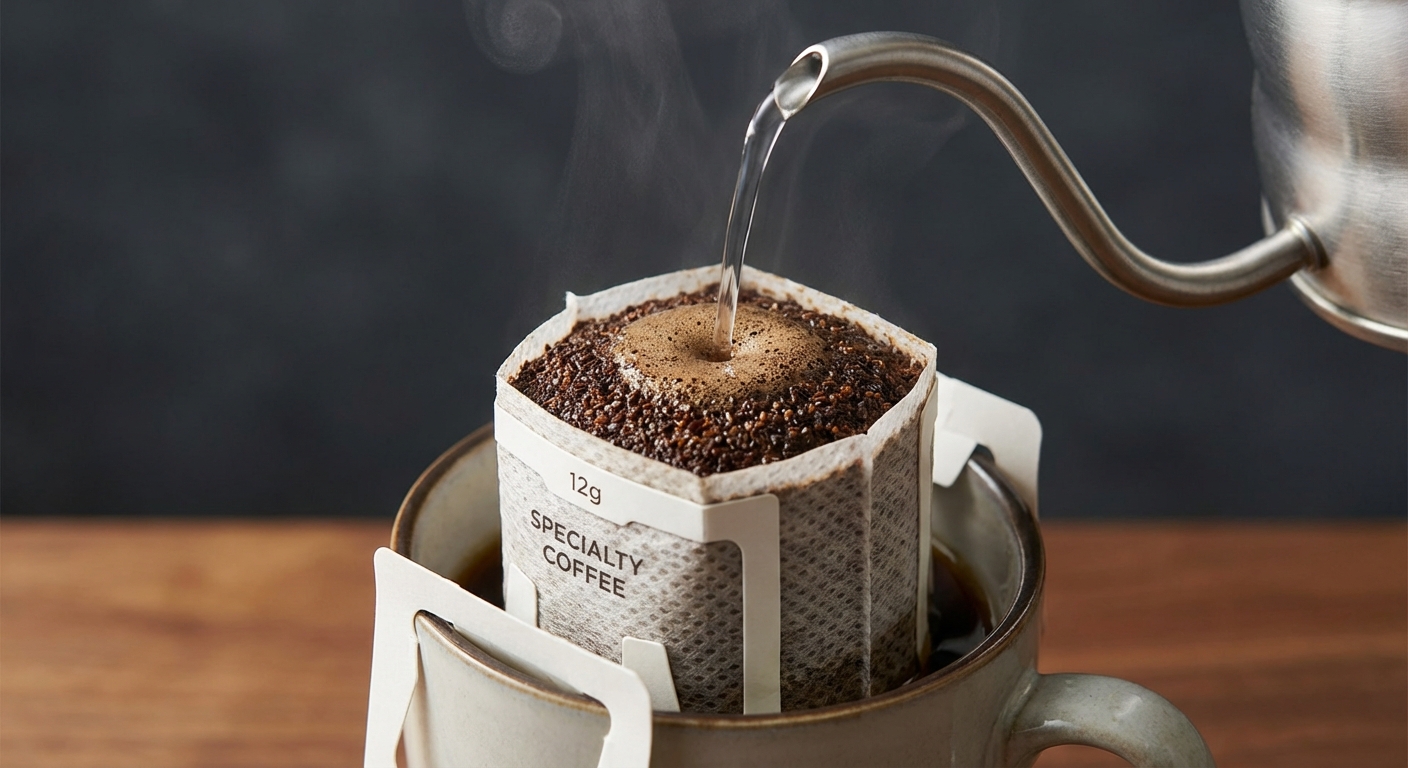
Upgrading to a 12g drip bag weight standard is the best move for brands that want to compete with manual pour-over quality in a convenient format. This higher dose allows for a larger, bolder cup of coffee (200ml+) that satisfies the most demanding connoisseurs.
Does 12g attract the premium coffee market?
High-end consumers are often willing to pay a premium for a “stronger” cup that mimics the intensity of a café experience. By using 12g, you differentiate your brand as a “Specialty” leader rather than a mass-market commodity.
It allows for more complex flavor notes to shine through.
It justifies a significantly higher retail price per sachet.
It appeals to users who prefer adding milk or cream.
Ready for the secret?
What technical challenges come with 12g?
Dosing 12g into a standard bag requires high-precision equipment to prevent the coffee from overflowing during the sealing process. You must ensure your machine can handle the extra volume while maintaining a fast cycle time.
It may require a slightly larger or wider filter bag.
You must use ultrasonic sealing to ensure a tight bond through dust.
Shipping weight increases, which must be factored into your pricing.
Here is the kicker:
Key Takeaway: The 12g standard is an “Ultra-Premium” hallmark that requires advanced machinery to execute without production bottlenecks.
12g Market Specs
Detail
Target User
Coffee Enthusiasts
Extraction Potential
High / Bold
Equipment Need
High Precision
Moving to 12g is a strategic brand elevation that demands a corresponding investment in packaging technology.
How does filter bag capacity limit your weight?
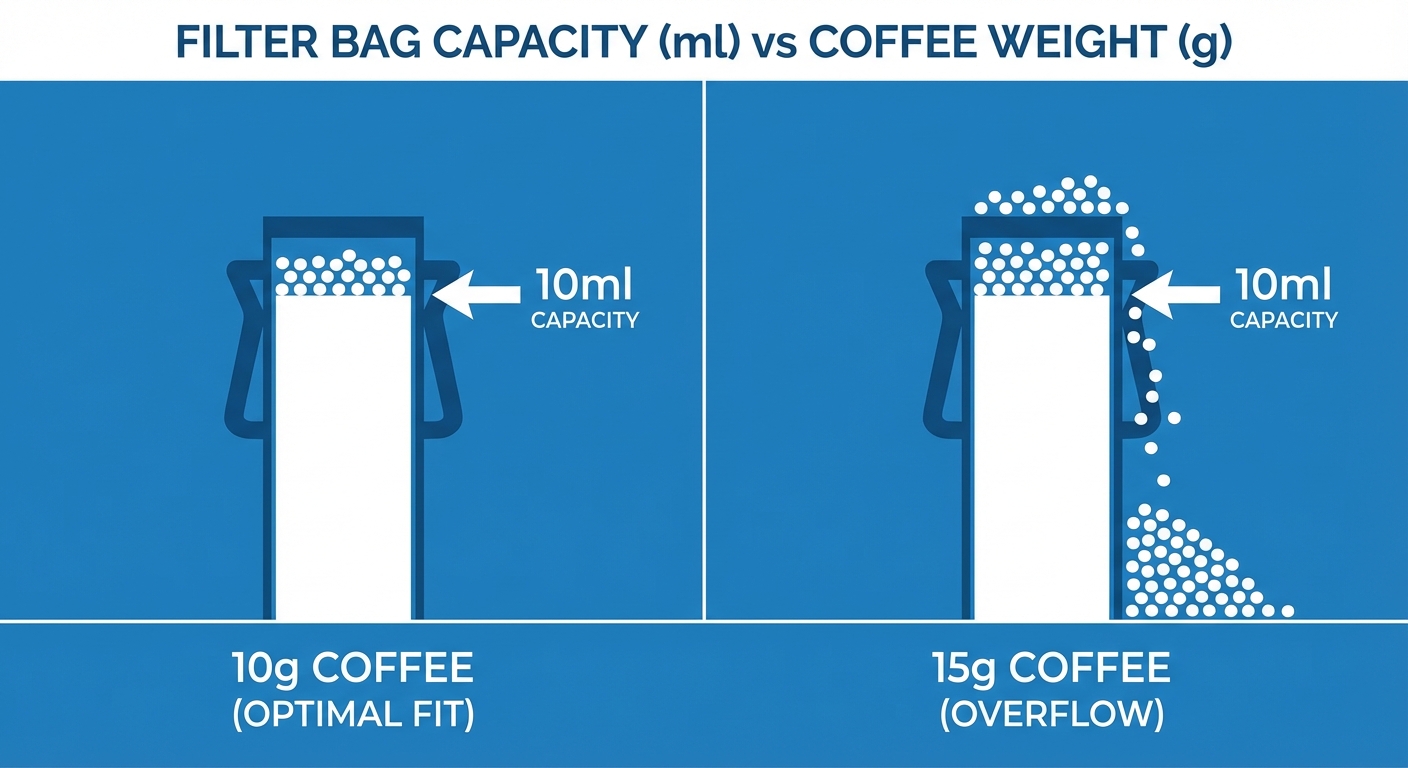
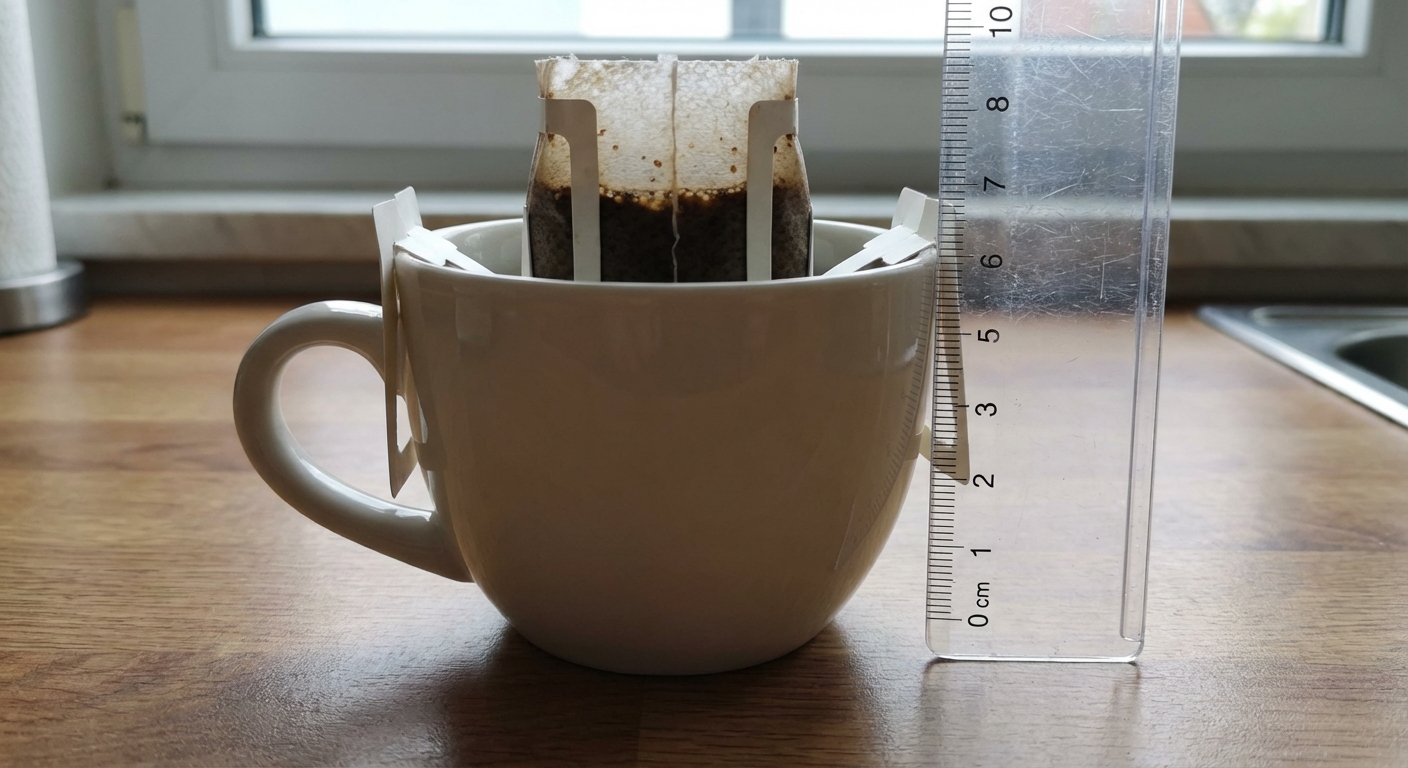
Your chosen drip bag weight standard is physically constrained by the volume of the filter bag, as the coffee needs space to “bloom” when hot water is added. If the bag is too full, water will overflow, resulting in coffee grounds in the user’s cup.
Why is “bloom space” critical for a good brew?
When hot water hits the coffee, it releases CO2 and expands; if there is no room for this expansion, the water will simply run off the top. This is a common issue when trying to force 12g into a bag designed for 8g on a VFFS packaging machine.
It prevents messy overflows in the customer’s mug.
It allows for more even saturation and better flavor extraction.
It ensures the “hanging ears” remain securely on the cup.
You might be wondering:
Can the wrong weight cause sealing failures?
If the coffee level sits too high in the bag, the sealing jaws may trap coffee particles in the seal, leading to “leakers.” This ruins the freshness of the coffee and can cause the bag to fail during transit.
Overfilling leads to a higher rate of manufacturing rejects.
It forces the machine to run at slower, less efficient speeds.
It compromises the vacuum or nitrogen seal of the outer sachet.
Here is the catch:
Key Takeaway: You must align your gram weight with the cubic capacity of your filter material to ensure both brewing quality and packaging integrity.
Bag Size (mm)
Recommended Weight
Max Limit
70 x 90
8g – 10g
11g
74 x 90
10g – 12g
13g
Respecting physical volume limits is the only way to maintain a high-speed, low-waste production line.
Will grind size affect your drip bag performance?
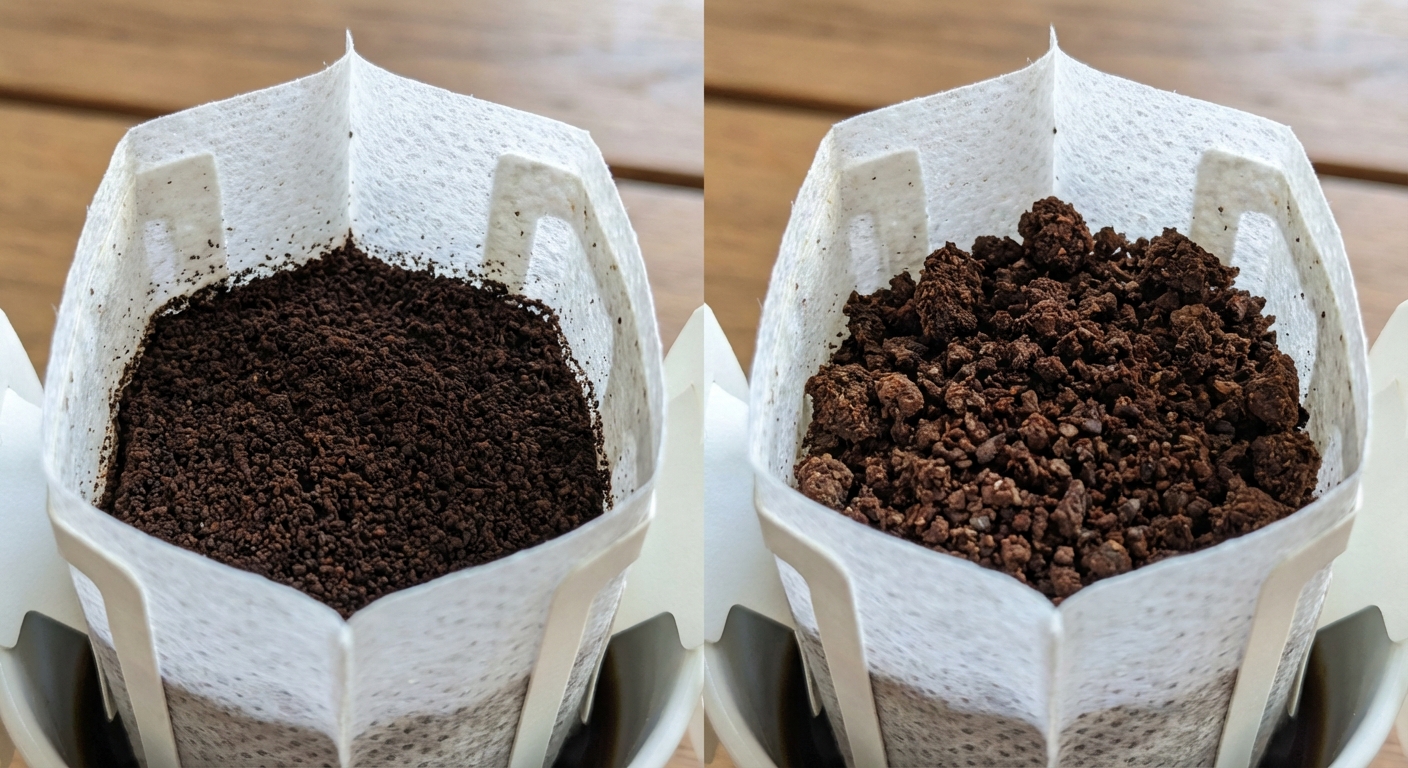
Grind size significantly affects your drip bag weight standard because different roasts and grinds occupy different amounts of physical space at the same weight. A 10g dose of a dark, coarse grind will take up much more room than 10g of a light, fine grind.
How does density change your dosing accuracy?
As you change coffee roasts, the density shifts; darker roasts are less dense and more “fluffy.” You must calibrate your filling auger for every batch to ensure you are hitting your gram target without overfilling the bag’s volume.
Light roasts are dense and sit low in the filter.
Dark roasts expand and can cause volume-related sealing issues.
Decaf coffee often behaves differently due to the bean’s structure.
Think about this:
Does grind size control the flow rate?
The grind size acts as the “brake” for the water; if it’s too coarse, the water flows through too fast for the weight to matter. Conversely, if it’s too fine, the bag may “clog,” causing the ears to slip off the cup.
Aim for a medium-fine grind (similar to table salt).
Adjust the grind based on the weight (finer for 8g, coarser for 12g).
Test the “drain time” to ensure it falls between 60 and 90 seconds.
Can you see the advantage?
Key Takeaway: Weight and grind size are two sides of the same coin; you cannot optimize one without carefully adjusting the other.
Grind Type
Best Weight Match
Flow Result
Fine
8g
Slow / Intense
Medium
10g
Balanced
Coarse
12g
Fast / Clean
Proper grind-to-weight calibration ensures that the technical performance of the bag matches the intended flavor profile.
Can ultrasonic sealing prevent messy bag overflows?
Ultrasonic sealing technology is the secret to maintaining a high drip bag weight standard because it allows for a narrower seal that doesn’t consume precious bag volume. Unlike heat sealing, it can create a perfect bond even if there is coffee dust in the seal area, which is common with a granule packaging machine.
Why is ultrasonic sealing better for 12g doses?
When you push the limits of bag capacity with a 12g dose, the coffee is very close to the sealing line. Ultrasonic waves “shake” any trapped coffee particles out of the way, creating a molecular bond that heat sealers simply cannot achieve.
It reduces the width of the seal from 5mm down to 1-2mm.
it provides more “internal room” for the coffee to expand.
it eliminates “burn” marks on the delicate non-woven filter.
Wait, it gets better:
How does sealing impact aroma preservation?
Heat sealing can slightly “cook” the coffee dust near the seal, creating a faint burnt odor when the package is opened. Ultrasonic sealing remains cold throughout the process, ensuring your coffee’s delicate top notes are perfectly preserved.
It maintains 95% more aroma than traditional heat sealing.
It produces a cleaner, more professional-looking finished bag.
It significantly reduces energy consumption on the production floor.
Ready for the secret?
Key Takeaway: If your brand strategy relies on 10g or 12g doses, ultrasonic sealing is an essential investment to ensure bag integrity and aroma quality.
Sealing Method
Seal Width
Dust Tolerance
Heat Seal
5mm – 7mm
Low
Ultrasonic
1mm – 2mm
Very High
Switching to ultrasonic sealing allows you to maximize bag capacity while simultaneously improving the sensory quality of the product.
How do you optimize the coffee-to-water ratio?
Optimizing the ratio is the final step in validating your drip bag weight standard, as it determines the final strength the consumer will taste. You must design your dose based on the average mug size in your target market—typically 150ml to 250ml.
What is the “Golden Ratio” for drip bags?
In the specialty world, a 1:15 to 1:18 ratio is considered perfect. If you choose a 10g weight standard, your goal is to have the consumer add roughly 150ml to 180ml of water for a balanced brew.
8g Dose = 120ml Water (Small Cup).
10g Dose = 160ml Water (Standard Mug).
12g Dose = 200ml Water (Large / Travel Mug).
Why does this matter?
How do you communicate this to the consumer?
Since most consumers don’t use a scale at home, you must provide visual cues on your packaging. Clear instructions, such as “Fill bag to the top three times,” help users hit the correct volume without confusion.
Use simple icons to show water levels.
Provide a QR code for a “Perfect Brew” video guide.
Clearly state the recommended mug size on the outer sachet.
Can you see the advantage?
Key Takeaway: Your weight standard only works if the consumer knows how much water to add; education is as important as the dosing itself.
Coffee Weight
Recommended Water
Resulting Body
8g
120ml
Light & Bright
10g
160ml
Rich & Balanced
12g
200ml
Heavy & Bold
Standardizing the brewing instructions alongside the weight ensures a consistent brand experience in every kitchen.
What role does nitrogen flushing play in dosing?
Nitrogen flushing is critical for maintaining your drip bag weight standard because more coffee means more surface area exposed to oxygen, which leads to faster staling. Without nitrogen displacement, a premium 12g dose can lose its flavor complexity in just a few weeks.
Does more coffee require more nitrogen?
Yes, because larger doses trap more oxygen within the interstitial spaces of the coffee grounds. NewIdeaPack machines use high-precision nitrogen injection to drive oxygen levels below 1%, ensuring your coffee stays “roaster-fresh.”
It extends shelf life from 3 months to over 12 months.
It preserves the delicate oils that provide the coffee’s body.
It prevents the “cardboard” taste associated with oxidized grounds.
Here is the catch:
Does nitrogen impact the bag’s appearance?
Proper nitrogen flushing creates a slight “pillow” effect in the outer sachet, which protects the inner filter bag from being crushed during shipping. This ensures that the “hanging ears” remain intact and ready for use.
Acts as a protective cushion for the delicate filter.
Signals freshness to the consumer upon opening the sachet.
Maintains the structural integrity of the entire package.
Think about this:
Key Takeaway: Nitrogen flushing is the “insurance policy” for your weight standard; it ensures that the extra grams you pay for actually deliver flavor.
Oxygen Level
Freshness Period
Quality Grade
5%
1-2 Months
Low
< 1%
12-24 Months
Premium
High-performance nitrogen flushing turns a simple coffee sachet into a long-term, high-quality asset.
Which machine best suits your weight requirements?
Automatic Drip Coffee Bag Packaging Machine
The best machine for your drip bag weight standard is one that offers ±0.1g filling accuracy and high-speed ultrasonic sealing. Whether you are running 8g or 12g, the NewIdeaPack ND-C80PRO provides the precision needed to maintain brand consistency.
Why is filling accuracy so important for ROI?
If your machine is inaccurate by even 0.5g, you could be losing hundreds of kilograms of coffee over a single production month. Precise auger fillers ensure that you hit your target weight every time, protecting your margins.
It prevents the brand damage of “underfilled” bags.
It eliminates the material waste of “overfilled” bags.
It allows for reliable cost forecasting and pricing.
You might be wondering:
Can the right machine handle multiple weight standards?
Modern automated systems are designed for flexibility, allowing you to switch between 8g, 10g, and 12g runs with minimal downtime. This versatility allows your brand to target different market segments with a single production line.
Features quick-change parts for different bag sizes.
Includes programmable PLC settings for various roasts.
Provides the high speed (80+ BPM) needed for industrial scaling.
But there is a catch:
Key Takeaway: Your packaging machinery is the final guardian of your weight standard; investing in high-precision technology is the only way to guarantee ROI.
Machine Feature
Benefit for Dosing
Auger Filler
±0.1g Precision
Ultrasonic Seal
Max Bag Volume
N2 Flushing
12-Month Freshness
The right machinery transforms your dosing strategy into a repeatable and highly profitable manufacturing reality.
Final Thoughts on Drip Bag Weight Standards
Deciding between 8g, 10g, or 12g is more than just a culinary choice; it is a strategic business decision that defines your brand’s market position. While 10g remains the “golden ratio” for its versatility and balance, your choice should ultimately depend on your target consumer’s habits and your production capabilities. By standardizing your weight and investing in the right technology, you ensure that every cup of coffee reinforces your brand’s reputation for quality.
At NewIdeaPack, we are dedicated to helping coffee roasters achieve perfect dosing through advanced automation and ultrasonic technology. Our vision is to empower your brand with the precision tools needed to deliver a world-class coffee experience, one gram at a time.
FAQ
Can I put 15g of coffee in a standard drip bag? No, it is not recommended for standard 70x90mm bags. A 15g dose leaves no room for the coffee to bloom, which usually leads to the water overflowing and a very messy brewing experience.
What’s the best weight for a dark roast drip bag? Usually, 10g is the best weight for dark roasts. Darker beans are less dense and more porous, occupying more volume; 10g provides a bold, smoky flavor without risking a bag overflow.
How do I know if my weight standard is too high? Check for coffee grounds in your seal area. If you see frequent seal failures or “leakers,” it’s a sign that your dose is too high for your bag size or your machine’s sealing capability.
How can I make my 8g drip bags taste stronger? Use a finer grind size. By slowing down the flow of water through the 8g of coffee, you increase the extraction time, which results in a much bolder and more satisfying flavor profile.
What’s the best machine for 12g specialty coffee? The NewIdeaPack ND-C80PRO is ideal for 12g doses. It features high-precision auger filling and ultrasonic sealing, which are necessary to handle the larger volume while maintaining a clean, strong seal.
Sales Pitch Component
If you are ready to optimize your production line?
Contact us today to find the perfect solution for your needs.