What Makes High Quality Start coffee business equipment Essential Now
2025年9月14日 by newideapack
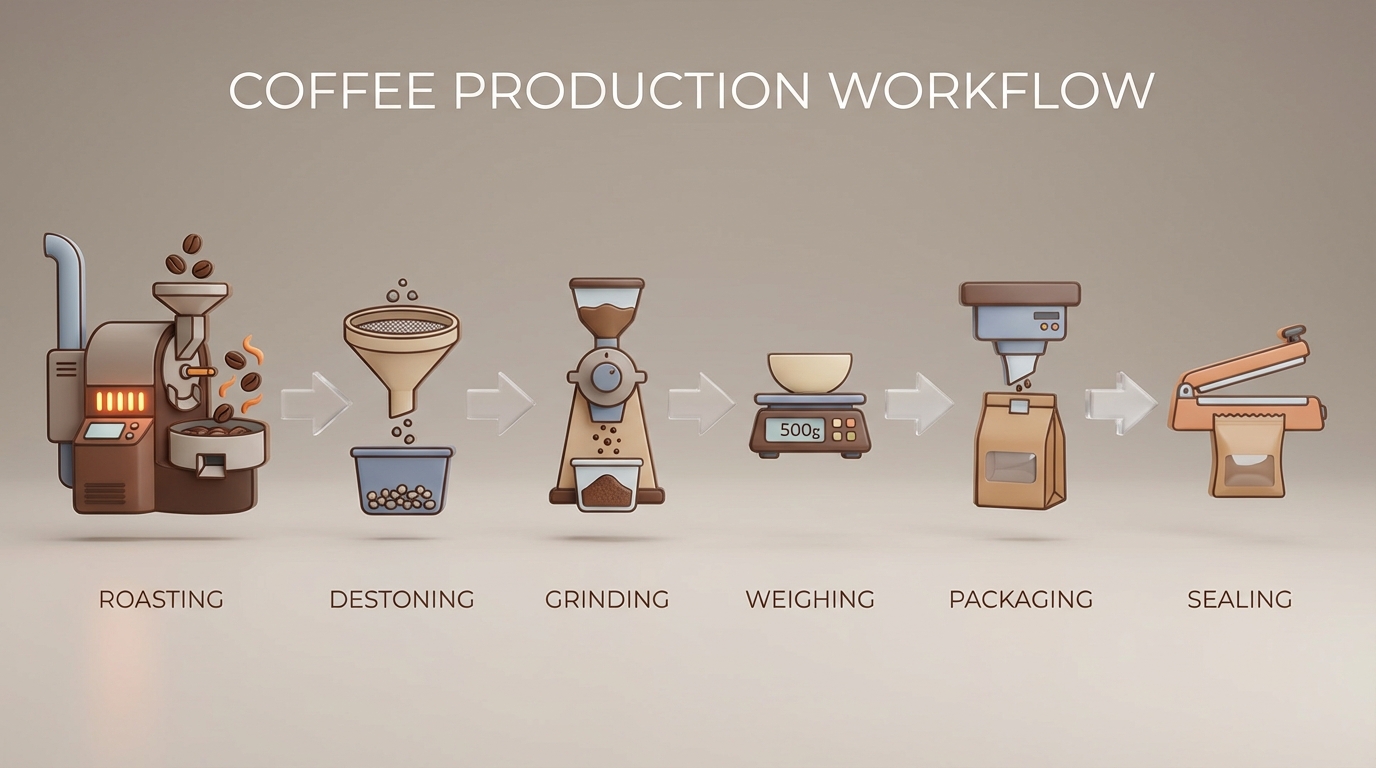
To start a small coffee brand with basic equipment, you need to invest in a professional drum roaster, a high-capacity burr grinder, and an automated packaging system to ensure consistency. Many aspiring roasters struggle with the jump from home brewing to commercial production, often finding themselves buried in manual labor. This inefficiency leads to inconsistent flavor profiles and slow fulfillment, which can quickly drain your startup capital and ruin your brand’s reputation. By choosing the right start coffee business equipment from Newideapack, you can automate your workflow, preserve bean freshness, and scale your production without sacrificing quality.
What roaster do you need to start coffee business equipment sets?
You should begin with a 1kg to 5kg gas-powered drum roaster to properly start coffee business equipment collections for small-batch artisanal production. This size allows you to learn the nuances of heat application and airflow without the massive overhead of industrial-scale machinery. Precise temperature probes and data logging software are essential features to look for in your first unit. These tools ensure that every roast follows a repeatable curve, which is the secret to building customer loyalty.
How to select the right roasting capacity?
Determining your capacity depends on your projected weekly sales and the number of hours you can realistically spend at the machine. A 2kg roaster is often the “sweet spot” for startups because it balances speed with the ability to do custom micro-lots.
1kg Roaster: Best for sample roasting and tiny boutiques.
2.5kg Roaster: Ideal for local farmers’ markets.
5kg Roaster: Perfect for growing wholesale accounts.
But that’s not all. Consistency is the only currency that matters in the specialty coffee world.
Key Takeaway: A small-capacity drum roaster provides the control needed to master flavor profiles before scaling up.
Feature
Importance
Why It Matters
Gas Heating
High
Offers instant temperature response for better control.
Data Logging
Medium
Essential for replicating successful roast profiles.
Cooling Tray
High
Stops the roasting process instantly to lock in flavor.
Reliable roasting hardware is the foundation of your production line and dictates your daily output potential.
Which grinder is best to start coffee business equipment lists?
To start coffee business equipment acquisition for ground products, a heavy-duty industrial burr grinder with heat-reduction technology is your most important tool. Unlike blade grinders, burr systems crush beans into uniform particles, which is vital for even extraction during brewing. If your grind is inconsistent, your customers will experience bitter or sour notes that reflect poorly on your brand. Look for a machine that can handle continuous operation without overheating the coffee oils.
Why is particle uniformity so critical?
Uniformity ensures that water flows through the grounds at a predictable rate, extracting the full range of flavors. If you have “fines” and “boulders” in the same bag, the taste will be unbalanced and muddy.
Consistent extraction leads to better flavor.
Reduces customer complaints about brewing issues.
Professional look and feel for your ground product.
Here is the kicker: A bad grinder can make world-class beans taste like average grocery store coffee.
Key Takeaway: Investing in a professional burr grinder ensures your ground coffee meets the high standards of specialty retailers.
Component
Standard
Benefit
Burrs
64mm+ Flat Burrs
High-speed, uniform grinding for retail bags.
Motor
Induction Motor
Provides longevity and reduces heat transfer to beans.
Adjustment
Stepless
Allows for micro-adjustments between drip and espresso.
Grinding consistency is the bridge between a high-quality roast and a satisfied customer at home.
How does VFFS help to start coffee business equipment workflows?
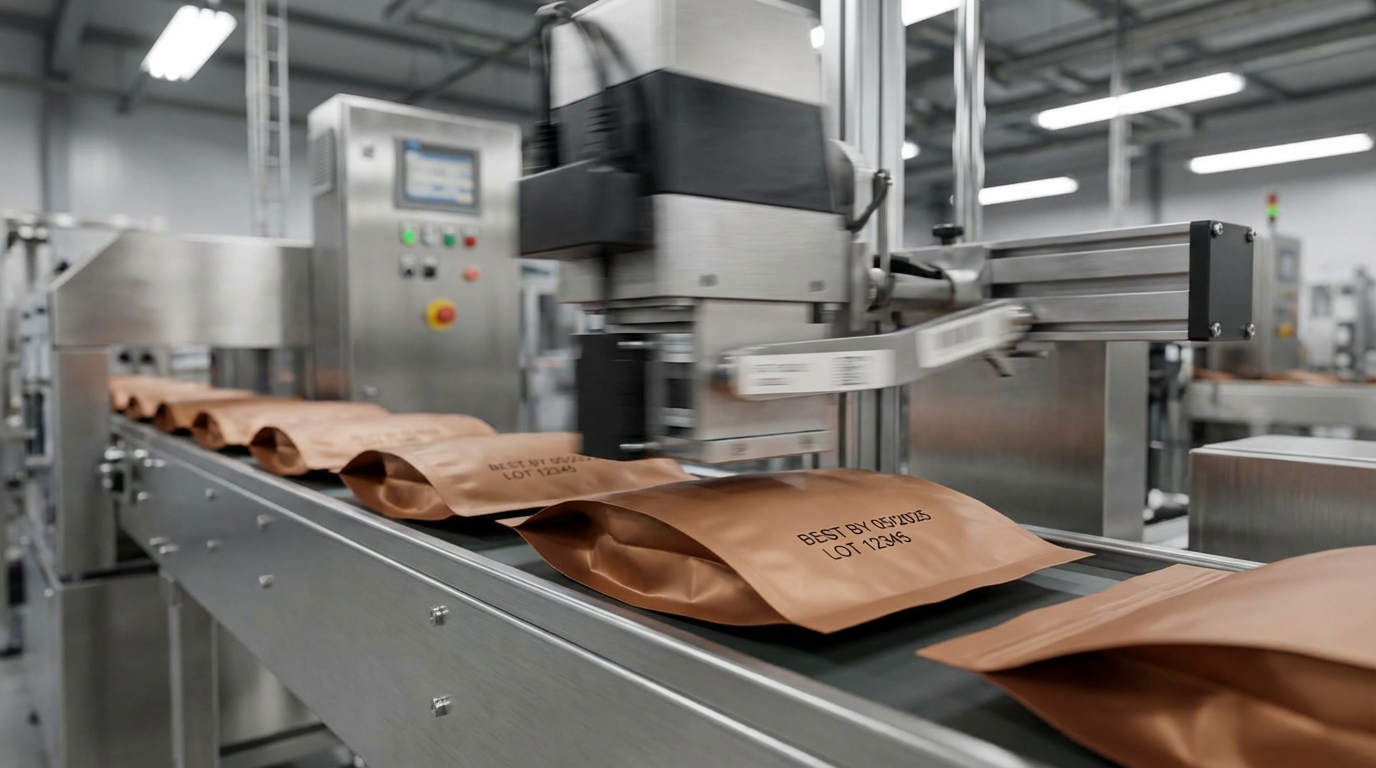
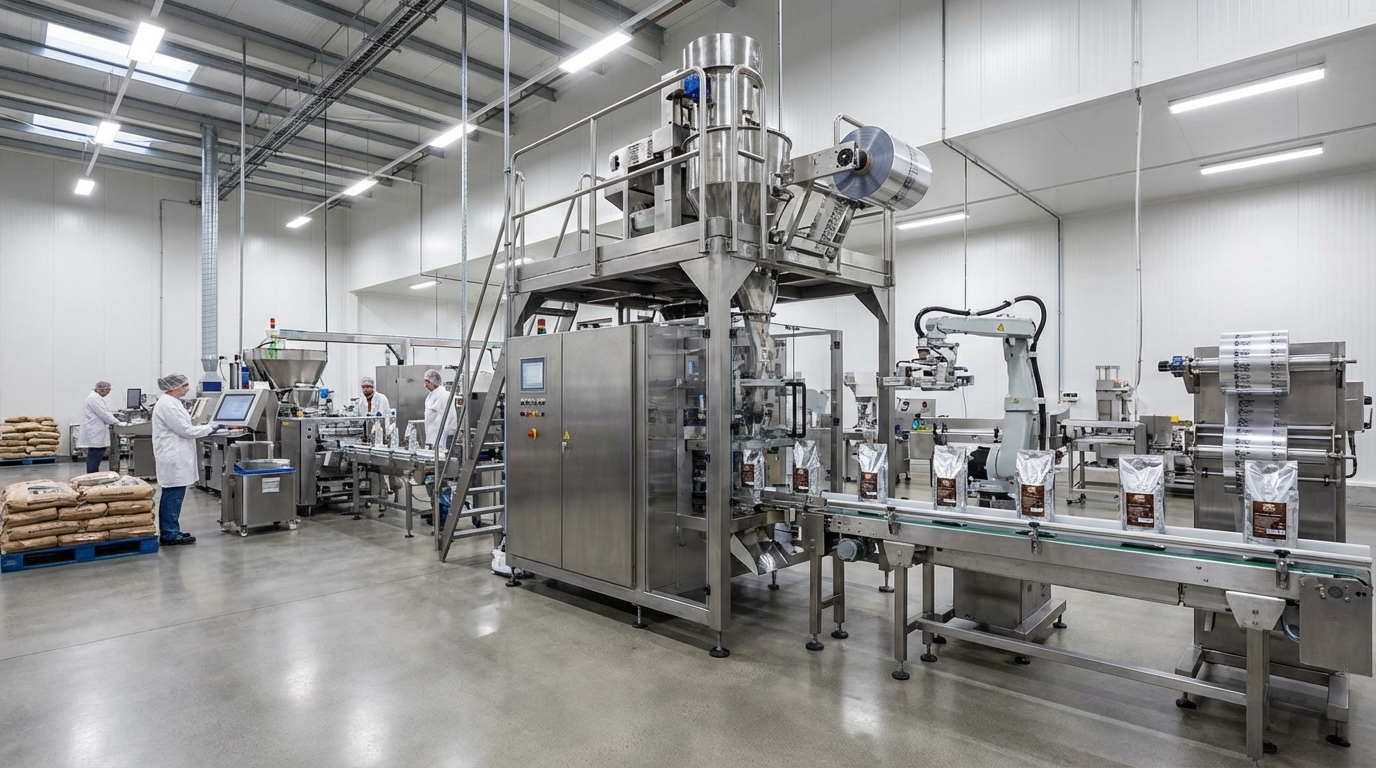
Automating your packaging process is the most effective way to start coffee business equipment integration that supports rapid business growth. Manual bagging is slow, prone to spills, and leads to inaccurate weights that can eat your profits. A Vertical Form Fill Seal (VFFS) machine automates the bag-making, filling, and sealing steps in one continuous motion. This drastically reduces labor costs and ensures that every bag on the shelf looks identical and professional.
Is automation necessary for a small startup?
While you can start with hand-filling, you will quickly hit a ceiling once your volume exceeds fifty bags per day. Automation allows you to spend your time on sales and marketing rather than tedious manual labor.
Speeds up production by 500%.
Ensures airtight seals every single time.
Reduces product waste from manual spills.
Think about it: Every minute spent hand-bagging is a minute you aren’t growing your retail presence.
Key Takeaway: Packaging automation like VFFS turns a slow manual process into a high-speed professional production line.
Step
Manual Time
VFFS Time
Bag Preparation
15 Seconds
0 Seconds
Filling & Weighing
30 Seconds
1 Second
Sealing
10 Seconds
1 Second
Streamlining your workflow through automation is the only way to compete with established brands on price and speed.
Why are scales vital to start coffee business equipment accuracy?
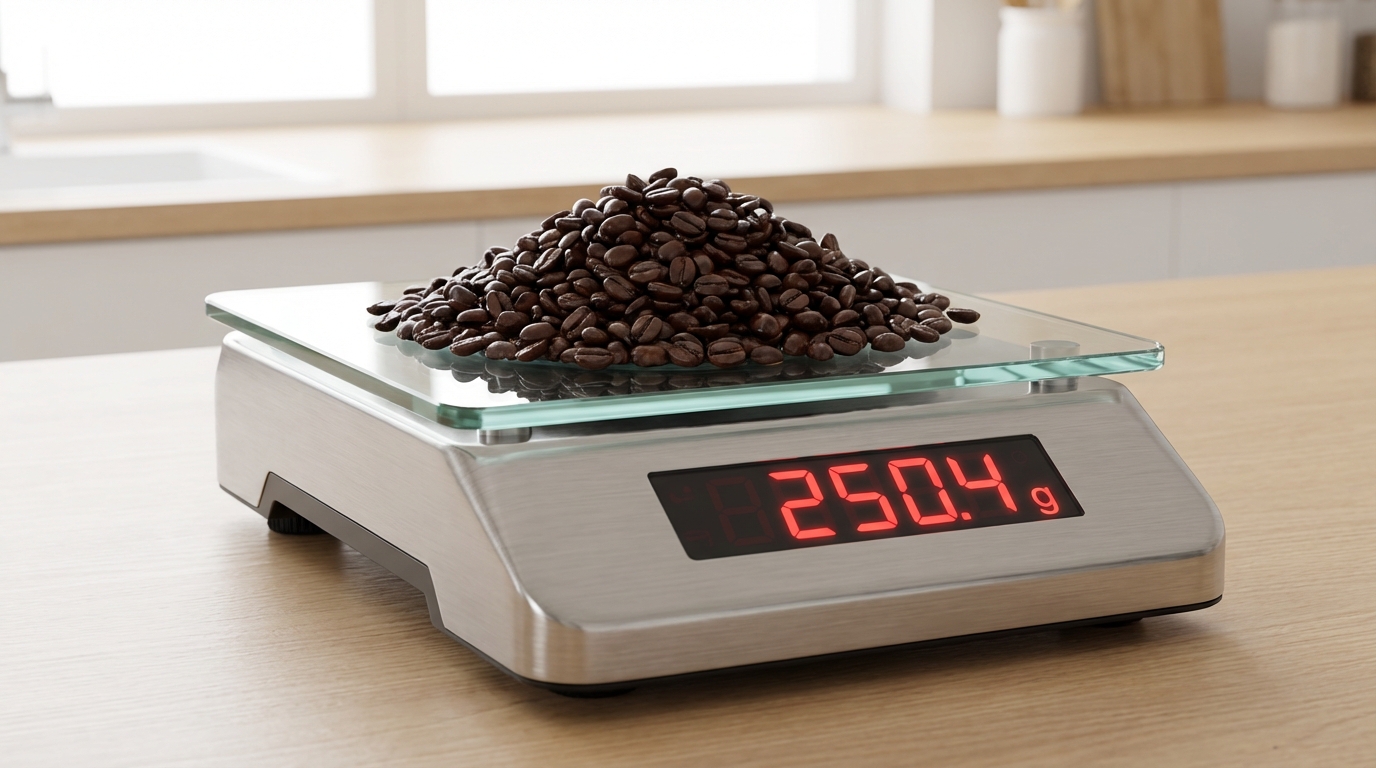
You must include high-precision digital scales to start coffee business equipment operations if you want to maintain strict quality control and legal compliance. Scales are used at every stage, from weighing green beans to checking the final weight of the retail pouches. Inaccurate measurements lead to fluctuating profit margins and potential fines from weights and measures authorities. A good scale should offer 0.1g increments and a fast stabilization time for efficient workflows.
Do you need legal-for-trade scales?
If you are selling products by weight, most jurisdictions require scales that are certified as “Legal for Trade.” These devices are more expensive but are necessary to protect your business from legal disputes.
Ensures customers get exactly what they pay for.
Helps calculate roast loss percentages accurately.
Standardizes your recipes for consistent brewing.
Let’s be honest: Guessing weights is the fastest way to go out of business in a low-margin industry.
Key Takeaway: Precision scales protect your bottom line and ensure your brand remains compliant with consumer protection laws.
Metric
Ideal Accuracy
Application
Green Coffee
+/- 10g
Batch preparation and inventory.
Roasted Samples
+/- 0.1g
Quality control and moisture loss.
Retail Bags
+/- 1g
Final bagging and shipping compliance.
Using data-driven weight measurements allows you to track your material costs with surgical precision.
Which sealer helps you start coffee business equipment shelf life?
A professional continuous band sealer is the best choice to start coffee business equipment setups that guarantee your ground coffee stays fresh for months. Unlike home-style impulse sealers, band sealers provide a wide, textured, and hermetic seal that prevents oxygen from entering the bag. Ground coffee has a massive surface area, making it highly susceptible to oxidation and staling. A strong seal combined with a one-way degassing valve is the only way to preserve the delicate aromatics of your roast.
Is a band sealer worth the investment?
A band sealer is significantly faster than a manual foot-pedal sealer because it allows for a continuous flow of bags. It also applies consistent heat and pressure, ensuring that the seal doesn’t fail during shipping.
Prevents oxygen ingress and aroma loss.
Handles heavy foil-lined coffee bags easily.
Improves the aesthetic of the final package.
Look: A weak seal will turn your premium coffee into a stale product before it reaches the customer.
Key Takeaway: High-quality heat sealing is your final defense against the elements that destroy coffee flavor.
Sealer Type
Volume Capability
Best Use Case
Impulse Sealer
Low
Small-batch sample bags.
Band Sealer
Medium
Standard retail bag production.
Vacuum Sealer
Niche
Specialty long-term storage.
Reliable sealing equipment ensures your product tastes just as good in the customer’s kitchen as it did in your roastery.
How to store beans to start coffee business equipment freshness?
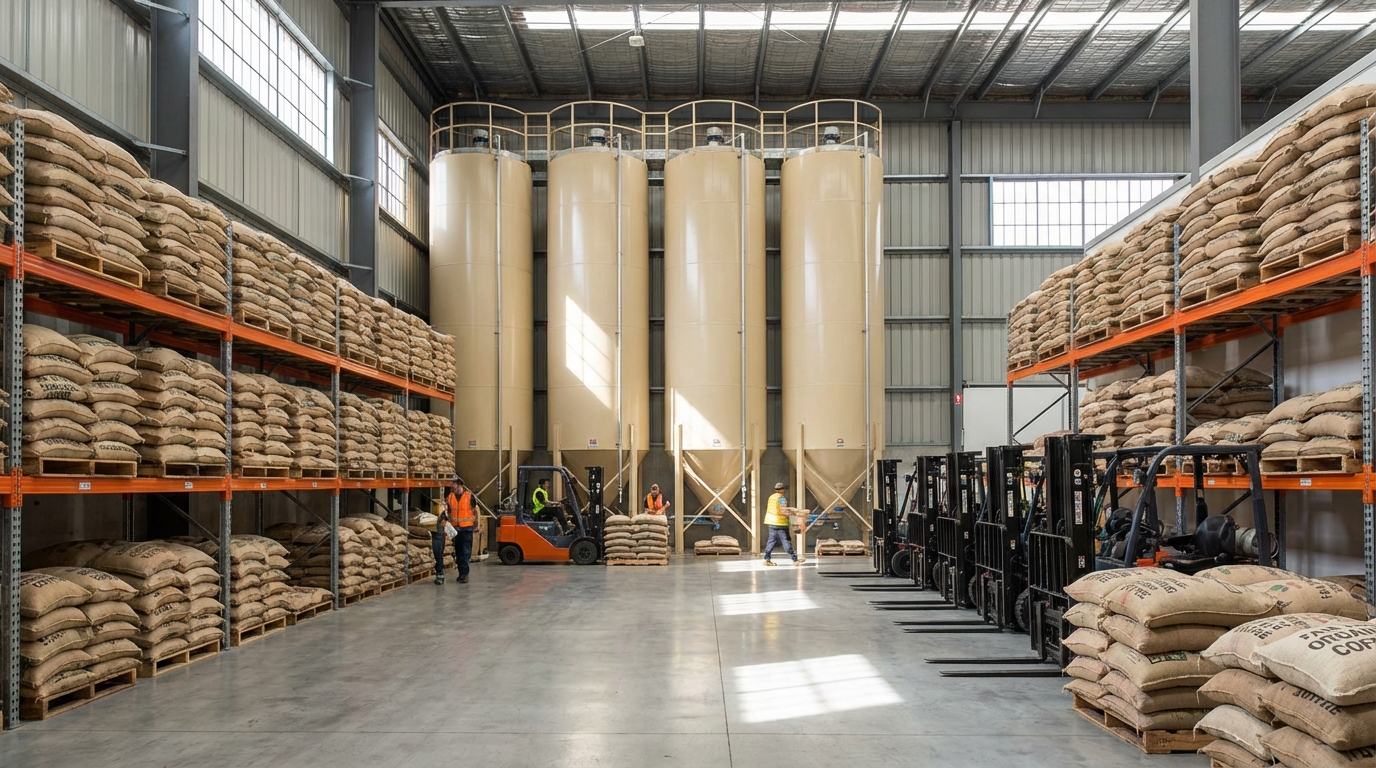
Proper storage solutions are required to start coffee business equipment routines that prevent contamination and premature staling of your inventory. Green coffee must be stored in a climate-controlled environment, while roasted beans need to degas in airtight containers before they are packaged. Using food-grade bins or silos prevents the coffee from absorbing odors from the surrounding warehouse environment. Organization in your storage area also speeds up your fulfillment process and makes inventory tracking much easier.
Should you use plastic or stainless steel?
Stainless steel silos are the gold standard because they are non-porous and easy to sanitize between different bean origins. Food-grade plastic bins are a more affordable starting point but can retain oils and smells over time.
Protects beans from light and moisture.
Prevents pest infestation in green coffee.
Maintains organized batches for better traceability.
The best part? Organized storage reduces the time you spend searching for specific lots during production.
Key Takeaway: Strategic storage prevents flavor cross-contamination and ensures your green beans stay viable for roasting.
Item
Ideal Material
Protection Provided
Green Bean Bin
Breathable Fabric
Allows air to circulate, preventing mold.
Roasted Storage
Stainless Steel
Blocks UV light and prevents oil buildup.
Small Batches
Glass/Ceramic
Excellent for small sample management.
Keeping your raw materials and finished products separate and sealed is non-negotiable for quality control.
What labeler should you start coffee business equipment branding?
You need a semi-automatic labeling machine to start coffee business equipment branding that competes with national players on the retail shelf. Hand-applying labels often results in bubbles, crooked stickers, and a generally “homemade” look that can devalue your premium coffee. A labeler ensures that every sticker is placed in the exact same spot, creating a uniform look across your entire product line. This professionalism builds trust with both retailers and high-end consumers who value attention to detail.
Is an automatic labeler too expensive?
Semi-automatic labelers are very affordable for small brands and can process hundreds of bags per hour. They are a much better investment than paying someone to spend all day struggling with manual sticker application.
Consistent placement enhances brand image.
Speeds up the final packaging stage significantly.
Allows for easy batch and date code printing.
Check this out: Customers judge the quality of the coffee inside by the quality of the label on the outside.
Key Takeaway: Professional labeling turns a plain bag into a recognizable brand that stands out in a crowded market.
Method
Accuracy
Speed (Bags/Hour)
Manual Application
Low
50 – 100
Semi-Automatic
High
300 – 600
Fully Automatic
Extreme
1,000+
High-quality branding is what allows you to charge a premium price for your artisanal roasted coffee.
Is a destoner used to start coffee business equipment safety?
A destoner is a critical piece of machinery to start coffee business equipment safety protocols because it removes foreign objects that can damage your grinder. Coffee is an agricultural product, and it is common for small rocks or metal fragments to make it through the harvesting process. If one of these stones enters your expensive burr grinder, it can cause catastrophic damage and halt your production. A destoner uses gravity and airflow to separate these heavy objects from the lighter roasted beans.
How does a destoner actually work?
The machine creates a vertical air current that lifts the roasted coffee beans while letting heavier items like stones, glass, and metal fall into a collection bin. It is a simple but incredibly effective way to protect your other machinery.
Protects expensive grinder burrs from damage.
Ensures a clean, safe product for the customer.
Acts as a final stage of quality control after roasting.
Believe it or not: A single small stone can cause hundreds of dollars in repair costs for your grinder.
Key Takeaway: Destoners are the best insurance policy for your grinding equipment and your brand’s reputation for safety.
Risk Factor
Prevention
Machine
Stone Damage
Airflow Separation
Destoner
Metal Fragments
Magnetic Traps
Magnetic Grate
Grinder Clogs
Fine Mesh Screening
Vibratory Sieve
Protecting your equipment from physical contaminants is a hallmark of a professional roasting operation.
Which QC tools help start coffee business equipment standards?
You should utilize moisture meters and color analyzers to start coffee business equipment standards that ensure every batch tastes exactly like the last one. Color analyzers (Agtron) provide a scientific reading of your roast level, moving beyond the subjective “light” or “dark” labels. This data allows you to adjust your roasting profile in real-time to account for changes in green bean density or ambient humidity. Consistent quality is the only way to retain subscribers and wholesale accounts who expect the same flavor every week.
Is scientific testing necessary?
While your palate is your most important tool, it can be biased or tired. Scientific QC tools provide objective data that proves your roasting process is stable and under control.
Moisture meters check green bean health.
Color analyzers ensure roast consistency.
Cupping spoons allow for standardized tasting.
It gets better: Data-driven roasting allows you to train other employees to replicate your signature flavor profiles.
Key Takeaway: Objective quality control tools take the guesswork out of production and guarantee a reliable product.
QC Tool
Data Provided
Action Taken
Moisture Meter
Bean Hydration %
Adjust initial heat application.
Agtron Scale
Internal/External Color
Confirm roast depth and uniformity.
TDS Meter
Extraction Strength
Calibrate grind settings for brewing.
Blending sensory skills with scientific data is the ultimate strategy for coffee business excellence.
How to maintain your start coffee business equipment longevity?
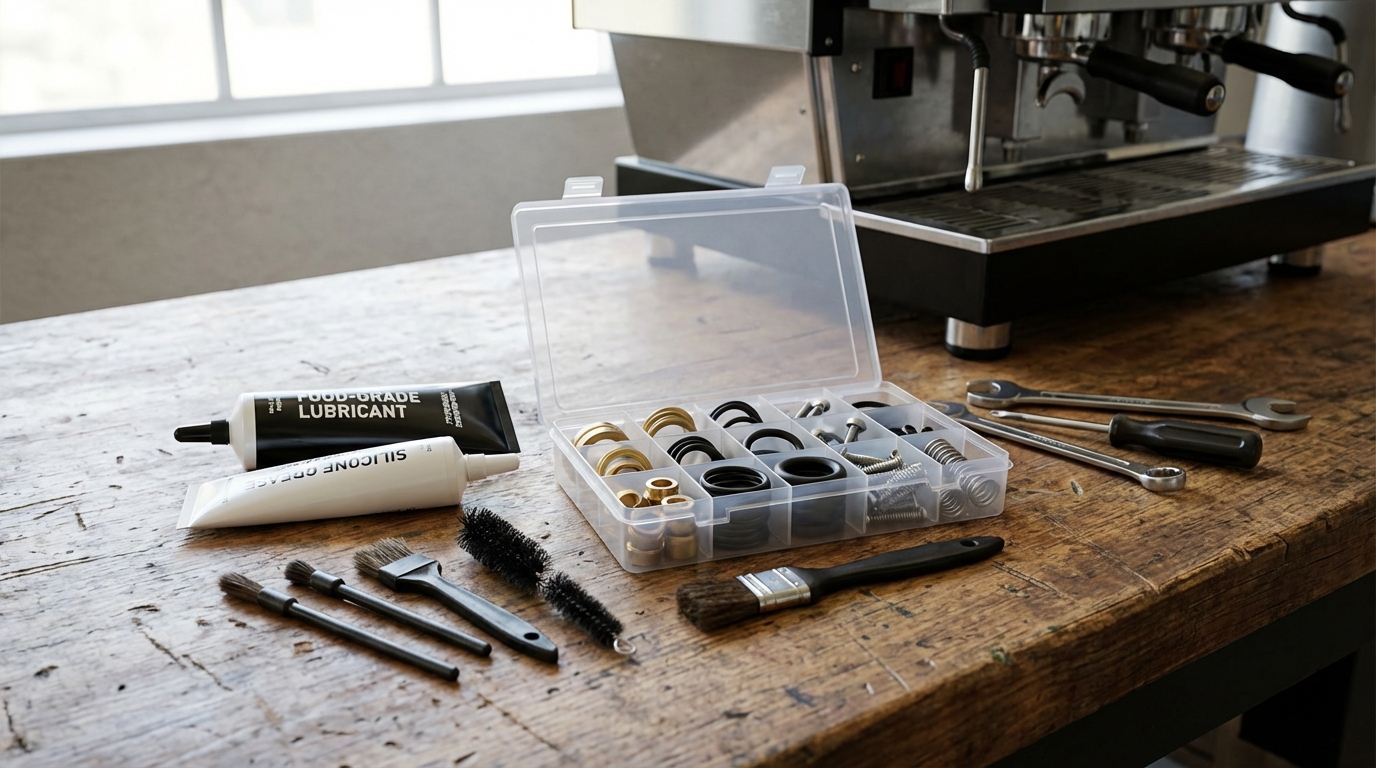
Maintaining a strict cleaning schedule and keeping a spare parts kit is essential to start coffee business equipment care that prevents expensive downtime. Coffee oils are highly acidic and will build up inside your roaster and grinder, eventually turning rancid and ruining the flavor of your coffee. Furthermore, chaff buildup in a roaster’s exhaust system is a significant fire hazard that must be managed daily. Having gaskets, belts, and specialized cleaning brushes on hand ensures you can fix minor issues before they become major disasters.
What should be in a roastery maintenance kit?
Your kit should include food-grade lubricants, a high-temperature vacuum for chaff, and replacement seals for your packaging machinery. Regular lubrication of moving parts prevents friction and extends the life of your motors.
Daily: Clean chaff collector and cooling tray.
Weekly: Deep clean grinder burrs and chutes.
Monthly: Inspect exhaust flues and grease bearings.
Now for the secret: An hour of preventive maintenance today saves you a thousand dollars in repairs next month.
Key Takeaway: Diligent maintenance is the most cost-effective way to ensure your roastery stays operational for years to come.
Task
Frequency
Result
Chaff Removal
Daily
Prevents roaster fires and ensures airflow.
Burr Cleaning
Weekly
Removes rancid oils for cleaner flavor.
Belt Inspection
Monthly
Prevents sudden mechanical failure during shifts.
A clean roastery is a safe, efficient, and professional workspace that produces better-tasting coffee.
Selecting the right machinery is the single most important decision you will make for your growing brand. At Newideapack, we understand that small-scale entrepreneurs need a balance of high performance and ease of use to succeed in today’s competitive market. Our range of automated packaging and processing solutions is designed to grow with you, ensuring that your artisanal vision is never limited by your hardware.
Frequently Asked Questions
Can I start a coffee brand with just a home roaster? No, because home roasters lack the consistency, thermal mass, and industrial-grade ventilation required for commercial retail production.
What’s the best way to keep my ground coffee fresh? The best way is to use high-barrier pouches with one-way degassing valves and a nitrogen-flush packaging system to remove oxygen.
How do I know if my grinder is professional enough? If it can run for 30 minutes straight without overheating the beans or losing its micron-level grind setting, it is suitable for commercial use.
Can I use a manual scale for retail bagging? Yes, but it is extremely slow and prone to human error; a semi-automatic weighing filler is highly recommended for scalability.
What’s the best floor type for a coffee roasting facility? Epoxy-coated concrete is the industry standard because it is waterproof, slip-resistant, and incredibly easy to sanitize after a roasting shift.
Sales Pitch Component
If you are ready to take your production to the next level and professionalize your workflow
Contact us today for a personalized equipment consultation. We are committed to empowering the next generation of roasters with the tools they need to build lasting, sustainable businesses.