What Every Professional Knows About Eliminating Poor Sealing Causes
2025年12月25日 by newideapack
Identifying the root poor sealing causes is the first step in protecting your product’s shelf life and brand reputation. When seals fail, oxygen and moisture infiltrate the packaging, leading to rapid staling—a problem particularly catastrophic for sensitive products like coffee. By systematically addressing mechanical, thermal, and environmental factors, professionals can achieve a 0% failure rate.
Why are coffee bag sealing issues affecting your shelf life?
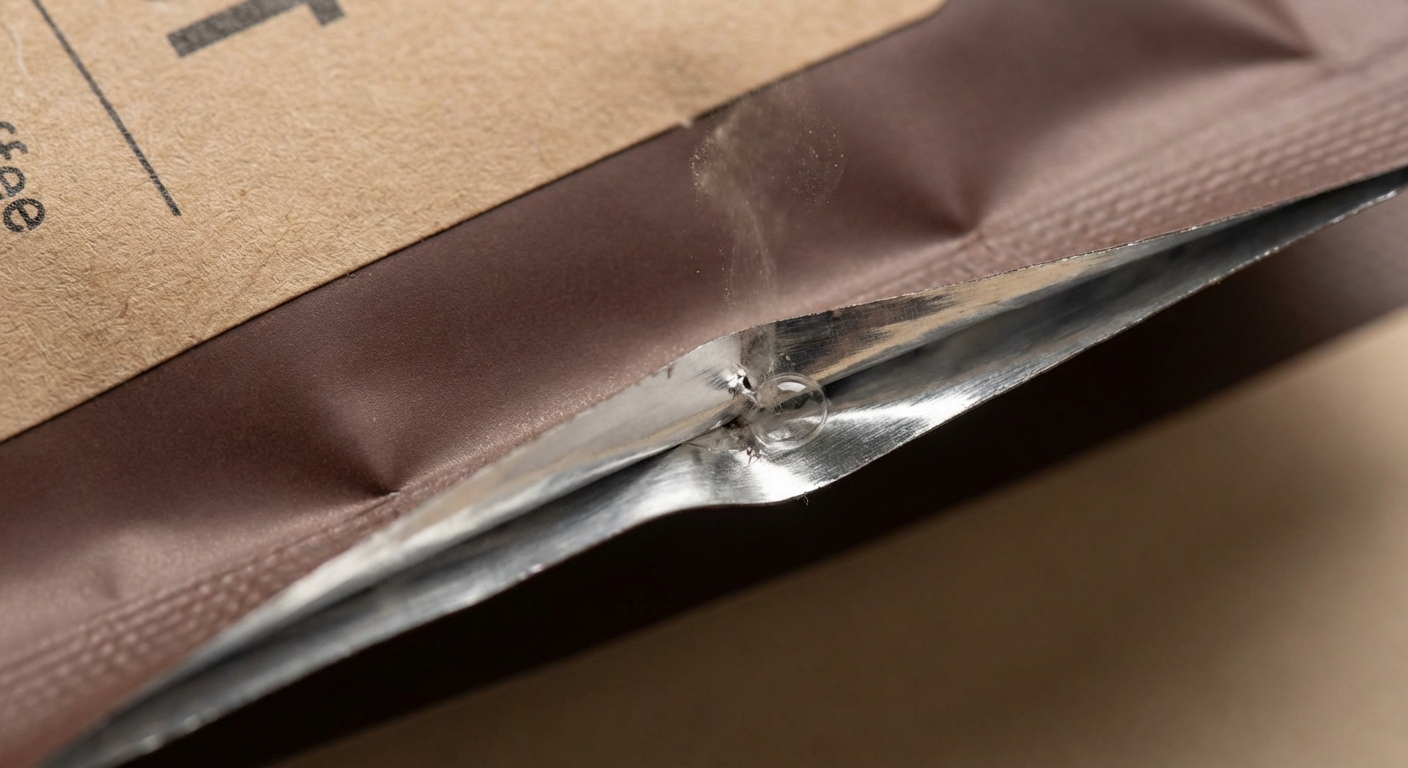
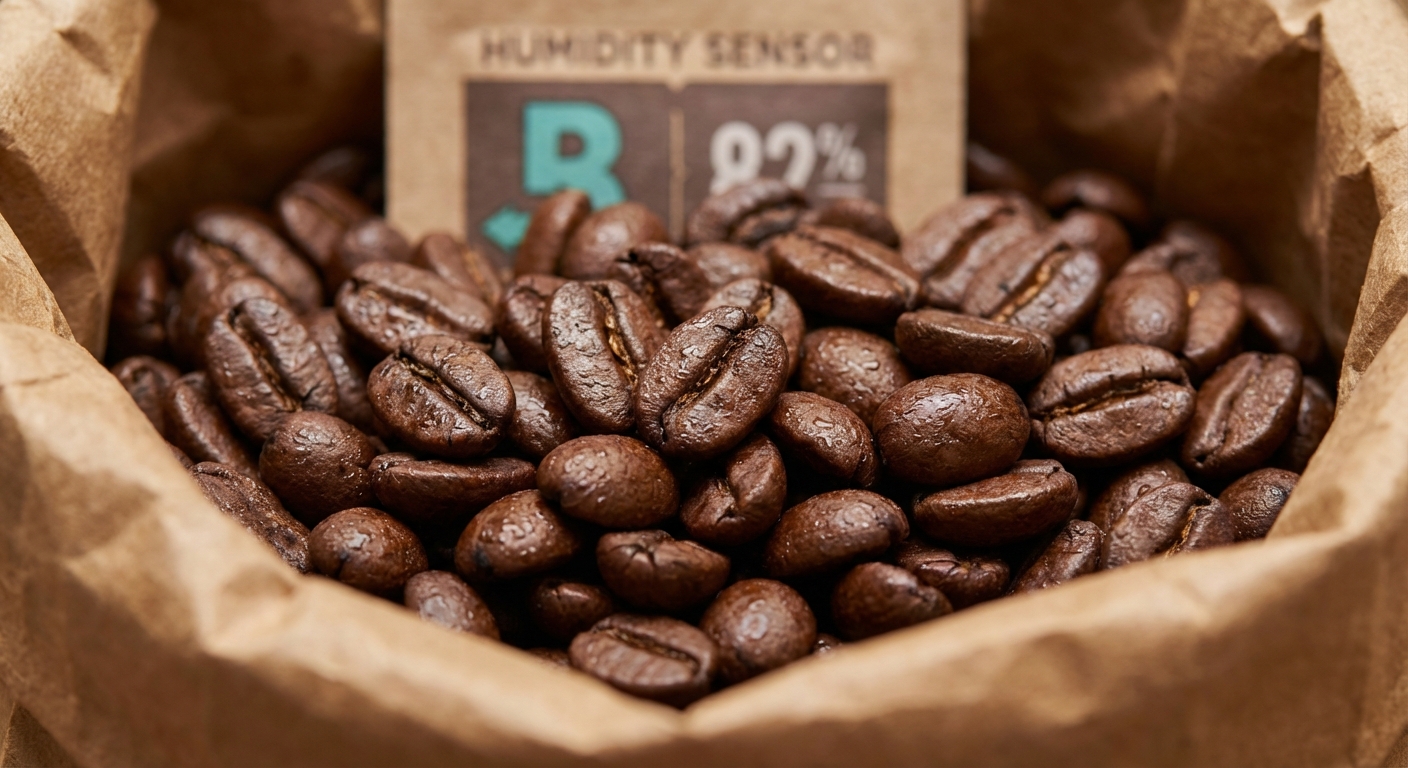
Weak seals allow oxygen and moisture to enter the bag, which rapidly accelerates the oxidation of coffee oils and destroys freshness through various coffee bag sealing issues. When you lose that hermetic barrier, the CO2 degassing process is interrupted, and the internal atmosphere of the bag equilibrates with the outside world. This leads to rapid staling that customers notice the moment they open the package.
Is oxygen the primary enemy of coffee beans?
Think about this: oxygen reacts with coffee lipids to create rancid off-flavors within days of exposure. If you have a micro-leak, you aren’t just losing air; you are losing your reputation for quality. You must ensure your machine creates a molecular bond that withstands the pressure of degassing.
Oxygen leads to lipid oxidation.
Moisture ingress makes beans soggy.
Aromas escape through tiny channels.
Here is the deal: even a pinhole leak can ruin an entire production batch if left unchecked.
Key Takeaway: Maintaining a perfect seal is the only way to preserve the volatile aromatic compounds that define your specific roast profile.
Seal Condition
Estimated Shelf Life
Aroma Retention
Hermetic Seal
12-18 Months
95-100%
Micro-leak
3-6 Months
40-60%
Weak Seal
< 1 Month
< 20%
A simple micro-leak can reduce your coffee’s marketable life by over 70%, making seal testing a mandatory part of your quality control.
How can heat settings fix coffee bag sealing issues?
Adjusting the sealing temperature to match the specific melting point of your film’s inner layer creates a permanent, leak-proof bond and solves most coffee bag sealing issues. Every film laminate has a specific “sealing window” where the plastic becomes molten enough to fuse without burning. If you operate outside this narrow range, the seal will either peel apart under pressure or become brittle and crack.
Is the temperature too low for your laminate?
Laminate materials with foil or thick Kraft paper require higher dwell times or heat to penetrate the outer layers. You might notice that your bags look sealed but pop open during shipping. This usually indicates the heat didn’t reach the inner PE layer long enough to create a true weld.
Verify jaw temperature with an IR thermometer.
Increase heat in 5-degree increments slowly.
Check for consistent heating across the jaw.
But wait, there’s more: high-speed machines often need higher temperatures to compensate for shorter contact times between the jaws.
Key Takeaway: Temperature precision is the foundation of any successful high-speed packaging operation, so treat your PID settings as a critical variable.
Heat Level
Resulting Seal Type
Risk Factor
Too Low
Peelable / Cold Seal
High Leakage
Optimized
Molecular Fusion
Zero Leaks
Too High
Burned / Brittle
Physical Tear
Proper calibration ensures the film layers fuse perfectly without compromising the structural integrity of the outer bag material.
Do dirty sealing jaws trigger coffee bag sealing issues?
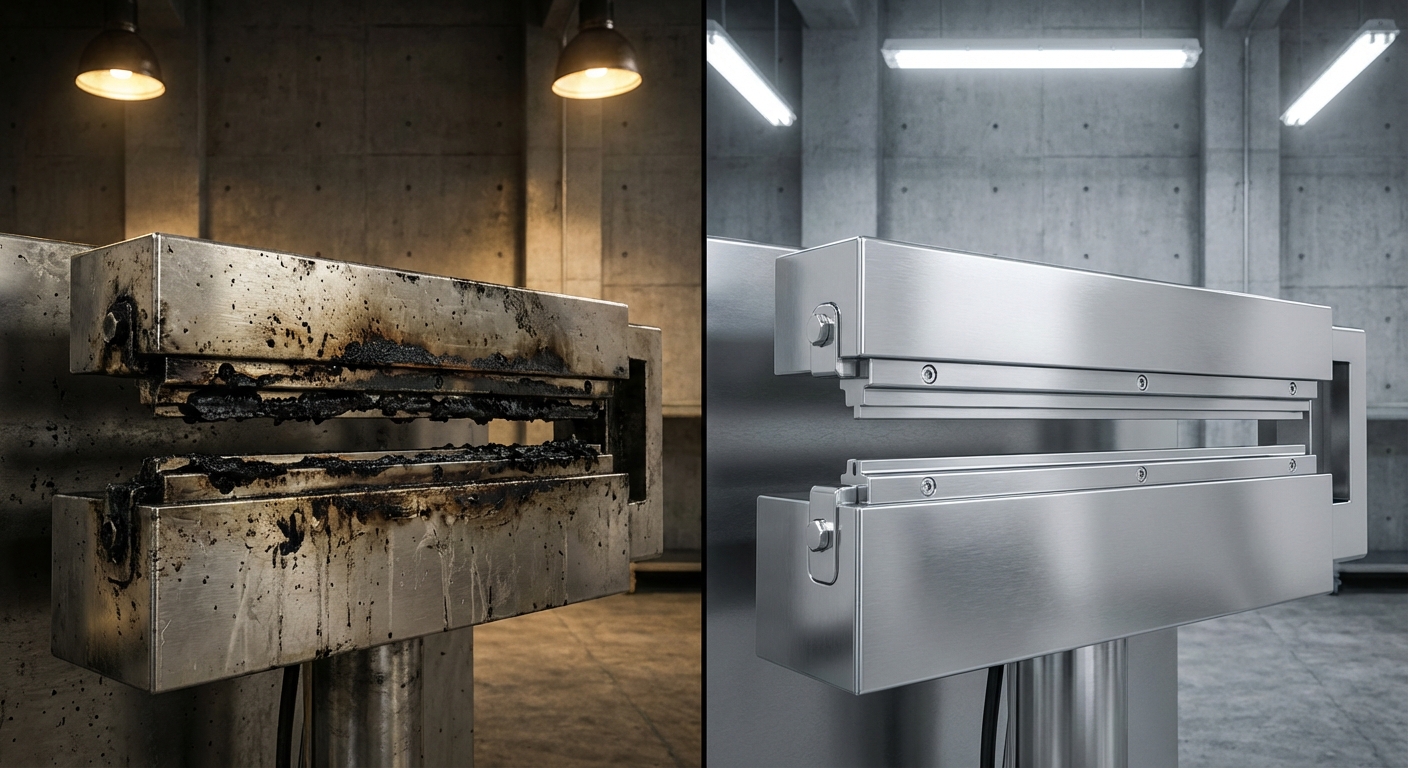
Carbonized coffee oils and plastic residue on the sealing jaws prevent even heat distribution, resulting in localized weak spots and recurring coffee bag sealing issues. Over time, burnt product acts as an insulator, meaning the heat display might show 170°C, but the actual film surface only receives 150°C. You will see this manifest as “intermittent” leaks that seem to happen at random.
Can a simple cleaning routine save you money?
Cleaning your jaws every shift ensures that the serrated pattern bites into the film correctly. If you allow residue to build up, the jaws can’t apply equal pressure across the entire width of the bag. You should use a copper brush to avoid scratching the expensive metal surfaces.
Use non-abrasive copper cleaning brushes.
Clean while the jaws are still warm.
Apply food-grade release agents weekly.
Believe it or not, a five-minute cleaning routine can prevent thousands of dollars in wasted packaging material and product rework.
Key Takeaway: A pristine sealing surface allows for lower operating temperatures and higher machine speeds while maintaining a 0% failure rate.
Cleaning Schedule
Buildup Level
Seal Failure Rate
Every Shift
Negligible
< 0.1%
Weekly
Moderate
2-5%
Monthly
Heavy
> 10%
Regular maintenance is the most cost-effective way to ensure consistent packaging quality and protect your brand’s reputation for freshness.
Is low air pressure causing your coffee bag sealing issues?
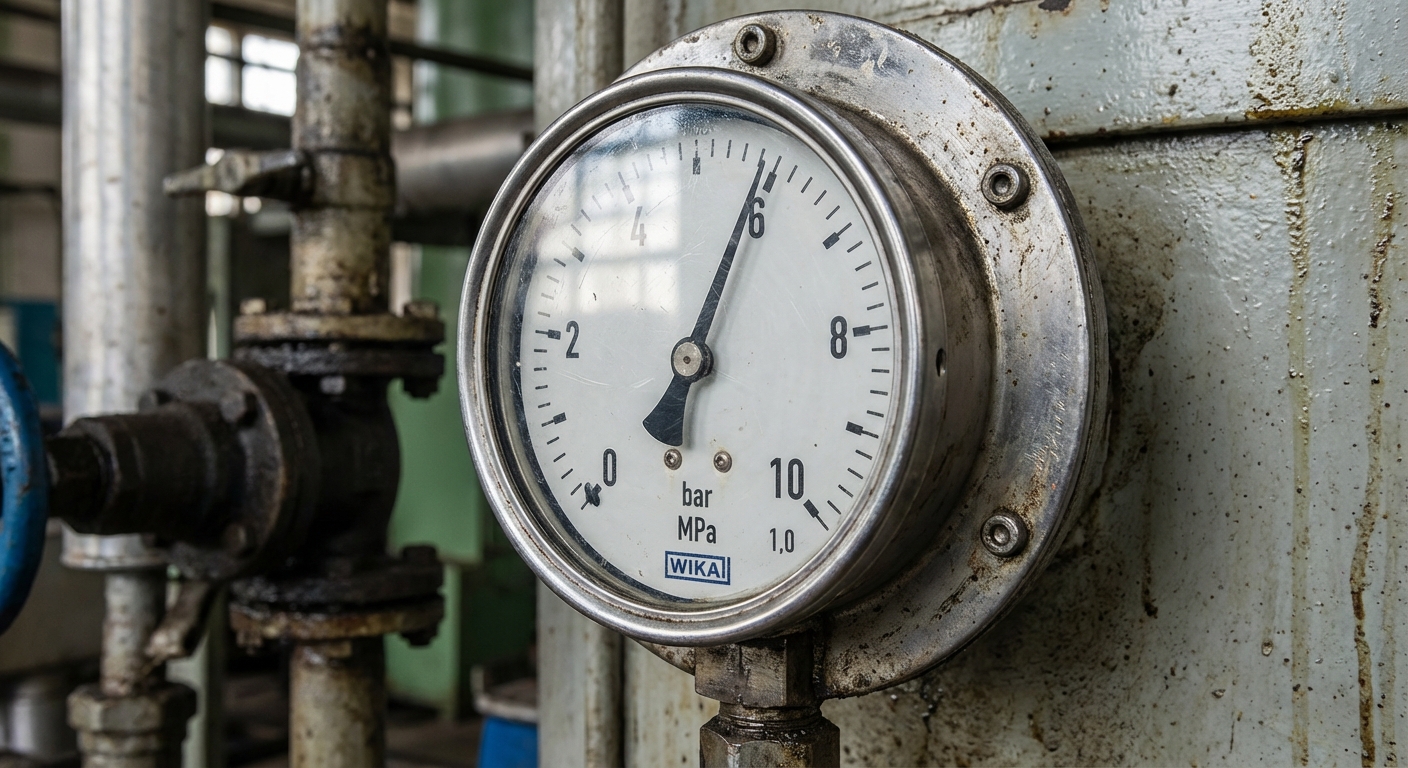
Insufficient pneumatic pressure fails to compress the film layers together, leaving microscopic gaps where air can escape and causing chronic coffee bag sealing issues. Heat alone is not enough; the machine must physically force the molten plastic layers to intermingle. If your air compressor is underpowered or your hoses have small leaks, the clamping force will be insufficient for a hermetic seal.
Does your machine have enough clamping force?
You might notice that the top of your bags looks fine, but the gusseted areas where the film is thicker are leaking. This is a classic sign that your pneumatic cylinder isn’t providing enough “bite” to seal multiple layers of material. You need to check your regulator settings against the film manufacturer’s specifications.
Check for air leaks in the hoses.
Verify the compressor’s total CFM output.
Ensure the regulator is locked in place.
Here is the kicker: as machines age, the internal seals in the air cylinders can wear out, leading to a silent drop in pressure.
Key Takeaway: Consistent mechanical pressure is just as vital as heat for achieving a reliable molecular bond in multi-layer laminates.
Material Type
Required Pressure (PSI)
Seal Strength
Single Layer
40-50
Standard
Foil Laminate
60-75
High
Kraft Paper
70-85
Ultra-High
Heavier materials like Kraft paper or aluminum foil require significantly more force to achieve a truly airtight and professional closure.
Can product dust lead to major coffee bag sealing issues?
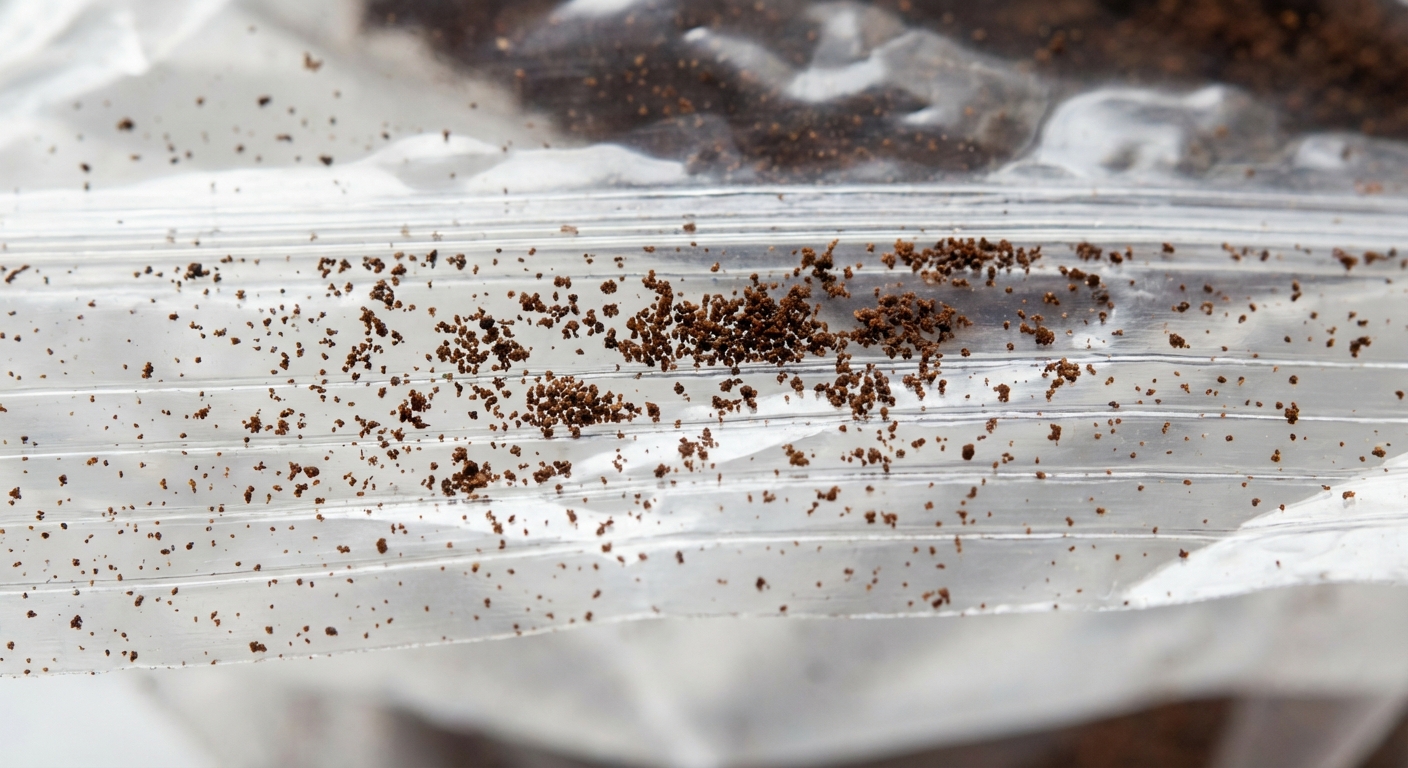
Fine coffee grounds trapped in the seal area act as a physical barrier that prevents film layers from fusing completely, leading to severe coffee bag sealing issues. This is especially common with fine espresso grinds that create a “dust cloud” during the filling process. If you see tiny brown specks inside your clear seal area, you have a contamination problem that heat cannot fix.
How do you prevent dust contamination?
You can solve this by adjusting the timing of your filling cycle or installing a dust extraction system. You want the product to settle completely before the sealing jaws close on the film. Static electricity can also pull dust into the seal zone, so consider using anti-static bars on your film reel.
Install a vacuum dust hood.
Adjust the filling and sealing timing.
Use anti-static bars on the film.
Look: keeping the “seal zone” pristine is the ultimate secret to high-speed, leak-free production in the coffee industry.
Key Takeaway: Preventing product travel into the seal area is critical for maintaining bag integrity and preventing premature staling.
Contaminant
Seal Reduction
Visual Indicator
Fine Dust
30%
Cloudy Seal Area
Large Grains
60%
Visible Gaps
Coffee Oil
80%
Greasy Texture
Keeping your filling area clean is just as important as the mechanical settings on your vertical form fill seal machine.
Does jaw misalignment worsen coffee bag sealing issues?
If the sealing jaws do not meet perfectly parallel, one side of the bag will be over-sealed while the other remains dangerously weak, triggering coffee bag sealing issues. This mechanical shift often happens after a machine jam or a rough parts change. You can diagnose this by placing a piece of carbon paper between the jaws and performing a test cycle to check the pressure footprint.
Is your machine’s mechanical timing off?
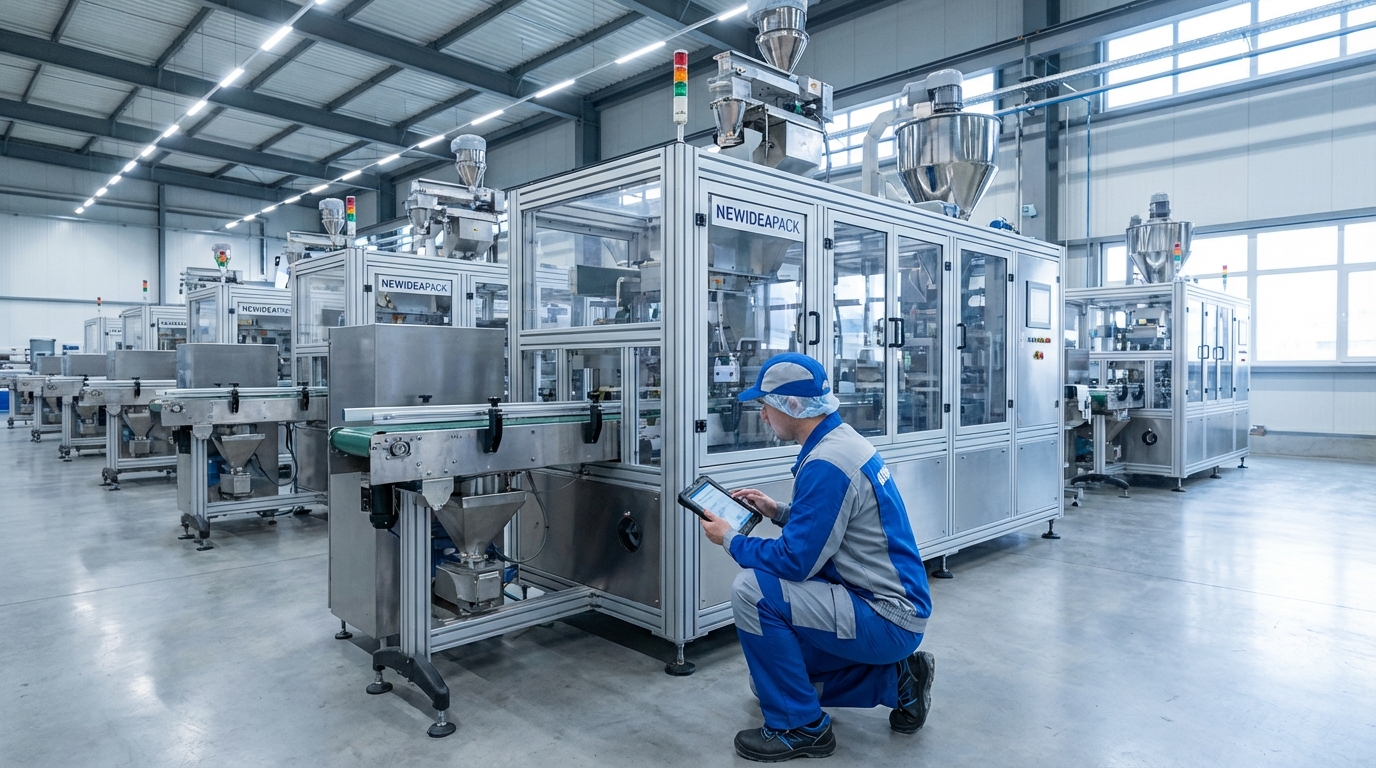
You need to ensure that the jaws strike the film at the exact same moment across the entire surface. If one corner is tilted, that area won’t receive the heat or pressure required for a weld. Most professional machines from Newideapack include alignment bolts to fine-tune this geometry during setup.
Inspect the jaw mounting bolts.
Check for worn bushings or bearings.
Level the entire machine frame.
It gets better: once you align the jaws correctly, you can often run the machine at lower temperatures, extending the life of your heaters.
Key Takeaway: Perfect alignment ensures that every square millimeter of the seal receives equal pressure and thermal energy for total consistency.
Alignment Status
Seal Uniformity
Failure Point
Parallel
100%
None
Offset
70%
Bag Edges
Tilted
40%
Center Point
Even a 0.5mm misalignment can cause catastrophic seal failures under the internal pressure generated by coffee degassing.
Will worn parts trigger major coffee bag sealing issues?
Degraded Teflon tape or pitted heating elements create uneven heat zones that lead to intermittent leaks and frustrating coffee bag sealing issues. Teflon covers are designed to prevent the film from sticking to the hot metal jaws. Once this tape burns through or frays, the film will snag, stretch, and eventually leak during the cooling phase.
When should you replace your Teflon?
You should replace your Teflon tape at the first sign of browning or if you notice the film “clicking” as it releases from the jaws. It is a cheap consumable that prevents very expensive problems. If you ignore worn tape, you risk damaging the expensive heating rods underneath due to overheating.
Check for dark “hot spots.”
Feel for rough textures on tape.
Monitor the seal “release” speed.
The best part? Keeping a stock of spare parts like thermocouples and Teflon tape means your downtime will be measured in minutes, not days.
Key Takeaway: Proactive replacement of inexpensive consumables prevents the massive costs associated with production downtime and product waste.
Part Name
Lifespan (Hours)
Failure Sign
Teflon Tape
40-80
Film Sticking
Heater Rod
2,000+
Low Temperature
Seal Jaw
5,000+
Physical Pitting
Tracking your machine’s running hours allows your team to perform proactive maintenance before a single bag fails in the field.
Do film variations create coffee bag sealing issues?
Differences in film thickness or resin quality between different batches can require immediate adjustments to your parameters to prevent coffee bag sealing issues. Even if you buy from the same supplier, environmental factors like humidity can change how the plastic behaves on the reel. You must be prepared to tweak your settings whenever you load a new pallet of film.
Does your supplier provide a COA?
You should always ask for a Certificate of Analysis (COA) to ensure the film gauge is consistent with your previous orders. If the film is even 5 microns thinner than usual, your current heat settings might melt right through it. Conversely, thicker film will act as an insulator and result in cold, weak seals.
Test every new roll of film.
Measure the film gauge accurately.
Check the Coefficient of Friction (COF).
Check this out: switching to compostable films often requires a completely different heat profile because they have a much narrower melting window.
Key Takeaway: Consistency in your raw materials leads directly to consistency in your finished product and reduces your troubleshooting time.
Film Material
Optimal Temp
Max Speed (BPM)
PET/PE
140°C
60
Kraft/AL/PE
165°C
45
Compostable
130°C
35
Understanding the thermal properties of your specific packaging material is essential for maintaining a high-speed, high-efficiency production line.
Can sensor errors create hidden coffee bag sealing issues?
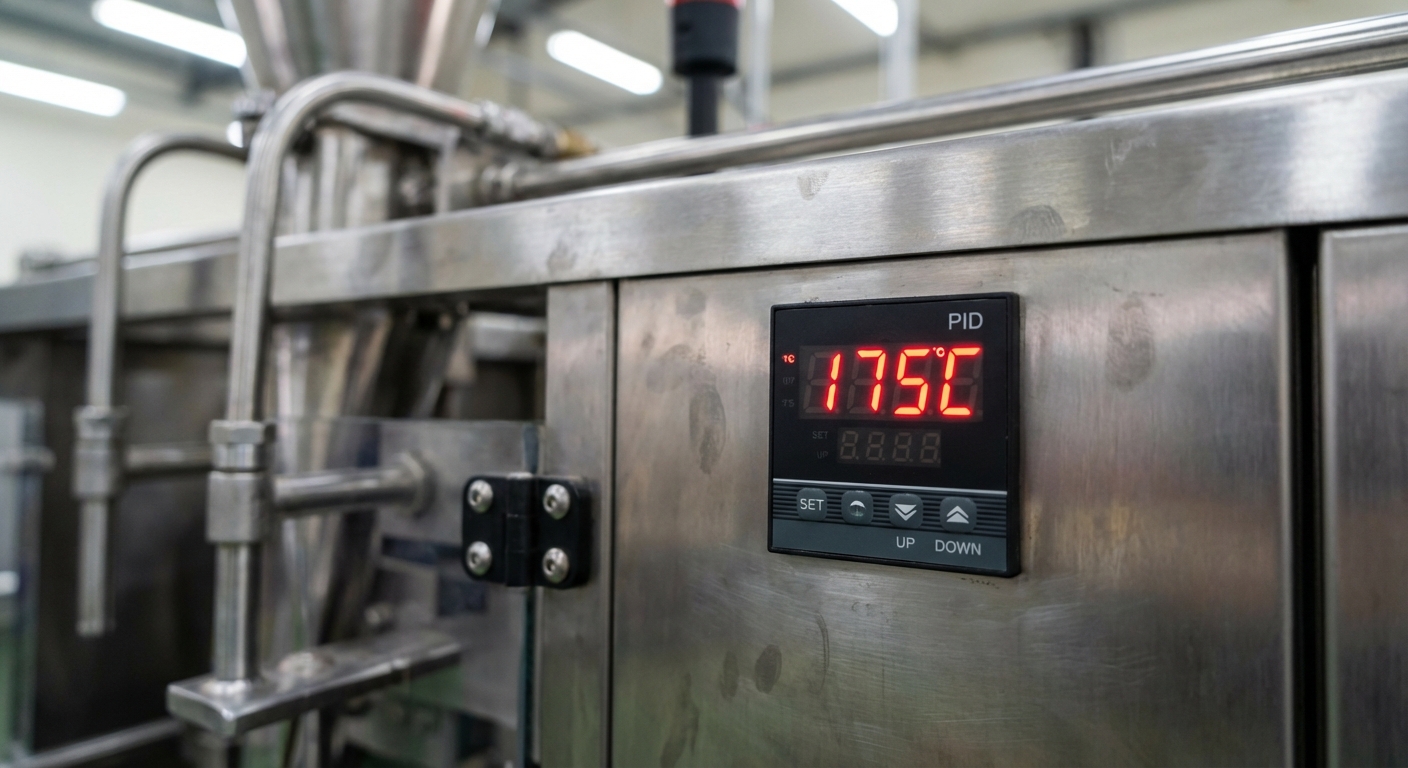
Malfunctioning thermocouples or proximity sensors can feed false data to the PLC, causing the machine to seal at incorrect temperatures and creating coffee bag sealing issues. If a sensor is “drifting,” your control panel might say 175°C, while the actual jaw is at 190°C. This leads to burned seals that look okay but fail the moment the bag is handled.
How do you verify sensor accuracy?
You should use an external infrared thermometer to double-check your machine’s reported temperatures at least once a week. If you see a discrepancy of more than 5 degrees, it’s time to replace the thermocouple. It is also important to check the wiring for any loose connections caused by machine vibration.
Compare PLC vs. IR readings.
Check for loose or frayed wires.
Recalibrate the PID loop monthly.
Here is the kicker: high humidity in the roasting room can sometimes cause electronic sensors to give erratic readings, so keep your cabinet dry.
Key Takeaway: Electronic precision is the “brain” of your machine; regular verification ensures your mechanical settings are actually being applied correctly.
Sensor Type
Failure Symptom
Seal Impact
Thermocouple
Temp Fluctuation
Burned/Weak Mix
Proximity
Early Jaw Opening
Incomplete Seal
Photoeye
Bag Misalignment
Seal in Art Zone
Maintaining your electronic sensors is just as important as oiling the gears if you want to achieve 100% seal integrity.
How does maintenance stop recurring coffee bag sealing issues?
A structured preventative maintenance plan identifies small mechanical shifts before they evolve into full-scale production shutdowns and permanent coffee bag sealing issues. Most leaks are not caused by a single catastrophic failure, but by a series of small parts wearing out simultaneously. Newideapack recommends a “daily, weekly, monthly” checklist to keep your packaging line running at peak efficiency.
Is your operator trained for inspections?
You should empower your staff to perform basic “look, listen, and feel” checks every morning before starting the run. A simple pressure test on the first five bags can catch 90% of issues before the machine produces a thousand duds. Training your team to spot the early warning signs of wear is your best defense against waste.
Perform daily jaw cleaning.
Conduct weekly pressure tests.
Schedule monthly sensor calibration.
To wrap it up: proactive care is the only way to achieve 99% uptime in a high-demand coffee packaging environment.
Key Takeaway: Investing in maintenance today prevents the catastrophic cost of a product recall and protects your brand’s reputation for excellence.
Metric
No Maintenance
With PM Plan
Monthly Leaks
500+ Bags
< 5 Bags
Machine Uptime
75%
98%
Waste Costs
High
Minimal
A well-maintained machine is a profitable machine, ensuring that every bag you ship is as fresh as the moment it left the roaster.
Conclusion
We have explored how temperature, pressure, and cleanliness form the “golden triangle” of leak-free packaging. By addressing these three fast fixes, you can eliminate the vast majority of coffee bag sealing issues and ensure your coffee stays as fresh as the day it was roasted. At Newideapack, we believe that your packaging should be as high-quality as your beans. Our engineering team focuses on building robust, reliable systems that minimize downtime and maximize freshness.
FAQ
Can I use the same settings for different coffee bean roasts? No, because oily dark roasts can leave more residue on the jaws than dry light roasts, necessitating more frequent cleaning and potential pressure adjustments to maintain seal integrity.
What’s the best way to test if my coffee bags are leaking? Submerge a sealed bag in a water tank and apply gentle pressure; rising bubbles will immediately pinpoint the exact location of any microscopic leaks or weak points in the seal.
How do I know if my sealing jaws are actually worn out? Look for physical pitting, scratches, or uneven wear patterns on the metal serrations that cannot be removed by standard cleaning; these imperfections create paths for air to escape.
Can I adjust the sealing time to compensate for low heat? Yes, increasing the dwell time can help the heat penetrate thicker materials, but it will significantly slow down your production speed, so increasing temperature is usually the preferred fix.
What’s the most common cause of “intermittent” leaking issues? Fluctuating air pressure from a central compressor or a failing thermocouple are typically the culprits behind seals that look perfect but fail only occasionally under stress.
Sales Pitch Component
If you are struggling with inconsistent packaging results
Contact us today to speak with an expert about your specific needs. Our mission is to ensure every bag you produce is a testament to your brand’s quality and commitment to excellence.