Vacuum Packed Coffee Beans: How to Extend Peak Specialty Freshness by 400%
2025年9月19日 by newideapack
Vacuum packaging is a highly effective method for preserving the freshness of specialty whole beans because it virtually eliminates the oxygen that causes flavor degradation. You spend months sourcing the perfect microlot only to watch its delicate aromatics vanish within days of roasting due to oxidation. This rapid decline in quality is a nightmare for roasters who value consistency and premium taste profiles. Thankfully, utilizing Vacuum packed coffee beans offers a scientifically backed way to lock in those volatile compounds and extend your product’s shelf life.
Why is oxygen considered the primary enemy of specialty coffee?
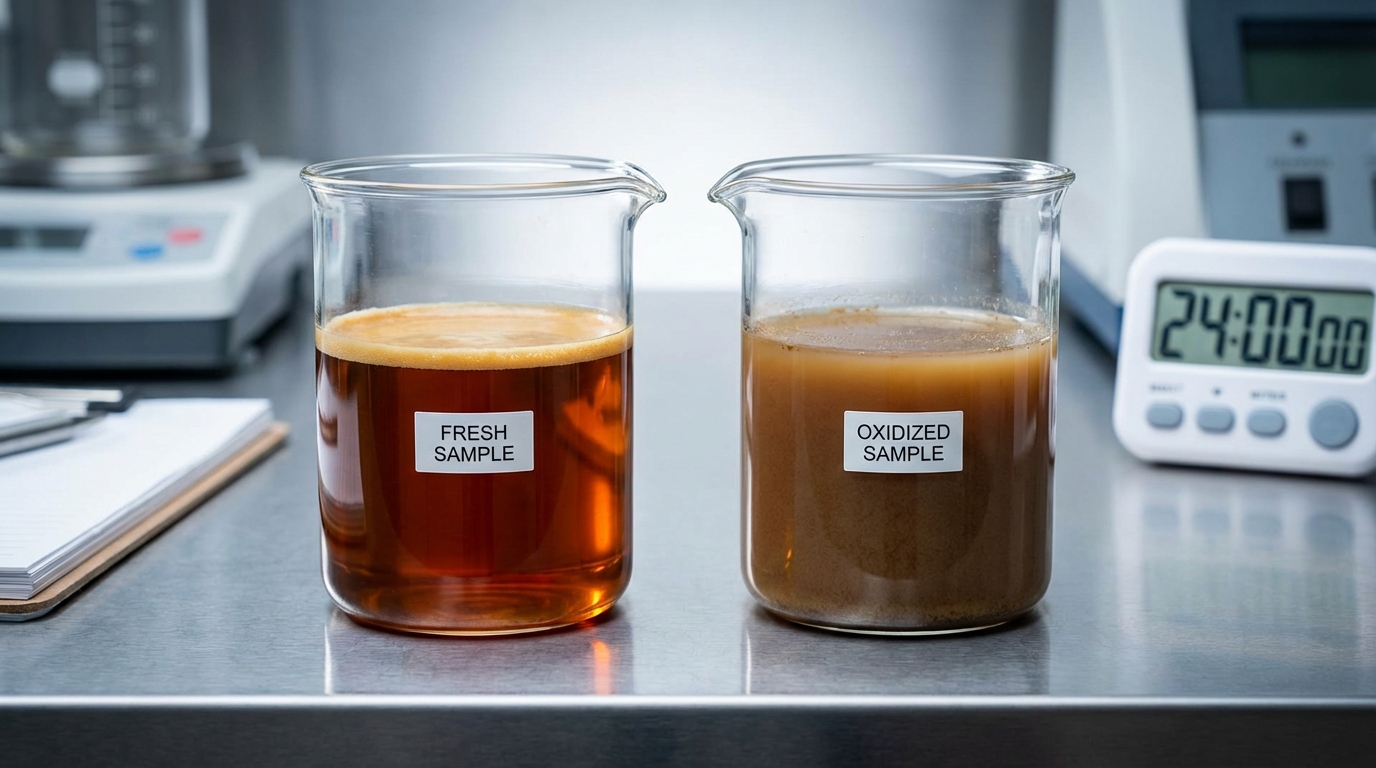
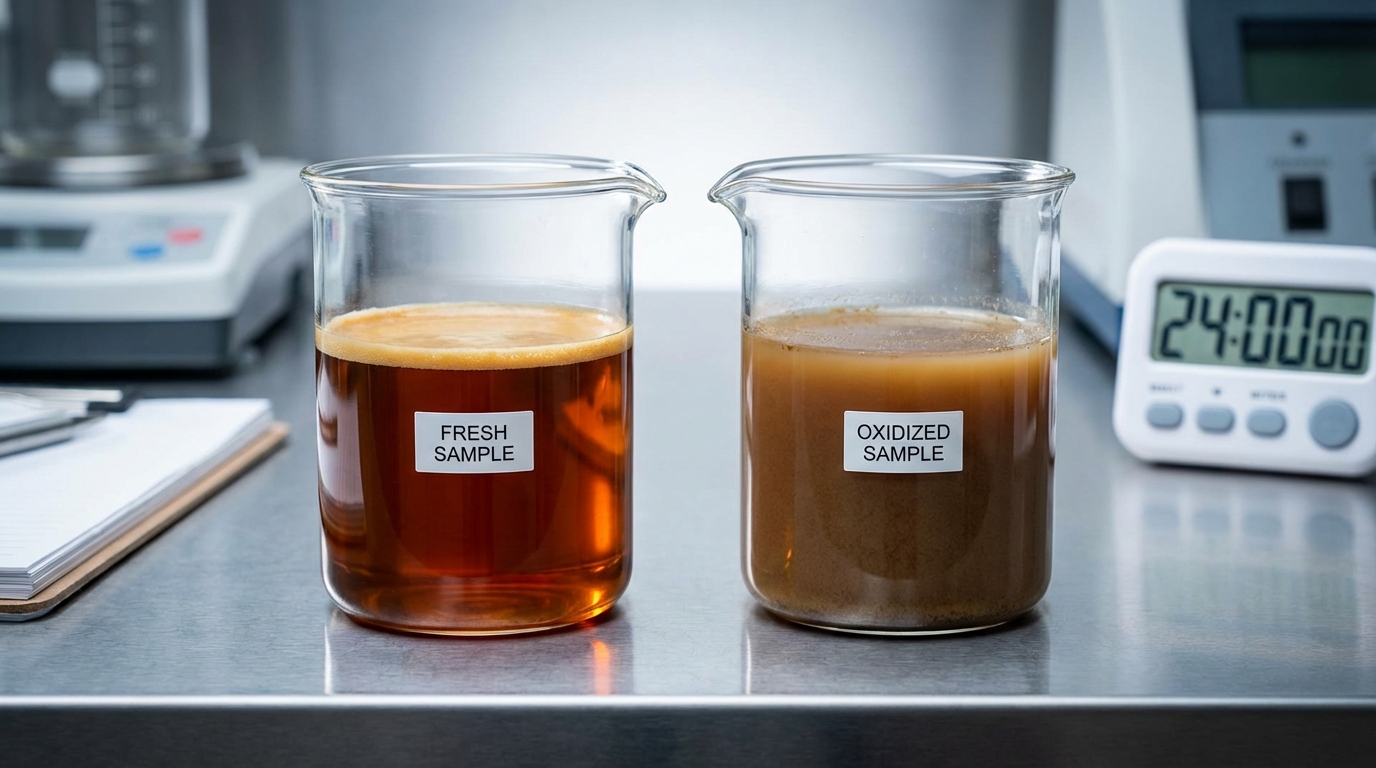
Oxygen is the leading cause of flavor degradation in specialty coffee because it triggers the oxidation of delicate oils and aromatic compounds. When you leave your premium Vacuum packed coffee beans exposed to the atmosphere, the complex flavor notes—like jasmine or stone fruit—begin to dissipate almost immediately. I have seen countless roasters lose the “sparkle” of a high-scoring roast simply because their packaging didn’t provide an adequate barrier against the air.
How does oxidation affect the chemical structure of oils?
Coffee beans contain volatile lipids that are extremely sensitive to environmental exposure. Once these oils react with oxygen, they turn rancid, leading to that “stale” or “cardboard” taste we all dread. The process breaks down aromatic esters and develops secondary oxidation products that mask the original origin characteristics.
Best of all: By removing the air, you stop this chemical chain reaction in its tracks. This preservation method ensures that the consumer experiences the roast exactly as the head roaster intended during the initial cupping.
Can you identify the sensory signs of oxygen damage?
Even an untrained palate can often tell when a coffee has been “air-struck” for too long. The vibrant, citrusy acidity typically flattens into a dull, bitter profile that lacks any complexity or finish. You will notice the following signs:
Aroma disappears from the dry grounds.
The cup lacks “body” or mouthfeel.
Metallic or vinegary aftertastes appear.
Why do volatile compounds disappear so quickly?
Volatile compounds are responsible for the unique scent and flavor profiles of specialty coffee. Because these molecules are lightweight, they easily evaporate into the surrounding air if a vacuum seal isn’t present. Vacuum technology keeps these molecules trapped within the bean’s cellular structure.
Key Takeaway: Eliminating oxygen is not just a preference; it is a necessity for maintaining the integrity and high-end value of specialty whole beans.
Factor
Oxygen Exposure
Vacuum Sealed
Aromatic Retention
Rapid Loss
High Preservation
Oil Oxidation
Rancidity Risk
Minimized
Flavor Complexity
Flattened
Maintained
The data proves that oxygen removal is the single most important factor in maintaining a “just-roasted” sensory profile.
Can vacuum packed coffee beans truly extend peak freshness?
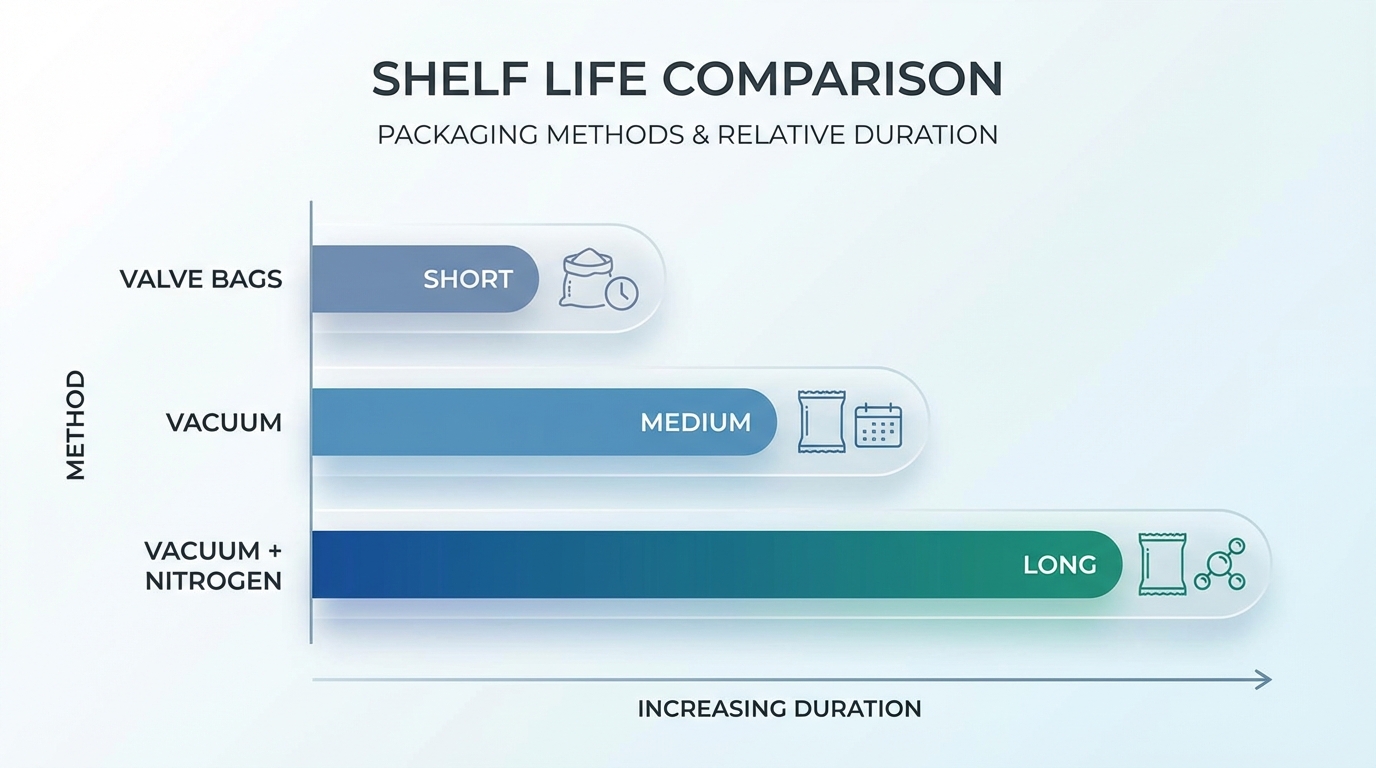
Yes, Vacuum packed coffee beans can maintain their peak flavor profile for three to four times longer than coffee stored in traditional paper or valve bags. I often tell my clients that if you want to ship a microlot across the country, vacuum sealing is your best insurance policy. It creates a stable internal environment that protects the beans from the fluctuating conditions of transit and storage.
How long does the freshness window actually last?
While standard packaging might give you two weeks of “perfection,” vacuum-sealed beans can often stay in their peak window for up to two months. This extended timeframe allows for better inventory management and less waste for both roasters and cafes.
But here is the kicker: The quality remains remarkably consistent from the first day to the last, provided the seal remains intact. This stability is why many high-end competitions rely on vacuum sealing for their competition-grade lots.
What role does the barrier material play in this extension?
The machine is only half the battle; the material of the bag itself must prevent oxygen from seeping back in over time. Using multi-layer foil or high-barrier plastics is essential to prevent the “vacuum” from failing during storage. High-quality materials from New Idea Pack ensure:
High oxygen transmission rate (OTR) protection.
Moisture vapor barrier properties.
Opaque layers to block UV light.
Does the roast profile affect the freshness extension?
Darker roasts tend to have more surface oils, which are more susceptible to oxidation than lighter roasts. Consequently, Vacuum packed coffee beans with a darker profile see an even more dramatic improvement in shelf life compared to traditional storage. Light roasts also benefit by retaining their delicate floral notes for significantly longer periods.
Key Takeaway: For businesses looking to scale their reach without sacrificing quality, vacuum packaging offers the most reliable way to ship “roastery-fresh” flavor.
Packaging Type
Peak Freshness Window
Total Shelf Life
Standard Paper Bag
3-7 Days
2 Weeks
Valve Bag
2 Weeks
4-6 Weeks
Vacuum Sealed
8-12 Weeks
6-12 Months
Extending the freshness window from days to months allows specialty roasters to access global markets with complete confidence.
Is degassing a significant problem for vacuum sealing whole beans?
Freshly roasted coffee naturally releases carbon dioxide (CO2), which can cause Vacuum packed coffee beans to bloat or even burst the seal if not handled correctly. This process, known as degassing, is the biggest technical hurdle for roasters moving toward vacuum technology. If you seal the beans too quickly after they leave the cooling tray, the trapped gas has nowhere to go but out.
Why does CO2 build up inside the sealed bag?
During the roasting process, gases are trapped within the cellular structure of the bean as byproducts of the Maillard reaction. These gases, primarily CO2, are slowly released over several days, creating internal pressure that fights against the vacuum seal.
Look: If you don’t account for this, your beautiful packaging will look like a bloated pillow within 24 hours. This is why timing and equipment choice are so critical in the specialty sector.
Should you wait before sealing your beans?
Allowing the coffee to “rest” for 12 to 24 hours before vacuum sealing is a common practice to mitigate the risk of bag failure. This ensures that the most aggressive phase of degassing is complete while still capturing the aroma before oxidation begins. Benefits include:
Reduces the risk of seal failure.
Maintains the “tight” look of the package.
Preserves the bean’s internal moisture.
Can one-way valves be used with vacuum packaging?
Some manufacturers combine a vacuum seal with a one-way degassing valve to allow CO2 to escape without letting oxygen in. This “hybrid” approach is excellent for very fresh roasts that need to be packaged immediately for logistics reasons. New Idea Pack offers several pre-made bag packaging machine solutions that can integrate these features.
Key Takeaway: Managing the degassing timeline is the “secret sauce” to successfully implementing vacuum packaging for freshly roasted specialty lots.
Degassing Stage
Time Elapsed
Impact on Vacuum Bag
Immediate
0-2 Hours
High risk of bag burst
Intermediate
12-24 Hours
Ideal window for sealing
Late
48+ Hours
Potential loss of aromatics
Careful timing ensures the package maintains its structural integrity while locking in the coffee’s most volatile flavor components.
How does vacuum packaging affect the coffee’s aromatic profile?
Vacuum packaging effectively “locks” the aromatic compounds inside the bean by removing the medium—air—through which they would otherwise escape. When you prepare Vacuum packed coffee beans, you are essentially putting the coffee into a state of suspended animation. I’ve found that when the bag is finally opened, the “aroma bloom” is often more intense than with any other packaging method.
Why do volatiles stay trapped inside the bean?
Without air movement, the volatile organic compounds (VOCs) that create coffee’s smell have no incentive to migrate out of the bean’s pores. The vacuum environment creates a pressure equilibrium that keeps the flavor exactly where you want it: inside the coffee.
Think about this for a second: Every time you smell coffee in a room, that is flavor leaving the bean forever. Vacuum sealing stops that loss completely until the moment the customer opens the bag.
Is there a risk of “smothering” the coffee?
Some critics argue that coffee needs to “breathe,” but in reality, specialty coffee only needs to degas, not breathe oxygen. As long as the initial CO2 is managed, the vacuum environment is purely beneficial for aroma retention. You can expect:
Preserves delicate floral and fruity notes.
Prevents the “stale room” smell in warehouses.
Concentrates the aroma for the end consumer.
How does pressure impact the release of oils?
The lack of external pressure in a vacuum can sometimes draw internal oils to the surface of the bean more quickly. While this makes the beans look “shiny,” it actually keeps the flavor-rich lipids accessible for the brewing process once the bag is opened.
Key Takeaway: Vacuum sealing acts as a flavor vault, ensuring the most complex aromatic notes of your specialty coffee are delivered directly to the consumer’s cup.
Sensory Metric
Traditional Bag
Vacuum Sealed
Dry Fragrance
Fades in 10 days
Strong at 60 days
Wet Aroma
Muted over time
Vibrant and punchy
Flavor Finish
Short/Dull
Lingering/Clean
The intensity of the “aroma bloom” upon opening a vacuum-sealed bag is a major selling point for premium coffee consumers.
Should you use a specialized coffee vacuum sealer?
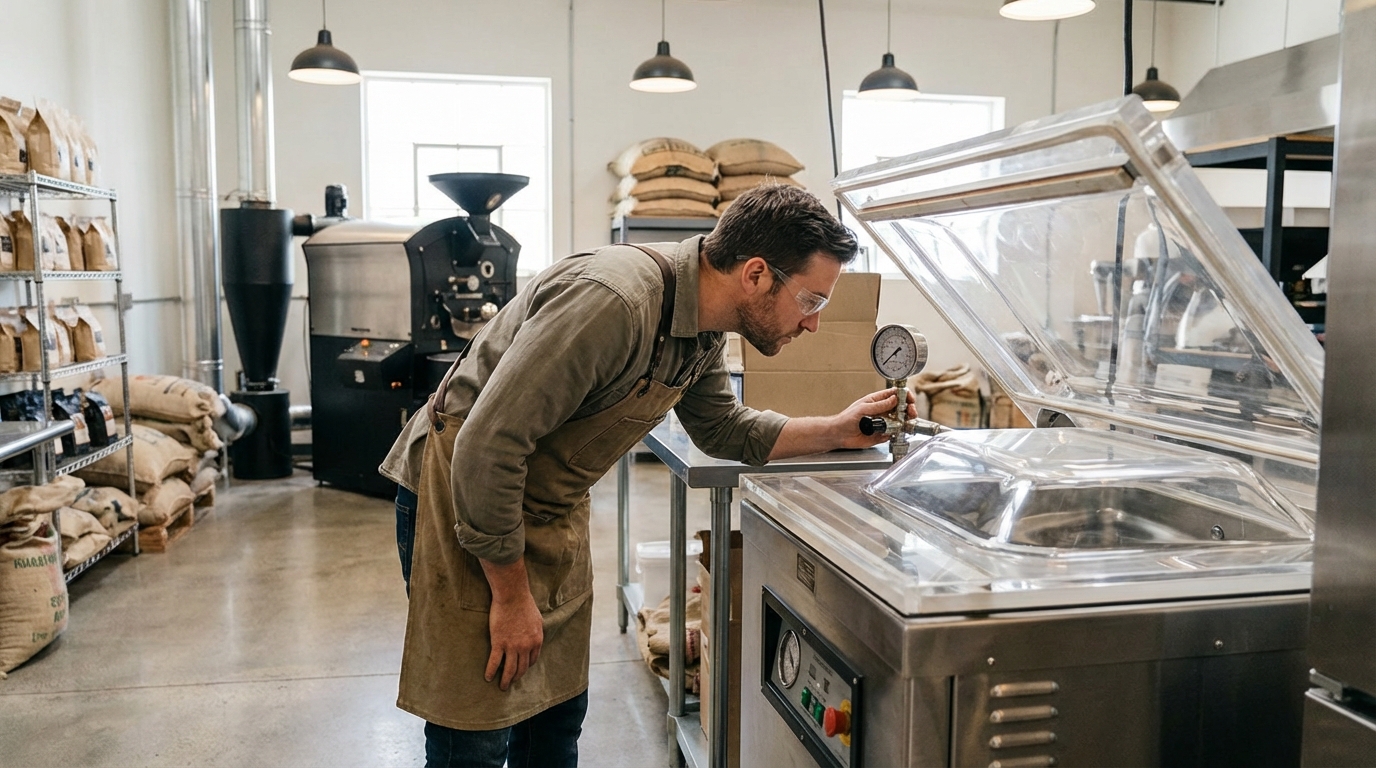
Investing in a specialized machine like the Coffee Pac vacuum sealer is essential because standard food sealers cannot handle the dust and gas requirements of whole beans. Professional Vacuum packed coffee beans require a machine that can manage high-volume production while ensuring a hermetic seal every single time. At New Idea Pack, we emphasize that the right equipment prevents the “seal failure” that ruins entire batches of expensive specialty coffee.
What features make a coffee sealer different?
Coffee-specific machines often include particle filters to prevent fine coffee dust from clogging the vacuum pump. They also offer precise control over the vacuum strength to prevent crushing delicate beans or over-stretching the bag material.
It gets better: The Coffee Pac even includes a particle ejection system to keep the internal components clean. This longevity is what separates a professional B2B solution from a consumer-grade toy.
Can these machines handle different bag types?
Specialty coffee often uses side-gusseted bags or stand-up pouches, which require specific sealing bar configurations to ensure the corners don’t leak. A professional sealer provides the heat and pressure necessary to melt through multiple layers of foil and plastic. Features include:
Compatible with gusseted bags.
Handles thick, multi-layer laminates.
Ensures consistent “ribbon” seals.
Is automation necessary for your production scale?
If you are sealing hundreds of bags a day, a semi-automatic or fully automatic system is vital for consistency. New Idea Pack provides machines that allow for repeatable results, ensuring every bag of Vacuum packed coffee beans meets your quality standards without human error.
Key Takeaway: High-quality machinery is an investment in your brand’s reputation for freshness and prevents costly product returns due to leaked seals.
Feature
Kitchen Sealer
Coffee Pac (Professional)
Seal Width
2mm – 3mm
10mm – 12mm
Dust Management
None
Built-in Filters
Daily Capacity
10-20 Bags
1,000+ Bags
A professional-grade machine pays for itself by eliminating seal failures and protecting high-value inventory.
Does vacuum packaging prevent moisture and mold growth?
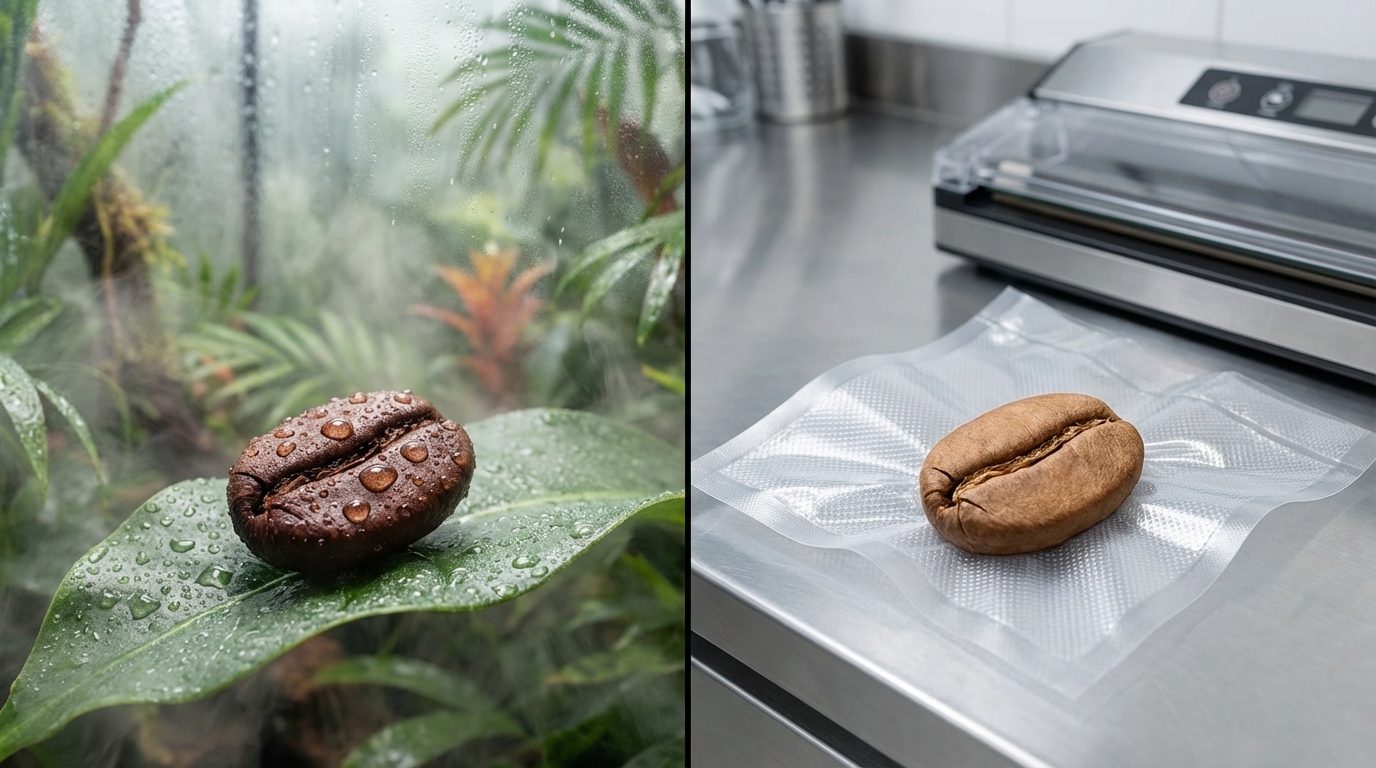
Vacuum packaging creates a physical barrier that prevents moisture from reaching your Vacuum packed coffee beans, which is vital for preventing mold and bacterial growth. Because specialty coffee is often shipped across different climate zones, humidity can be a silent killer of quality. I always recommend vacuum sealing for any coffee destined for humid or coastal environments where traditional bags fail.
Why is moisture so dangerous for roasted beans?
Roasted coffee is hygroscopic, meaning it acts like a sponge for any moisture in the air. This moisture not only speeds up oxidation but can also lead to the development of ochratoxin A and other harmful molds.
The truth is: Even a small amount of humidity can turn a bright, acidic Ethiopian coffee into a muddy, fermented mess. Vacuum sealing removes the humidity from the equation entirely by creating a dry, airtight environment.
Can it protect against external odors too?
Since the bag is airtight, it also prevents the coffee from absorbing the smells of other products in the pantry or shipping container. This is why you can safely store vacuum-packed coffee near spices or cleaning supplies without risk of contamination. Key benefits include:
Barrier against pungent environmental smells.
Protects the purity of the coffee’s origin.
Ideal for multi-product retail shelves.
Does vacuum sealing help with static electricity during grinding?
Beans that have been stored in a vacuum-sealed environment often maintain a more consistent internal moisture level. This can actually lead to less static electricity when the beans are eventually ground, making for a cleaner brewing workflow.
Key Takeaway: Vacuum packaging offers a dual-layer of protection, acting as both a moisture shield and an odor-proof barrier for your premium beans.
Environmental Threat
Valve Bag Protection
Vacuum Seal Protection
High Humidity
Moderate
Total
Cross-Contamination
Low
Total
Pest Infiltration
Moderate
Total
By isolating the product from all external environmental variables, vacuum sealing ensures the coffee tastes the same in London as it did in the roastery.
Is nitrogen flushing better than vacuum packaging alone?
While vacuuming removes air, nitrogen flushing replaces that air with an inert gas, providing an even higher level of protection for Vacuum packed coffee beans. Many high-end roasters use a “vacuum-gas-flush” cycle to achieve residual oxygen levels below 1%. This combined approach is the gold standard in the specialty industry for long-term shelf stability and structural integrity of the bag.
How does nitrogen improve the process?
Nitrogen is an inert gas that does not react with coffee oils, and it provides a “cushion” inside the bag that prevents the vacuum from crushing the beans. It essentially fills the void left by oxygen with a harmless, flavor-neutral protector.
Believe it or not: Most of the “super-fresh” coffee you buy from global specialty brands uses this exact combination of vacuum and nitrogen. It is the most advanced way to preserve the “just-roasted” characteristics for many months.
Is the equipment more complex for gas flushing?
Yes, you will need a machine like the Coffee Pac that is equipped with gas-injection ports and a nitrogen source. While the setup cost is higher, the results in terms of shelf-life extension are unparalleled for high-volume roasters. You will need:
A nitrogen generator or tank.
Integrated gas-flush controls.
Specialized nozzles for injection.
Does nitrogen flushing affect the taste?
Nitrogen is completely odorless and tasteless, meaning it has zero impact on the sensory profile of the coffee. Its only role is to displace oxygen and provide a protective atmosphere for the Vacuum packed coffee beans.
Key Takeaway: If your goal is the absolute maximum shelf life with zero risk of oxidation or bean breakage, a vacuum-plus-nitrogen-flush system is the ultimate solution.
Method
Residual Oxygen
Bean Protection
Shelf Life
Vacuum Only
2-5%
Low (compression)
6 Months
Nitrogen Only
1-2%
High (cushion)
9 Months
Vacuum + Nitrogen
<1%
High (cushion)
12+ Months
The combination of both technologies represents the pinnacle of modern coffee preservation science.
Can you vacuum seal green coffee for long-term storage?
Vacuum sealing green coffee is a game-changer for importers and roasters who want to preserve the “harvest-fresh” quality of high-value Vacuum packed coffee beans. Unlike roasted coffee, green coffee does not degas significantly, making it the perfect candidate for high-vacuum storage. I have cupped green coffees that were vacuum-sealed for over a year and found them nearly indistinguishable from the new crop.
Why does green coffee benefit so much from vacuum?
Green coffee loses its moisture and vitality over time when stored in traditional burlap bags, leading to “baggy” or “papery” flavors. Vacuum sealing preserves the internal water activity of the bean, preventing it from tasting like old-crop.
You might be wondering: “Is it really worth the extra cost for green coffee?” If you are dealing with $15/lb Geisha microlots, the answer is a resounding yes to protect your most expensive raw assets.
What is the best material for green coffee vacuum bags?
For large quantities of green coffee, roasters often use heavy-duty liners or specialized multi-layer vacuum bags. These are designed to withstand the sharp edges of green beans without puncturing during handling. Look for:
High puncture resistance.
Large capacity (10kg – 30kg).
UV protection for warehouse storage.
Does it protect against infestation?
Since the environment is airtight and oxygen-free, it is impossible for insects or larvae to survive inside the bag. This makes vacuum sealing an excellent organic alternative to chemical fumigation for imported coffee.
Key Takeaway: Vacuum sealing green coffee is the most effective way to “stop the clock” on a harvest, allowing you to serve seasonal flavors all year round.
Storage Method
Moisture Stability
Insect Protection
“Old Crop” Flavor Delay
Burlap Bag
Low
None
3-6 Months
GrainPro Liner
Moderate
Moderate
6-9 Months
Vacuum Sealed
High
Total
18+ Months
Roasters who vacuum seal their green coffee can maintain a consistent menu regardless of the global harvest calendar.
Will vacuum packed coffee beans survive the freezer?
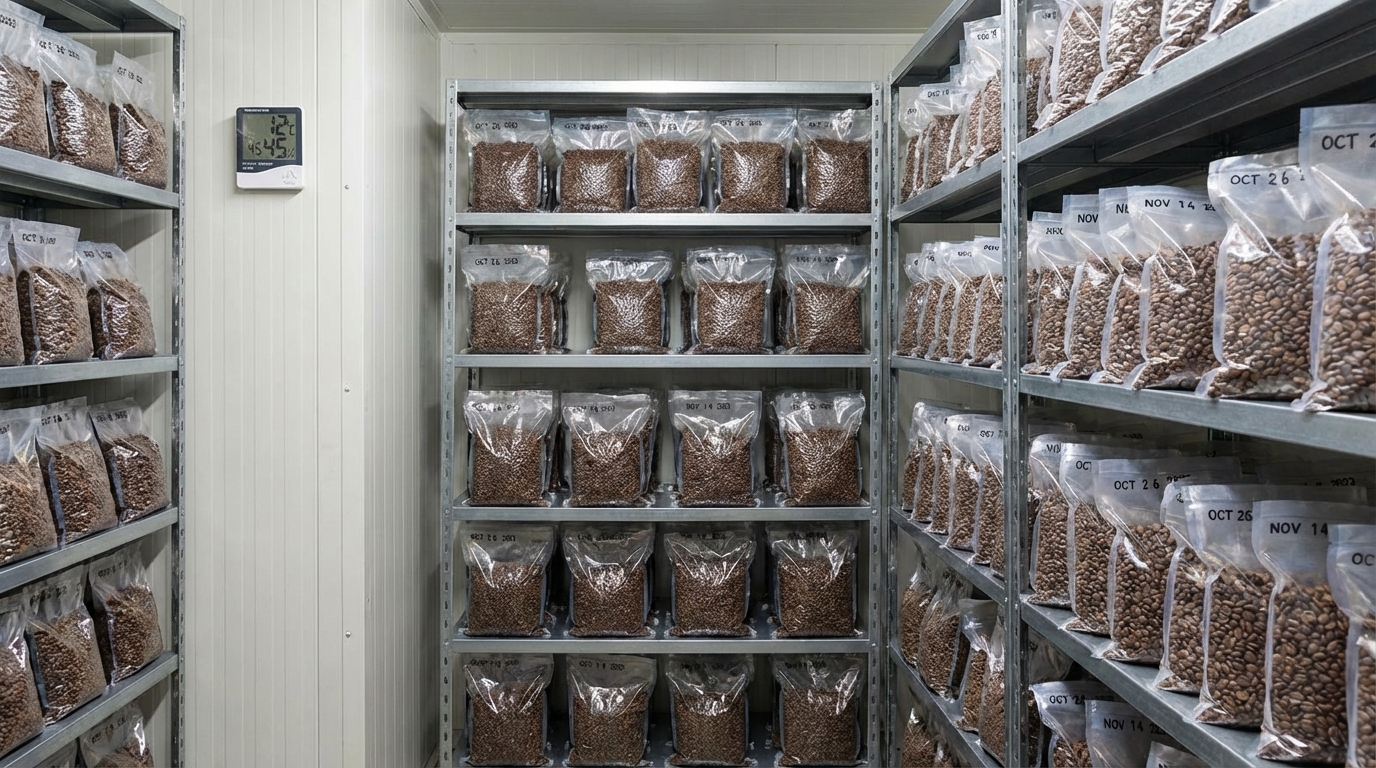
Vacuum sealing is the only recommended way to freeze Vacuum packed coffee beans because it prevents the condensation and freezer burn that usually ruin coffee quality. When you remove the air, there is no moisture left to turn into ice crystals on the surface of the beans. Specialty baristas often use this method to build “libraries” of rare roasts that can be enjoyed months after the roast date.
How does freezing affect the bean’s structure?
Freezing slows down the movement of molecules, essentially pausing the chemical aging process. When combined with a vacuum, it creates the most stable storage environment possible for specialty coffee.
The bottom line is this: If you put a standard valve bag in the freezer, you’re asking for trouble; if you put a vacuum bag in, you’re building a flavor vault. Just make sure to let the bag reach room temperature before opening it.
What is the proper “thawing” procedure?
Opening a frozen bag of coffee while it is still cold will cause immediate moisture condensation on the beans, leading to instant staleness. You must allow the sealed vacuum bag to sit on the counter for at least 4-6 hours until it is completely at room temperature. Follow these steps:
Remove from freezer.
Leave seal intact.
Wait until room temperature is reached.
Open and enjoy.
Can you freeze green coffee as well?
While possible, freezing green coffee is less common because vacuum storage at room temperature is usually sufficient for most needs. However, for extremely rare experimental lots, the combination of vacuum and sub-zero temperatures offers the ultimate protection.
Key Takeaway: For long-term preservation of high-value microlots, the combination of vacuum sealing and freezing is scientifically the most effective method available.
Storage Temperature
Atmospheric Pressure
Relative Aging Speed
25°C (Room)
Ambient
100%
25°C (Room)
Vacuum
20%
-18°C (Freezer)
Vacuum
2%
Freezing vacuum-sealed coffee effectively halts the passage of time, preserving the roast’s peak aromatics for over a year.
Is vacuum packaging the right choice for your brand?
Deciding to move to Vacuum packed coffee beans depends on your brand’s commitment to quality and your customers’ expectations for freshness. If you are positioning yourself as a premium B2B supplier or a high-end retail roaster, the benefits of vacuum technology far outweigh the initial investment. At New Idea Pack, we believe that providing a superior sensory experience is the best way to build long-term customer loyalty.
What are the cost considerations?
While vacuum bags and machines are more expensive than basic kraft bags, the reduction in product waste and the ability to charge a premium for “fresher” coffee often leads to a higher ROI. You should account for:
Initial machinery investment.
Higher cost per unit for high-barrier bags.
Potential labor savings from automated systems.
But wait, there’s more: The marketing value of being able to say your coffee stays fresh for 6 months is a massive competitive advantage in a crowded market. It builds immense trust with your wholesale partners and retail customers alike.
How does it impact your brand’s aesthetic?
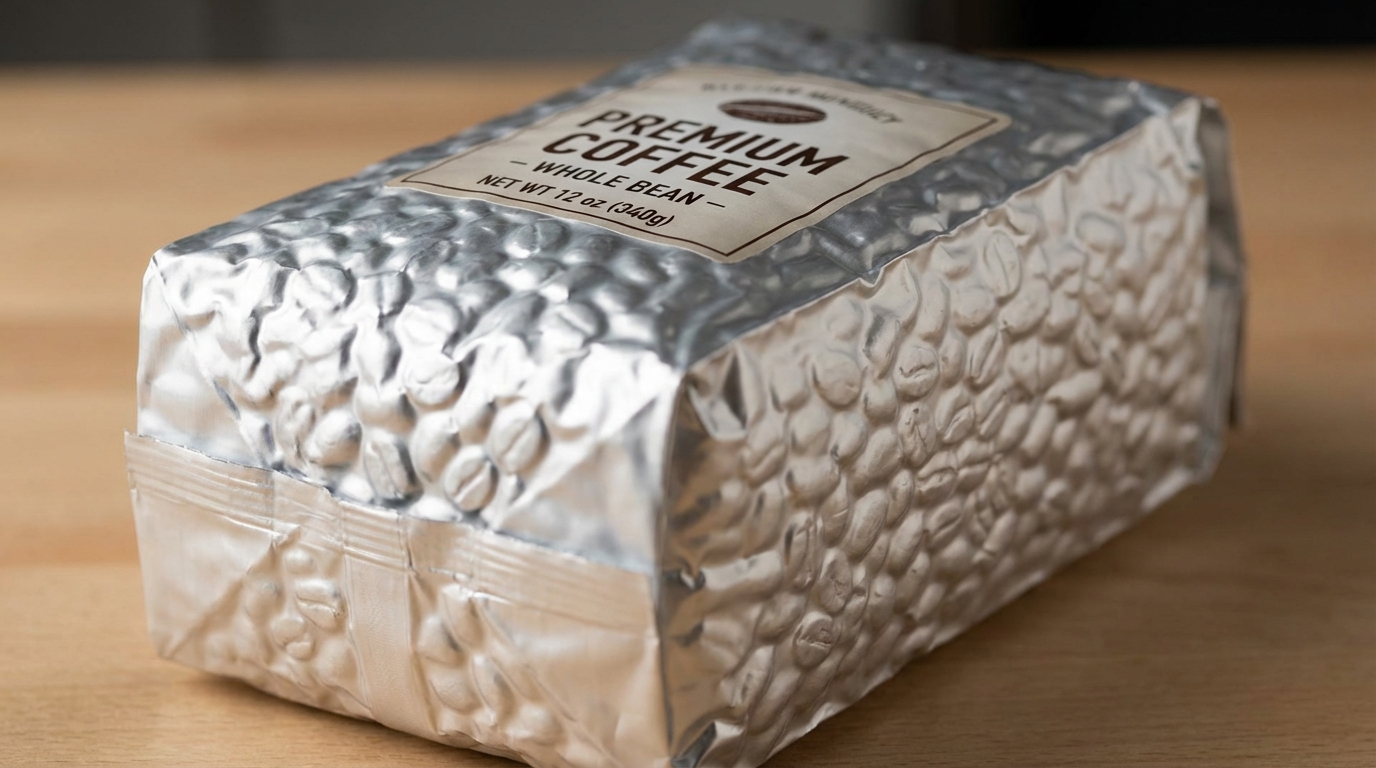
Vacuum-packed bags have a distinct “brick” look that communicates a scientific, quality-first approach to coffee. This professional appearance can help your product stand out on a retail shelf dominated by floppy paper bags. Features include:
Unique, “tight” bag appearance.
Professional, high-tech branding.
Clearly visible “freshness” indicator.
Is it suitable for all your products?
You might choose to use vacuum packaging only for your highest-scoring microlots or for export orders where shipping times are long. For high-volume, local “daily driver” coffees, standard valve bags might still be the more cost-effective choice.
Key Takeaway: Vacuum packaging is a strategic choice that signals to your customers that you value their experience enough to invest in the best preservation technology.
Choosing the right packaging strategy allows you to balance cost-efficiency with uncompromising quality standards.
Conclusion
Vacuum packaging is the ultimate tool for specialty roasters who refuse to let environmental factors dictate the quality of their product. By removing oxygen and humidity, you can extend the peak flavor of your beans from mere days to several months. Whether you are storing green coffee to preserve harvest freshness or shipping roasted beans across the globe, the data is clear: vacuum technology wins. At New Idea Pack, we are dedicated to helping you scale your business while keeping your quality at the highest possible level.
FAQ
Can I vacuum seal coffee immediately after it comes out of the roaster? No, you should wait at least 12-24 hours. Coffee releases a high volume of CO2 immediately after roasting, which will cause the vacuum bag to expand and potentially burst.
How do I know if my vacuum seal has failed? A successful vacuum seal will be hard to the touch, like a brick. If the bag feels loose or the coffee beans move freely inside, the seal has been compromised or the beans have outgassed significantly.
Does vacuum packaging work for ground coffee? Yes, it works very well. Ground coffee has more surface area and oxidizes even faster than whole beans, so vacuum sealing is actually more critical for pre-ground products.
What is the best way to store vacuum-sealed bags? Store them in a cool, dark, and dry place. While the vacuum provides an airtight barrier, high heat can still cause chemical changes inside the bag over time.
Can I reuse a coffee vacuum bag? Generally, no. Most high-barrier coffee bags are designed for a single heat-seal cycle, and cutting them open usually removes the space needed for a clean second seal.
Sales Pitch Component
If you are ready to stop flavor loss and start building a more resilient coffee brand
Contact us today to learn more about our specialized coffee packaging solutions!