Static Electricity: How to Stop Powder Filling Messes
2026年2月6日 by newideapack
Stopping powder filling messes requires integrating an anti-static packaging machine to neutralize the electrical charges that cause fine particles to repel each other and cling to surfaces. You have probably dealt with the frustration of fine powder flying everywhere except into the bag. It creates a dust cloud that coats your equipment, ruins your heat seals, and wastes expensive product. I have seen production lines grind to a halt because of “snowballing” powder, but there is a reliable way to fix this once and for all. By addressing the root causes of static at the filling point, you can maintain a clean, efficient facility.
Why does powder stick to everything during filling?
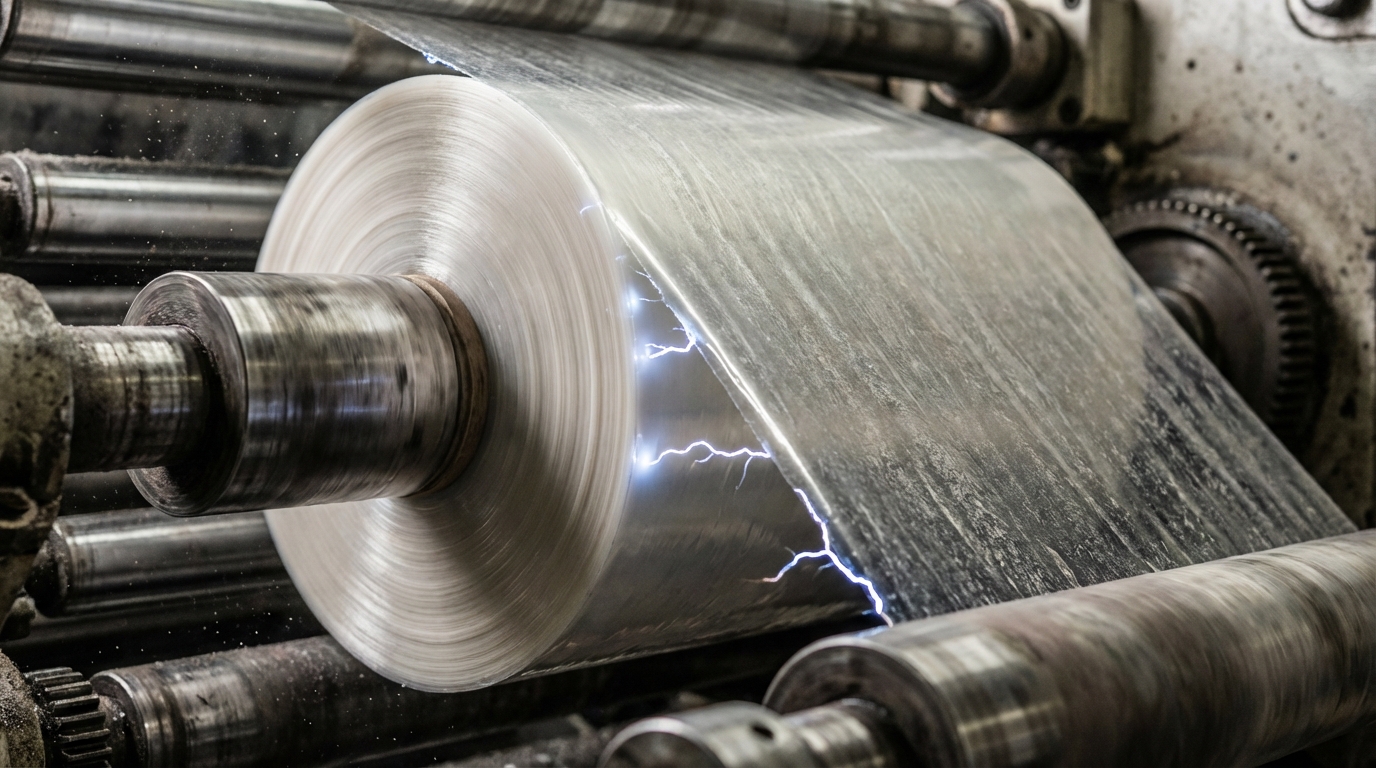
Powder clings to surfaces because friction between particles and the film creates an imbalance of electrons, which can be solved using an anti-static packaging machine. When your plastic film unwinds at high speeds, it generates a massive static charge that acts like a magnet for fine dust.
Does friction always create static?
Yes, the movement of the film over rollers and the powder through the hopper creates a triboelectric charge. This charge builds up quickly, especially with non-conductive materials like plastic or glass.
Friction from film unwinding.
Particle-to-particle contact in the hopper.
High-speed movement through metal tubes.
The result? A mess that seems impossible to wipe away.
Why do fine powders react so strongly?
Fine particles have a high surface-area-to-mass ratio, making them incredibly sensitive to electrical forces. Even a small charge can lift a particle of coffee or chemical powder and send it flying toward the nearest grounded object.
Low mass allows easy movement.
High surface area attracts more charge.
Dry particles act as insulators.
Key Takeaway: Understanding that friction is the primary driver of static allows you to target the exact points in your line where charge builds up.
Factor
Impact on Static
Film Speed
Higher speeds increase charge accumulation.
Material Type
Plastics generate more static than metals.
Particle Size
Finer powders are more reactive to static.
The relationship between movement speed and static generation is the first thing I check when troubleshooting a messy line.
Can low humidity actually make your powder messier?
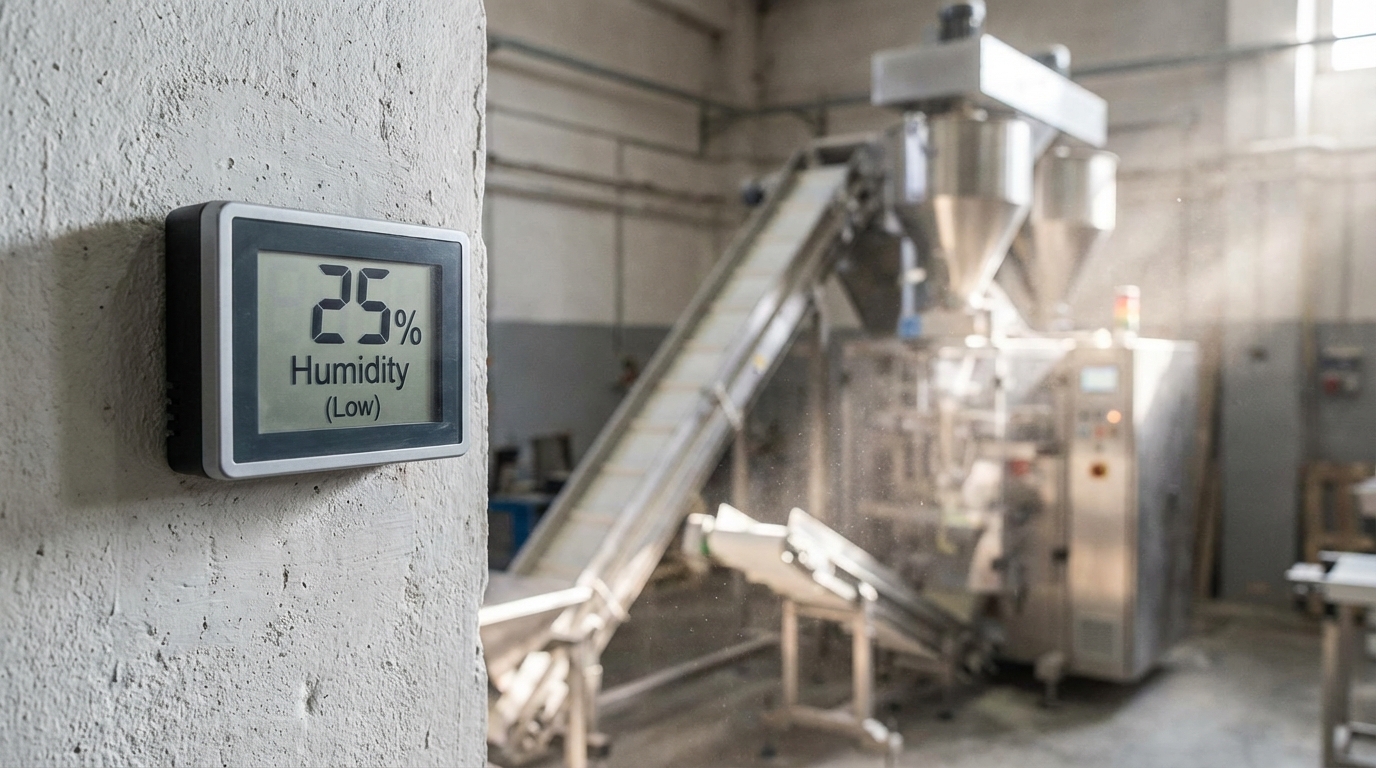
Low humidity significantly increases static because dry air acts as an insulator, whereas an anti-static packaging machine helps mitigate these environmental impacts. When the air is dry, there is no moisture to help dissipate the electrical charges building up on your machinery.
Why does moisture help eliminate static?
Moisture in the air creates a thin, microscopic layer of conductive water on surfaces. This allows static charges to bleed off into the atmosphere rather than building up to dangerous levels.
Water is naturally conductive.
Humidity prevents charge “pooling.”
Moist air stabilizes the film.
But wait, there is more. You also need to worry about the comfort of your operators and the longevity of your sensors.
What is the ideal humidity level?
Most experts recommend maintaining a relative humidity (RH) between 40% and 60% in your packaging area. Going too high can cause the powder to clump, while going too low creates the static nightmare we are discussing.
45% RH is the “sweet spot” for powders.
Below 30% triggers severe static issues.
Above 70% may cause clumping or mold.
Key Takeaway: Keeping a digital hygrometer near your filling station ensures you are alerted before environmental conditions ruin your production run.
Humidity Level
Static Risk
Powder Behavior
< 30%
Extreme
Airborne dust, sticking to film.
40-50%
Low
Stable flow, clean seals.
> 70%
Zero
Potential clumping and moisture damage.
Controlling the environment is a cheap but effective way to support your automated systems.
How do you measure invisible static in your factory?
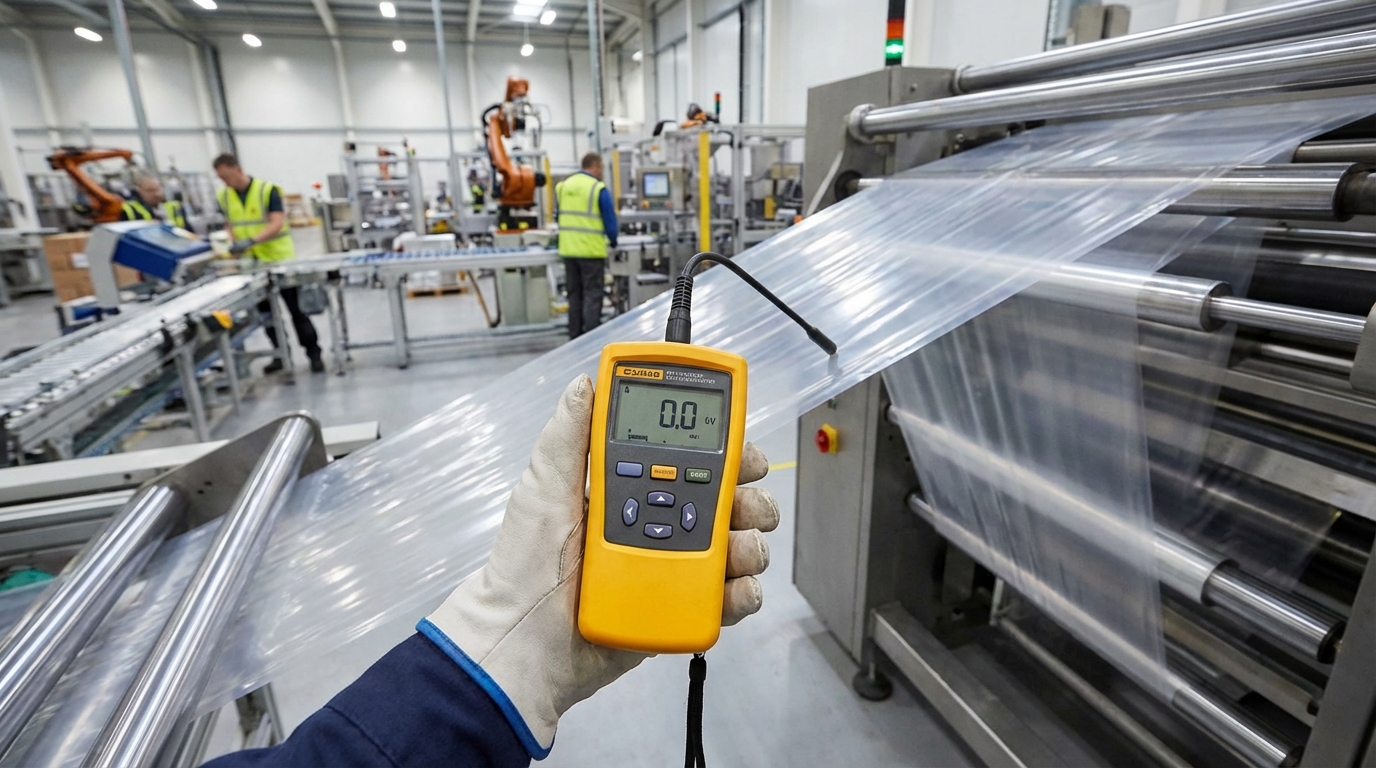
You measure static using a specialized handheld field meter, which is a standard tool when calibrating an anti-static packaging machine. Since you cannot see the electrical charge, you might be guessing where the problem starts. A meter gives you hard data so you can stop playing “hide and seek” with your powder leaks.
How does a field meter work?
The meter detects the strength and polarity of the electrical field surrounding a surface. You simply point it at the film or the hopper to see a numerical value of the voltage.
Measures kilovolts (kV).
Identifies positive vs negative charges.
Pinpoints the exact source of friction.
Here is the kicker: Sometimes the highest charge isn’t where the mess is happening.
Where should you test for static?
I recommend testing the film as it leaves the roll and again just before it enters the forming tube. You should also check the powder discharge nozzle where the particles are most agitated.
Unwinding station.
Roller contact points.
Filling tube exit.
Key Takeaway: Regular audits with a field meter prevent surprise shutdowns by identifying static buildup before it becomes a visible mess.
Measurement Point
Warning Level
Action Required
Film Unwind
> 5kV
Adjust tension or add bar.
Forming Tube
> 3kV
Check ionizing bar function.
Filling Nozzle
> 2kV
Inspect grounding cables.
Data-driven maintenance is the only way to ensure long-term stability in a high-speed environment.
Which machinery components actually eliminate static?
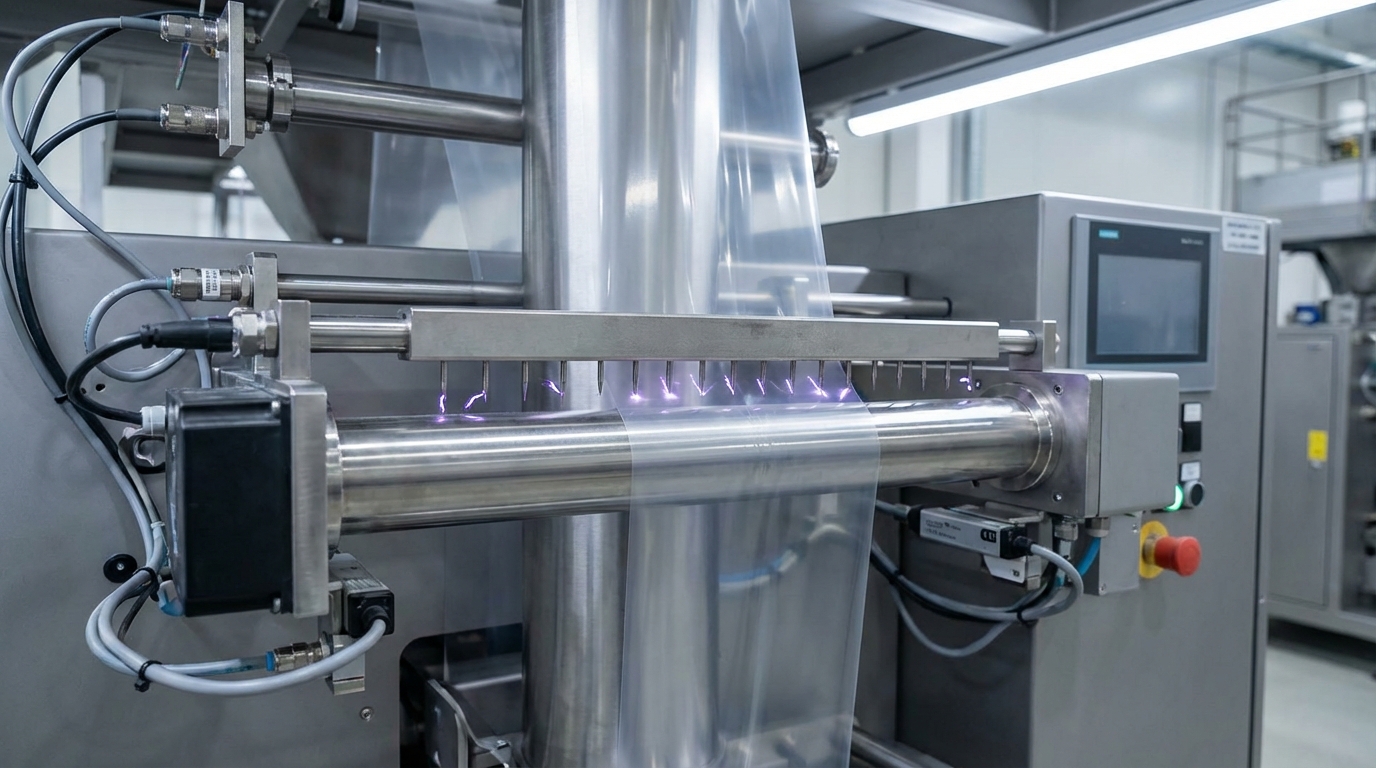
Ionizing bars and air nozzles are the primary components that neutralize charges in an anti-static packaging machine. These devices create a “curtain” of ions that flood the charged surface, effectively balancing the electrical state of the film and powder.
How do ionizing bars work?
They use high voltage to create positive and negative ions in the air. As the charged film passes by, it attracts the opposite ions it needs to become neutral.
Corona discharge technology.
Shock-less design for safety.
Low maintenance requirements.
The best part? They work almost instantly, even at high speeds.
Can air nozzles help with dust?
Yes, ionizing air nozzles combine the power of neutralization with a blast of clean air. This is perfect for cleaning the inside of bags or blowing dust away from the sealing area.
Targeted neutralization.
Cleans dust off bag “lips.”
Integrates with PLC controls.
Key Takeaway: Investing in active ionization technology is the most effective way to handle static that environmental controls cannot touch.
Component
Function
Best For
Ionizing Bar
Wide-area neutralization.
Film webs and rollers.
Ionizing Blower
Volumetric air treatment.
Hopper areas and large bags.
Ionizing Nozzle
Precision air blast.
Cleaning sealing jaws.
Active neutralization turns a chaotic filling process into a controlled, professional operation.
Is your grounding system actually working or just for show?
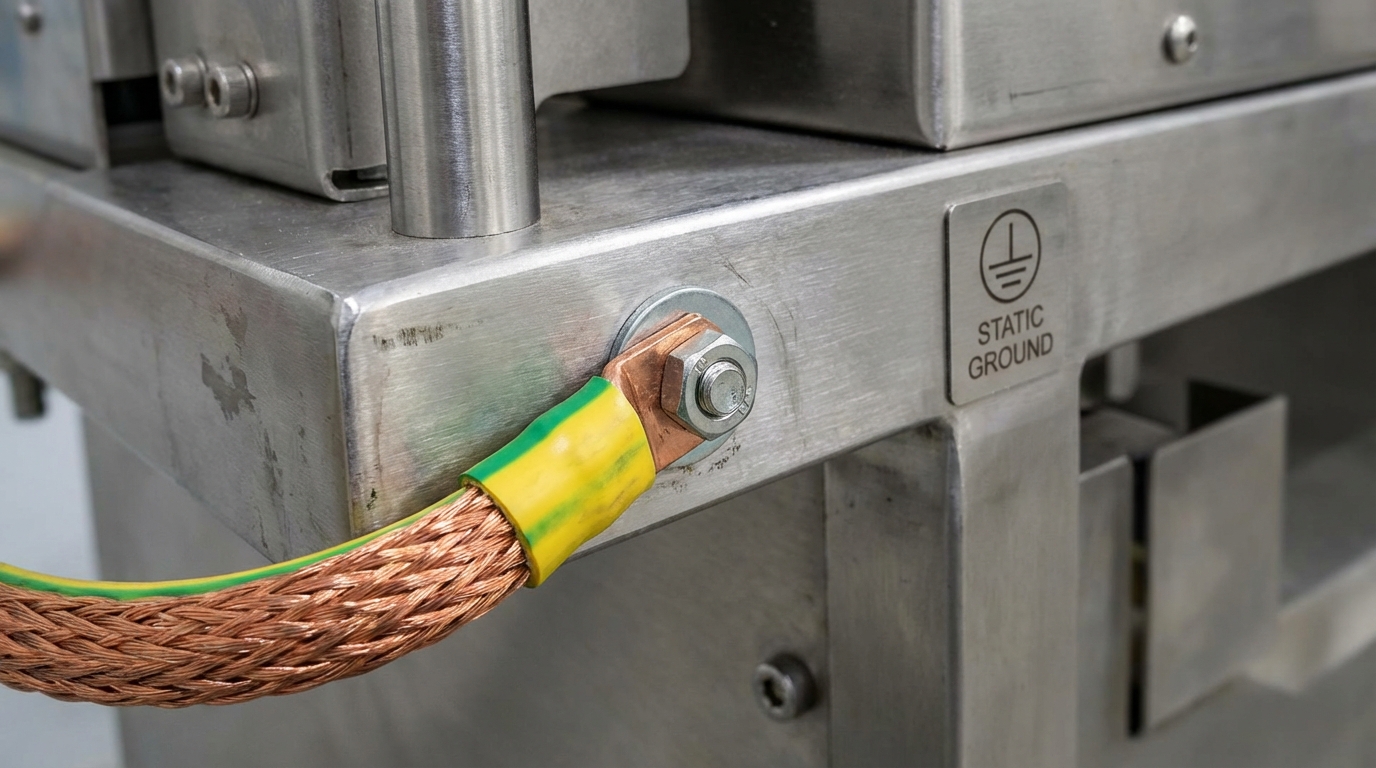
A proper grounding system provides a path for static to escape, and it is a critical feature of every anti-static packaging machine. If your machine isn’t properly bonded to the earth, the static will simply stay on the metal chassis or the film.
Why is grounding so important?
Without grounding, your machine becomes a giant battery, storing charge until it eventually “jumps” to a sensor or an operator. This can cause electronic glitches or even painful shocks.
Prevents sensor interference.
Protects the PLC from surges.
Ensures operator safety.
Look, I have seen machines where the ground wire was just hanging loose. It is a recipe for disaster.
How do you verify a good ground?
You should use a multimeter to check the resistance between the machine frame and your factory’s main grounding bus. The resistance should be extremely low, typically less than 1 ohm.
Check every moving part.
Use braided copper cables.
Ensure clean, metal-to-metal contact.
Key Takeaway: A robust grounding strategy is the foundation of any static control program, ensuring all other anti-static tools can work correctly.
Connection Type
Target Resistance
Maintenance Frequency
Main Chassis
< 1 Ohm
Monthly.
Moving Rollers
< 5 Ohms
Quarterly.
Control Cabinet
< 1 Ohm
Bi-annually.
Never assume your machine is grounded just because it is plugged into a wall; verify it yourself.
Why does static electricity ruin your bag sealing process?
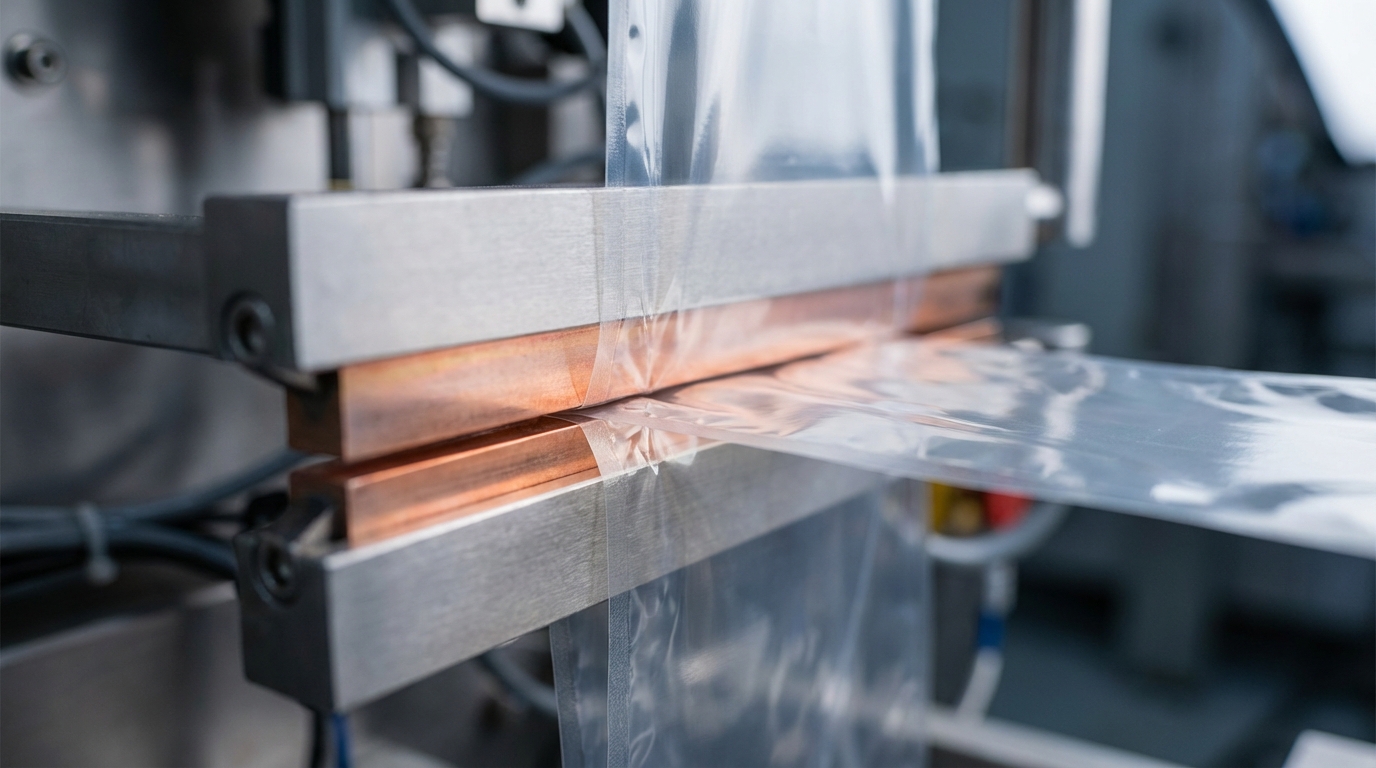
Static ruins seals by attracting powder particles to the sealing “lips” of the bag, which an anti-static packaging machine prevents. When dust gets trapped between the plastic layers during the heat-sealing phase, it creates “leakers.” These are microscopic gaps that allow oxygen to enter and product to spill out.
How does dust interfere with heat?
Dust acts as a thermal barrier, preventing the plastic layers from fusing correctly. Even if the seal looks okay to the eye, it will likely fail during shipping or pressure testing.
Leads to 10-20% higher reject rates.
Ruins product shelf life.
Increases customer complaints.
Think about it: One bad seal can ruin an entire pallet of product.
Can static cause “burn through”?
In extreme cases, high-voltage static discharge can actually create pinholes in thin films. These tiny holes are almost impossible to find until your product starts losing its freshness.
Weakens the integrity of the film.
Causes inconsistent bag length.
Damages sensitive barrier coatings.
Key Takeaway: Controlling static at the sealing jaws is the single best way to ensure your product reaches the customer in perfect condition.
Seal Issue
Cause
Solution
Leakers
Dust in seal area.
Ionizing air nozzles.
Pinholes
Static discharge.
Anti-static film rollers.
Weak Fusing
Particle interference.
Vacuum dust extraction.
A clean seal is the hallmark of a high-quality packaging process and a reliable brand.
Does anti-static technology improve your filling accuracy?
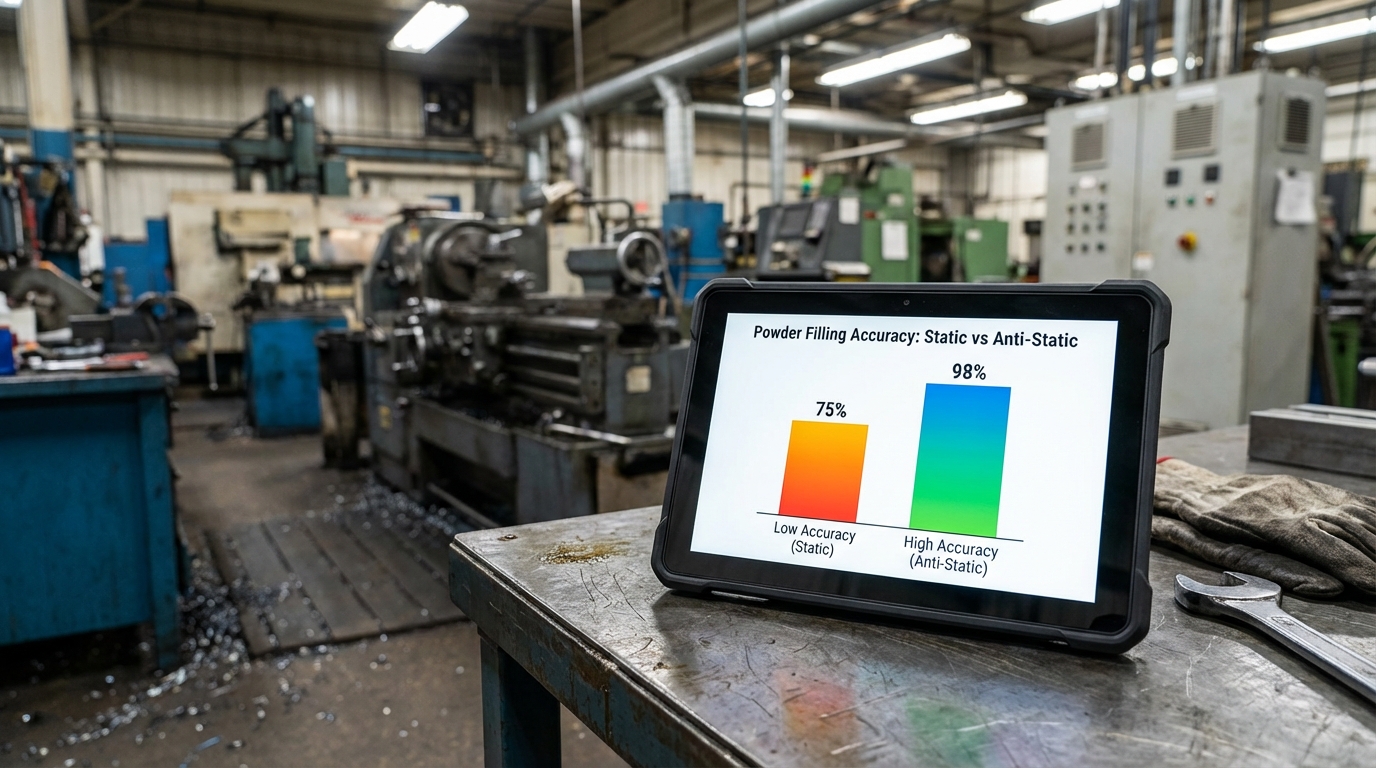
Yes, using an anti-static packaging machine drastically improves filling accuracy by ensuring every gram of powder goes into the bag instead of sticking to the equipment. When static is high, the “clinging” effect makes weights inconsistent. One bag might be underfilled because the powder stuck to the funnel, while the next is overfilled when the clump finally falls.
How much can accuracy improve?
I have seen facilities move from a ±2g variance down to ±0.2g just by installing proper static bars. This saves a massive amount of “giveaway” product over a year of production.
Reduces product waste.
Ensures regulatory compliance.
Stabilizes the weighing cycle.
You might be surprised at the ROI. The machine often pays for itself in product savings alone.
Does static affect the weigh scales?
Electronic scales are highly sensitive to electrical fields. Static can cause the “zero” point to drift or create “ghost” weights that confuse your packaging controller.
Interference with load cells.
Fluctuating digital readings.
Slowed production cycle times.
Key Takeaway: High accuracy is impossible without static control, as electrical forces are often stronger than gravity for fine powders.
Metric
With Static
Anti-Static Tech
Weight Variance
± 1.5g – 3.0g
± 0.1g – 0.5g
Product Giveaway
High (5%+)
Low (< 1%)
Scale Stability
Poor
Excellent
Precision is the key to profitability in the competitive world of powder packaging.
What safety risks does static pose to your operators?
Static electricity can cause painful shocks and, in dusty environments, represents a significant fire or explosion risk that an anti-static packaging machine helps eliminate. When fine powder hangs in the air, a single static spark can act as an ignition source. This is why packaging machine certification and safety standards are so vital for powder facilities.
Is powder dust actually explosive?
Many organic powders like sugar, flour, and coffee are highly combustible when dispersed in a dust cloud. A static discharge of just a few millijoules can trigger a primary explosion.
Fire hazard in dry seasons.
Risks to human health (inhalation).
Potential for catastrophic equipment loss.
Safety first, always. You cannot afford to ignore the risk of a “dust bang.”
How do certifications help?
Machines with the right certifications are built with explosion-proof components and integrated grounding systems. This ensures the machine won’t be the cause of an accident in your plant.
CE and ISO standards.
Food-grade material safety.
ATEX/Explosion-proof ratings.
Key Takeaway: Proper static management isn’t just about cleanliness; it is a critical part of your facility’s fire prevention and safety plan.
Risk Factor
Static Hazard
Safety Solution
Dust Cloud
Explosion risk.
Dust extraction + Ionization.
Metal Frame
Electric shock.
Verified grounding cables.
Electronic Failure
PLC damage.
Surge protection.
Protecting your people is the most important job of any operations manager.
How do you integrate anti-static tech into a production line?
You integrate anti-static tech by placing neutralizing bars at every “separation” point on the line, usually as part of a high-quality anti-static packaging machine. It isn’t enough to just have one bar at the beginning. You need a modular approach that treats the film and powder as they move through the system.
Where is the best placement?
The most critical spots are the film unwind, the forming shoulder, and the filling nozzle. Placing a bar right before the sealing jaws is also highly recommended to keep the seal area clean.
Unwind roll (primary charge).
Forming tube (friction point).
Sealing area (dust control).
It is simpler than it sounds. Most modern machines have mounting points ready for these accessories.
Can old machines be upgraded?
Yes, you can retro-fit almost any VFFS or pre-made bag machine with modern ionizing bars and air nozzles. It is a cost-effective way to extend the life of your existing equipment.
Bolt-on mounting brackets.
Integrated power supplies.
Synchronized with machine cycles.
Key Takeaway: A production line is only as clean as its weakest link, so ensure your static strategy covers the entire journey from hopper to sealed bag.
Integration Step
Component
Benefit
Phase 1
Ionizing Bar at Unwind.
Stabilizes film behavior.
Phase 2
Ionizing Nozzle at Filling.
Keeps seals dust-free.
Phase 3
Grounding Audit.
Protects electronics and staff.
Systematic integration ensures that static has no place to hide in your factory.
Can anti-static solutions work for high-speed coffee filling?
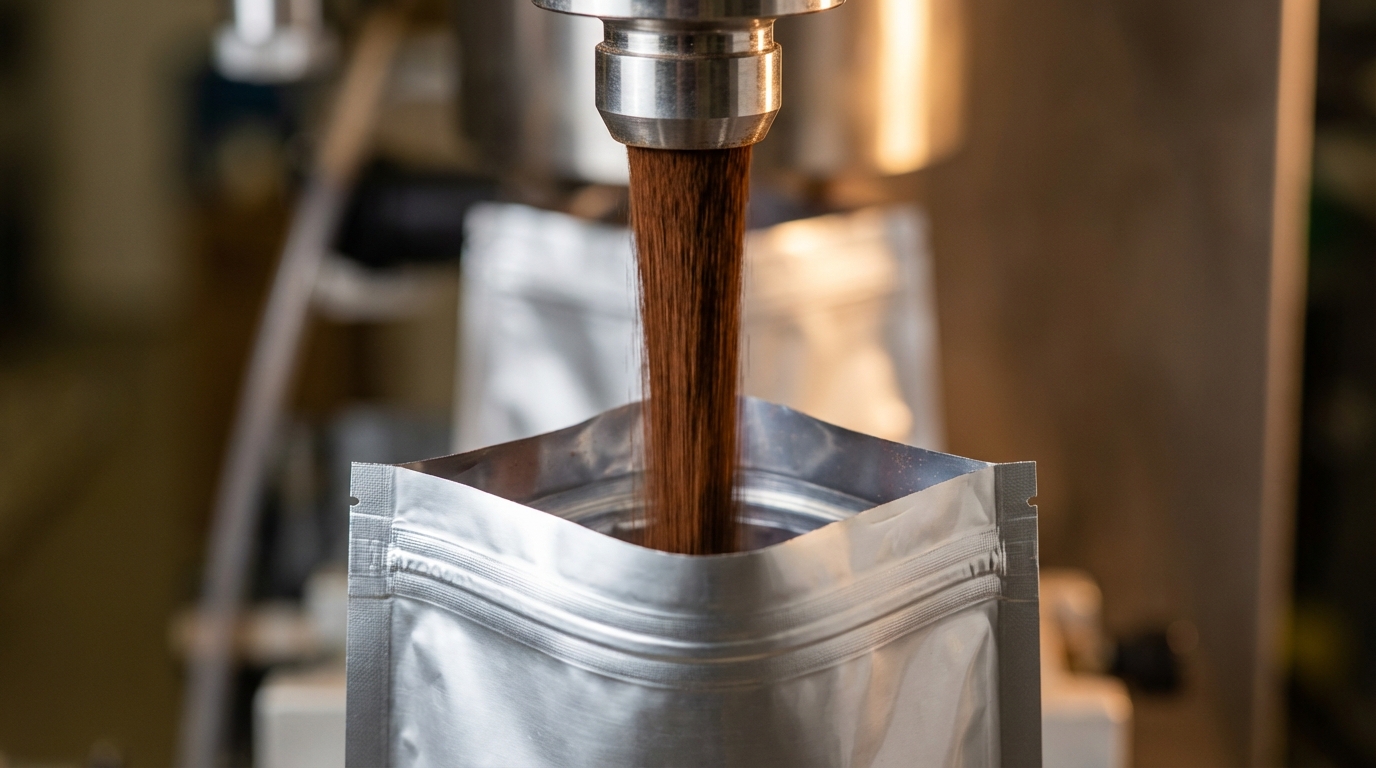
Anti-static solutions are incredibly effective for high-speed coffee filling, allowing an anti-static packaging machine to maintain speeds of 60+ bags per minute without any dust issues. Coffee powder is notorious for its oily, fine particles that love to cling to plastic.
Why is coffee so difficult?
Roasted coffee builds up a massive charge during grinding and transport. Without active neutralization, the powder will “climb” the walls of the bag and interfere with the nitrogen flushing process.
High oil content attracts dust.
Fine grind sizes increase static.
Nitrogen flushing adds more friction.
The result is a clean, fast pour. You get the speed you paid for without the headache.
What is the result of a “clean” fill?
When static is gone, the powder falls in a tight “slug” directly to the bottom of the bag. This allows the sealing jaws to close on clean film, ensuring a 100% airtight seal every single time.
Better shelf presence.
Consistent aroma retention.
Zero customer returns for leaks.
Key Takeaway: For high-value products like coffee, anti-static technology is not an “extra”—it is a necessity for maintaining brand quality and speed.
Coffee Metric
Traditional Filling
Anti-Static Filling
Speed (BPM)
35-40 (Max)
60-80 (Stable)
Residual Oxygen
Higher (leaks)
< 1% (Clean seals)
Dust Cleanup
Constant
Minimal
Modern anti-static technology turns coffee packaging from a messy chore into a high-speed success story.
Conclusion
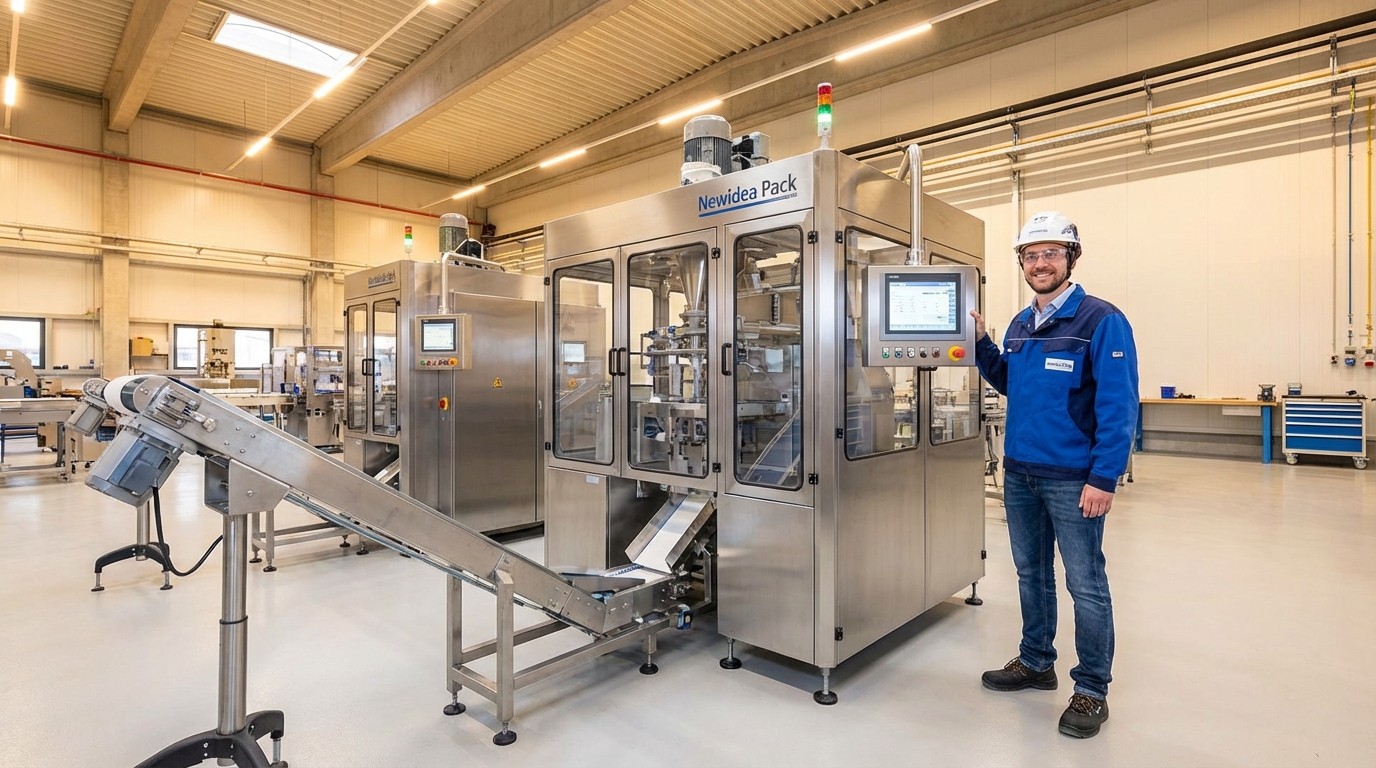
Managing static electricity is the “secret sauce” for any successful powder packaging operation. We have explored how environmental control, active ionization, and proper grounding work together to stop messes before they start. By eliminating the electrical charges that cause dust clouds and ruin seals, you can finally achieve the speed and accuracy your business deserves. At Newidea Pack, we specialize in building machines that tackle these challenges head-on, ensuring your production line stays clean and your ROI stays high.
FAQ
Can I use a household humidifier to stop static? No, industrial environments require precision. Household units cannot handle the scale of a factory or the specific humidity targets needed for powder.
What is the best way to clean powder off an oily film? Use an ionizing air nozzle. It neutralizes the static bond and blows the dust away simultaneously, something a cloth cannot do.
How do I know if my static bar is actually working? Check it with a static field meter. If the voltage doesn’t drop to near-zero as the film passes the bar, the power supply or pins are likely faulty.
Can anti-static machines handle explosive chemical powders? Yes, but they must be ATEX-certified. These machines use special components to ensure no spark can occur in the presence of combustible dust.
What’s the best first step for a messy line? Verify your grounding. It is the cheapest and most common failure point in static control before you invest in more expensive ionizing equipment.
Sales Pitch Component
Are you ready to say goodbye to powder messes and hello to precision?