Mastering Filter Porosity: How to Easily Unlock Professional Clarity
2026年2月7日 by newideapack
Mastering filter porosity is the “missing link” to achieving a professional-grade brew at home or in production. While many focus solely on bean quality, the microscopic structure of your paper determines exactly how water flows through your grounds. If your filter porosity is mismatched with your grind size, you risk a bitter, over-extracted mess or a thin, watery cup. This guide will show you how to control pore size and flow rate to unlock the perfect balance of clarity and body in every single extraction.
Does coffee filter paper porosity change the taste?
Yes, coffee filter paper porosity directly dictates the level of oils and micro-fines that pass into your coffee mug. If the pores are too tight, you lose the essential oils that provide body and mouthfeel.
What happens to the aromatic oils?
High-porosity papers allow more diterpenes like cafestol to pass through, resulting in a richer flavor. However, if the pores are too large, you might notice unwanted sediment at the bottom of your cup.
Increased oil passage adds creamy texture.
Large pores can lead to “muddy” flavors.
Tight pores emphasize bright acidity.
Here is the kicker: You can actually manipulate your brew time just by switching your paper brand.
Key Takeaway: Choosing the right porosity allows you to highlight specific flavor notes, such as citrus acidity or chocolatey body, depending on your preference.
Porosity Type
Flavor Profile
Best For
High
Full-bodied, Oily
Dark Roasts
Low
Clean, Bright
Light Roasts
Analysis: This table shows that your roast level should dictate your paper choice to avoid clashing flavor profiles.
How do microns define your filter’s porosity?
Micron ratings represent the physical size of the openings within the coffee filter paper porosity structure. Most standard paper filters range between 10 to 20 microns to balance flow and filtration.
Is a lower micron count always better?
Not necessarily, because a very low micron count can lead to “clogging” during the later stages of brewing. I have seen many brews fail because the paper was too restrictive for the grind size used.
10 microns: Very clean, zero sediment.
20 microns: Faster flow, more body.
30+ microns: Approaching metal filter territory.
Think about it: If your filter is too tight, even the best grinder won’t save your brew from stalling.
Key Takeaway: Understanding the micron size helps you match your filter to your grinder’s output, preventing the “stalling” effect in pour-overs.
Micron Rating
Flow Speed
Clarity Level
10μm
Slow
Crystal Clear
20μm
Medium
Balanced
50μm
Fast
Textured
Analysis: Higher micron ratings significantly decrease brew time but may require a coarser grind to prevent over-extraction.
Why does flow rate depend on paper thickness?
Paper thickness works in tandem with coffee filter paper porosity to create resistance against the water’s weight. Thick papers often have more “tortuous paths,” meaning the water must travel further through the fibers.
Does thicker paper filter more oils?
Thicker filters generally trap more oils because there is more surface area for the lipids to cling to. Even if the porosity is high, the depth of the paper acts as a secondary trap for fines.
Creped paper increases surface area.
Multi-ply filters slow down the draw-down.
Fiber density affects heat retention.
But wait, there’s more: The material Newideapack uses in professional packaging ensures that thickness doesn’t sacrifice the “sweet spot” of extraction time.
Key Takeaway: Thicker paper provides more “forgiveness” in your pour technique by naturally regulating the water flow through the grounds.
Paper Style
Thickness
Impact
Single-Ply
Thin
Rapid flow, light body
Creped
Medium
Balanced, versatile
Double-Ply
Thick
Slow flow, high clarity
Analysis: Creped designs are the industry standard because they provide the best balance between surface area and flow stability.
Can pore size prevent oily coffee flavors?
The specific pore size within the coffee filter paper porosity matrix acts as a chemical gatekeeper for your brew. If you prefer a “crisp” cup of coffee, you need a filter that specifically targets and traps oily diterpenes.
How do you achieve a “crisp” finish?
Using a low-porosity filter is the most effective way to strip away the oils that cause a lingering, heavy aftertaste. This allows the delicate floral and fruity notes of high-altitude beans to shine through clearly.
Blocks cafestol and kahweol.
Reduces “metallic” tastes.
Enhances tea-like consistency.
Believe it or not: The difference in taste between a high-porosity and low-porosity filter is often greater than the difference between two different coffee beans.
Key Takeaway: If you find your coffee feels too “heavy” or “muddy” on the tongue, switching to a lower porosity filter will immediately brighten the cup.
Goal
Filter Action
Result
Reduce Oils
Tight Pores
Tea-like clarity
Increase Body
Wide Pores
Syrupy mouthfeel
Analysis: Pore size is the primary tool for adjusting the “weight” of the coffee on your palate.
What happens if the filter porosity is too high?
High coffee filter paper porosity can lead to “under-extraction” because the water passes through the grounds too quickly to pick up flavor. You might end up with a cup that tastes sour, weak, or watery.
Is fast flow always a bad thing?
Fast flow is only a problem if you cannot compensate with a finer grind size or higher water temperature. Professional setups, like those using Newideapack equipment, often prefer high porosity for efficiency but adjust other variables.
Leads to “channeling” risks.
Requires precise pouring skills.
Can result in salty flavor notes.
Here’s the deal: If your brew finishes in under two minutes, your porosity is likely too high for your current grind setting.
Key Takeaway: High porosity requires a more disciplined brewing technique, as the paper provides less natural resistance to the water flow.
Problem
Cause
Solution
Weak Coffee
High Porosity
Finer grind size
Sour Taste
Fast Flow
Increase water temp
Analysis: High porosity filters are best suited for experienced brewers who want total control over the extraction time via grind adjustment.
How do bleached vs unbleached filters differ?
While the color seems like an aesthetic choice, it actually impacts the coffee filter paper porosity by changing the fiber structure. Oxygen-bleaching processes can sometimes “clean” the pores, making the flow more predictable.
Do unbleached filters clog faster?
Unbleached filters often retain more natural wood lignins, which can slightly constrict the pores compared to their bleached counterparts. This is why many enthusiasts notice a slight “papery” taste and a slower draw-down with brown paper.
Bleached: Neutral taste, consistent flow.
Unbleached: Earthy taste, slightly slower.
Bamboo: Eco-friendly, very high porosity.
The best part? You can remove the papery taste from unbleached filters simply by rinsing them with boiling water before you add the coffee.
Key Takeaway: Bleached filters generally offer the most consistent porosity and the cleanest flavor profile for competitive or high-end brewing.
Filter Type
Material Purity
Flow Consistency
White (Bleached)
High
Excellent
Brown (Natural)
Medium
Variable
Analysis: The bleaching process removes impurities that can otherwise cause slight variations in pore diameter across the sheet.
Does temperature affect paper pore expansion?
Thermal energy impacts coffee filter paper porosity by causing the cellulose fibers to slightly swell or contract. When you pour near-boiling water, the physical structure of the paper changes mid-brew.
Can cold water “lock” the pores?
Cold water doesn’t allow the fibers to relax, which is why cold brew filtration takes significantly longer than hot coffee filtration. I always recommend a hot rinse to “prime” the pores for the best possible flow.
High heat increases fiber flexibility.
Pre-wetting expands the pore matrix.
Consistent temp prevents flow “stalls.”
Think about it: A cold filter is essentially a “closed” filter, which is why your first 50g of water always seems to disappear slowly.
Key Takeaway: Always pre-rinse your filter with hot water to stabilize the porosity and ensure the flow rate remains consistent from start to finish.
Temperature
Fiber State
Flow Impact
Cold (<20°C)
Constricted
Very Slow
Hot (90°C+)
Expanded
Optimal/Steady
Analysis: Thermal priming is a non-negotiable step for anyone seeking professional-level consistency in their home brewing.
Should you choose high porosity for light roasts?
Lightly roasted beans are more dense and harder to extract, meaning coffee filter paper porosity needs to be carefully managed. If the paper is too restrictive, the long brew time will draw out bitter compounds from the delicate beans.
Why do light roasts stall?
Light roasts produce more “fines” (tiny dust-like particles) during grinding, which migrate to the bottom of the filter and plug the pores. Using a high-porosity filter helps accommodate these fines without completely stopping the flow.
Accommodates high “fines” production.
Prevents over-extraction bitterness.
Preserves floral aromatics.
You won’t believe this: Switching to a high-porosity “fast” paper can reduce a light roast brew time by up to 45 seconds, completely changing the flavor.
Key Takeaway: High porosity filters are the “secret weapon” for light roasts, as they prevent the bitterness that comes from fines-induced stalling.
Roast Level
Grind Size
Recommended Porosity
Light
Fine-Medium
High (Fast)
Dark
Medium-Coarse
Medium (Standard)
Analysis: Light roasts require faster papers to offset the naturally slow drainage caused by their high fines production.
How does porosity impact drip coffee bag quality?
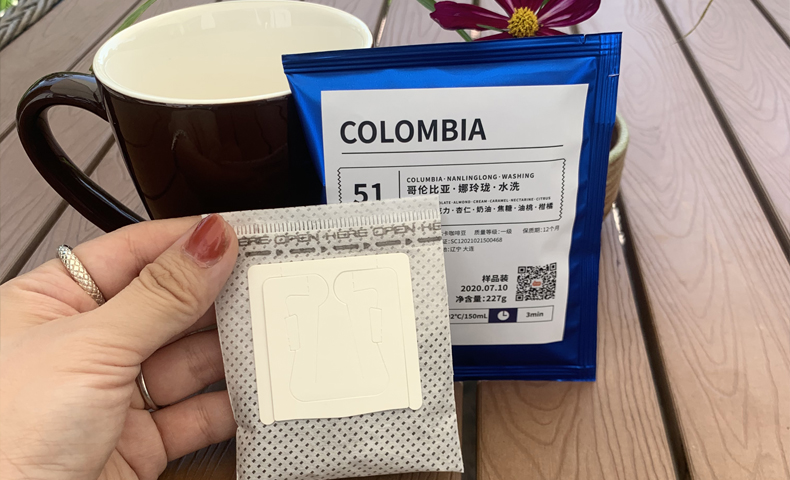
In the world of single-serve solutions, coffee filter paper porosity is the most critical factor for a “just-like-cafe” experience. The paper must be porous enough to brew quickly but strong enough to hold the weight of the water.
What makes a drip bag “premium”?
A premium drip bag uses non-woven fabric with highly engineered porosity to ensure that even with a simple pour, the coffee is fully extracted. Newideapack’s advanced machinery is designed to handle these delicate, high-performance materials without damaging the pore structure.
Ultrasonic sealing preserves pore integrity.
Fast-drain tech prevents “bag overflow.”
Consistent micron rating per batch.
As it turns out: Most “bad” drip coffee is actually the result of low-quality paper with inconsistent porosity, not bad coffee beans.
Key Takeaway: For businesses, investing in high-quality filter material and precise packaging machines ensures every customer gets a perfect, sediment-free brew.
Bag Feature
Porosity Need
Customer Benefit
Quick Brew
High
Convenience
No Residue
Precise Micron
Clean Flavor
Analysis: Drip coffee bags require the highest level of porosity consistency because the user has very little control over the brew variables.
What is the ideal porosity for a balanced cup?
Finding the “sweet spot” in coffee filter paper porosity usually means looking for a medium-rated paper that offers a 3-minute total brew time. For most home brewers, a standard 15-20 micron filter provides the best of both worlds.
Can you use two filters at once?
Using two filters effectively halves the porosity and doubles the thickness, which I only recommend if you are trying to “fix” a very dark, oily roast. Otherwise, it will almost certainly cause over-extraction.
15-20 microns is the “goldilocks” zone.
Standardizes your daily routine.
Compatible with most medium grinds.
Here is the bottom line: Consistency is more important than “perfect” porosity; find a paper you like and stick with it to master your grind.
Key Takeaway: Start with a 20-micron filter; it is the most versatile option for 90% of coffee types and brewing styles.
Factor
Ideal Setting
Why?
Pore Size
15-20 Microns
Balance of flow/clarity
Material
Bleached Cellulose
Taste neutrality
Analysis: For the majority of users, a mid-range porosity filter eliminates the most common brewing errors.
Frequently Asked Questions
Can I reuse coffee filter paper to save money? Generally, no, because the pores become “clogged” with oils and micro-fines during the first use. Reusing a filter will significantly slow down your flow rate and introduce stale flavors into your fresh cup.
What’s the best porosity for an AeroPress? AeroPress filters are typically low-porosity and very thin because the “plunging” pressure forces the water through the paper. This allows for a very clean cup even with a shorter brew time.
How do I know if my filter is too porous? You will know if you see visible “silt” or fine dust at the bottom of your cup after finishing. Additionally, if the water passes through as fast as you pour it, the porosity is likely too high for your grind.
Does bamboo paper have different porosity? Yes, bamboo fibers are naturally more porous and coarser than wood pulp. This often results in a faster flow rate, making bamboo a great choice for those who prefer a brighter, faster-draining brew.
Why does my filter always clog at the end? This is usually “fines migration,” where the smallest coffee particles settle into the pores. You can fix this by using a more consistent grinder or a filter with a slightly higher micron rating.
I hope this deep dive into the microscopic world of filtration helps you brew a better cup tomorrow morning. We have covered everything from micron ratings to the impact of paper thickness on your daily extraction. At Newideapack, we understand that the details—like the precision of your filter material and the efficiency of your packaging—make all the difference in the coffee industry.
Sales Pitch Component
If you are looking to scale your coffee business with high-quality drip bag solutions!
Feel free to contact us today. We are committed to helping you deliver the perfect brew to every customer, one bag at a time.