Is It Worth It? The Truth About Compostable Packaging Costs
2026年2月6日 by newideapack
Yes, investing in compostable coffee packaging is absolutely worth it for brands looking to future-proof their operations and align with modern consumer values. Imagine watching your premium beans lose their luster in cheap plastic while competitors win over your loyal fans with eco-friendly alternatives. I’ve seen roasters struggle with the “green premium” price tag only to realize that the cost of inaction—lost market share and regulatory fines—is far higher. Transitioning to compostable coffee packaging is the ultimate solution to bridge the gap between profitability and planetary health.
Why is compostable coffee packaging more expensive?
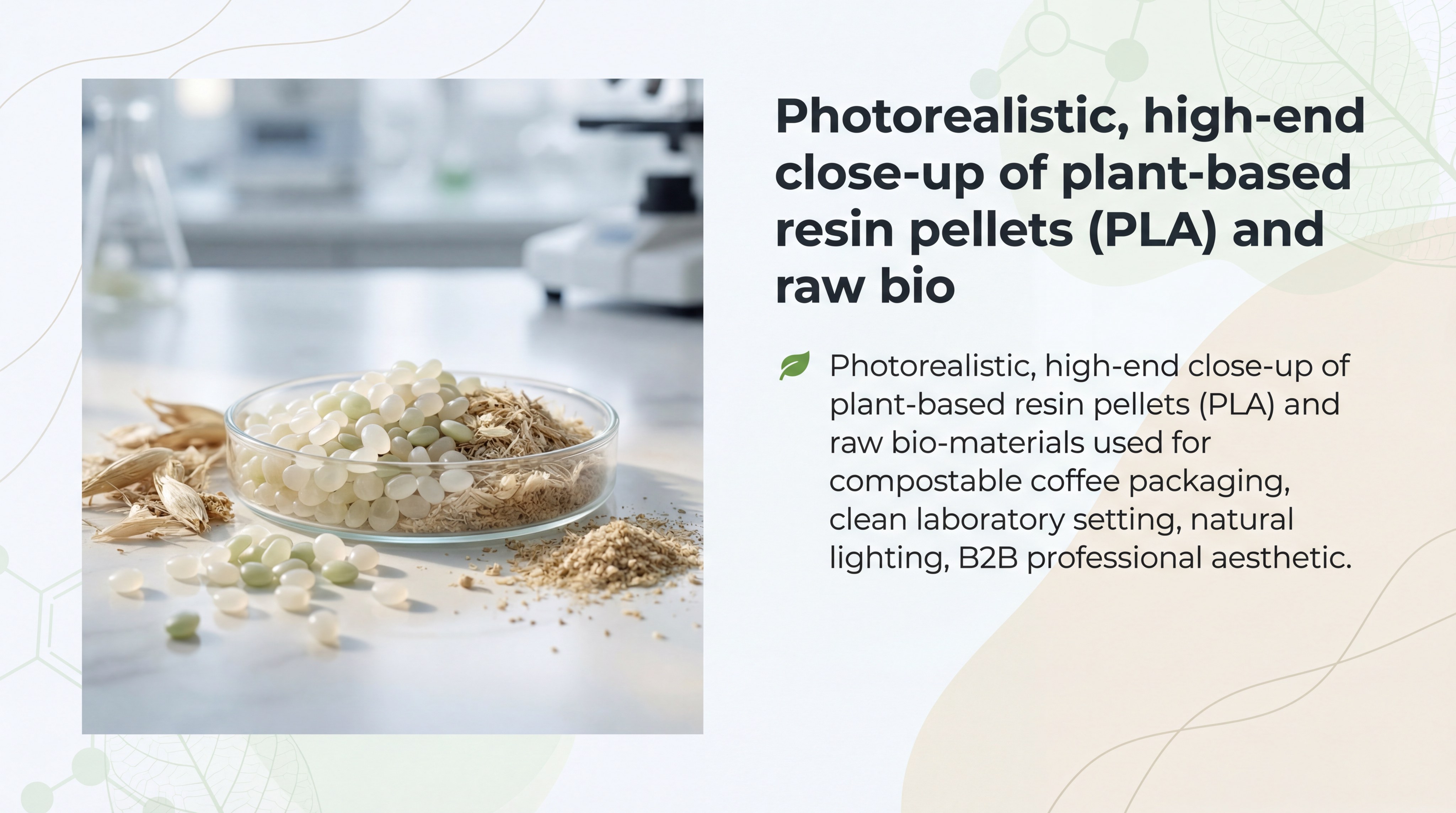
The higher price of compostable coffee packaging stems primarily from the complex extraction of plant-based polymers like PLA and the smaller scale of current production compared to petroleum-based plastics. You are essentially paying for a more sophisticated raw material that requires specialized processing to ensure it breaks down safely in specific environments.
Are raw material costs the main factor?
The short answer is yes, but there is more to the story than just the price of corn starch or sugarcane. Look at it this way:
Petroleum plastics benefit from decades of infrastructure and massive subsidies.
Bio-polymers require dedicated facilities and stricter purity standards.
Supply chains for sustainable resins are still maturing globally.
But here is the kicker. As demand surges, these costs are gradually stabilizing, making the “green premium” more manageable for growing roasters.
Do specialized manufacturing needs add to the price?
Producing compostable films requires tighter temperature controls and specific laminating techniques to maintain barrier properties. Consider these factors:
PLA-based layers have lower melting points than traditional PET.
Specialized adhesives are needed to ensure the entire bag remains compostable.
Production speeds may be slower on legacy equipment to prevent material warping.
Key Takeaway: Understanding the material science behind bio-polymers helps you justify the initial spend as a premium for environmental integrity and performance.
Cost Component
Impact Level
Reason
Raw Resin (PLA/PBAT)
High
Sourced from plant-based feedstocks rather than fossil fuels.
Specialized Lamination
Medium
Requires compostable adhesives to maintain full certification.
Production Volume
Medium
Smaller batches lead to higher per-unit costs compared to mass-market plastic.
The upstream supply chain dictates the current price ceiling for eco-friendly coffee bags, which explains the initial investment gap.
How does material choice affect your bottom line?
Choosing the right compostable coffee packaging involves balancing the cost of premium barriers with the shelf-life requirements of your specific roast. If you opt for high-barrier compostables, your initial material spend increases, but you protect your product quality and reduce the financial loss associated with stale beans.
Is the shelf life worth the extra spend?
Maintaining freshness is non-negotiable if you want to protect your brand’s reputation and bottom-line profit. Think about it:
High-barrier compostable films mimic aluminum foil’s oxygen protection.
Superior moisture resistance prevents flavor degradation in humid climates.
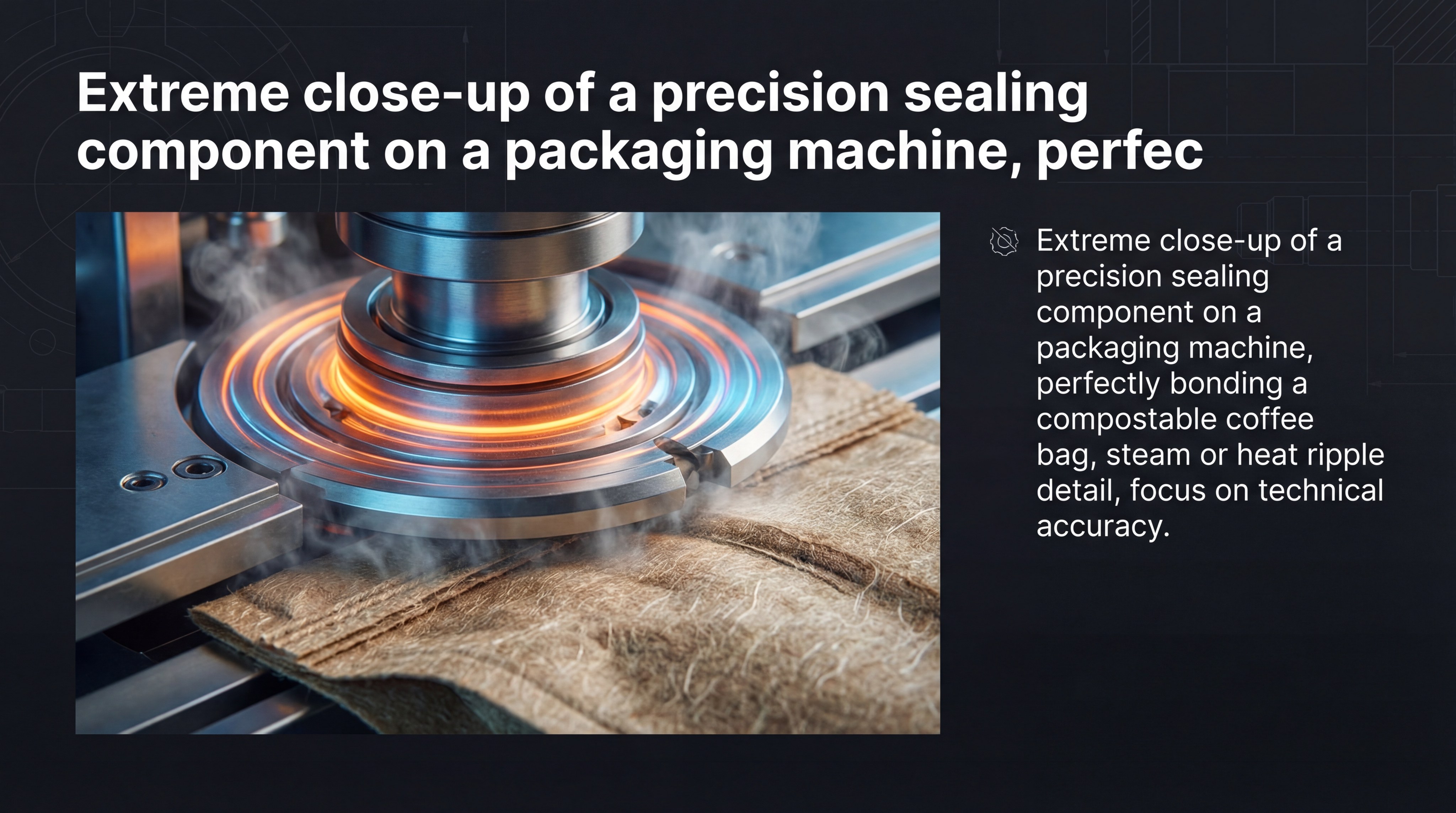
Precision sealing ensures these material benefits are fully realized.
But there is more. When you use materials that actually work, you slash the costs associated with customer complaints and refunds.
How do different structures impact the price?
You can choose between 2-ply and 3-ply structures depending on how long your beans sit on the shelf. Typical structures include:
Paper/PLA for short-term freshness.
NK/PLA for improved moisture barriers.
NK/Met-PLA/PLA for maximum protection.
The best part? You can tailor these layers to match your specific distribution cycle and avoid overpaying for protection you don’t need.
Key Takeaway: Investing in higher-grade materials ensures your coffee stays premium, reducing the “hidden cost” of customer dissatisfaction and returned products.
Barrier Type
Relative Cost
Best For
High-Barrier
1.4x
Long-term retail and international shipping.
Medium-Barrier
1.1x
Fast-moving local sales and short shelf-life beans.
Non-Barrier
0.8x
Immediate consumption or in-store refills.
Matching your material choice to your distribution cycle is the most effective way to manage your packaging budget without sacrificing quality.
Will current machinery handle eco-friendly films?
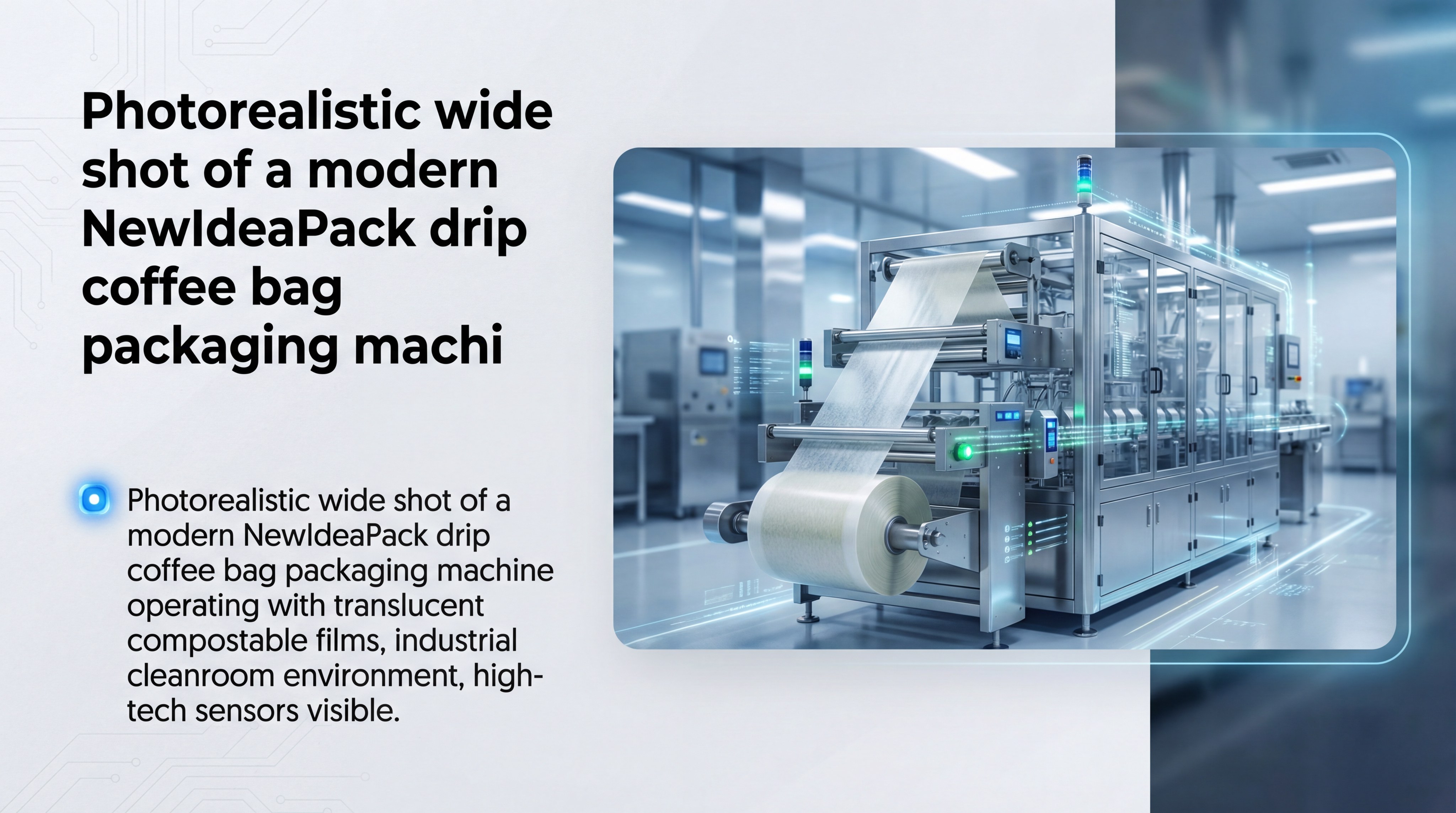
Modern compostable coffee packaging materials can be integrated into your production line, provided your equipment offers the precision controls necessary for bio-polymers. While older machines might struggle with the specific heat requirements of PLA, NewIdeaPack designs systems like our drip coffee bag packaging machine specifically to handle these sensitive films without sacrificing speed.
Do you need to buy all new equipment?
In many cases, you can retro-fit your existing machines with better sensors and heating elements rather than starting from scratch. You see:
Ultrasonic sealing is often more effective for compostable non-woven filters.
Digital temperature controllers allow for the ±1°C accuracy bio-resins require.
Precise tension control prevents the “stretching” common in plant-based films.
The truth is that most high-quality machines today are already built with the versatility to switch between traditional and sustainable materials.
Key Takeaway: Assessing your machinery’s compatibility early prevents costly production delays and ensures a smooth transition to sustainable materials.
Machine Feature
Necessity
Benefit
Ultrasonic Sealing
Essential
Provides a strong bond for PLA filters without melting.
PLC Temp Control
High
Ensures the film doesn’t warp due to excessive heat.
Servo-Driven Feeders
Medium
Maintains consistent tension for thinner bio-films.
Modernizing your sealing technology is the single most important step in making compostable materials cost-effective on the floor.
Can you reduce costs through bulk procurement?
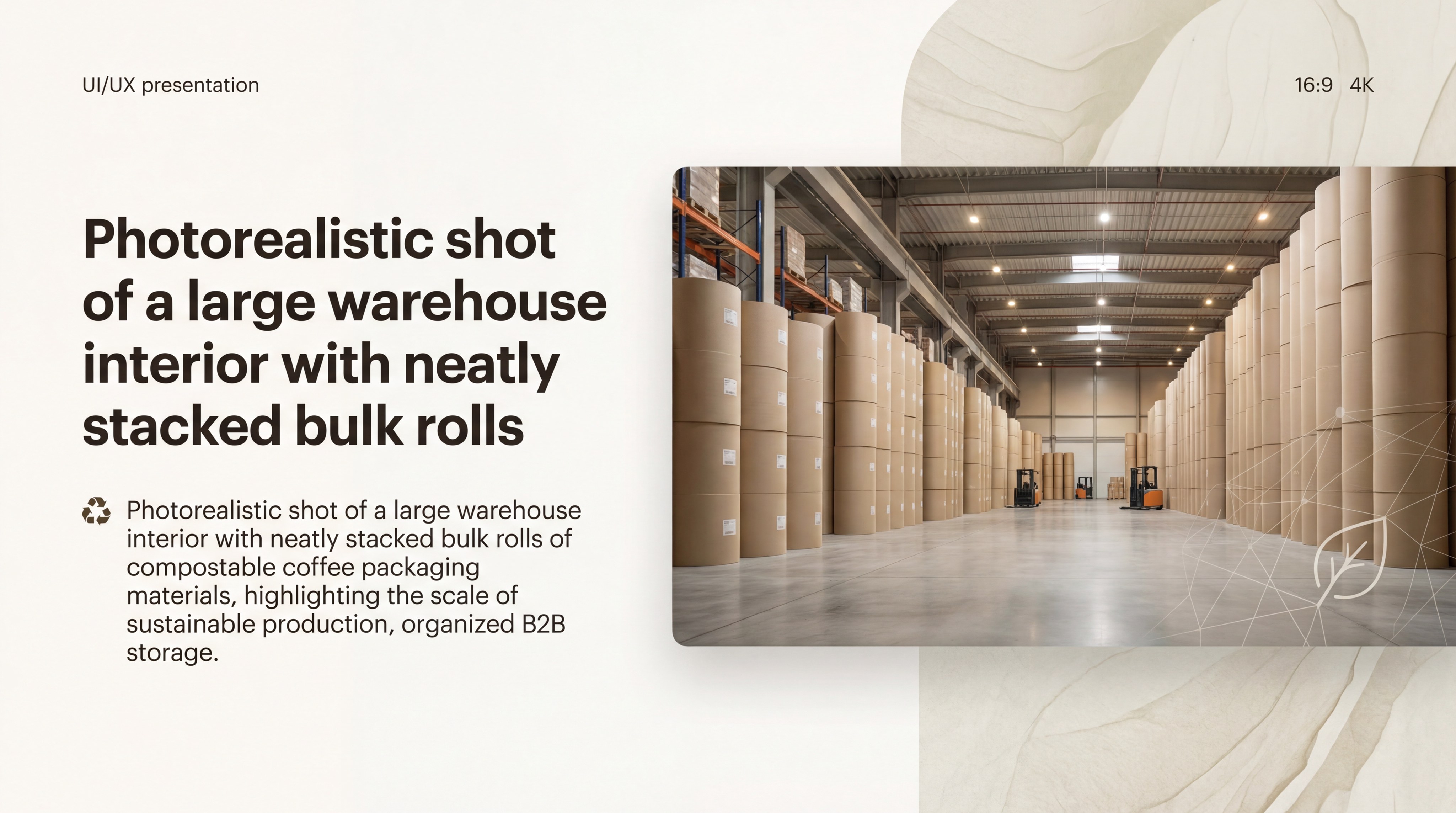
Scaling your order for compostable coffee packaging is the most direct way to drive down the per-unit price and improve your margins. Most manufacturers offer significant price breaks once you move past the “trial” phase and commit to larger, predictable volumes that optimize their production runs.
Does seasonal ordering save you money?
Planning your procurement around global manufacturing cycles can lead to unexpected savings on sustainable materials. Here is the deal:
Locking in annual contracts protects you from resin price volatility.
Batching multiple SKUs together reduces setup fees at the factory.
Strategic forecasting prevents the high cost of emergency air-freight orders.
It’s all about leverage. When you provide a supplier with a steady, high-volume forecast, they can optimize their own material sourcing.
Key Takeaway: Shifting from “as-needed” ordering to a strategic bulk procurement plan can slash your compostable packaging costs by 20% or more.
Order Quantity
Price Reduction
Primary Saving Factor
10,000 Units
Base Price
Standard small-batch production costs.
50,000 Units
15% – 20%
Optimization of machine setup and waste.
100,000+ Units
25%+
Direct raw resin negotiation and logistics.
Volume remains the ultimate equalizer when trying to reach price parity with traditional mass-market plastic packaging.
Does waste reduction improve your profit margin?
Minimizing material loss during production makes compostable coffee packaging far more affordable by ensuring every dollar of material ends up on a finished product. When you run a high-precision coffee packaging machine, the focus shifts from the price of the roll to the efficiency of the yield.
How does precision filling lower your costs?
High-precision machines reduce “giveaway” and film waste, which is critical when your material costs are 30% higher than average. Think about this:
Automatic weighing systems prevent overfilling that eats into your profit.
Precision cutting ensures minimal film scrap between bags.
Reduced downtime means less material is “burned” during machine startups.
Every inch of saved film adds up. Over a year of production, a 5% reduction in waste can completely offset the premium price of compostable materials.
Key Takeaway: Focusing on operational efficiency and precision allows you to absorb higher material costs without raising your retail prices.
Efficiency Factor
Saving Potential
Action Item
Precision Filling
3% – 5%
Use high-accuracy auger or vibratory fillers.
Film Alignment
2% – 4%
Ensure your machine has automatic web tracking.
Reject Rate
5% – 10%
Optimize sealing parameters to eliminate leaks.
Reducing physical waste is the most sustainable way to protect your profit margins and the environment simultaneously.
What hidden fees come with green certifications?
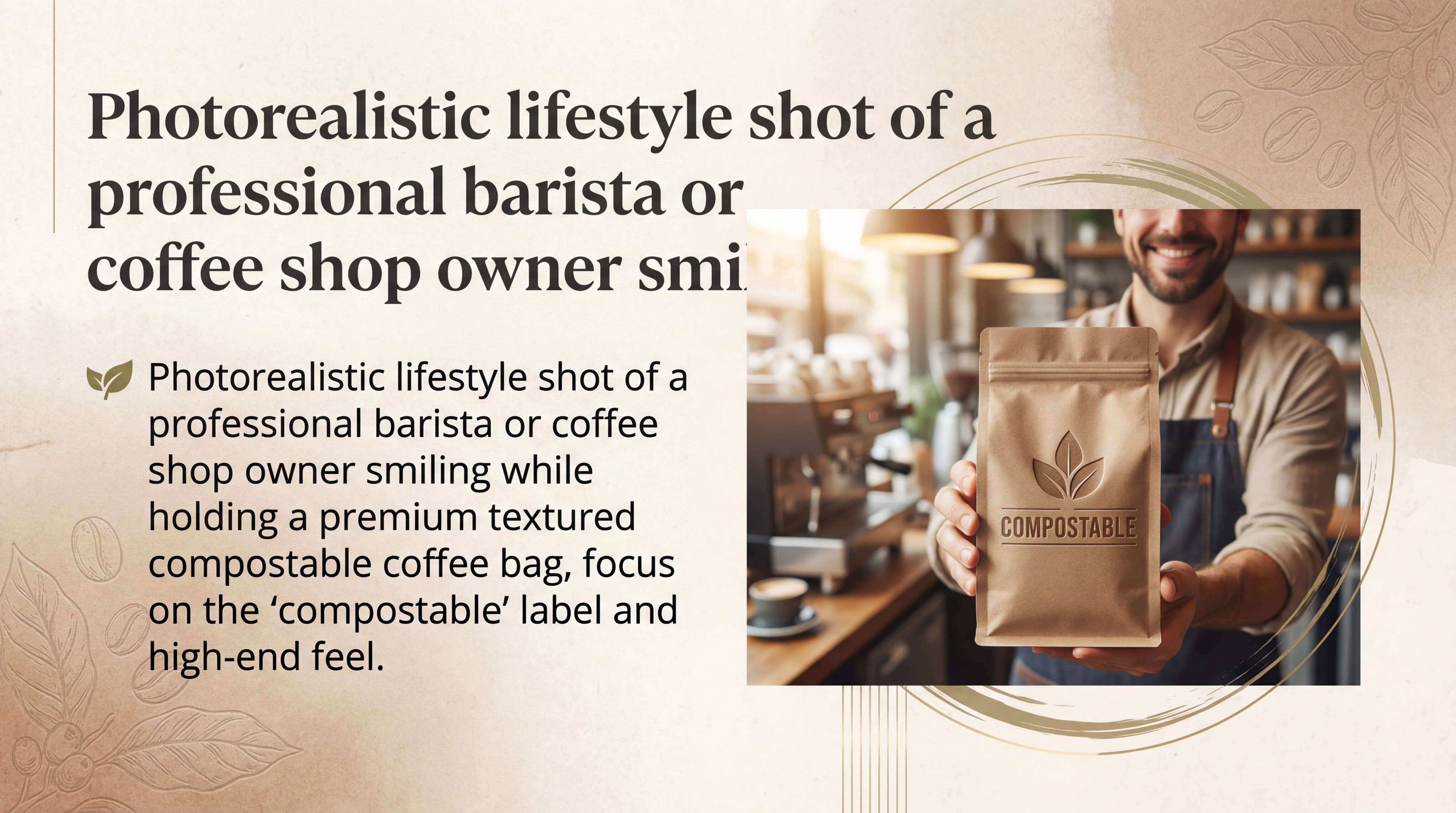
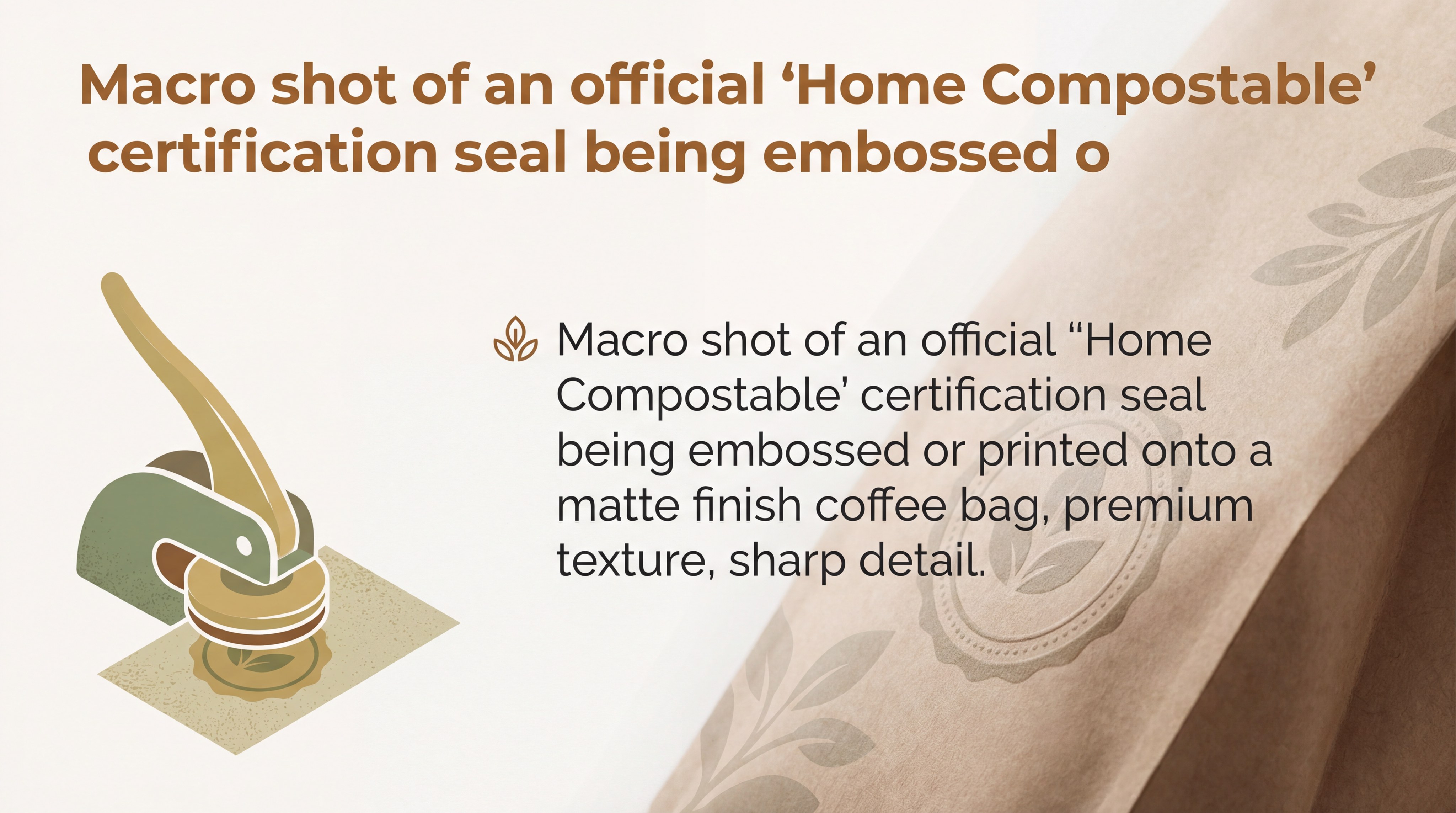
Obtaining and maintaining the right labels for your compostable coffee packaging involves administrative and testing fees that you must factor into your initial budget. While the “Compostable” logo on your bag is a powerful marketing tool, the path to getting it requires an investment in third-party validation.
Is the cost of ASTM D6400 worth it?
The certification proves to your customers—and the regulators—that your claims are backed by rigorous scientific testing. Consider the costs:
Initial laboratory testing for disintegration and toxicity.
Annual licensing fees to use official “Certified Compostable” logos.
Periodic audits to ensure your supply chain hasn’t changed its formulation.
But here is why you do it anyway. Without these logos, you risk “greenwashing” accusations that could damage your brand far more than any testing fee.
Key Takeaway: Budgeting for certifications upfront prevents legal headaches and builds the consumer trust necessary to justify a premium product price.
Certification
Region
Focus Area
ASTM D6400
USA
Commercial compostability standards.
EN 13432
Europe
European standard for packaging recovery.
TUV OK Compost
Global
Home and industrial composting validation.
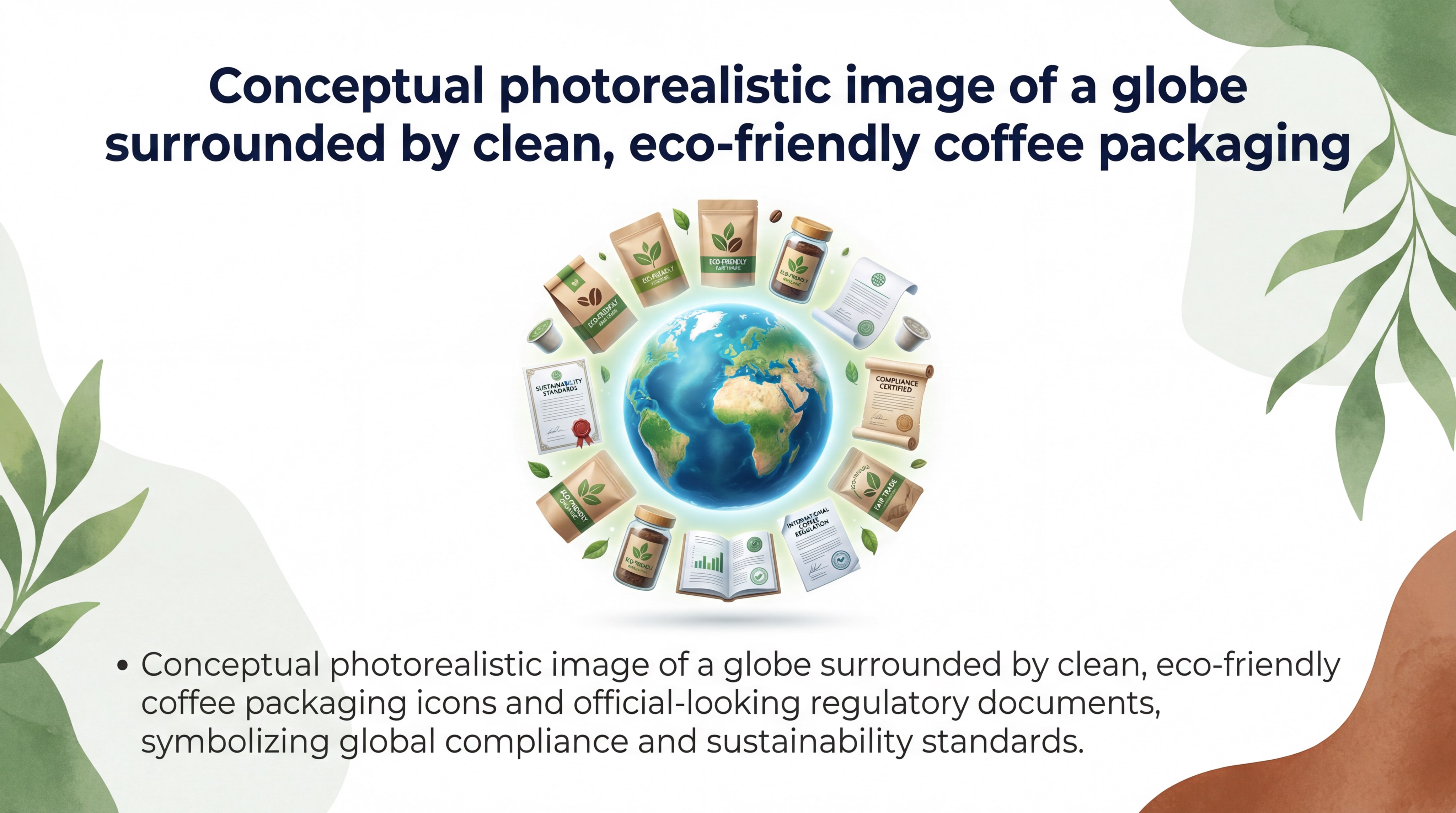
Certification costs act as an insurance policy for your brand’s reputation in an increasingly eco-conscious global market.
How does packaging impact your brand’s value?
Using compostable coffee packaging is a strategic investment in brand equity that can lead to higher customer retention and the ability to charge a premium. I have seen our clients use a vffs packaging machine to produce stunning sustainable pouches that fly off the shelves because they tell a story.
Can eco-packaging justify a higher retail price?
Modern consumers are often willing to pay a “sustainability tax” if they believe the brand is genuinely committed to the environment. It’s a fact:
70% of millennials prefer brands with sustainable packaging.
Eco-friendly bags stand out on crowded retail shelves.
Narrative-driven packaging creates a “feel-good” factor that drives repeat buys.
You aren’t just selling coffee; you are selling a guilt-free experience. This emotional connection creates brand loyalty that is hard for competitors to break.
Key Takeaway: The marketing value of sustainable packaging often outweighs the material cost by increasing customer lifetime value and brand recognition.
Brand Metric
Impact
Long-term Result
Customer Loyalty
High
Increased repeat purchase rates.
Price Elasticity
Medium
Ability to maintain margins during inflation.
Shelf Presence
High
Differentiation from plastic competitors.
Leveraging your commitment to sustainability in your marketing turns a “cost” into a powerful competitive advantage.
Is the long-term ROI higher for green options?
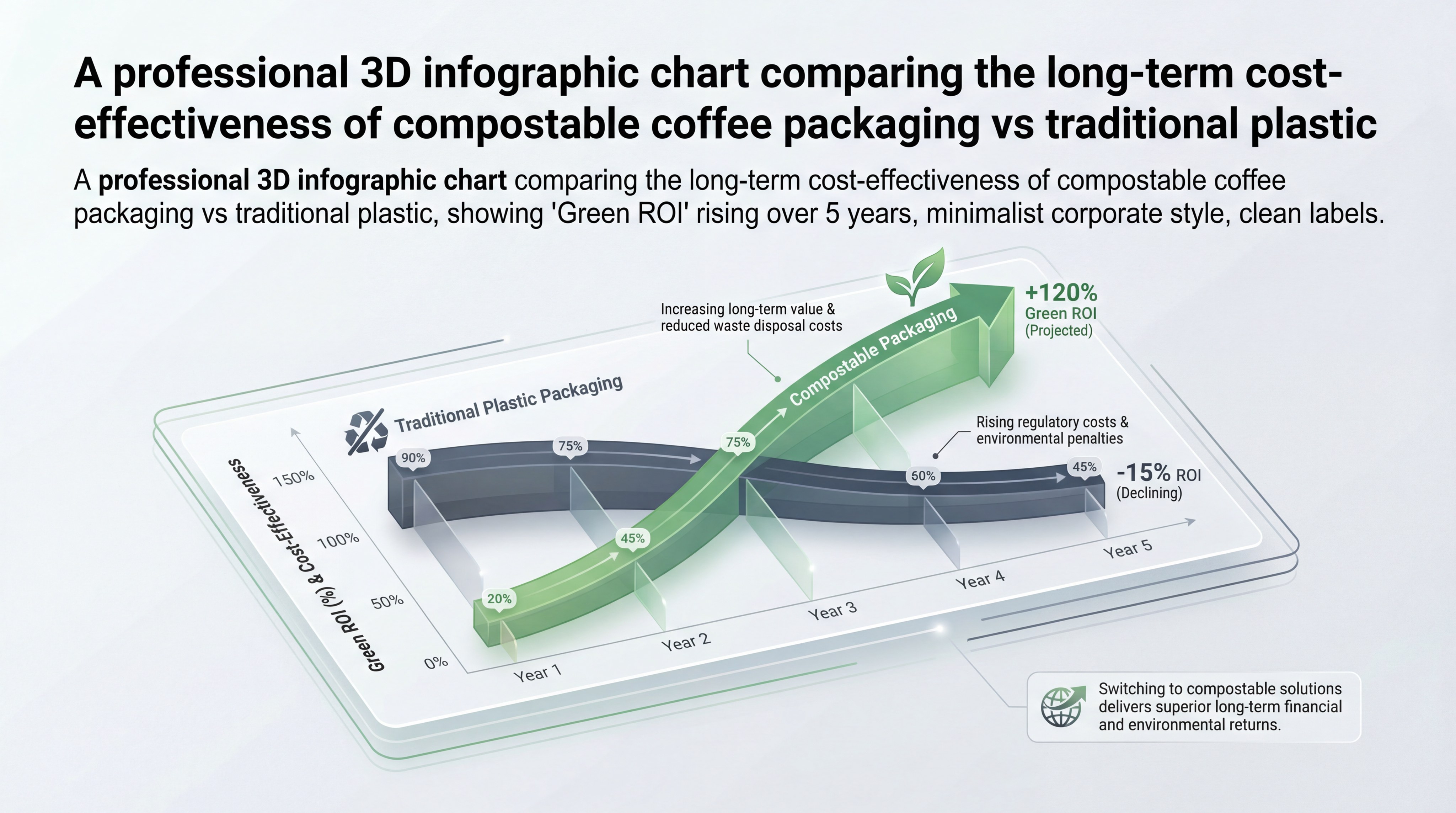
When you analyze the total lifecycle of compostable coffee packaging, the return on investment extends beyond the simple unit cost to include operational longevity and market positioning. By investing in the future today, you avoid the massive costs of emergency transitions when plastic bans eventually hit your region.
Will sustainable tech last longer?
Investing in machinery designed for green materials ensures you won’t be stuck with “stranded assets” as plastic regulations tighten globally. Keep this in mind:
NewIdeaPack machines are built for decades of use with multiple materials.
Future-proof equipment reduces the need for frequent upgrades.
Energy-efficient motors can reduce operational costs by up to 30%.
But there is more. An upfront investment in versatile, efficient technology pays for itself through lower energy bills and avoided replacement costs.
Key Takeaway: True ROI accounts for brand health, regulatory compliance, and machine efficiency, making compostables a smarter financial bet for the future.
ROI Driver
Time Horizon
Financial Impact
Energy Savings
Immediate
Lower monthly utility bills.
Regulatory Safety
1-3 Years
Avoidance of plastic taxes and bans.
Brand Equity
2-5 Years
Higher company valuation and share.
A forward-thinking investment strategy views sustainability as a core component of long-term financial stability and growth.
Are there tax benefits for using bio-plastics?
Governments worldwide are increasingly penalizing single-use plastics while offering incentives for companies that switch to compostable coffee packaging. Navigating these tax breaks and grant programs can significantly lower your effective cost, especially when paired with a premade pouch packing machine that qualifies for “green tech” subsidies.
Can you avoid the “Plastic Tax”?
Many regions, particularly in Europe and parts of North America, have introduced levies on non-recycled plastic packaging. Check this out:
Compostable materials are often exempt from Extended Producer Responsibility (EPR) fees.
Some jurisdictions offer tax credits for businesses investing in green machinery.
Grants for circular economy projects can subsidize your equipment purchases.
It’s worth a call to your local trade board. You might find that the government is willing to pick up a portion of the tab for your move.
Key Takeaway: Proactively seeking out green tax incentives can bridge the price gap between compostable and traditional materials.
Incentive Type
Benefit
How to Access
EPR Exemption
Lower per-unit tax
Provide certifications to regulators.
Investment Grants
Equipment subsidies
Apply through local trade agencies.
Depreciation
Faster write-offs
Consult on “green asset” tax rules.
Staying informed on local legislation ensures you aren’t leaving “green money” on the table during your transition.
How do you find a reliable packaging partner?
The most cost-effective way to implement compostable coffee packaging is to work with an expert who understands both the material science and the machinery requirements. A partner who provides expert responses within 24 hours ensures that any technical hurdles don’t turn into expensive production downtime.
Should you look for a “one-stop” provider?
Working with a company that understands both the machine and the film prevents the “finger-pointing” that often happens when sealing issues arise. Think about the benefits:
Integrated testing of your specific coffee with compostable films.
Customized machine settings that are pre-configured for your chosen material.
Training for your staff to ensure they handle bio-films correctly.
At NewIdeaPack, we don’t just sell you a machine; we help you build a system that works for the planet.
Key Takeaway: Choosing a partner with deep technical expertise reduces the risk of expensive errors and speeds up your time-to-market.
Partner Feature
Value
Result
In-house Testing
High
Guaranteed compatibility before buying.
24/7 Tech Support
Critical
Minimizes lost revenue during issues.
Material Knowledge
Medium
Guidance on the best bio-resins for beans.
Your choice of supplier is the most critical factor in determining whether your sustainability journey is a financial success.
Conclusion
Transitioning to compostable coffee packaging is more than just a material swap; it’s a strategic decision that aligns your brand with the future of global commerce. While the unit costs are currently higher, the combination of waste reduction, brand loyalty, and regulatory compliance makes it a fiscally responsible choice for the long term. We’ve addressed the hidden costs, explored the machinery requirements, and highlighted the massive ROI potential of going green. If you’re ready to future-proof your coffee business with high-efficiency, eco-friendly equipment, we are here to help you every step of the way. Contact us today to discuss how our specialized packaging solutions can help you balance sustainability with profitability. At NewIdeaPack, we believe that high-performance packaging shouldn’t cost the earth.
FAQ
Can I use my existing plastic-sealing machine for compostable films? Yes, but you likely need precise temperature adjustments. Compostable materials like PLA have lower melting points than PET, so ensure your machine has high-accuracy thermal controllers to prevent burning or weak seals.
What’s the best way to lower the cost per bag? Order in bulk. Moving from trial-sized orders to full-scale production runs allows manufacturers to optimize material yields and pass volume discounts directly to you.
How do I know if a bag is truly compostable? Look for official certifications. A truly compostable bag will carry logos like ASTM D6400 or EN 13432, proving it has passed independent lab tests for disintegration and toxicity.
Can I mix compostable bags with regular plastic recycling? No, you should never mix them. Compostable packaging is designed to break down in organic waste streams; mixing it with traditional plastic can contaminate the recycling process and reduce the quality of recycled resins.
What’s the best barrier material for organic coffee? High-barrier PLA or NK laminates are usually the best choice. These structures provide the oxygen and moisture protection needed to keep organic beans fresh without compromising the sustainable integrity of your product.
Sales Pitch Component
Are you ready to future-proof your coffee business with high-efficiency, eco-friendly equipment?
Contact us today to discuss how our specialized packaging solutions can help you balance sustainability with profitability.