How to Manage Humidity in packaging for Better Production Results
2026年2月10日 by newideapack
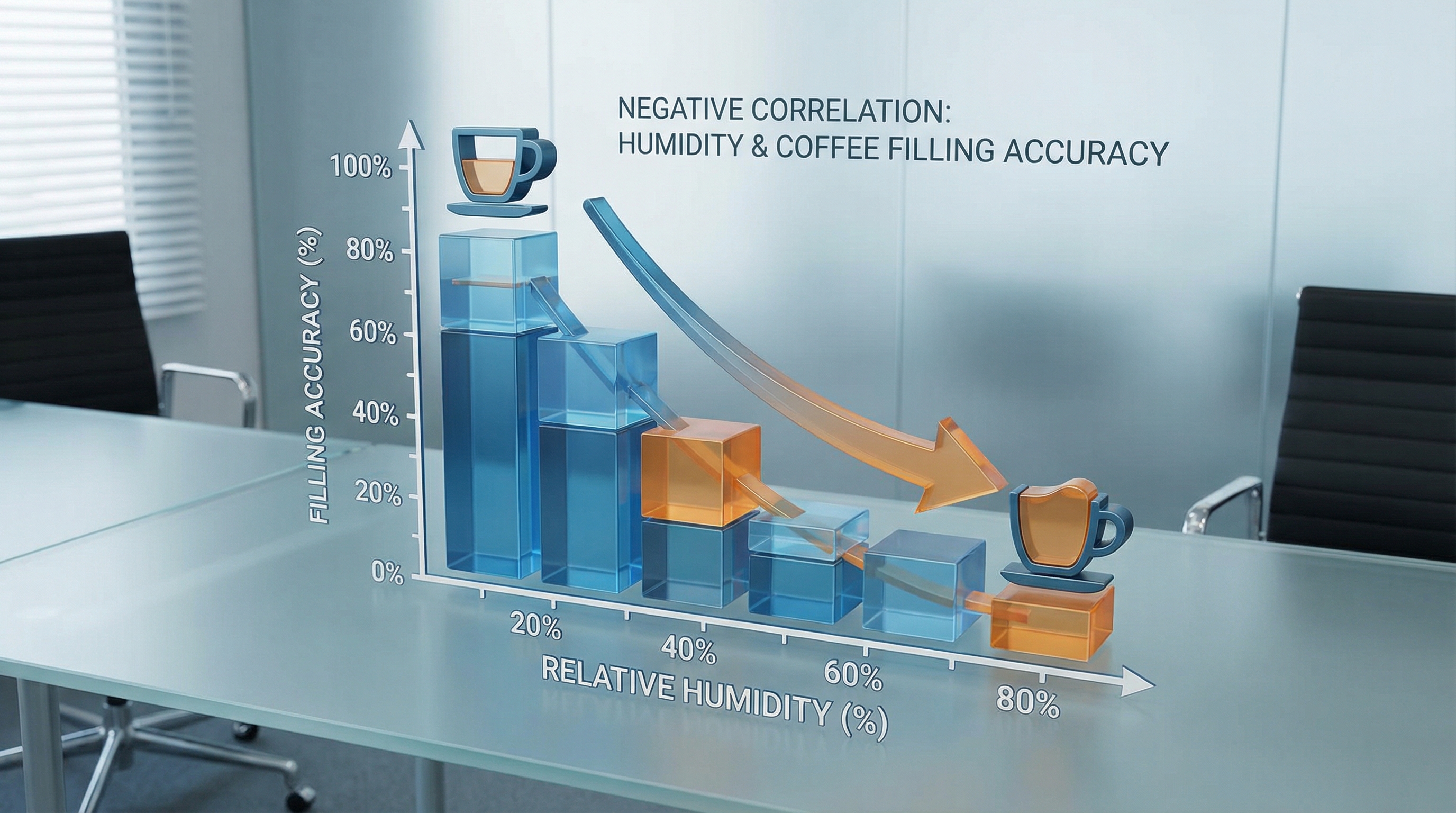
Humidity significantly decreases powder filling accuracy by causing particles to clump together and altering the bulk density of the product. When moisture levels rise, your once free-flowing coffee grounds transform into a stubborn, sticky mass that resists consistent movement. Managing humidity in packaging is the only way to ensure every bag hits its target weight.
Imagine walking into your factory on a rainy Tuesday morning to find your production line in chaos. Your operators are struggling because the coffee powder isn’t flowing, the bags are coming off the line with wild weight fluctuations, and the frustration is palpable. Clumping powder is a silent profit killer that turns a smooth operation into a maintenance nightmare. Fortunately, mastering moisture control can turn you into a production hero and restore your facility’s precision.
Why does humidity in packaging cause coffee clumping?
High humidity creates liquid bridges between individual powder particles, causing them to bond and form large aggregates. Controlling humidity in packaging prevents these microscopic water layers from turning your coffee grounds into a “cake-like” substance. This physical change happens rapidly as roasted coffee is highly hygroscopic, meaning it greedily pulls moisture from the air.
How do liquid bridges form in coffee?
When the air around your machine is moist, water vapor condenses into tiny droplets on the surface of the coffee grounds. These droplets act like glue, pulling particles together through capillary forces.
Surface tension pulls particles into tight clusters.
Capillary bridges create semi-solid bonds.
The powder loses its “fluid-like” characteristics.
What does this mean for you? It means your machine is no longer fighting individual grains, but heavy, unpredictable chunks of product.
Think about it: If the powder can’t flow, your precision suffers. You need a stable environment to maintain the flowability required for high-speed automated lines at Newideapack.
Key Takeaway: Controlling the environment ensures that the physical properties of the coffee remain stable, preventing the formation of sticky bridges that stall production.
Factor
Impact of High Humidity
Impact of Low Humidity
Particle Bond
Strong Liquid Bridges
Weak Electrostatic
Flow Rate
Sluggish and Uneven
Rapid and Consistent
Accuracy
Highly Variable
High Precision
The data shows that maintaining a dry environment is the first step toward achieving repeatable dosing results on your line.
How does humidity in packaging ruin filling accuracy?
Humidity ruins accuracy by creating inconsistent flow through the dosing mechanism, leading to unpredictable volume-to-weight ratios. Even with high-quality humidity in packaging protocols, moisture makes the powder “heavy” and less responsive to the high-speed rotations of an auger filler. This leads to a scenario where the machine thinks it is dispensing the correct amount, but the actual mass varies wildly.
Why do dose weights fluctuate so much?
Inconsistent flow is the primary enemy of precision in any powder system. When clumping occurs, the spaces between the auger flights may be filled unevenly, resulting in “voids” or “over-packs.”
Clumps create air pockets in the dosing tube.
Sticky powder clings to the auger screw.
The discharge timing becomes irregular.
The best part? Once you stabilize the humidity, these fluctuations often disappear instantly. Precision dosing relies on the predictable behavior of every single grain moving through the system.
Key Takeaway: Consistent weight-based filling is only possible when the powder flows with uniform speed and density, which requires strict environmental control.
Humidity Level
Weight Variance (%)
Flow Quality
< 40% RH
± 0.5%
Excellent
50-60% RH
± 2.0%
Moderate
> 70% RH
± 5.0%+
Poor
As you can see, higher relative humidity levels directly correlate with a significant drop in packaging precision.
Is humidity in packaging changing your powder density?
Yes, humidity significantly alters bulk density by filling the interstitial spaces between particles with moisture and causing the powder to compact. Managing humidity in packaging is vital because most filling machines operate on a volumetric basis. When density shifts, a fixed volume of powder no longer translates to the same weight, causing your bags to be under-filled or over-filled.
What is bulk density in coffee?
Bulk density is the mass of the powder divided by the total volume it occupies, including the air between the grounds. Moisture forces the particles to sit closer together or clump into “heavy” balls.
Moisture-laden powder occupies less volume per gram.
Static charges change, altering how the powder settles.
Volume-based dosing becomes unreliable.
Here is the deal: If your density is shifting every hour because of the weather, your machine settings will never be “just right.” You will find yourself constantly chasing the calibration settings on your Newideapack equipment.
Key Takeaway: By keeping density constant through moisture control, you eliminate the need for frequent manual machine adjustments during a shift.
Density Variable
High Moisture Effect
Low Moisture Effect
Compaction
Increases
Decreases
Air Voids
Fewer voids
More voids
Mass per Volume
Higher
Lower
This shift in mass per volume is the hidden reason why your filling accuracy might be failing despite your best efforts.
Can humidity in packaging lead to machine downtime?
Yes, excess moisture causes powder to stick to internal components, leading to frequent clogs and the need for unscheduled cleaning. Poor control over humidity in packaging creates a gummy residue on the hopper walls and the discharge nozzle. This buildup eventually restricts the flow entirely, forcing you to stop the line and perform a deep clean of the vffs packaging machine.
Why does sticky residue cause clogs?
As coffee powder absorbs moisture, its surface becomes tacky. This tackiness causes the grounds to adhere to the stainless steel surfaces of your equipment instead of sliding through.
Powder builds up on the auger blades.
Nozzles become constricted by “bridging.”
Sensors get coated in dust, causing errors.
Think about it: Every minute your line is stopped for cleaning is a minute of lost profit. Prevention through environmental control is always faster than scrubbing a gummy hopper by hand.
Key Takeaway: Reducing humidity minimizes the stickiness of the powder, which drastically reduces the frequency of cleaning and prevents costly mechanical jams.
Component
Moisture Risk
Maintenance Impact
Filling Nozzle
Narrowing due to buildup
Flow blockage
Hopper Walls
Product “hanging”
Inconsistent feed
Seal Jaws
Dust contamination
Leaky bags
This table highlights how humidity impacts specific parts of your machinery, proving that moisture control is a maintenance necessity.
Does humidity in packaging impact ground coffee aroma?
Yes, humidity accelerates the oxidation of coffee oils, which quickly destroys the delicate aromatic compounds that define your brand. Without proper humidity in packaging, the moisture acts as a catalyst for staling, even before the bag is sealed. Maintaining a dry atmosphere is the only way to ensure that the “freshly roasted” scent survives the journey from the roaster to the consumer’s cup.
How does moisture destroy coffee oils?
Coffee contains volatile oils that are responsible for its flavor. When moisture enters the picture, it promotes chemical reactions that turn these oils rancid.
Oxidation happens faster in humid air.
Aromatic gasses are displaced by water vapor.
The flavor profile becomes flat and woody.
The best part? Your customers will notice the difference immediately. Using a Newideapack system with high-barrier materials ensures that once the coffee is dry, it stays dry.
Key Takeaway: Controlling moisture during the filling process protects the chemical integrity of the coffee, ensuring the premium flavor your customers expect.
Aroma Component
Effect of High Humidity
Effect of Proper Control
Fragrance Intensity
Rapid Loss
Long-lasting
Oil Stability
High Rancidity Risk
Stable and Fresh
Overall Profile
Dull and Stale
Vibrant and Bold
Preserving these sensory qualities is just as important as the weight of the bag for maintaining customer loyalty.
How to monitor humidity in packaging for better flow?
You must use industrial-grade hygrometers and real-time sensors placed directly at the filling point to track environmental shifts. Monitoring humidity in packaging allows you to make proactive adjustments to your HVAC system or machine speed before the powder begins to clump. Accurate data is the foundation of a high-precision production environment where every gram counts.
Where should you place your sensors?
General warehouse sensors aren’t enough because the micro-climate inside your machine can be very different. You need sensors where the product is most exposed to the air.
Install a sensor near the main hopper.
Monitor levels at the discharge nozzle.
Use data logging to find seasonal trends.
What does this mean for you? It means you stop guessing. When the sensor shows humidity crossing 50%, you know it is time to turn up the dehumidifiers or check your pre-made bag packaging machine for buildup.
Key Takeaway: Real-time monitoring provides the visibility needed to catch moisture issues before they result in rejected batches or machine failure.
Sensor Type
Ideal Placement
Key Benefit
Digital Hygrometer
Near the Filling Head
Localized accuracy
Data Logger
Warehouse Storage
Long-term trend tracking
Integrated PLC
Machine Console
Automated alerts
A systematic approach to monitoring ensures that your production environment remains within the “sweet spot” for accuracy.
Are you using the right humidity in packaging barriers?
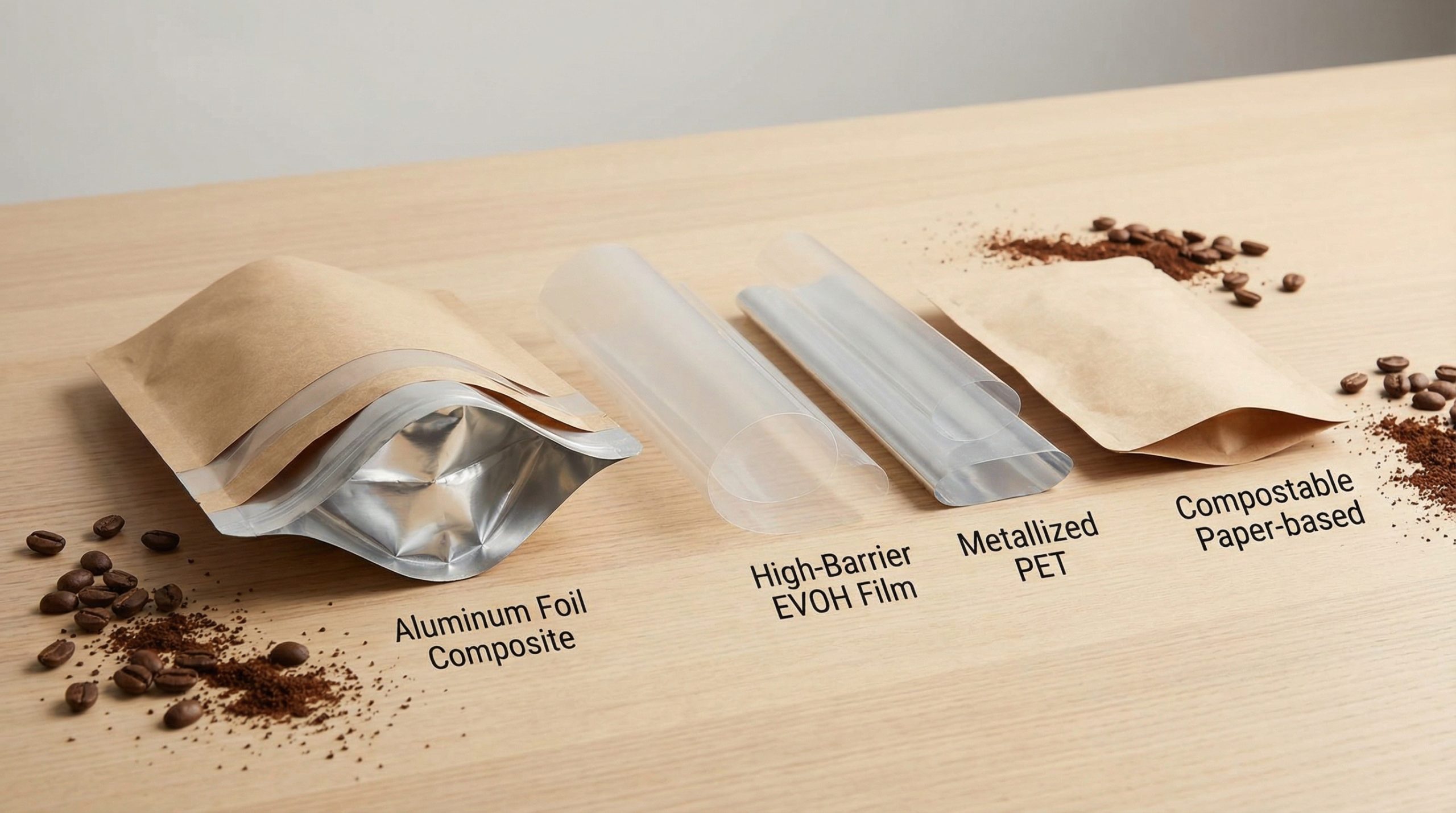
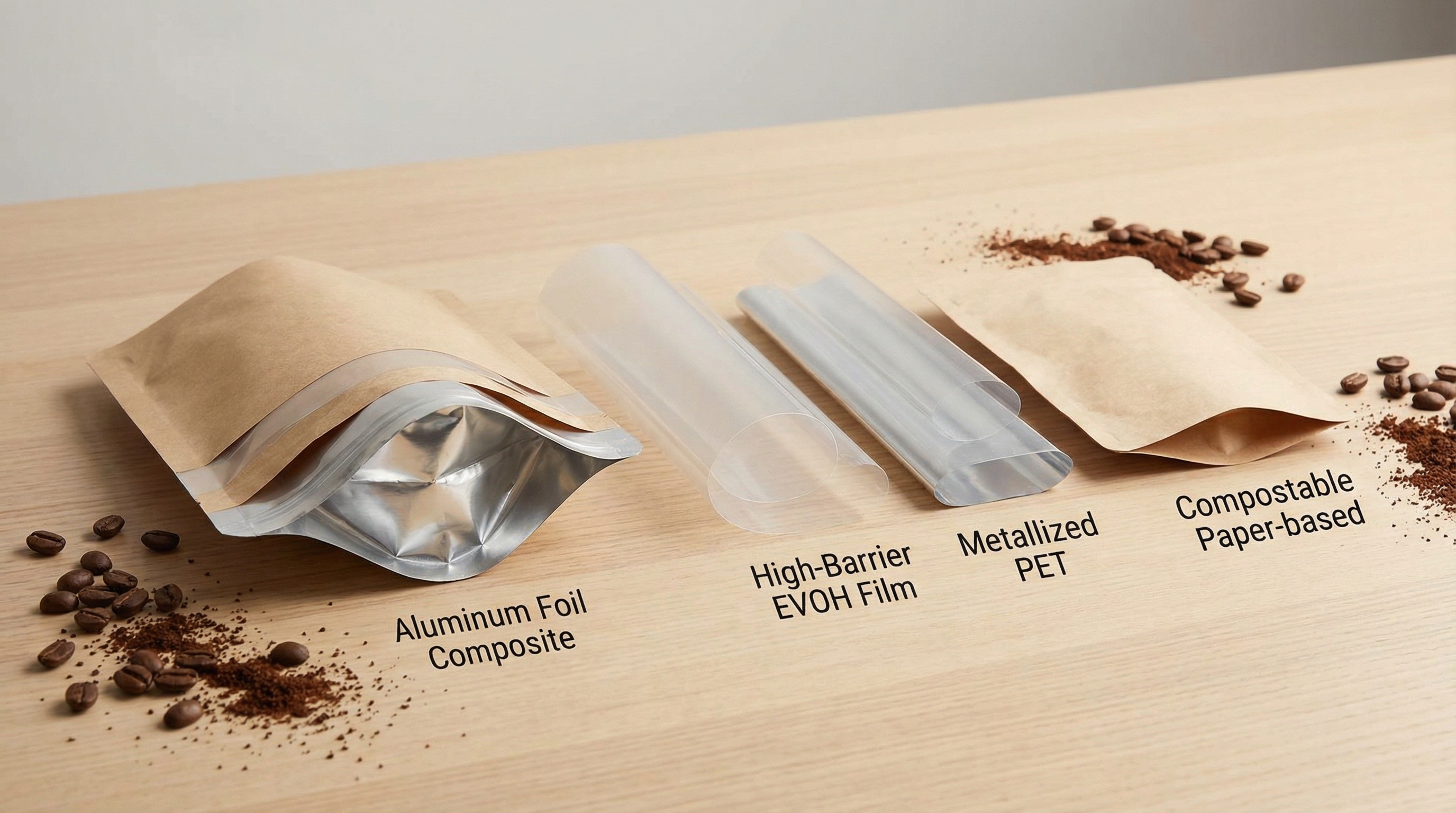
Choosing high-barrier films like aluminum laminates is essential to block external moisture from penetrating the bag after it leaves the factory. While humidity in packaging starts on the line, the barrier properties of your film determine how long that coffee remains fresh on the retail shelf. If your film is too permeable, all the moisture control in your factory will be wasted once the product enters the supply chain.
Which materials offer the best protection?
Not all packaging films are created equal. You need materials specifically designed to block water vapor transmission (WVTR).
Aluminum foil provides a near-perfect barrier.
Metallized PET is an excellent, cost-effective mid-range option.
Multi-layer laminates add structural integrity.
Think about it: The package is the final line of defense. Investing in premium materials for your drip bag ultrasonic packaging machine ensures the product stays as dry as the day it was filled.
Key Takeaway: High-barrier films protect the product from ambient humidity during storage and transport, extending shelf life and preserving quality.
Material Type
Moisture Barrier (WVTR)
Best Use Case
Polyethylene (PE)
Low
Short-term storage
Metallized PET
High
Standard retail coffee
Aluminum Foil
Superior
Premium/Long-term storage
Selecting the correct barrier material is a strategic decision that directly impacts the long-term success of your product.
What is the ideal humidity in packaging for coffee?
The ideal relative humidity for a coffee filling facility is between 30% and 50% to ensure optimal flow and accuracy. Maintaining this specific humidity in packaging prevents both the clumping caused by high moisture and the static issues caused by overly dry air. Consistency is the most important factor; even a small swing in humidity can throw off your filling precision by several grams.
Why is 30% to 50% the “sweet spot”?
This range provides enough moisture to prevent static electricity from making the powder “jump,” but not enough to cause liquid bridges.
Static is minimized below 50% RH.
Clumping is avoided above 30% RH.
Flowability remains consistent across shifts.
The best part? When your facility is climate-controlled, your Newideapack machinery will run more smoothly with fewer operator interventions. It creates a predictable environment where precision becomes the standard, not the exception.
Key Takeaway: Staying within the 30% to 50% humidity range balances flowability and static control, resulting in the highest possible filling accuracy.
Factor
Effect < 30% RH
Effect > 50% RH
Static Build-up
Very High
Low
Clumping Risk
Low
High
Filling Speed
Fast but “Jumpby”
Slow and Heavy
Maintaining this balance is the secret to high-throughput coffee packaging lines that never miss a beat.
Can desiccants fix humidity in packaging issues?
Desiccants like silica gel are highly effective for bulk storage areas but should generally be avoided inside the final retail coffee bags. While they help manage humidity in packaging for green beans or bulk grounds in a warehouse, they can sometimes strip away the coffee’s natural oils if placed in direct contact. Industrial dehumidifiers are a much better solution for the actual filling room where the product is exposed to the air.
How do desiccants help in storage?
Silica gel and other moisture absorbers are excellent for keeping the ambient air dry in large, sealed storage containers or warehouses.
They absorb excess moisture from the air.
They prevent “sweating” in shipping containers.
They protect bulk inventory from mold.
What does this mean for you? It means you have a backup plan. If your HVAC system fails, large desiccant bags can temporarily protect your raw materials until the climate control is restored.
Key Takeaway: Use desiccants as a secondary defense in storage, but rely on industrial climate control for the primary protection of your filling line.
Desiccant Use
Pros
Cons
Bulk Storage
Low cost, easy to use
Requires frequent replacement
Shipping
Prevents condensation
Limited capacity
In-Bag
Direct moisture removal
Possible flavor contamination
Understanding where to apply moisture-absorbing technology will save you money while protecting your product’s flavor.
Does humidity in packaging affect your seal integrity?
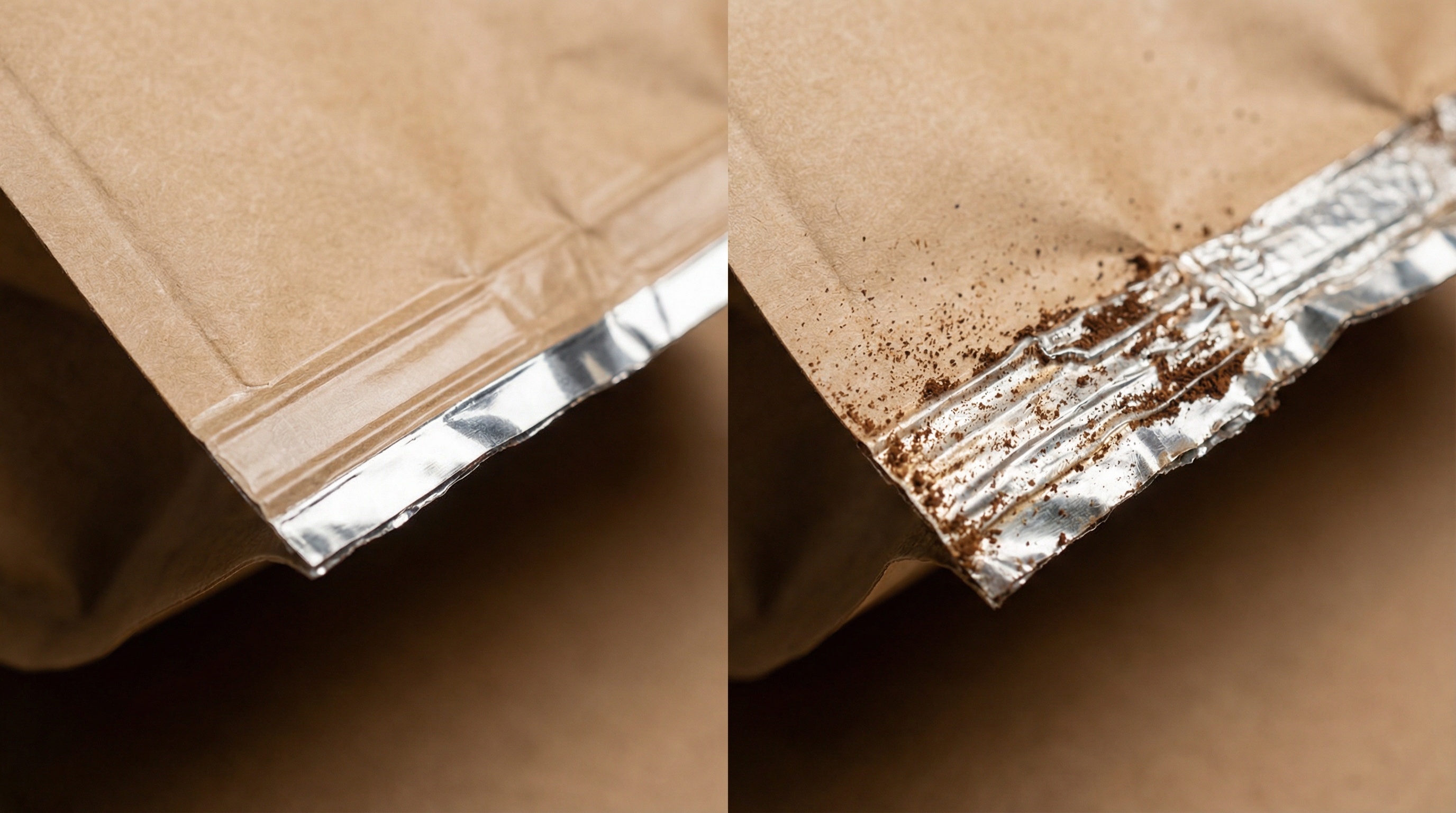
Yes, humid air carries more dust, and moist powder is more likely to stick to the seal area, causing leaks and weak bonds. Managing humidity in packaging ensures that the heat-sealing surfaces remain clean and free of product contamination. If coffee dust gets trapped in the seal because of moisture, the bag will eventually lose its vacuum or allow oxygen to enter, spoiling the contents.
Why does dust interfere with sealing?
Moist air makes the fine coffee “fines” heavier and more likely to settle on the open edges of your bags during the filling process.
Dust prevents the plastic layers from fusing.
Moisture creates steam during the heat-seal cycle.
Weak seals lead to high “leaker” rates.
Here is the deal: A perfect fill weight doesn’t matter if the bag isn’t sealed properly. Keeping the air dry at the filling station is the best way to ensure that your Newideapack machine produces airtight, professional-looking bags.
Key Takeaway: Clean, dry seals are essential for maintaining the long-term freshness and shelf life of your ground coffee products.
Seal Issue
Impact of Humidity
Solution
Channel Leaks
High due to dust clumping
Vacuum dust extraction
Weak Bonds
Steam interference
Dehumidification
Visual Defect
Gummy residue on bag
Lower RH levels
By controlling the environment, you ensure that every bag that leaves your facility is perfectly sealed and ready for the customer.
*
Mastering the Environment for Perfection
Achieving high-precision powder filling is about more than just having the right machine; it is about controlling the environment in which that machine operates. By managing humidity, you eliminate the variables that cause clumping, density shifts, and machine downtime. At Newideapack, we are committed to providing not just the machinery, but the technical expertise you need to optimize your entire production line. Our vision is to empower coffee brands with the stability and precision required to lead the global market.
If you are ready to eliminate weight fluctuations and boost your efficiency, contact us today for a custom consultation.
*
Frequently Asked Questions (FAQ)
Can I use silica gel packets inside ground coffee bags? No, because while they are excellent at absorbing moisture, they can potentially interact with the coffee’s natural oils and may not be food-safe for direct, long-term contact with fine grounds. It is much better to control the room’s humidity and use high-barrier packaging materials.
What’s the best way to tell if my powder is too humid for the filling machine? Check for “caking” or if the powder sticks to the sides of the hopper rather than flowing freely into the auger mechanism. If you see the powder forming small, hard balls or clinging to the stainless steel surfaces, your humidity is likely too high.
How do I know if the humidity is affecting my seal strength? Perform a “squeeze test” or a bubble test on finished bags to check for micro-leaks or weak spots in the seal area. If you find consistent failures or see product dust trapped within the transparent part of the seal, moisture-laden dust is likely the culprit.
Can I adjust my machine speed to compensate for high moisture? Yes, you can slow down the filling cycle to allow “heavy” or sticky powder more time to settle and flow through the nozzle. While this may improve accuracy slightly in the short term, it reduces your overall output and is not a permanent fix for humidity issues.
How do I prevent clumping in my auger filler during rainy seasons? Ensure your facility is equipped with industrial dehumidifiers to maintain a consistent 30% to 50% relative humidity. Additionally, you should perform more frequent cleanings of the auger and nozzle during wet weather to prevent the buildup of sticky residue.
Sales Pitch Component
If you are ready to eliminate weight fluctuations and boost your efficiency