How to Design Stunning Window Coffee Bags: The Best Way to Protect and Sell Your Roast
2025年8月14日 by newideapack
Choosing the right balance between product visibility and UV protection is the primary challenge when selecting Window coffee bags for your specialty beans. You want your customers to see the rich texture and roast of your coffee, yet you know that light is the enemy of flavor. Imagine a customer standing in a retail aisle, hesitant to buy your premium roast because they can’t see the product quality. You feel the pressure to add a clear window, but you worry that UV exposure will turn your aromatic beans into stale, flavorless pebbles within days. Newideapack offers the perfect middle ground, providing high-barrier films and UV-protected windows that maintain transparency without sacrificing the delicate oils of your coffee.
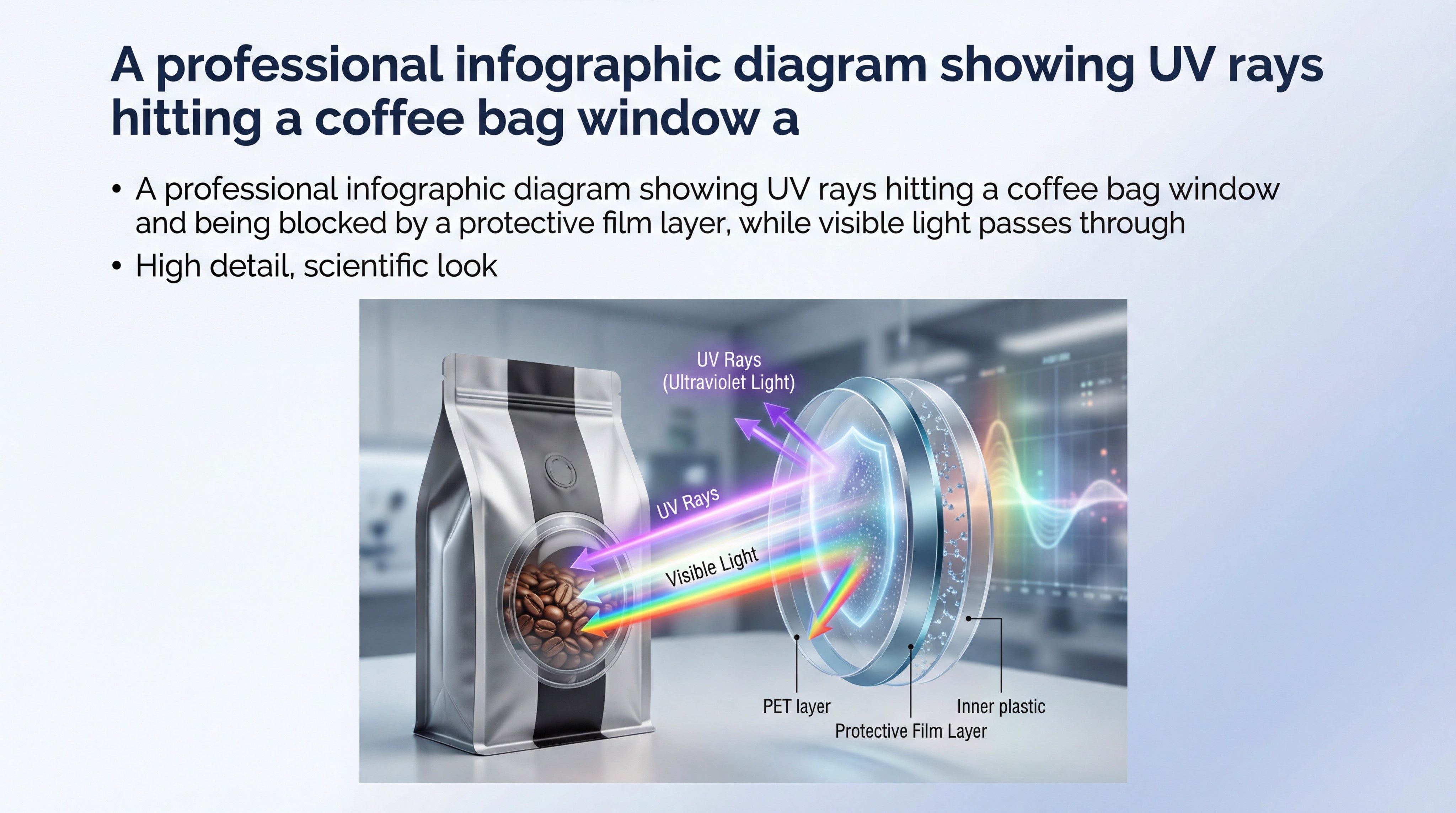
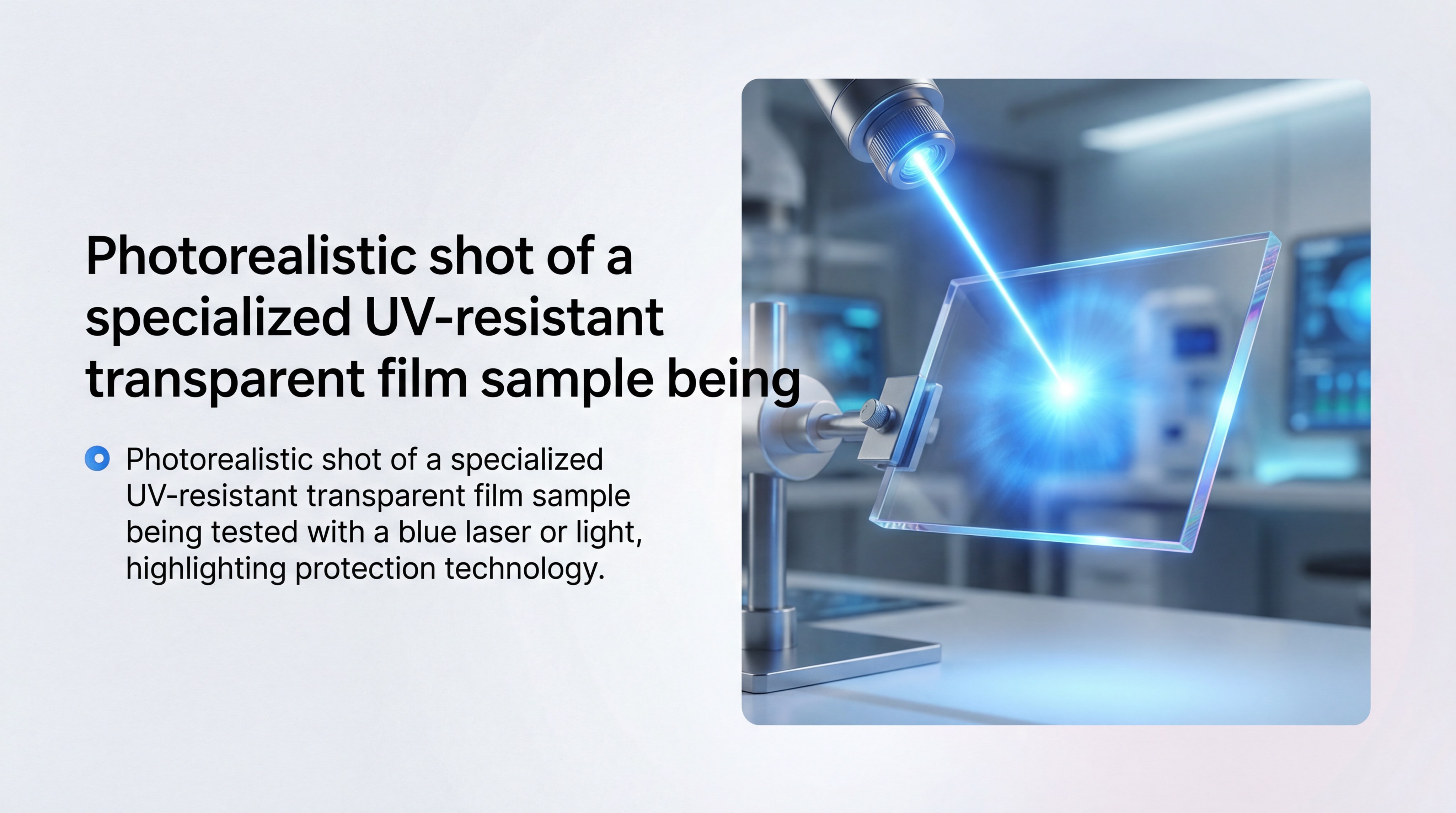
UV light causes significant photodegradation in window coffee bags by breaking down the chemical bonds in coffee oils and aromatic compounds. This process, often called “lightstruck” damage, results in a loss of complex flavor notes and the development of rancid off-flavors. When you expose your coffee to grocery store lighting or indirect sunlight, the invisible radiation acts as a catalyst for oxidation.
Does light destroy roasted coffee oils?
Roasted coffee oils are highly susceptible to light because they are often present on the surface of the bean. When UV rays hit these lipids, they trigger a chain reaction that produces free radicals and volatile compounds.
The bottom line?
Light-induced oxidation happens faster than air-induced oxidation.
Darker roasts are more vulnerable due to higher surface oil content.
Exposure for even a few days can noticeably dull the coffee’s profile.
Can consumers taste the light damage?
Consumers will definitely notice a difference in the cup profile if the beans have been exposed to excessive UV radiation. The vibrant acidity and floral notes are typically the first to vanish, replaced by a “cardboard” or metallic taste.
Look:
Aroma is the most significant indicator of coffee quality.
Lightstruck beans often smell “flat” rather than “fruity” or “nutty.”
Consistent flavor is the foundation of repeating wholesale orders.
Key Takeaway: UV light is a silent flavor killer that necessitates the use of specialized barrier films in any windowed packaging design to protect the product’s sensory integrity.
Damage Factor
Effect on Coffee
Severity Level
UV Radiation
Oxidation of surface oils
High
Visible Light
Slow flavor degradation
Moderate
Heat Catalysis
Accelerated staling
High
Using high-performance UV blockers ensures that you can showcase your beans without compromising the premium taste your customers expect.
What materials are used in window coffee bags?
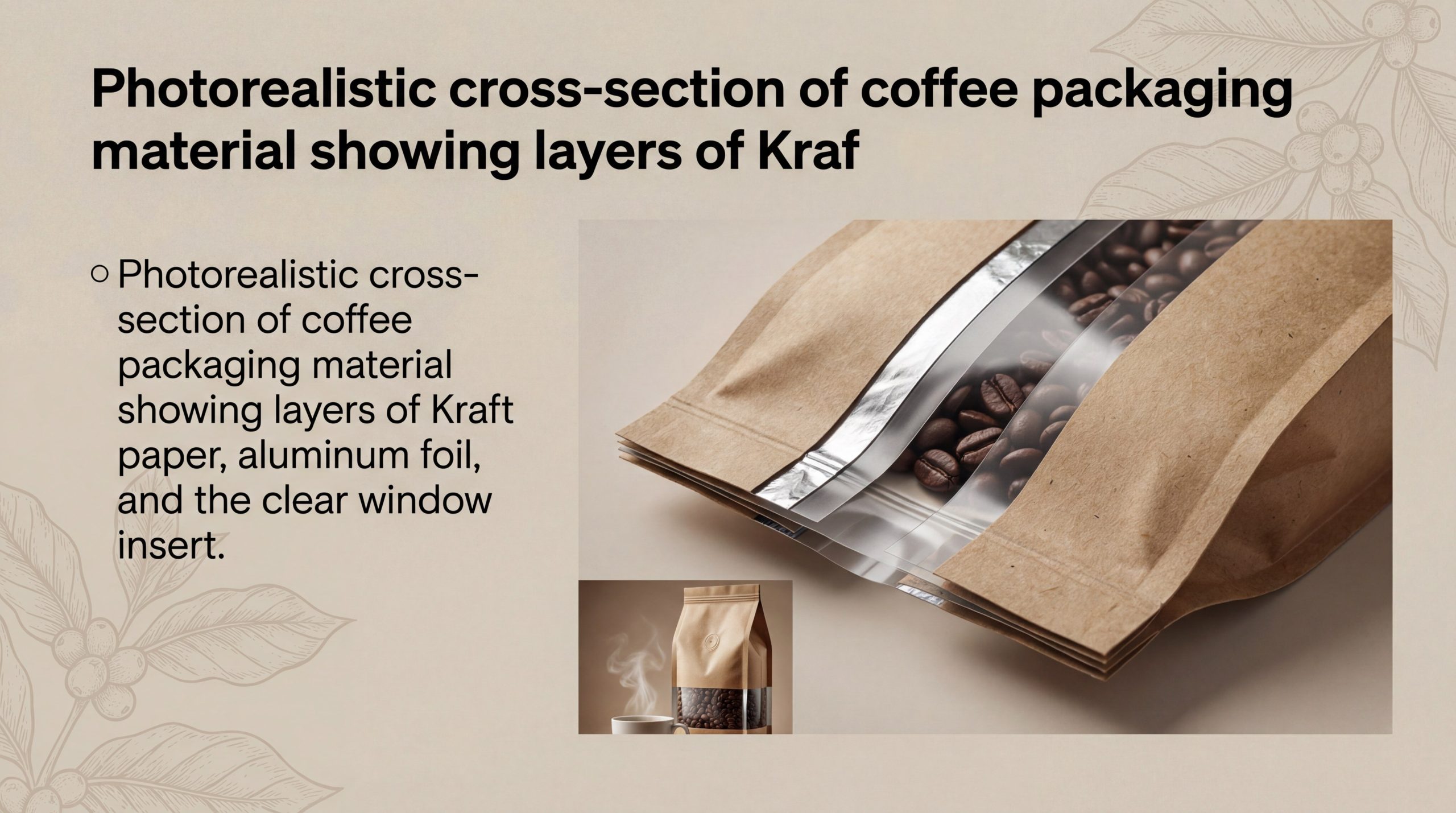
High-quality Window coffee bags utilize multi-layer laminates that combine the structural strength of plastic with the barrier properties of aluminum or metalized films. The window itself is typically made from a specialized PET (polyethylene terephthalate) or BOPP (biaxially oriented polypropylene) that has been treated with UV inhibitors. These materials ensure that while the window is clear, it still acts as a functional barrier against oxygen and moisture.
Is foil lining still necessary?
Foil lining remains the gold standard for long-term coffee storage because it provides a near-zero transmission rate for oxygen and light. In windowed designs, the foil covers the majority of the bag, leaving only a small area for the transparent film.
Think about it:
Aluminum foil blocks 100% of light and UV rays.
It provides the most rigid structure for shelf-stable display.
Most premium window bags use a 3-layer or 4-layer construction.
What is the role of PET in windows?
PET is the preferred material for the window insert because of its high clarity and excellent mechanical properties. It can be easily heat-sealed to other layers of the bag to create a permanent, airtight bond.
The best part?
PET can be manufactured with built-in UV absorbing additives.
It resists scratching and clouding during the shipping process.
It maintains its clarity even when in contact with oily dark roasts.
Key Takeaway: Material selection is the most critical technical decision in packaging, as it determines the OTR (Oxygen Transmission Rate) and the overall longevity of your coffee.
Layer Type
Material Used
Primary Function
Outer Layer
Kraft Paper / Matte PET
Branding and aesthetics
Barrier Layer
Aluminum Foil / VMPET
Light and oxygen block
Window Insert
UV-Treated PET
Visibility and UV protection
By layering these materials strategically, manufacturers can provide a window into the product while maintaining a professional-grade barrier.
How do window coffee bags maintain freshness?
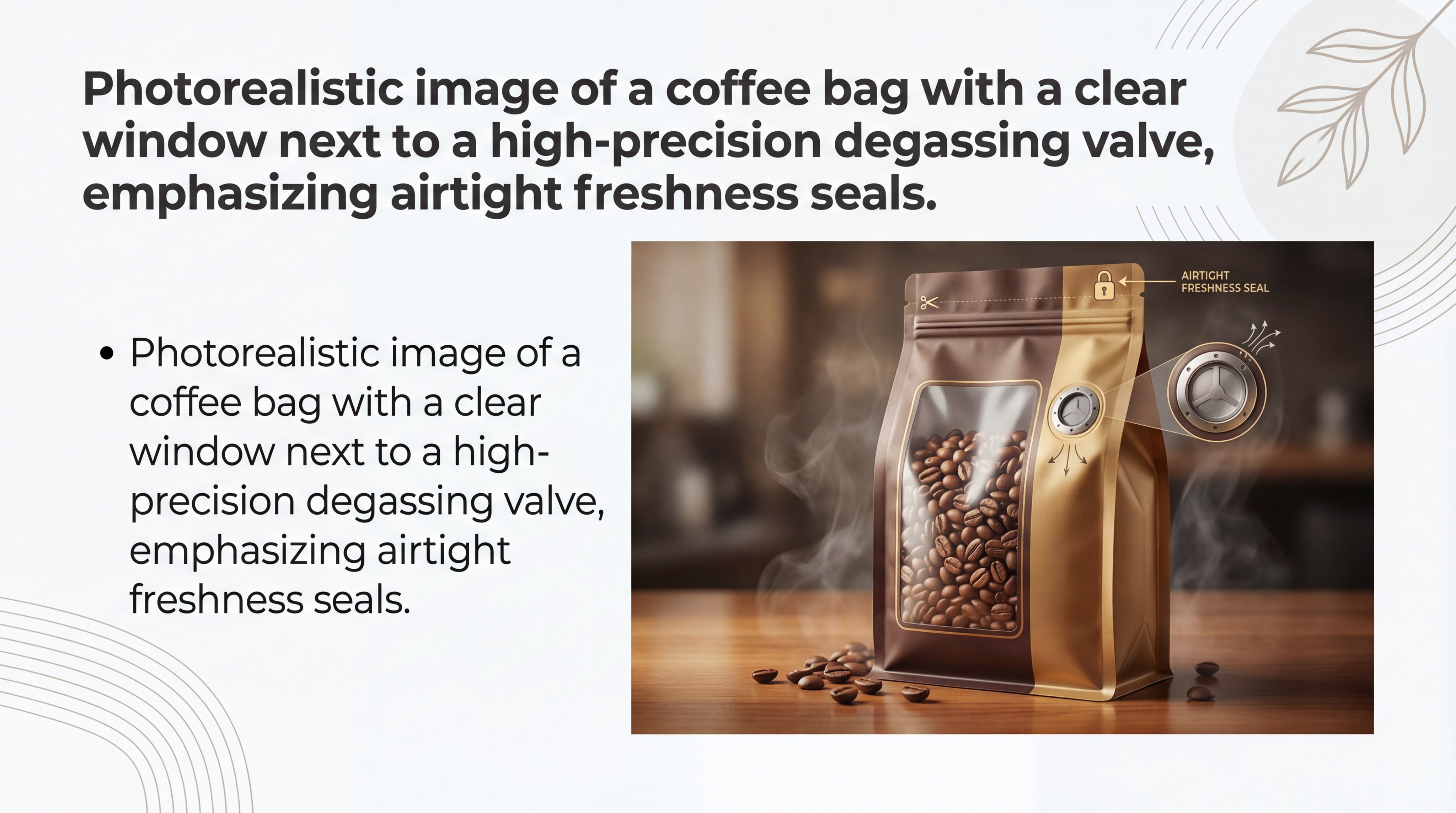
Window coffee bags maintain freshness by utilizing a combination of high-barrier films, airtight heat seals, and one-way degassing valves. While the window adds a visual element, the rest of the bag is designed to be a fortress against environmental factors like humidity and oxygen. Newideapack ensures that the integration of the window does not create weak points where air could seep in.
Why are degassing valves essential?
One-way degassing valves are critical for freshly roasted beans because they allow carbon dioxide to escape without letting outside air into the bag. This prevents the bag from bloating or bursting while keeping the internal environment oxygen-free.
The reality is:
Freshly roasted coffee releases gas for several days post-roast.
Valves prevent the “puffing” that can distort the window area.
They allow you to pack coffee immediately to preserve aroma.
Does the window weaken the seal?
A properly engineered window is heat-sealed into the laminate structure, making it as strong as the rest of the bag’s seams. Advanced manufacturing processes ensure that there is no air migration at the transition between the opaque film and the clear window.
Believe it or not:
Modern heat-sealing technology creates a molecular bond between layers.
Test results show no difference in OTR between solid and windowed bags.
The window is often the strongest part of the bag’s front face.
Key Takeaway: Freshness is a result of a total system—valves, barriers, and seals—all working together to keep the delicate coffee chemistry stable until the bag is opened.
Freshness Component
Impact on Coffee
Role in Window Bags
Degassing Valve
Prevents bursting
Maintains bag shape
Airtight Seal
Blocks oxygen
Prevents staling
Moisture Barrier
Prevents mold
Keeps beans crisp
Integrating these features allows roasters to offer visual transparency without the traditional risks associated with clear packaging.
Why choose window coffee bags for retail?
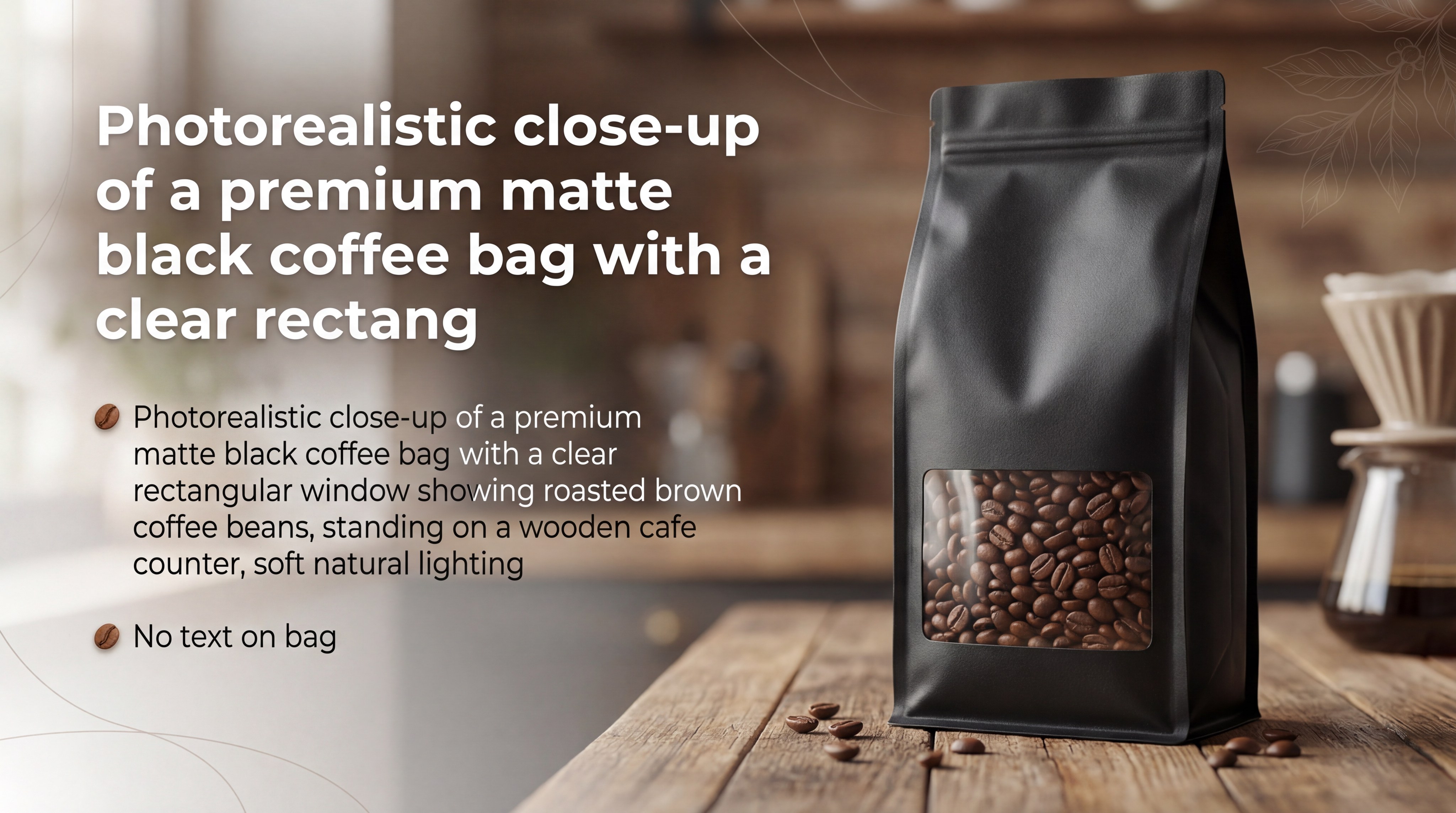
Roasters choose Window coffee bags for retail because they build immediate consumer trust by allowing shoppers to verify the quality and roast of the beans. In a crowded marketplace, the ability to see the actual product can be the deciding factor for a customer who is hesitant to try a new brand. Seeing the consistency and color of the beans provides a sensory experience that opaque bags simply cannot match.
Does visibility increase conversion rates?
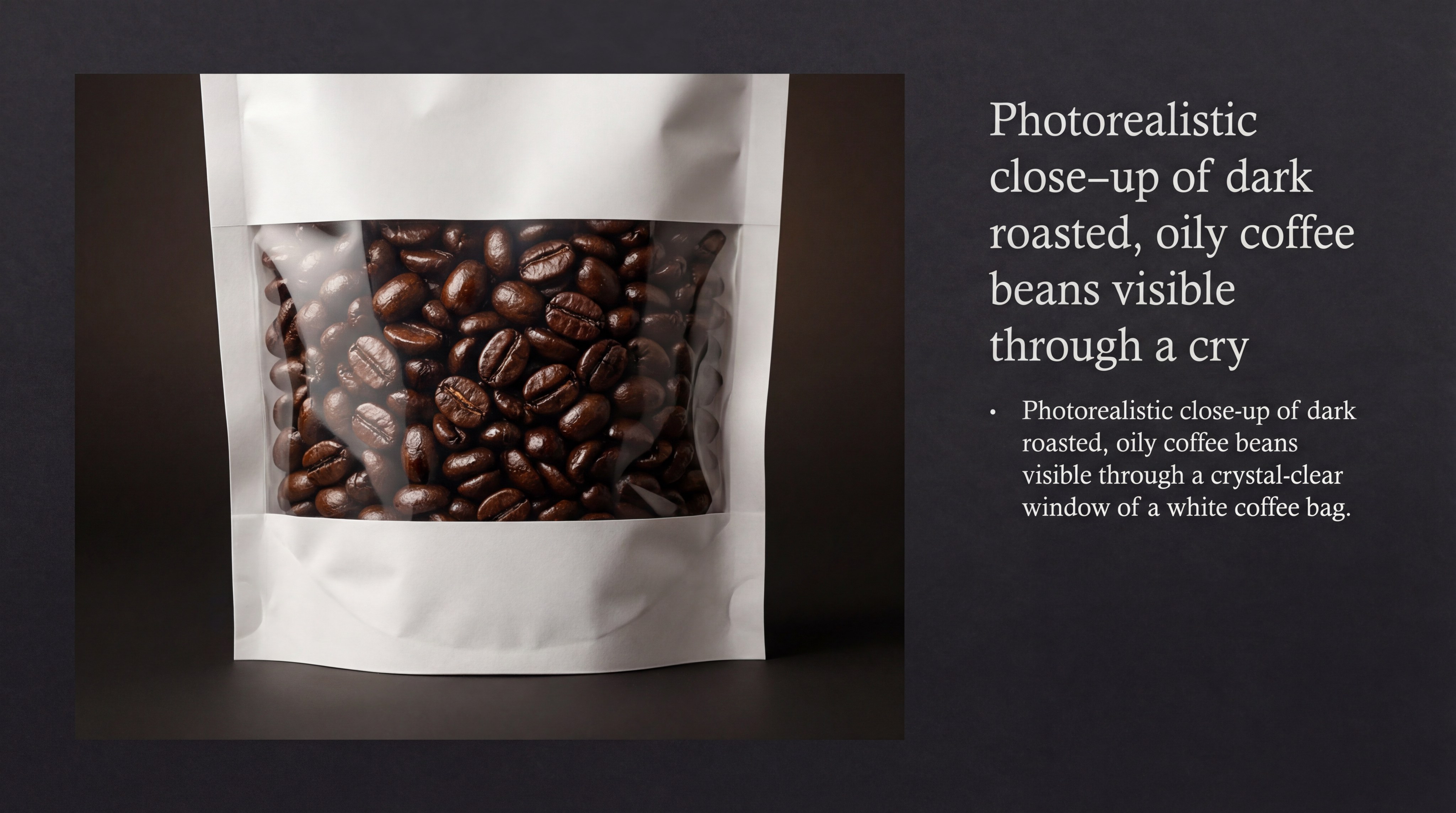
Visibility acts as a powerful marketing tool because it reduces the perceived risk for the consumer during the purchasing process. When people can see that the beans are whole, consistent, and oily, they feel more confident in the premium price.
Think about this:
Visual cues are processed 60,000 times faster than text.
Shoppers often equate “visible” with “authentic” and “fresh.”
It allows for instant verification of the roast level (light vs. dark).
How do windows improve brand image?
Including a window suggests that your brand is proud of its product and has nothing to hide from the consumer. It creates an artisanal, “farm-to-table” aesthetic that appeals to the modern specialty coffee demographic.
It gets better:
You can showcase unique bean varieties like peaberry or longberry.
It differentiates your product from big-box commodity brands.
Minimalist designs with windows often look more high-end on the shelf.
Key Takeaway: Retail windows turn the product itself into the primary marketing asset, allowing the natural beauty of the coffee to drive impulse purchases.
Retail Advantage
Consumer Perception
Brand Benefit
Product Proof
“I can see the quality”
Increased trust
Visual Appeal
“This looks delicious”
Higher shelf movement
Differentiation
“This brand is unique”
Market standing
Leveraging the visual appeal of your roast is the most effective way to compete in a saturated retail environment.
Are there eco-friendly window coffee bags?
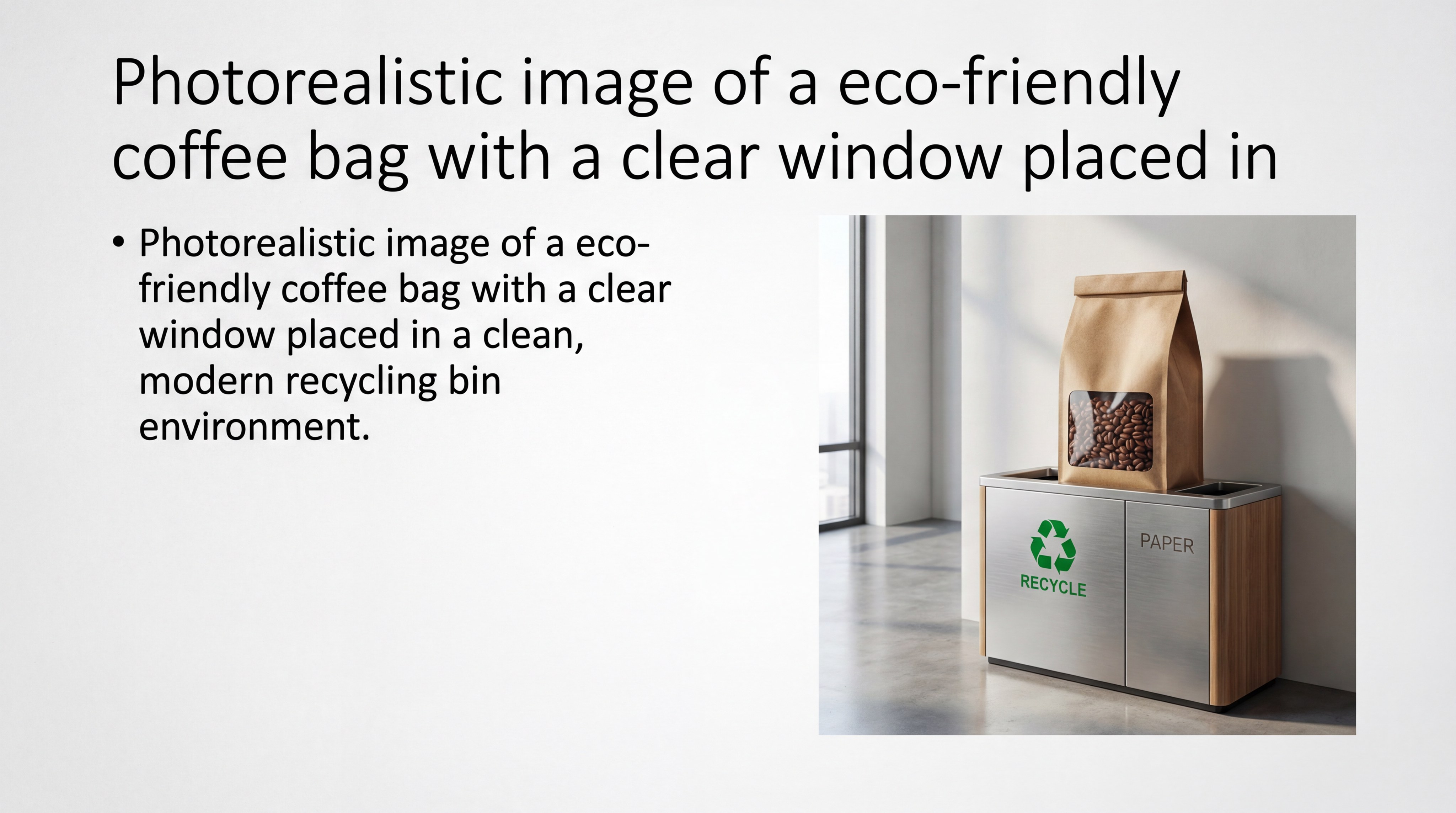
Eco-friendly window coffee bags are now available in compostable and recyclable formats that utilize plant-based plastics for the transparent window. Historically, windowed bags were difficult to recycle because they combined different materials, but new mono-material and bio-plastic innovations have solved this problem. You can now offer visibility while meeting the sustainability demands of your eco-conscious customer base.
What are compostable windows made of?
Most compostable windows are made from PLA (polylactic acid), which is derived from renewable resources like corn starch or sugar cane. These windows look and feel like traditional plastic but will break down in industrial composting facilities.
But here is the kicker:
PLA provides excellent clarity for bean display.
It is naturally resistant to many coffee oils.
It pairs perfectly with Kraft paper or PLA-lined outer layers.
Can window bags be recycled?
Recyclable window bags are usually made from “mono-material” PE (polyethylene), where both the bag and the window are the same plastic family. This allows the entire package to be processed in standard soft-plastic recycling streams without being separated.
Look at this:
Mono-materials simplify the waste journey for consumers.
They maintain high moisture and oxygen barrier properties.
Newideapack specializes in these future-proof sustainable solutions.
Key Takeaway: Sustainable packaging is no longer a niche requirement; it is a brand necessity that can be successfully combined with visual windows.
Eco-Material
Sustainability Type
Window Quality
PLA (Corn Starch)
Compostable
Very Clear
Mono-PE
Recyclable
Slightly Matte
Kraft + Bio-film
Biodegradable
High Clarity
Adopting green packaging demonstrates your commitment to the environment and resonates deeply with the specialty coffee community.
What sizes are available for window coffee bags?
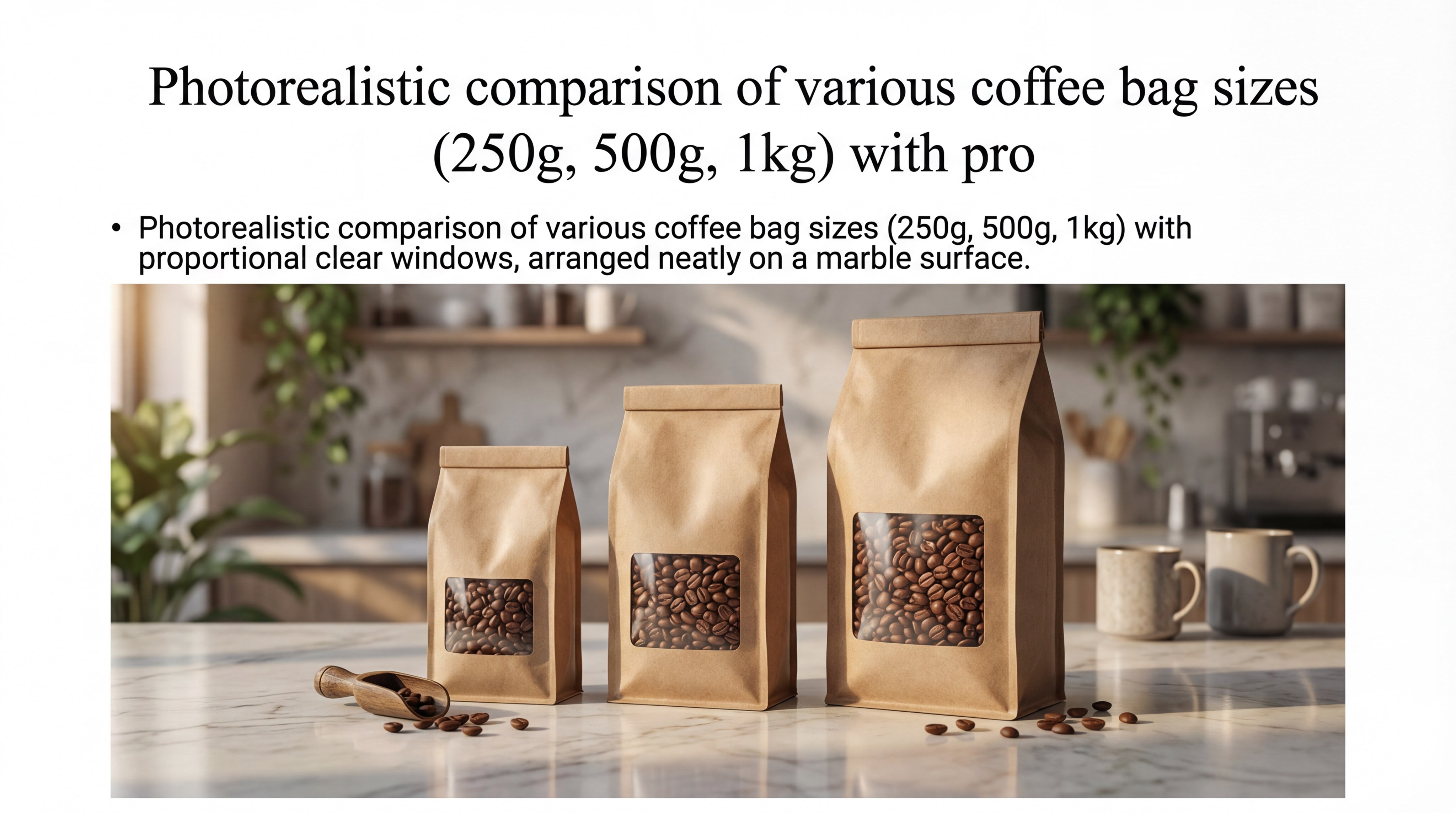
Window coffee bags are available in a wide range of industry-standard sizes, typically ranging from 250g (8.8oz) to 1kg (2.2lb) capacities. The size of the window is usually scaled proportionally to the bag dimensions to ensure the design remains balanced and the structural integrity is maintained. Whether you are selling sample packs or bulk wholesale quantities, there is a windowed solution that fits your volume requirements.
Is 250g the best size for windows?
The 250g bag is the most popular size for specialty retail because it represents a “one-week” supply for most home brewers. Windows on this size allow customers to see the exact roast they are buying for their daily ritual.
Think about it:
Smaller bags are often displayed at eye level on shelves.
The window takes up a larger percentage of the face, making it more impactful.
It is the ideal size for limited-edition micro-lots.
Are 1kg bags suitable for windows?
While 1kg bags are often used for wholesale or bulk retail, adding a window can help baristas or bulk buyers quickly identify which beans are in which bag. This is especially useful in busy cafe environments where speed is essential.
The reality is:
Bulk windows are usually smaller to maintain bag strength.
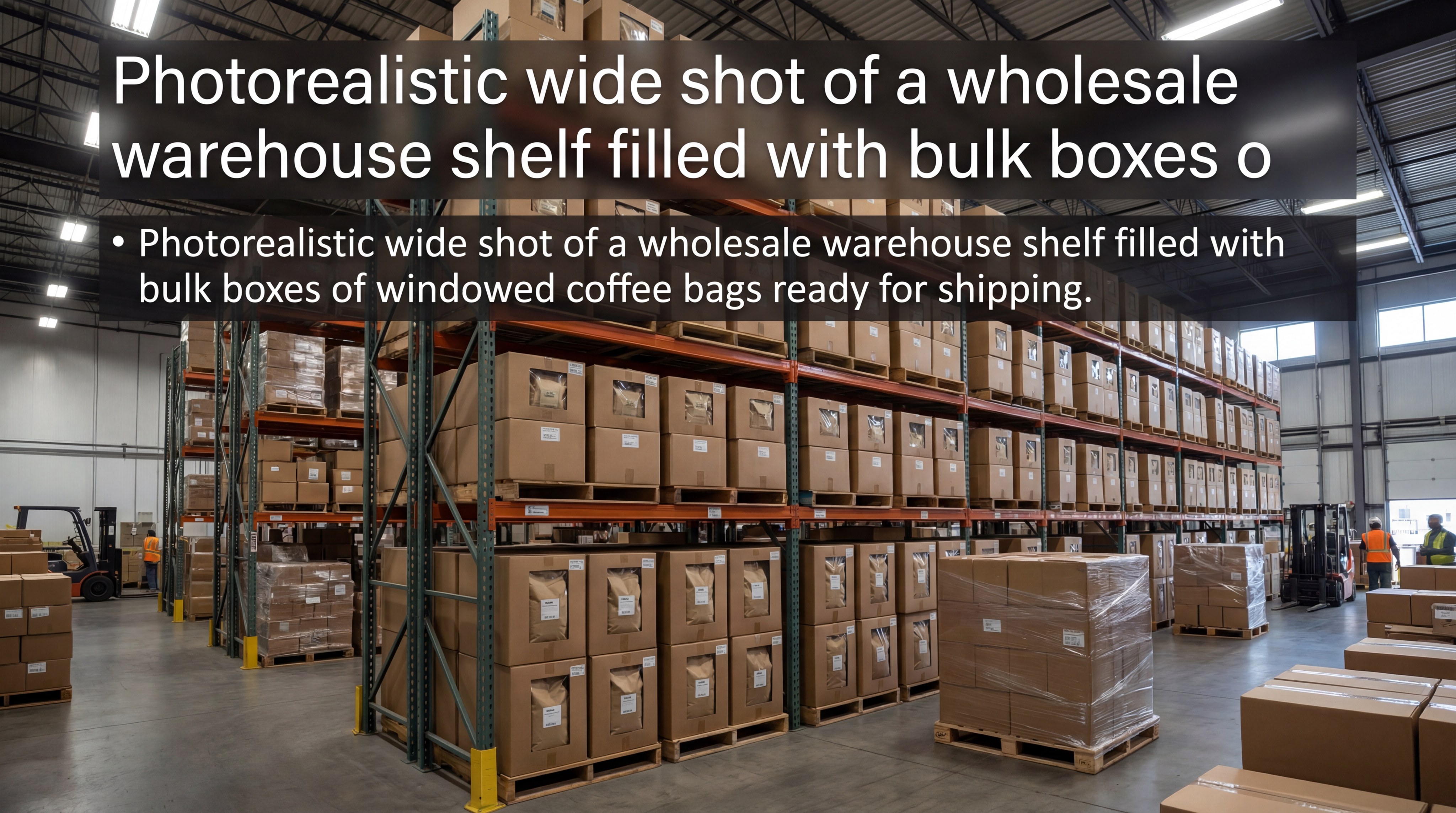
They help in inventory management at the warehouse level.
Clear windows prevent “wrong bean” mistakes during bar prep.
Key Takeaway: Offering a range of sizes with consistent window placement helps create a unified brand family across all your product lines.
Bag Size
Standard Weight
Target Market
Sample Pack
50g – 100g
Gifting / Tasting
Retail Standard
250g – 500g
Home consumers
Bulk / Wholesale
1kg – 2kg
Cafes / Offices
Choosing the right size ensures that your packaging matches the consumption habits of your target audience while maximizing shelf space.
Are whole beans better for window coffee bags?
Whole beans are significantly better for window coffee bags because they have a much lower surface area-to-volume ratio than ground coffee, making them less sensitive to light and air. The texture of whole beans also provides a much more appealing visual experience through the window compared to the flat, dusty appearance of grounds. If you want to showcase your product through a clear panel, whole beans are the ideal candidate for maintaining both aesthetics and freshness.
Why is ground coffee a risk?
Once coffee is ground, the internal cell structure is completely exposed, leading to rapid oxidation even in the best environments. Light exposure through a window accelerates this staling process even further for ground coffee.
Look:
Ground coffee can look “messy” against the clear window.
Static electricity can cause grounds to stick to the window film.
Aroma loss is nearly instantaneous once the seal is compromised.
Do whole beans look more premium?
There is no doubt that the sight of glossy, perfectly roasted whole beans creates a premium impression that ground coffee cannot replicate. The window highlights the artisanal nature of the roast and the quality of the raw green coffee used.
The best part?
You can see the “bean type” (e.g., Peaberry vs. Typica).
It proves that there are no defects or “quakers” in the bag.
Consumers perceive whole beans as being fresher than ground alternatives.
Key Takeaway: Focus your windowed packaging efforts on whole bean products to maximize the “wow factor” and ensure your customers receive the highest quality coffee.
Coffee Format
Window Suitability
Reason
Whole Bean
Excellent
High visual appeal, lower oxidation
Coarse Ground
Fair
Good for French Press visibility
Fine Ground
Poor
Messy look, high sensitivity
Whole beans allow the natural beauty of the coffee to shine, providing the best return on investment for windowed packaging designs.
How can I customize window coffee bags?
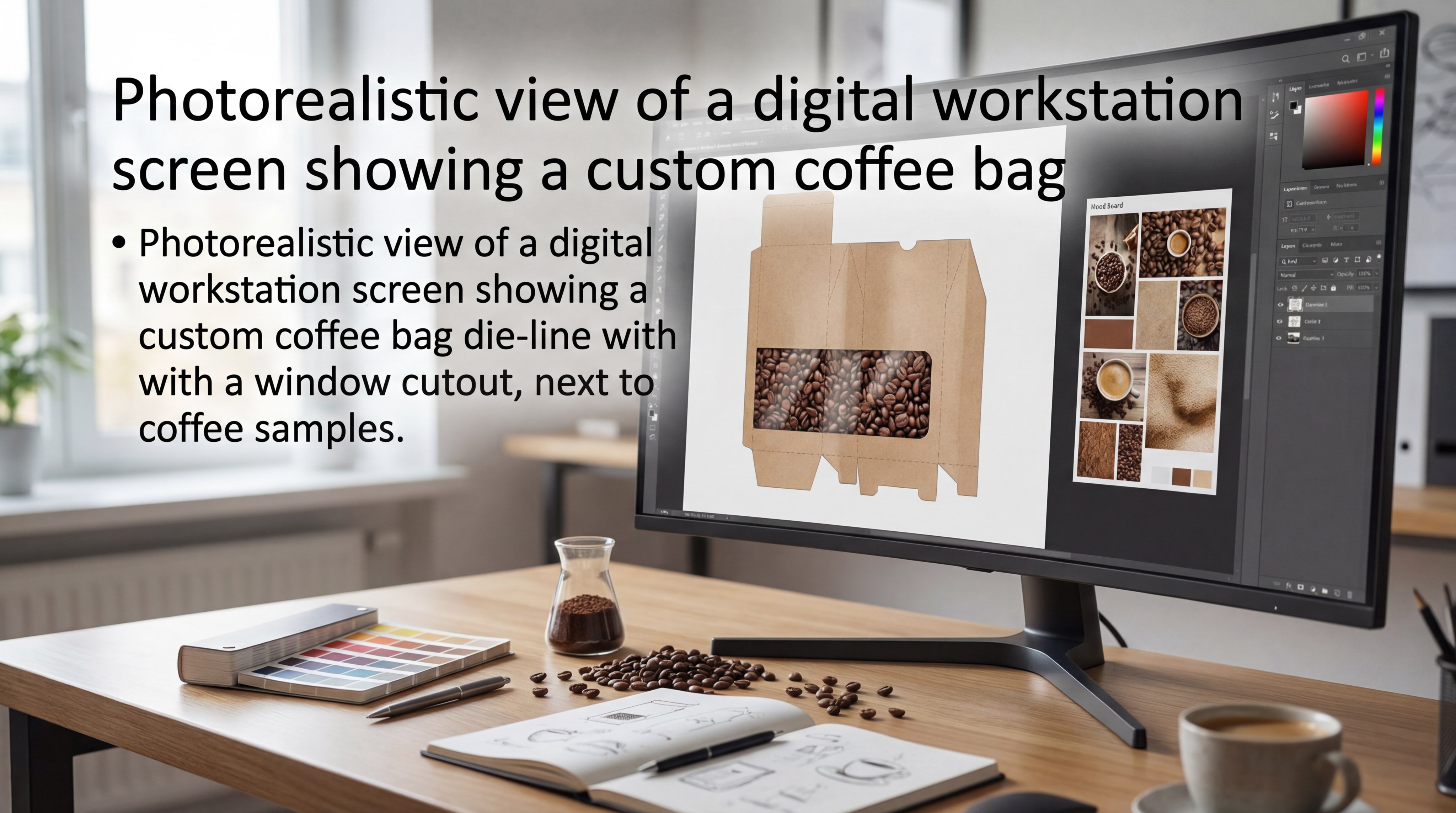
Customizing Window coffee bags allows you to create a unique brand identity through custom die-cut window shapes, specialized printing techniques, and varied textures. Instead of a standard rectangle, you could have a window shaped like your logo, a coffee bean, or even a mountain range to represent the coffee’s origin. This level of customization ensures that your packaging stands out in a crowded retail landscape and tells your brand’s story.
Are custom window shapes possible?
Modern die-cutting technology allows for nearly any shape to be cut into the bag’s face before the clear film is applied. This is a cost-effective way to add a “signature” look to your packaging.
Think about this:
Bean-shaped windows are a classic and instantly recognizable.
Silhouette windows can reflect the geography of the coffee’s origin.
Custom shapes help prevent “copycat” branding from competitors.
What printing works best with windows?
Digital and rotogravure printing both work exceptionally well with windowed bags, allowing for high-resolution graphics that wrap around the clear panel. You can use matte finishes on the bag to create a contrast with the high-gloss clear window.
It gets better:
Spot UV coating can add extra shine to specific design elements.
Metallic inks can complement the visual of the beans.
Transparent inks can create a “tinted” window effect.
Key Takeaway: Customization is where your brand’s personality comes to life; using creative window shapes turns your packaging into a conversation piece.
Customization Type
Impact Level
Implementation
Die-Cut Shape
High
Custom tooling
Texture Contrast
Moderate
Matte vs. Gloss films
Placement
High
Bottom vs. Center windows
A well-designed custom window doesn’t just show the product; it enhances the entire brand experience for the consumer.
How to seal window coffee bags efficiently?
Efficiently sealing window coffee bags requires precision-engineered heat sealing equipment that can handle multiple layers of material without damaging the clear window panel. Because the window insert is often a different thickness or material than the rest of the bag, maintaining the correct temperature and dwell time is essential for a perfect seal. Newideapack’s automated machinery is designed to provide consistent pressure and heat, ensuring every bag is airtight and retail-ready.
What is the ideal sealing temperature?
The ideal temperature varies depending on the film thickness, but it generally falls between 150°C and 180°C for PE-based laminates. If the heat is too high, the window film can warp or shrink, ruining the visual appeal of the bag.
The reality is:
Digital controls are necessary for high-speed production.
Consistent pressure is just as important as heat.
Cooling bars help set the seal quickly to prevent wrinkles.
Can manual sealers handle windows?
Manual sealers can work for very small batches, but they lack the consistency needed for commercial shelf-life standards. For wholesale operations, a continuous band sealer or an automated VFFS machine is highly recommended.
Look:
Automation reduces the risk of human error during sealing.
It ensures a professional, flat seal every time.
Integrated coding can add roast dates during the sealing process.
Key Takeaway: Professional-grade sealing is the final step in ensuring that all your protective barriers actually work to keep your coffee fresh.
Sealing Method
Production Speed
Consistency
Hand Impulse Sealer
Low
Variable
Band Sealer
Medium
High
Automated VFFS
Very High
Maximum
Investing in the right sealing technology pays for itself by reducing product waste and ensuring a high-quality consumer experience.
Where to buy wholesale window coffee bags?
You should buy wholesale window coffee bags directly from specialized manufacturers like Newideapack to ensure you get factory pricing and the highest quality standards. Buying direct allows you to customize your bags from the ground up, ensuring that the UV barriers and film thicknesses are exactly what your coffee requires. B2B manufacturers provide the scale and technical support needed to grow your brand from a local roastery to a national presence.
Why buy direct from the factory?
Buying from the factory eliminates the middleman markup and gives you a direct line to the engineers who design your packaging. You can request specific barrier tests and ensure your sustainability certifications are valid.
Think about it:
You get access to the latest film technologies first.
Lead times are more predictable with direct communication.
Bulk discounts are much more significant at the factory level.
What should I look for in a supplier?
A good supplier should offer a wide range of stock options as well as full custom capabilities. They should also provide physical samples so you can test the OTR and UV protection with your specific roasts.
It gets better:
Look for suppliers with ISO and food-grade certifications.
Check for “one-stop-shop” services including design and valves.
Reliable logistics partners ensure your bags arrive on time.
Key Takeaway: Your packaging partner is an extension of your brand; choose a manufacturer that understands the delicate balance between visibility and protection.
Supplier Benefit
Impact on Roaster
Long-term Value
Custom Design
Unique brand identity
Market growth
Quality Control
Consistent freshness
Customer loyalty
Bulk Pricing
Higher profit margins
Scalability
Establishing a strong relationship with a factory partner is the most strategic move you can make for your coffee’s future.
*
Conclusion
Finding the perfect balance between showcasing your coffee and protecting its flavor is the key to building a successful brand. We’ve explored how Window coffee bags can enhance your retail presence, why UV-resistant films are non-negotiable for quality, and how the right materials ensure long-term freshness. By choosing the right bag shape and focusing on whole beans, you can create a premium experience that resonates with your customers.
At Newideapack, we are dedicated to helping roasters around the world preserve the integrity of their craft through innovative packaging solutions. Whether you need standard retail pouches or fully custom-designed bags with advanced UV barriers, we have the expertise and technology to bring your vision to life.
*
FAQ
Can I use window bags for flavored coffee?
Yes, but you must ensure the window material is “aroma-tight” to prevent the flavor oils from migrating through the plastic. High-barrier PET windows are recommended for flavored beans to maintain their unique scent.
What’s the best way to store windowed bags at home?
Always store windowed bags in a cool, dark place like a pantry. While the UV-resistant film helps in the store, long-term exposure to home kitchen lighting can still affect the coffee’s flavor over several weeks.
How do I know if my window bag has UV protection?
You should ask your manufacturer for a technical data sheet (TDS). High-quality suppliers like Newideapack will specify the UV transmission percentage of their window films in these documents.
Can I get windows on compostable coffee bags?
Yes, modern compostable bags often feature PLA (Polylactic Acid) windows. These are made from corn starch and provide excellent clarity while being fully biodegradable in industrial composting facilities.
Does the size of the window affect the shelf life?
Generally, no, as long as the window is made from high-barrier, UV-resistant film. However, the larger the window, the more attention you should pay to how the bags are displayed in direct sunlight on retail shelves.
Sales Pitch Component
If you are ready to take your packaging to the next level and protect your beans with the best in the industry
Contact us today to discuss your project requirements.