How to Control Residual Oxygen Levels to Keep Your Coffee Fresh
2026年1月28日 by newideapack
Residual oxygen monitoring is the only way to verify that your packaging process has successfully removed the gas responsible for staling and flavor loss. You’ve likely seen this scenario: a roaster pours heart and soul into a perfect roast, only for the coffee to taste flat and cardboard-like just weeks later because air was trapped inside the bag. This staling agitates customers and destroys your brand’s reputation for quality. At newideapack, we provide the technology to control Residual oxygen levels so your product tastes as fresh on day 100 as it did on day one.
Monitoring these levels is vital because oxygen is the primary catalyst that turns delicate coffee oils rancid and destroys aroma. Even small Residual oxygen levels left in a sealed bag will begin a chemical countdown that strips away the complex flavor profiles you worked hard to develop.
Does oxygen destroy the coffee aroma?
Oxygen molecules immediately begin to break down the volatile compounds that give coffee its signature scent. If you don’t remove this gas, the premium “bloom” your customers expect will vanish before they even open the bag.
Volatile oils oxidize and create “off” flavors.
Aromatics dissipate into the bag’s headspace.
Shelf life drops from months to mere weeks.
Think about it.
Without precise control, you are essentially leaving your product’s quality to chance.
Key Takeaway: Low oxygen is the “secret sauce” for preserving the sensory experience of specialty coffee over long periods.
Feature
High Oxygen Impact
Low Oxygen Benefit
Aroma
Rapidly fades
Locked in for months
Flavor
Bitter and stale
Bright and complex
This data shows that controlling the atmosphere is non-negotiable for any serious roasting operation.
How do residual oxygen levels cause oxidation?
Oxidation occurs when oxygen molecules bond with the unsaturated fats in the coffee bean, creating peroxides that taste like wet paper. Managing Residual oxygen levels prevents this chemical chain reaction from ever starting, keeping the oils stable and delicious.
Is the oxidation process reversible?
Once a coffee bean has oxidized, the flavor loss is permanent and cannot be fixed by better brewing or storage. You must act at the point of packaging to ensure the oxygen is displaced before the seal is finalized.
Oxygen reacts with lipids to create rancidity.
Free radicals are formed that further degrade the bean.
Carbon dioxide is lost, which carries the flavor.
But here is the kicker.
The more porous the bean, the faster this invisible enemy can penetrate the center and ruin the batch.
Key Takeaway: Prevention via atmosphere control is the only way to stop the irreversible damage caused by oxidation.
Oxidation Stage
Timeframe (No Control)
Taste Profile
Initial
1-3 Days
Loss of bright acidity
Advanced
2-4 Weeks
Rancid, cardboard notes
Clearly, the speed of degradation makes immediate oxygen removal a top priority for your production line.
What are ideal residual oxygen levels for beans?
The industry standard for premium coffee is to keep these levels below 3%, though specialty roasters often aim for less than 1%. Achieving these low Residual oxygen levels ensures that the coffee enters a state of “stasis” where aging almost completely stops.
Why is 2% the magic number?
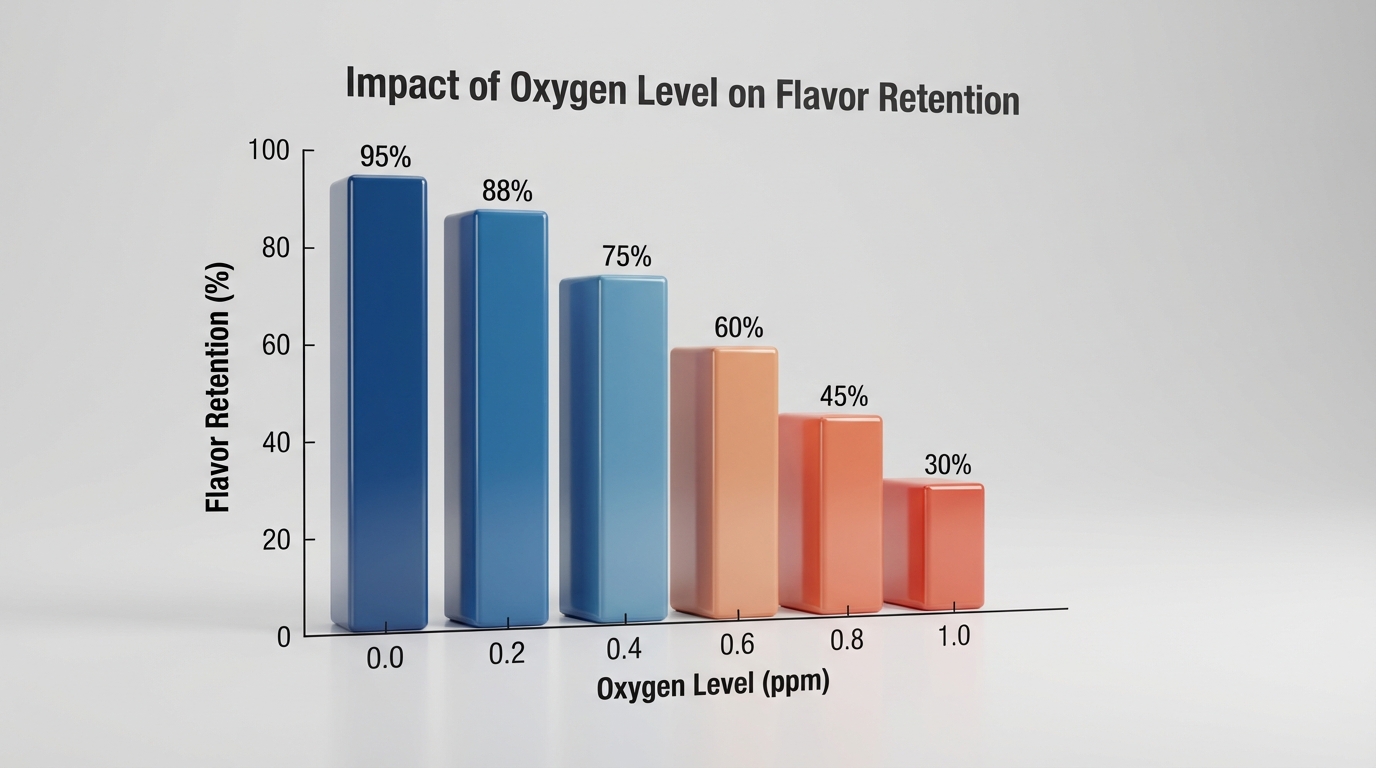
Research indicates that flavor degradation slows down exponentially once the atmosphere inside the bag reaches 2% oxygen or lower. While 0% is the goal, reaching 1% to 2% provides a massive safety buffer for long-term retail display.
Levels above 5% lead to rapid staling.
Ground coffee requires even lower targets than whole beans.
Most newideapack machines can reach <1% consistently.
Believe it or not.
Even a 1% difference in oxygen can mean the difference between a satisfied customer and a return.
Key Takeaway: Setting a target of <2% oxygen is the benchmark for professional-grade coffee freshness.
Coffee Type
Target O2 Level
Recommended Shelf Life
Whole Bean
< 3%
12 Months
Ground Coffee
< 1%
6 Months
These targets provide a clear roadmap for your quality control team to follow during every production shift.
How can you measure residual oxygen levels fast?
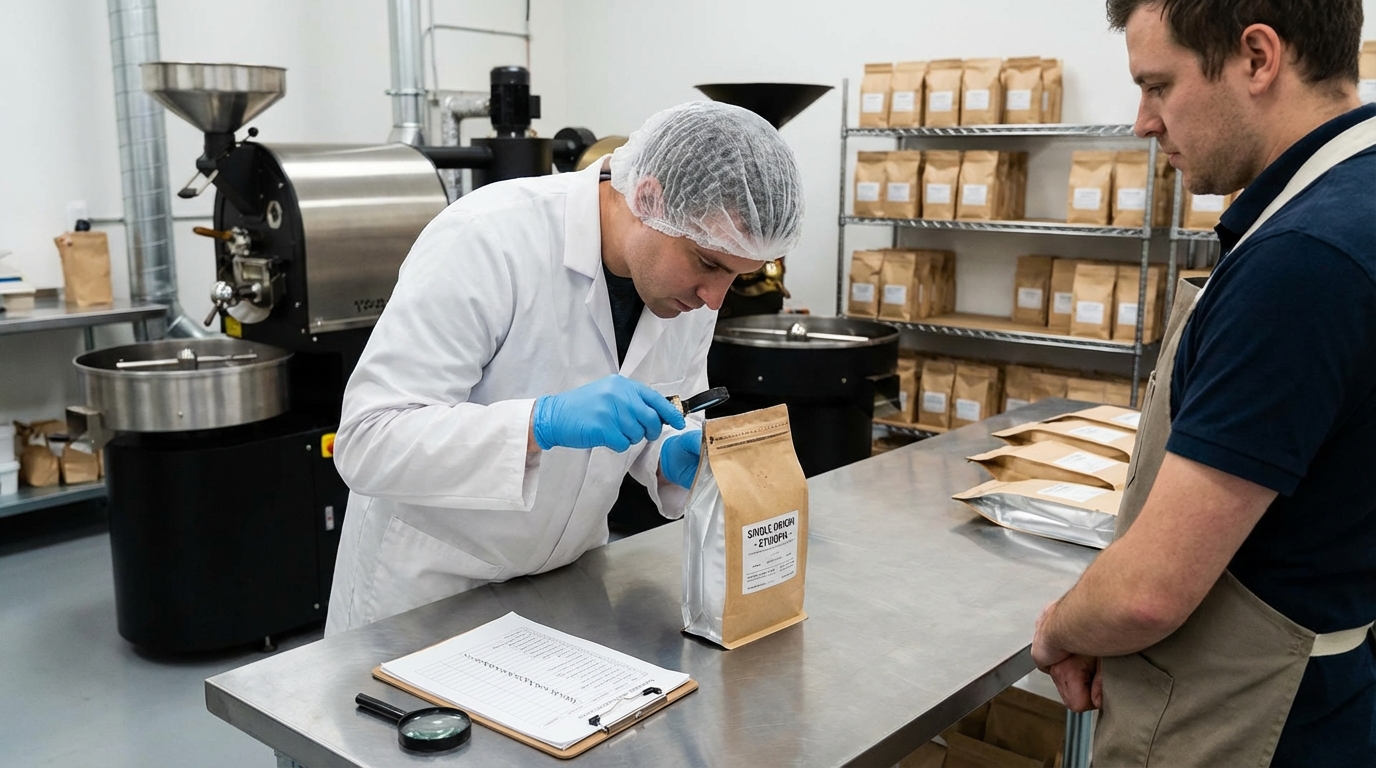
You can measure these levels quickly by using a handheld headspace analyzer that pierces the bag and provides a digital reading in seconds. Tracking Residual oxygen levels with this equipment allows you to verify your gas flush settings without slowing down your packaging speed.
Which tools are best for measurement?
Electrochemical sensors and laser-based analyzers are the most common tools used in modern coffee facilities for their speed and accuracy. You might prefer a non-destructive laser system if you want to test bags without wasting product or packaging material.
Handheld units are portable for spot checks.
Benchtop models offer higher precision for R&D.
In-line sensors provide constant data during the run.
The best part?
Modern analyzers are so simple to use that any member of your team can become a QC expert.
Key Takeaway: Fast, accurate measurement tools are essential for catching equipment drifts before they ruin an entire batch.
Tool Type
Speed
Accuracy
Handheld
10 Seconds
+/- 0.1%
In-line
Real-time
+/- 0.05%
Investing in high-quality measurement tools is a small price to pay for the peace of mind they provide.
Do residual oxygen levels vary by coffee roast?
Yes, darker roasts are much more sensitive to oxygen because the roasting process makes the beans more porous and pushes oils to the surface. These oils are a magnet for Residual oxygen levels, making dark roasts prone to rancidity much faster than denser light roasts.
Why do dark roasts stale faster?
The cellular structure of a dark roast bean is effectively “broken,” creating more surface area for oxygen to interact with internal compounds. If you are packing dark roasts, your margin for error with gas flushing is much smaller than with other varieties.
Surface oils oxidize almost instantly in air.
Light roasts are denser and resist gas penetration.
Medium roasts require a balanced approach to flushing.
Check this out.
If you don’t adjust your packaging protocol for dark roasts, you may find your most popular blends going stale prematurely.
Key Takeaway: Roasters must customize their oxygen targets based on the specific roast profile to ensure consistent freshness across the brand.
Roast Level
Porosity
Oxidation Risk
Light
Low
Moderate
Dark
High
Extreme
This roast-specific data helps you prioritize your quality control efforts where they are needed most.
Can VFFS systems lower residual oxygen levels?
A high-performance VFFS packaging machine can significantly lower these levels by integrating nitrogen flushing directly into the bag-forming process. This automation replaces the air with an inert gas, ensuring Residual oxygen levels stay well below the 2% danger zone.
How does nitrogen flushing work?
The machine injects food-grade nitrogen into the bag as it is being filled, which physically pushes the heavier oxygen molecules out of the package. Because the bag is sealed immediately after flushing, the oxygen has no chance to re-enter.
Replaces ambient air with pure nitrogen gas.
Controlled timing ensures 100% gas coverage.
Sealed jaws prevent air leaks during the process.
But wait.
The efficiency of this system depends entirely on the precision of the gas flow controls within your newideapack equipment.
Key Takeaway: Automating the atmosphere control with VFFS technology is the most reliable way to scale production without sacrificing quality.
System Component
Role in O2 Control
Benefit
Gas Lance
Injects Nitrogen
Displaces Oxygen
Sealing Jaws
Creates Airtight Bond
Prevents Re-entry
Using a VFFS system allows you to maintain professional standards at speeds that manual packing simply cannot match.
How does nitrogen affect residual oxygen levels?
Nitrogen affects these levels by acting as a flavor-neutral “blanket” that occupies the space where oxygen would normally settle. By maintaining low Residual oxygen levels with nitrogen, you essentially “pause” the aging process of the coffee beans.
Is nitrogen safe for coffee flavor?
Nitrogen is an inert gas that does not react with coffee oils, meaning it won’t change the taste, color, or texture of your product. It is a natural part of the air we breathe and is the gold standard for Modified Atmosphere Packaging (MAP).
It is 100% food-safe and odorless.
Nitrogen prevents the bag from collapsing under pressure.
It is cost-effective for high-volume roasters.
The best part?
It also provides a “cushion” inside the bag that protects whole beans from breaking during shipping and handling.
Key Takeaway: Nitrogen is the ultimate tool for displacing oxygen because it is effective, safe, and has zero impact on the coffee’s flavor profile.
Gas Property
Nitrogen (N2)
Oxygen (O2)
Reactivity
Zero (Inert)
High (Oxidizer)
Food Safety
Excellent
Causes Spoilage
Replacing oxygen with nitrogen is a simple chemical swap that yields massive benefits for your product’s shelf life.
Why monitor residual oxygen levels in drip bags?
You must monitor these levels in drip bags because the ground coffee inside has a massive surface area that stales ten times faster than whole beans. Our Pre-made Bag Packaging Machine is designed to handle these small formats while keeping Residual oxygen levels at ultra-low percentages.
Why is ground coffee so sensitive?
When you grind coffee, you break the bean into thousands of tiny particles, each one exposed to the air and ready to oxidize. If you don’t control the oxygen in a drip bag, the coffee will taste bitter and metallic within just a few weeks of production.
Increased surface area accelerates chemical reactions.
Drip bags have very little headspace for error.
Ultrasonic sealing ensures no oxygen enters through the mesh.
You see.
The smaller the package, the more critical it is that your oxygen monitoring is absolutely precise.
Key Takeaway: Specialty drip bags require the highest level of oxygen control to preserve the delicate notes that make portable coffee worth the price.
Format
Staling Speed
Monitoring Priority
Whole Bean
Moderate
High
Drip Bag
Extreme
Critical
This comparison highlights why roasters moving into the drip bag market must invest in superior gas control technology.
Do residual oxygen levels impact packaging ROI?
Low oxygen levels have a direct impact on your Return on Investment (ROI) by reducing product waste and increasing the value of your brand. Consistent Residual oxygen levels allow you to sell to distant markets and larger retailers who demand long shelf-life guarantees.
Can freshness improve your bottom line?
When your coffee stays fresh for 12 months instead of 3, you can manage inventory more effectively and reduce the number of credits issued for stale stock. Freshness is the most important factor in customer retention for specialty coffee brands.
Longer shelf life opens up export opportunities.
Reduced returns increase overall profitability.
Brand loyalty is built on consistent quality.
Think about it.
A single bad experience with stale coffee can cost you a customer’s lifetime value, which far exceeds the cost of a monitoring system.
Key Takeaway: Monitoring oxygen is not just a quality control step; it is a financial strategy to protect your profit margins.
ROI Factor
Without O2 Control
With O2 Control
Shelf Life
3 Months
12+ Months
Customer Churn
High
Low
The data confirms that atmosphere management is one of the most profitable investments a coffee business can make.
How to manage residual oxygen levels every day?
Managing these levels every day requires a disciplined routine of testing the first and last bags of every production run to ensure consistency. Keeping Residual oxygen levels stable is an ongoing process that involves monitoring your nitrogen supply and your machine’s sealing integrity.
What should your daily routine look like?
Your team should record O2 levels in a logbook for every batch, allowing you to spot trends before they become failures. If you see levels creeping up, it’s a signal that your gas flow or sealing temperature needs immediate adjustment.
Test samples at the start, middle, and end of runs.
Calibrate your sensors daily for maximum accuracy.
Check nitrogen tank levels before starting production.
But here is the thing.
Consistency is more important than perfection; a stable 2% is better than a 1% that occasionally jumps to 5%.
Key Takeaway: Daily management of oxygen levels turns freshness from a goal into a measurable, repeatable success for your business.
Daily Task
Frequency
Benefit
Sample Testing
Every Batch
Verifies Batch Quality
Machine Inspection
Every Shift
Prevents Seal Failure
A disciplined QC routine ensures that every bag leaving your facility meets the high standards your customers expect.
*
Ensuring your coffee stays fresh is a scientific challenge that requires the right combination of technology and discipline. By mastering the control of residual oxygen, you protect your hard work and ensure your customers always enjoy the perfect cup. From selecting the right VFFS machines to implementing a daily testing routine, every step you take to lower O2 levels is an investment in your brand’s future. At newideapack, we are committed to providing the precision-engineered solutions you need to lead the market in quality.
*
FAQ
Can I achieve zero percent oxygen in my coffee bags? It is virtually impossible to reach absolute zero in a commercial setting, but reaching 0.5% is achievable with high-end equipment. For most specialty roasters, keeping levels under 2% is more than enough to stop staling.
What’s the best way to test for leaks in my packaging? The “bubble test” is a simple method where you submerge a pressurized bag in water to look for escaping air. For more precision, you can use a vacuum decay tester which measures pressure changes over time without destroying the bag.
How do I know if my nitrogen flush is working correctly? You must use a digital headspace analyzer to verify the internal atmosphere of your finished bags. If your readings are consistently above 3%, you likely need to increase your gas flow or adjust the timing on your machine.
Can I use a one-way valve to lower oxygen levels after sealing? No, a valve only allows CO2 to escape; it does not actively remove oxygen that was trapped during the sealing process. You must remove the oxygen before the bag is sealed to ensure the product stays fresh.
How often should I calibrate my oxygen monitoring tools? You should calibrate your handheld sensors at the beginning of every production day using ambient air as a reference point. This ensures that your readings are accurate and that your quality control data is reliable.
Sales Pitch Component
Don’t let oxygen steal your flavor
Contact us today to discover how our advanced packaging systems can transform your coffee business.