How to Choose Your First Coffee Packaging Machine to Save 80% Labor Costs & Boost ROI
2026年3月6日 by newideapack
To choose your first coffee packaging machine, you must evaluate your current production volume, preferred bag styles, and long-term growth goals to find a system that balances speed with weighing precision.
You have probably spent long nights hand-filling bags, only to find that your weights are inconsistent and your seals look unprofessional. It is incredibly frustrating to see your premium beans lose their aroma because manual packaging simply cannot compete with the speed of a growing market. At New Idea Pack, we believe you deserve a better way to scale your passion without burning out. Transitioning to your first coffee packaging machine is the ultimate solution to reclaim your time and ensure every bag on the shelf represents your brand perfectly.
Why do you need your first coffee packaging machine?
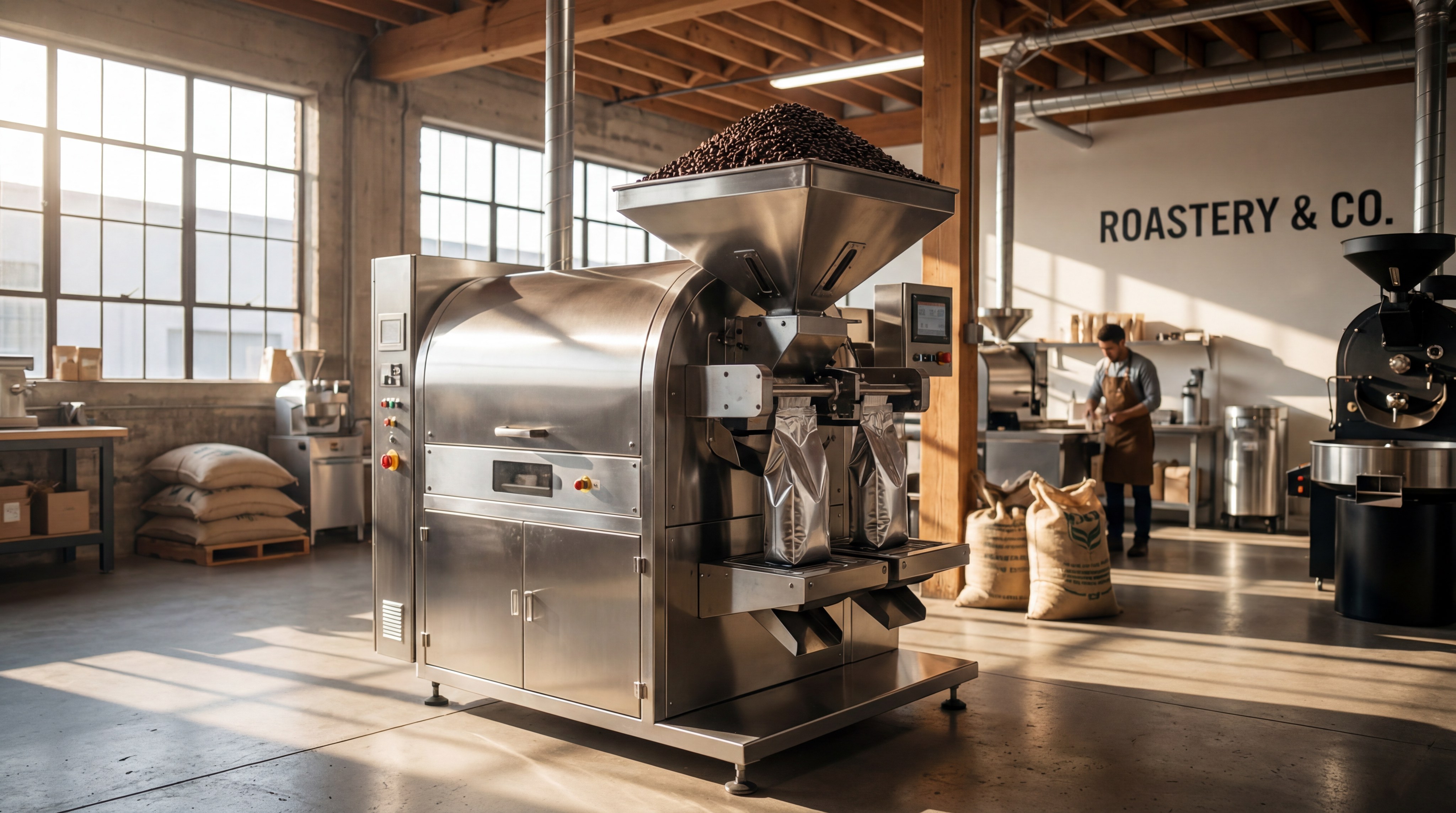
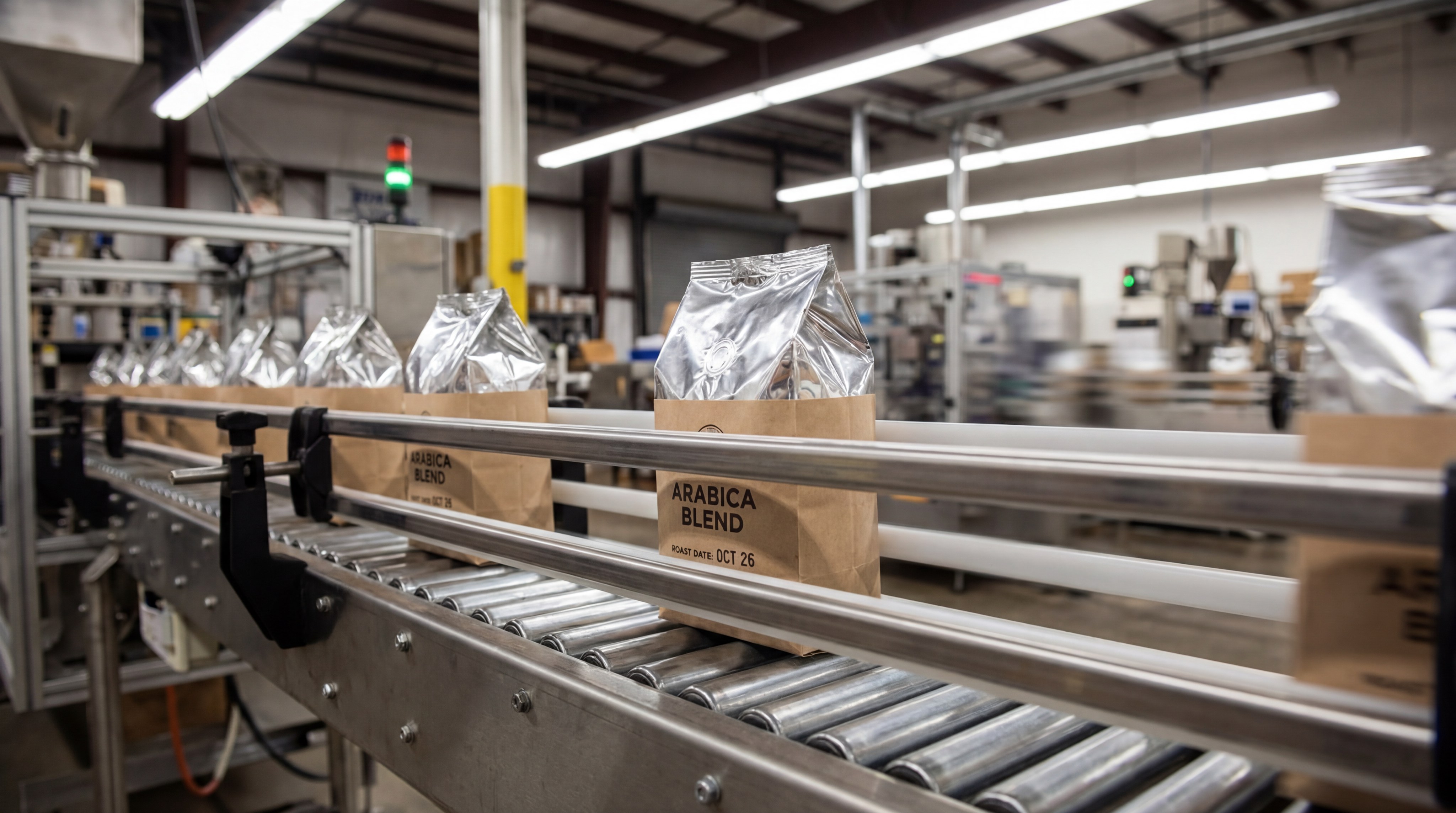
Investing in your first coffee packaging machine is the most effective way to guarantee consistency, professional aesthetics, and a significant reduction in labor costs. Automation allows you to move from packaging five bags a minute to fifty, which is essential for fulfilling wholesale orders.
You will find that manual errors, such as spilled beans or weak seals, disappear once a dedicated system takes over. This transition marks the moment your roastery moves from a hobbyist operation to a serious commercial contender.
Scaling your output
Are you ready to grow?
Higher bags-per-minute (BPM) output.
Reduced product giveaway through precision.
Elimination of repetitive manual strain.
The reality is that your team can only work so fast before quality begins to dip. Implementing your first coffee packaging machine ensures that your throughput remains steady even during peak holiday seasons.
Professional brand image
Think about it.
Hermetic seals that prevent oxygen ingress.
Perfectly aligned labels and degassing valves.
Consistent bag shapes that look great on retail shelves.
Customers judge your coffee by its cover before they ever taste the brew. A machine-sealed bag tells them you are a professional brand that cares about freshness.
Comparison Factor
Manual Packaging
Automated Machine
Bags Per Minute
3 – 5 BPM
30 – 60 BPM
Weight Accuracy
+/- 5.0g
+/- 0.2g
Seal Integrity
Variable
Industrial Strength
Switching to automation typically reduces labor requirements by over 40% while doubling your daily capacity.
Key Takeaway: Moving to an automated system is not just about speed; it is about providing the consistency your customers and retail partners demand.
What type of machine fits your business model?
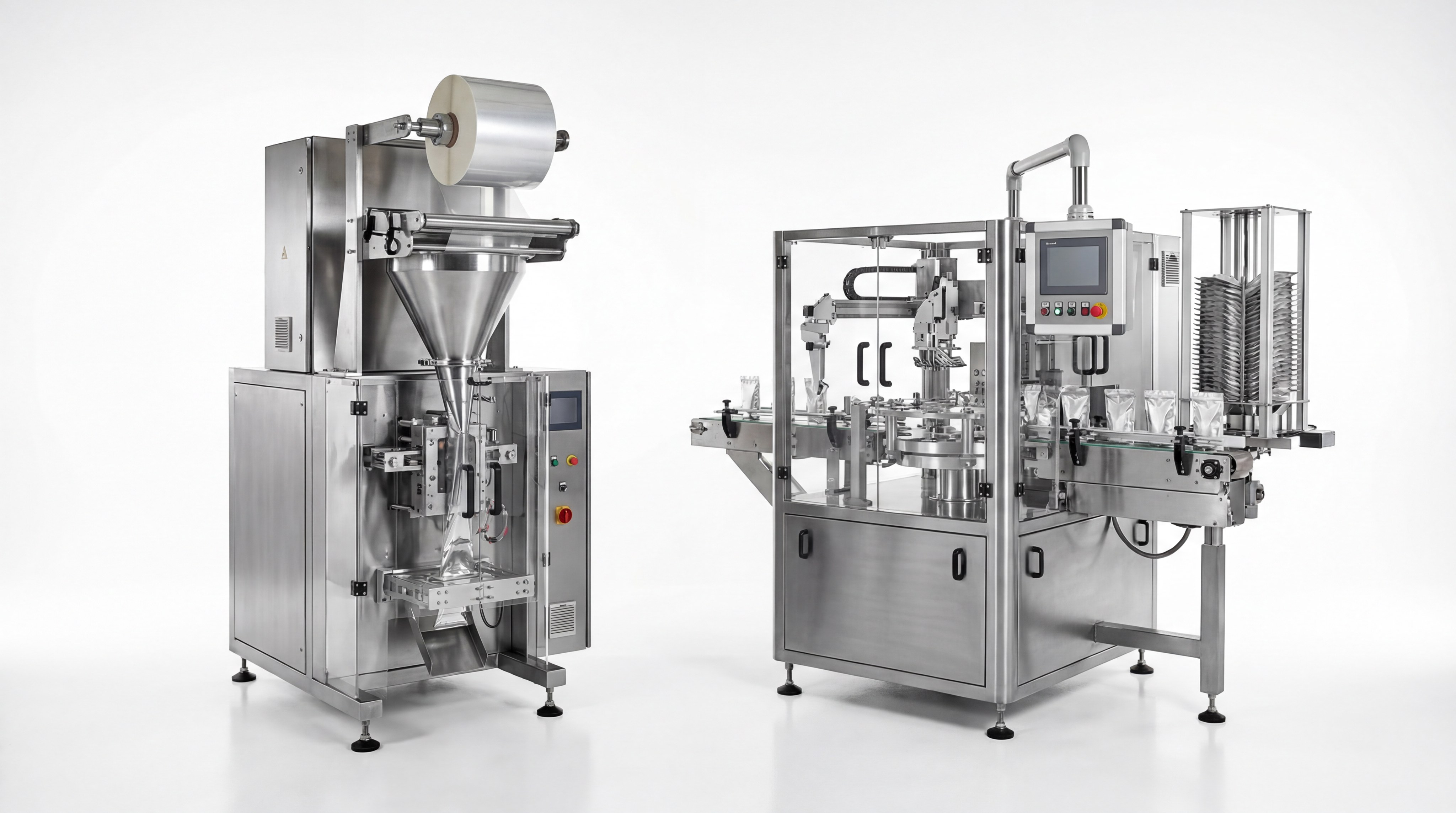
Your specific business model determines whether you need a vertical form-fill-seal system, a pre-made bag loader, or a specialized drip bag machine. Choosing your first coffee packaging machine requires a clear understanding of your primary product—whether it is whole beans, ground coffee, or single-serve filters.
If you focus on bulk retail, a VFFS system is usually the best entry point. However, if you are targeting the premium gift market, a pre-made bag machine might be more suitable for luxury pouches.
Whole bean vs. ground coffee
But here’s the kicker.
Whole beans require a multi-head weigher for speed.
Ground coffee needs an auger filler to prevent dust.
Dual-purpose machines offer the most flexibility for startups.
The flow characteristics of your coffee dictate the dosing method. Ensuring your first coffee packaging machine has the right filler is the difference between a clean facility and a dusty mess.
Single-serve innovations
Is there a market for convenience?
Drip coffee bags are booming in urban markets.
Capsule filling offers high-margin opportunities.
Sachet machines are perfect for hotel amenities.
New Idea Pack specializes in these versatile formats. If you want to capture the “on-the-go” consumer, starting with a specialized single-serve machine is a smart strategic move.
Machine Category
Ideal Application
Typical Footprint
VFFS System
High-volume retail bags
Large vertical space
Pre-made Loader
Premium stand-up pouches
Medium floor space
Drip Bag Machine
Single-serve filters
Compact / All-in-one
Identifying your core product early prevents you from buying a machine that lacks the necessary specialized attachments.
Key Takeaway: Match the machine technology to your highest-selling product format to maximize your initial return on investment.
How does bag style influence your choice?
The bag style you choose dictates the mechanical requirements of your first coffee packaging machine, as different shapes require specific forming tubes or gripping arms. Whether you prefer the classic side-gusseted look or the modern stand-up pouch, New Idea Pack has a drip bag ultrasonic packaging machine or VFFS solution to fit.
Some machines are designed to be “multi-format,” but most perform best when optimized for one or two specific styles. You need to decide if you want to prioritize shelf stability or low material costs.
Roll film vs. pre-made bags
Let’s look at the numbers.
Roll film is significantly cheaper per unit.
Pre-made bags allow for complex zippers and shapes.
VFFS machines create the bag from the roll directly.
If your first coffee packaging machine uses roll film, you save on material costs but spend more on the initial machine setup. Pre-made bags are easier to handle for beginners but have a higher cost per pouch.
Visual shelf appeal
It gets better.
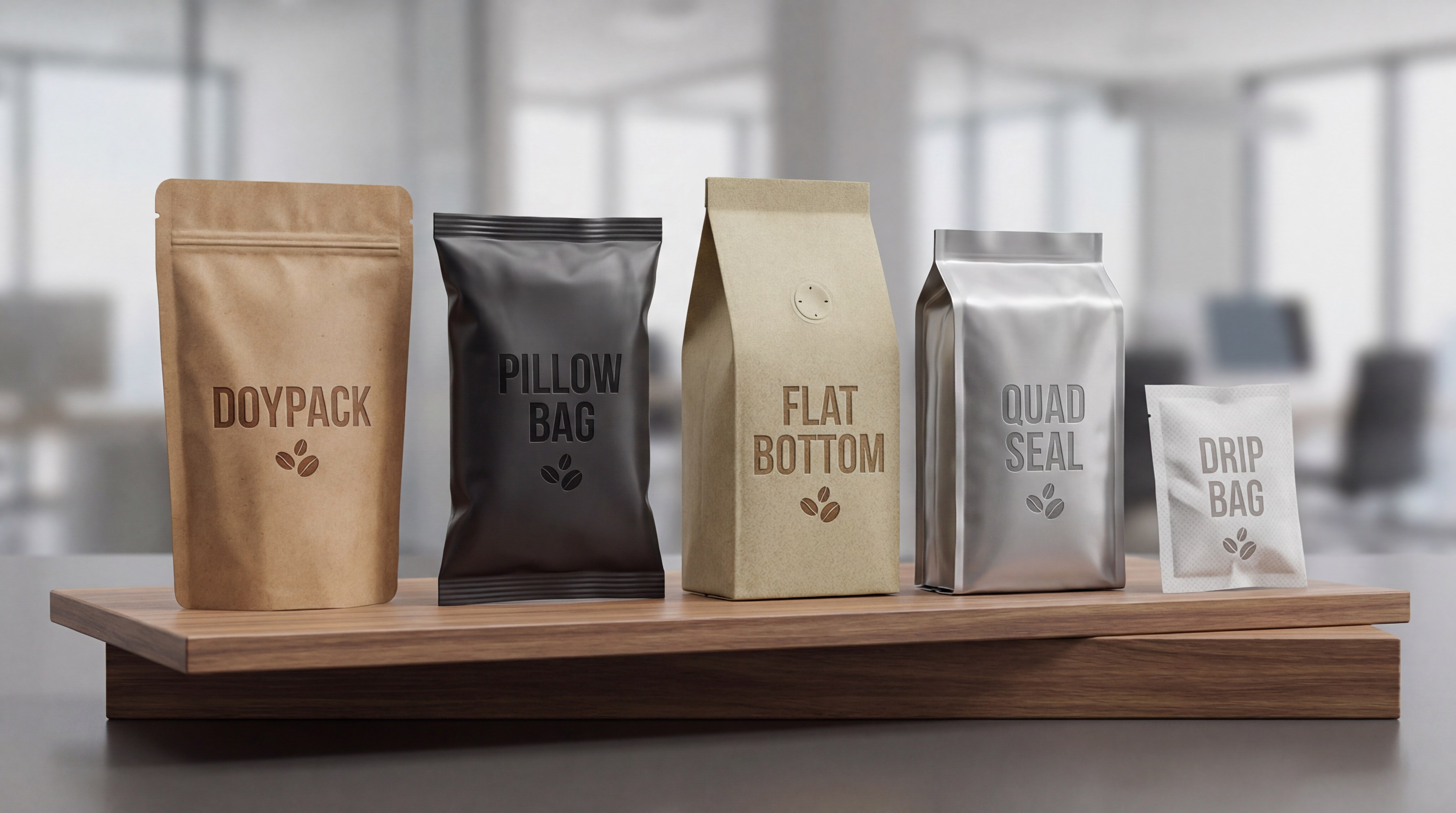
Flat bottom bags offer the best stability.
Pillow bags are cost-effective for bulk sales.
Quad-seal bags provide a premium, structured look.
Your machine must be able to handle the thickness and material type of your chosen bags. Some sustainable materials require special heat-sealing profiles to ensure a perfect bond.
Bag Style
Material Cost
Shelf Presence
Pillow Bag
Low
Basic
Stand-up Pouch
Moderate
High
Quad Seal
Moderate
Very High
Selecting the right bag style early ensures that your brand stands out in a crowded marketplace without exceeding your budget.
Key Takeaway: Your bag style is your brand’s physical handshake with the customer; choose a machine that makes that handshake firm and professional.
Is production speed a major factor?
Production speed is a critical metric because it determines your daily capacity and your ability to scale when a large wholesale client suddenly calls. When evaluating your first coffee packaging machine, you must distinguish between “rated speed” and “stable operating speed.”
A machine might be advertised at 60 bags per minute, but it may only run reliably at 45. You should always choose a system that meets your needs while running at roughly 70% of its maximum capacity.
Calculating your needs
How much coffee are you moving?
Total weekly volume in kilograms.
Number of different SKU changes per day.
Hours available for packaging staff.
If you are packaging 1,000kg a week, your first coffee packaging machine should be able to finish that work in a single shift. This frees up your team for other tasks like roasting or sales.
Balancing speed and quality
Don’t rush the process.
Faster speeds can lead to “weighing jitter.”
Nitrogen flushing needs time to displace oxygen.
Sealing jaws need a specific “dwell time” to cool.
Finding the “sweet spot” ensures your bags are sealed perfectly without slowing down your operations. High-speed machines are great, but stability is what actually saves you money.
Output Goal
Bags Per Shift (8hr)
Suggested Machine Speed
Small Roaster
2,000 – 5,000
15 – 25 BPM
Mid-Size Roaster
10,000 – 15,000
30 – 45 BPM
Industrial Scale
25,000+
60+ BPM
Analyze your current sales trajectory to ensure the machine you buy today won’t be a bottleneck twelve months from now.
Key Takeaway: Speed should follow stability; a machine that runs at a consistent medium pace is better than a fast machine that breaks down daily.
Should you consider VFFS technology?
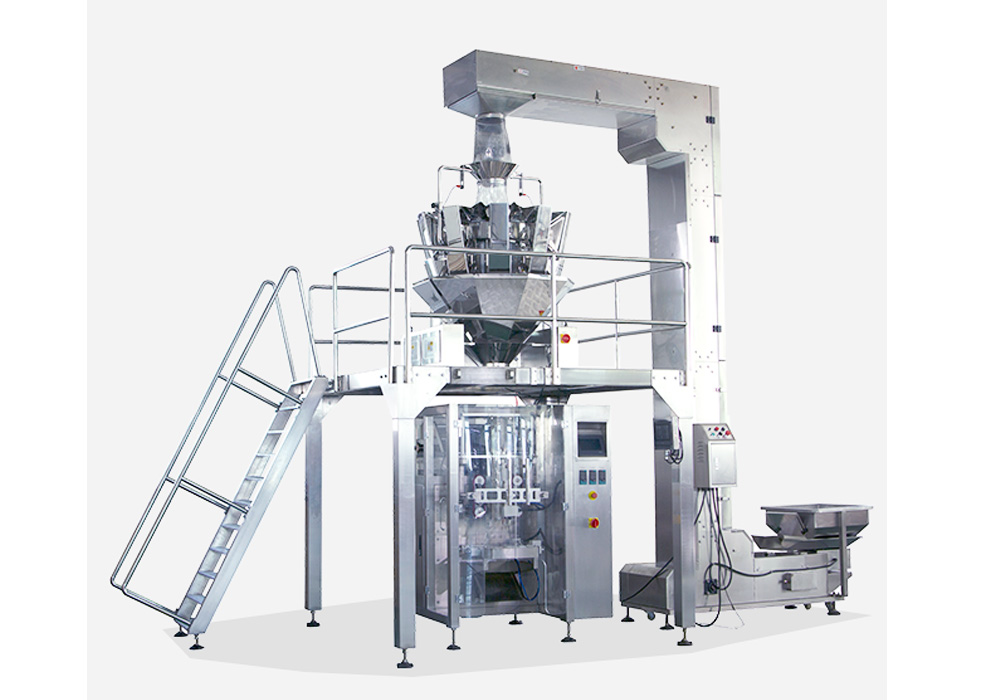
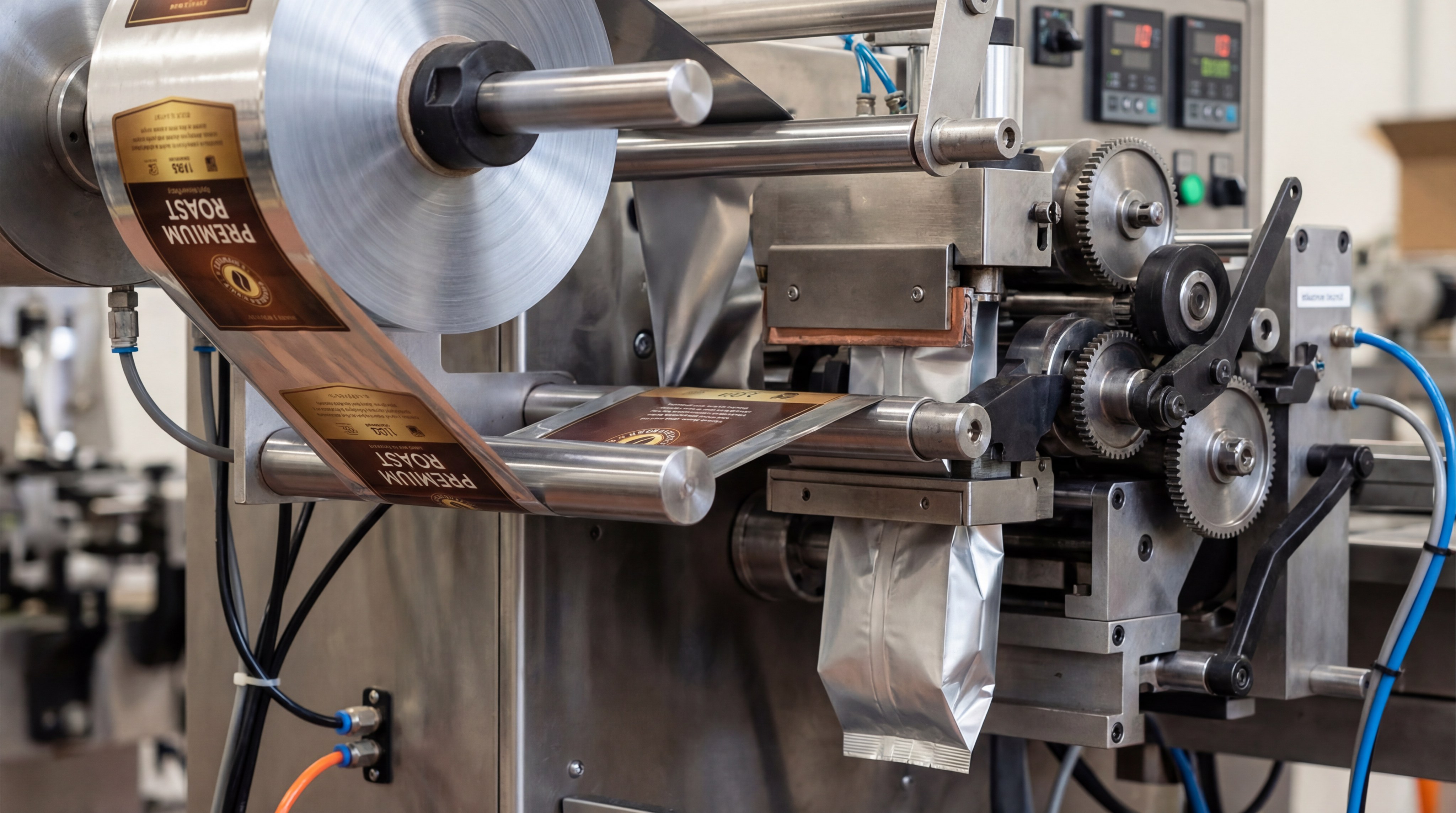
Vertical Form-Fill-Seal (VFFS) technology is often the most popular choice for a first coffee packaging machine due to its versatility and compact footprint. If you are looking for a high-performance VFFS packaging machine, this technology allows you to automate bag creation and filling in one vertical motion.
This system is ideal because it uses roll film, which is the most economical way to package coffee at scale. It effectively combines three machines into one single, efficient unit.
Vertical efficiency
Why go vertical?
Saves valuable floor space in small roasteries.
Gravity-fed filling is faster for beans.
Integrated printers can add roast dates on the fly.
Your first coffee packaging machine should maximize your available real estate. VFFS units are taller than they are wide, making them perfect for tight production corners.
Ease of operation
Believe it or not.
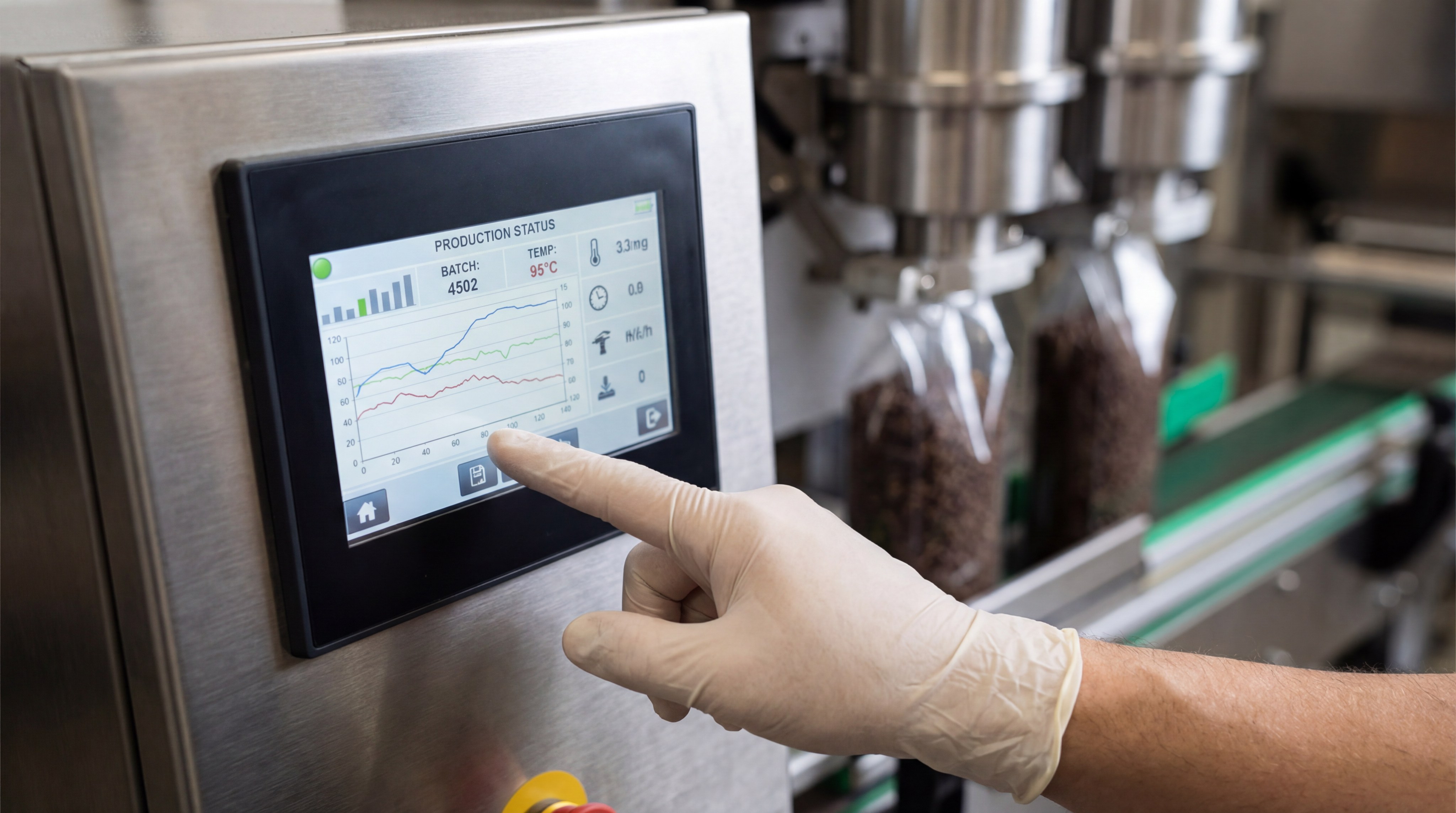
Modern PLC touchscreens make setup easy.
Tool-less changeovers for different bag widths.
Automatic sensors detect film alignment issues.
New Idea Pack designs VFFS machines with the user in mind. You do not need to be a mechanical engineer to produce perfect bags every single morning.
VFFS Benefit
Business Impact
User Experience
Roll Film Usage
30% lower material cost
Continuous running
Compact Design
Fits in 4sqm area
Easy to clean
Integrated Dosing
Higher accuracy
One control panel
VFFS technology remains the industry standard for a reason: it offers the best balance of cost, speed, and reliability for growing brands.
Key Takeaway: If your goal is the lowest cost-per-bag with the highest throughput, VFFS is almost always the correct technological path.
How important is filling accuracy?
Filling accuracy is arguably the most important technical factor because overfilling leads to “product giveaway” that eats directly into your profit margins. When configuring your first coffee packaging machine, you must decide between linear weighers, multi-head weighers, or auger fillers.
A high-quality weighing system can pay for itself in less than a year just by reducing the amount of “free” coffee you give to customers. Precision is the foundation of a profitable packaging line.
Multi-head weigher advantages
But here is the real secret.
Uses 10 to 14 “buckets” to find the perfect weight.
Achieves speeds that single-head scales cannot match.
Gentle on delicate whole beans to prevent breakage.
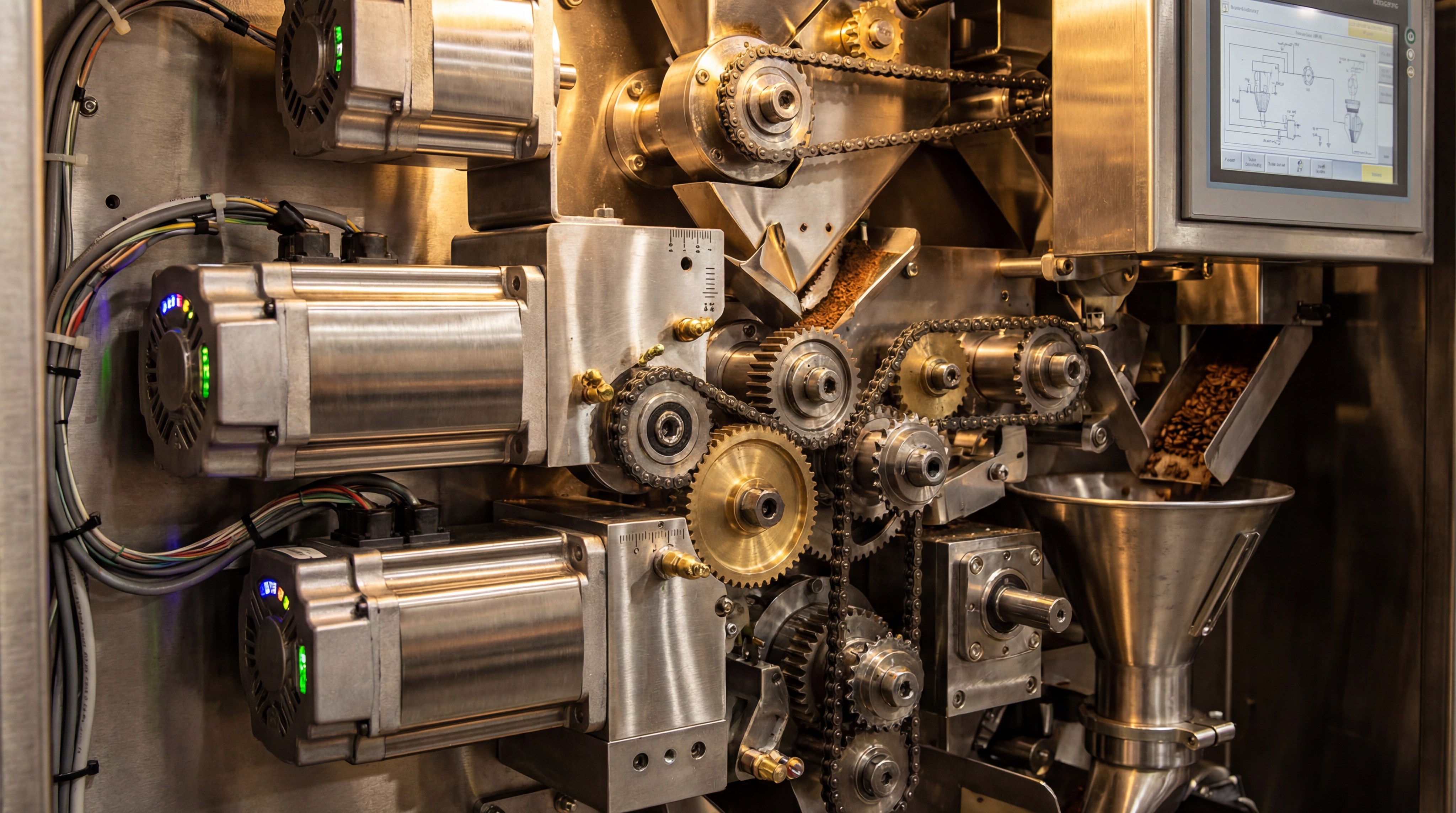
For whole beans, a multi-head weigher is the gold standard for your first coffee packaging machine. It uses advanced algorithms to combine different weights and hit your target exactly every time.
Auger fillers for grounds
Looking for a clean finish?
Specifically designed for fine powders.
Uses a screw-like motion to dose coffee.
Prevents dust from interfering with the bag seal.
If your primary product is ground coffee, an auger filler is non-negotiable. It ensures that the “fine” particles stay in the bag and don’t end up on your floors or in your sealing jaws.
Filling Technology
Accuracy
Best For
Multi-head Weigher
+/- 0.1g to 0.5g
Whole Bean
Linear Weigher
+/- 1.0g to 2.0g
Budget-conscious whole bean
Auger Filler
+/- 0.5%
Ground Coffee
Investing in high-precision weighing components ensures your business remains profitable and compliant with weights and measures regulations.
Key Takeaway: Accuracy is not an extra feature; it is a financial necessity that protects your margins on every single bag sold.
Which technical features are essential?
The technical features you select, such as nitrogen flushing and degassing valve applicators, are what will keep your coffee fresh on the shelf for months. Your first coffee packaging machine should be equipped with a high-speed multilane stick pack machine capability or VFFS features that prioritize aroma retention.
Without these features, specialty coffee loses its unique flavor profile within weeks. You want your customers to experience that “freshly roasted” smell every time they open a pouch.
Nitrogen gas flushing
How do you stop time?
Replaces oxygen with inert nitrogen gas.
Dramatically extends the shelf life of the beans.
Prevents the oxidation of delicate coffee oils.
By adding a nitrogen system to your first coffee packaging machine, you can expand your distribution reach. This allows your coffee to travel further and stay in retail stores longer without going stale.
Degassing valve applicators
Don’t let it blow!
Allows CO2 to escape without letting air in.
Prevents bags from bloating or bursting.
Vital for freshly roasted coffee packaged immediately.
A one-way valve is the hallmark of premium coffee. Most modern machines from New Idea Pack can be fitted with automatic valve applicators that work seamlessly at high speeds.
Essential Feature
Primary Function
Consumer Benefit
Nitrogen Flush
Removes O2
Long-lasting freshness
One-Way Valve
Releases CO2
Prevents bag bloat
Date Printer
Tracks batches
Batch transparency
Prioritizing these freshness features allows you to charge a premium price because the quality of the coffee remains protected until consumption.
Key Takeaway: Technical features like nitrogen flushing and valves are the “insurance policy” for your coffee’s flavor and your brand’s reputation.
How do you set a realistic budget?
Setting a budget for your first coffee packaging machine involves calculating the total cost of ownership, including the machine price, shipping, installation, and future maintenance. You should view this not as an expense, but as a capital investment that will pay for itself through labor savings.
A cheaper machine might save you money today, but it could cost you thousands in downtime and lost production tomorrow. Quality construction is always the better financial path in the long run.
Calculating the ROI
Think about the future.
Savings in hourly labor costs.
Reduced product waste from overfilling.
Ability to take on larger wholesale contracts.
Most of our clients find that their first coffee packaging machine pays for itself within 12 to 18 months. When you calculate the ROI, the true cost of staying manual becomes painfully clear.
Hidden costs to consider
Watch out for these.
Import duties and international shipping.
Specialized electrical or air compressor needs.
Annual spare parts and wear-item budget.
New Idea Pack provides transparent pricing and engineering support to ensure there are no surprises. We help you plan for the “full picture” of automated production.
Budget Tier
Typical Features
Ideal For
Entry Level
Semi-auto / Single head
Startups / Lab testing
Mid-Range
Fully auto VFFS
Scaling Roasteries
Premium
Multi-lane / High BPM
Industrial production
Setting a realistic budget ensures you get a machine that is robust enough to handle your growth without breaking the bank.
Key Takeaway: Invest in the best machine you can afford; the reliability of a high-quality system is the most valuable asset in your roastery.
What maintenance routines are required?
Maintaining your first coffee packaging machine is surprisingly simple if you follow a disciplined daily, weekly, and monthly cleaning schedule. Selecting a pre-made bag packaging machine or VFFS system with easy-access parts makes this process even faster for your staff.
Coffee oils and dust are the natural enemies of sensors and sealing jaws. A clean machine is a machine that runs without unexpected stoppages.
Daily cleaning habits
Do it every shift.
Wipe down sealing jaws to remove buildup.
Clean sensors to ensure accurate bag detection.
Vacuum coffee dust from the electrical cabinet.
Your first coffee packaging machine should be as clean at 5:00 PM as it was at 8:00 AM. This prevents the “sticky” buildup that causes film jams or poor seals.
Weekly and monthly checks
Stay ahead of the curve.
Lubricate moving joints and chains.
Check heating elements for consistent temp.
Inspect suction cups and belts for wear.
Bucket brigades like “keep it running” apply here—proactive maintenance prevents 90% of all mechanical failures. Training your team to listen for “new sounds” can save you from a costly repair.
Maintenance Task
Frequency
Estimated Time
Seal Jaw Clean
Every Shift
10 Minutes
Lubrication
Weekly
20 Minutes
Deep Inspection
Monthly
1 Hour
Establishing a strict maintenance log ensures that your machine retains its value and performance for many years to come.
Key Takeaway: Fifteen minutes of daily maintenance is the most effective way to avoid fifteen hours of catastrophic downtime.
How do you choose a reliable manufacturer?
Choosing a manufacturer for your first coffee packaging machine requires vetting their engineering expertise, their after-sales support, and their history in the coffee industry. New Idea Pack has over 18 years of experience, serving more than 500 customers in over 80 countries worldwide.
You want a partner who provides “engineer-to-engineer” connections, allowing your technical team to speak directly with the designers. This level of support is invaluable when you are first learning the system.
Global trust and traceability
Verify the claims.
100% component traceability for every part.
International certifications (CE, ISO, SGS).
Real-world case studies with coffee leaders.
A reliable manufacturer will offer you a “Factory Acceptance Test” (FAT) before your first coffee packaging machine even leaves the factory. This ensures it is tuned exactly to your specific coffee and bag material.
After-sales support network
Don’t be left alone.
Remote diagnostic capabilities via the internet.
Fast shipping for critical wear parts.
Multi-language support for global operations.
New Idea Pack doesn’t just sell you a machine; we deliver stability. We provide the technical deep-dive and training required to make your first step into automation a complete success.
Selection Criteria
What to Look For
Why It Matters
Experience
15+ Years
Proven longevity
Support
Direct Engineer Access
Faster repairs
Testing
Sample Video/FAT
Guaranteed compatibility
Choosing the right manufacturer is the final piece of the puzzle, ensuring your roasting business has the backing it needs to reach the next level.
Key Takeaway: Your machine is only as good as the company that stands behind it; prioritize support and industry reputation over the lowest price.
Conclusion
Taking the step to purchase your first coffee packaging machine is a transformative moment for any coffee brand. It marks the transition from manual labor to scalable manufacturing, allowing you to focus on what you do best: roasting incredible coffee. We have shown you how to navigate the complexities of machine types, bag styles, and technical features to find the perfect fit for your roastery.
At New Idea Pack, we are dedicated to pioneering the future of packaging automation with precision and sustainability. We don’t just sell machinery; we deliver the stability and growth potential that your coffee business deserves.
Can I use the same machine for different coffee bag sizes? Yes, you can. Most VFFS machines allow for “forming tube” changes that let you switch from 250g bags to 1kg bags, though it may require a few minutes of mechanical adjustment.
How do I know if my coffee needs nitrogen flushing? If you plan to sell your coffee in grocery stores or ship it internationally, nitrogen flushing is essential. It removes the oxygen that causes stale flavors and rancid oils.
What is the best way to package ground coffee without a mess? An auger filler is the best dosing method for ground coffee. It uses a contained screw mechanism that prevents fine coffee dust from blowing into the air and onto the bag seals.
How long does it typically take to set up a new machine? Most standard machines can be installed and calibrated in 1 to 2 days. This includes the mechanical setup, electrical connections, and training for your staff.
Can I package compostable or eco-friendly films? Absolutely. You just need to ensure your machine has the correct “sealing profile” and temperature controls, as sustainable materials often have a narrower melting window than plastic.
Sales Pitch Component
If you are ready to stop hand-bagging and start scaling your brand with professional efficiency
please contact us today for a custom solution. Let’s build your legacy together.