How to Choose the Best Coffee Bean Weighing Machine: 5 Proven Ways to Skyrocket Roastery Profits
2026年2月24日 by newideapack
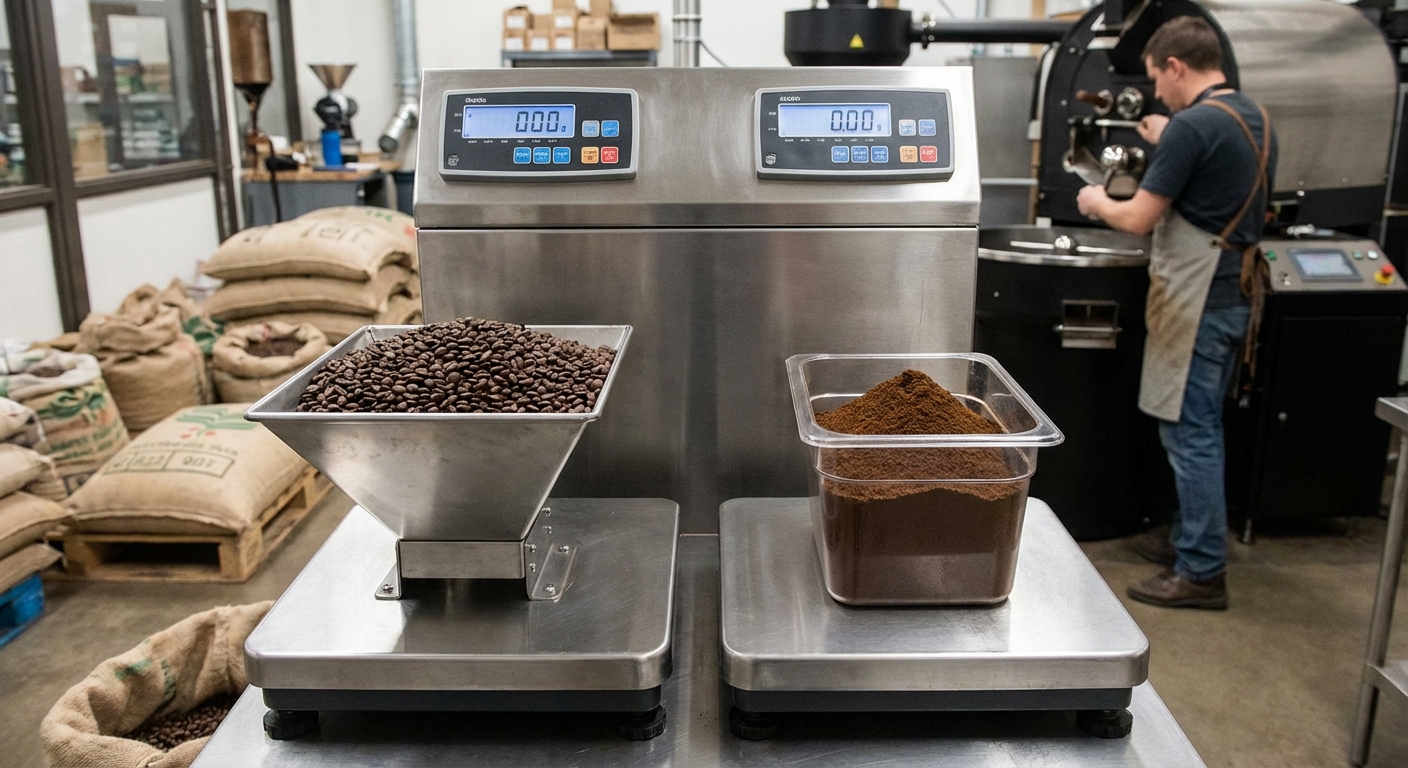
The best weighing solution for your roastery depends on your production scale, as linear models favor small-batch simplicity while multi-head units dominate high-volume speed. You spend countless hours perfecting your roast profiles and sourcing the finest beans from across the globe. Yet, if your packaging line relies on manual scales or outdated equipment, you are watching your hard-earned profits disappear through product giveaway and shipping delays. It is truly frustrating to see premium coffee wasted or customers waiting because your process hit a bottleneck. By integrating a professional Coffee bean weighing machine, you can finally bridge the gap between artisan quality and industrial efficiency.
A linear Coffee bean weighing machine is a vibratory-fed system that dispenses product into a weigh bucket in a straight line, prioritizing simplicity and gentle handling. This equipment is the reliable workhorse for roasteries that need high accuracy without the high price tag of industrial-scale combination systems.
Think about it: Linear systems use vibrating pans to move beans from a bulk hopper into one or more weighing buckets sequentially. It is a straightforward process where the machine slows down as it nears the target weight to ensure a “fine feed” accuracy that respects the bean’s physical integrity.
Why Choose Simple Linear Design?
But that’s not all. The modular and open design of these units makes them incredibly easy to clean and troubleshoot on the fly. You will find that minimal moving parts reduce mechanical wear and open access to all contact parts simplifies sanitation.
Key Takeaway: Linear machines provide a low-barrier entry for roasters looking to automate without overwhelming technical complexity.
Feature
Linear Weigher Capability
Primary Use
Small to mid-volume batches
Complexity
Low; easy maintenance
Best For
Uniform beans and ground coffee
How Does a Multi-head Coffee Bean Weighing Machine Work?
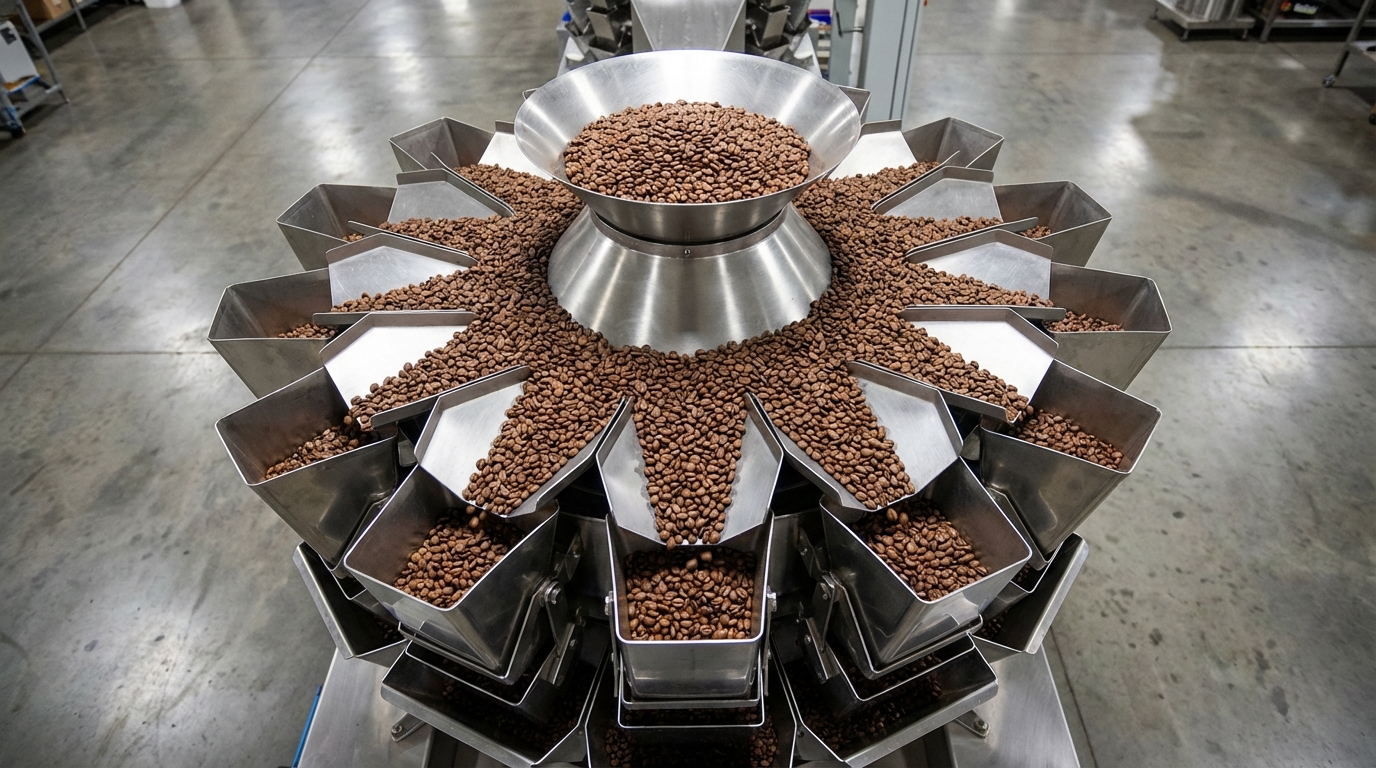
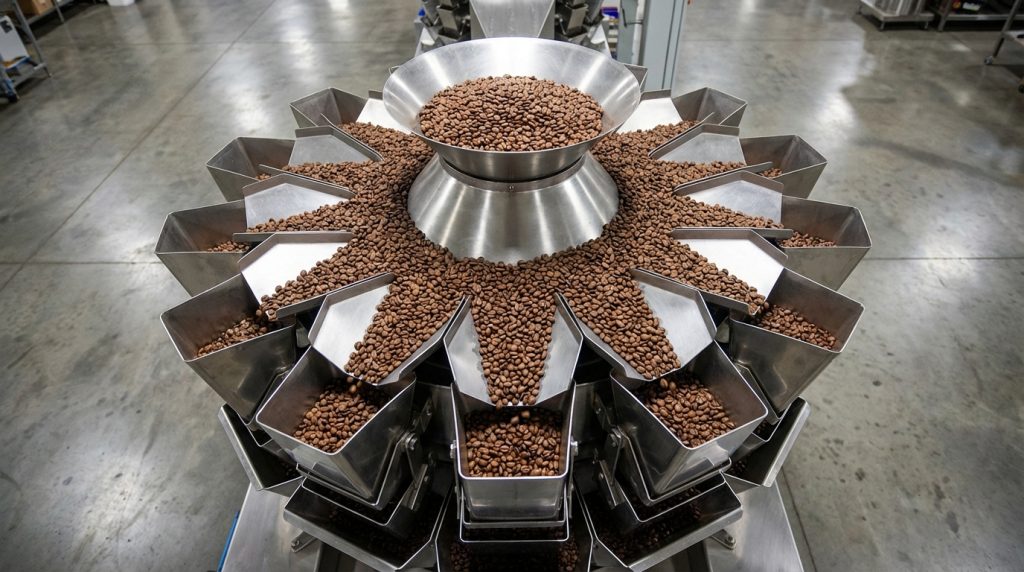
A multi-head Coffee bean weighing machine uses a complex algorithm to select the best combination of multiple weigh buckets to hit your target weight instantly. This technology identifies the optimal mix of portions from ten or more heads to achieve unmatched speed and precision.
Instead of relying on a single bucket to reach the weight, the system looks at all active hoppers simultaneously. Would you believe it? This allows for speeds exceeding 60-100 bags per minute with giveaway levels often below 0.5 grams per pack.
Why Is High-Speed Output Necessary?
Wait, there’s more. When you are moving into national distribution, your packaging line must keep pace with your industrial roaster. The high throughput of 60 to 200+ bags per minute ensures reduced labor costs through massive automation and seamless integration with bagging lines.
Key Takeaway: Multi-head weighers are essential for roasteries that have outgrown local markets and require industrial-scale efficiency.
Feature
Multi-head Weigher Capability
Primary Use
High-volume industrial lines
Precision
Extreme (±0.1g – 0.5g)
Speed
60 – 120+ weighments per minute
Which Coffee Bean Weighing Machine Offers More Accuracy?
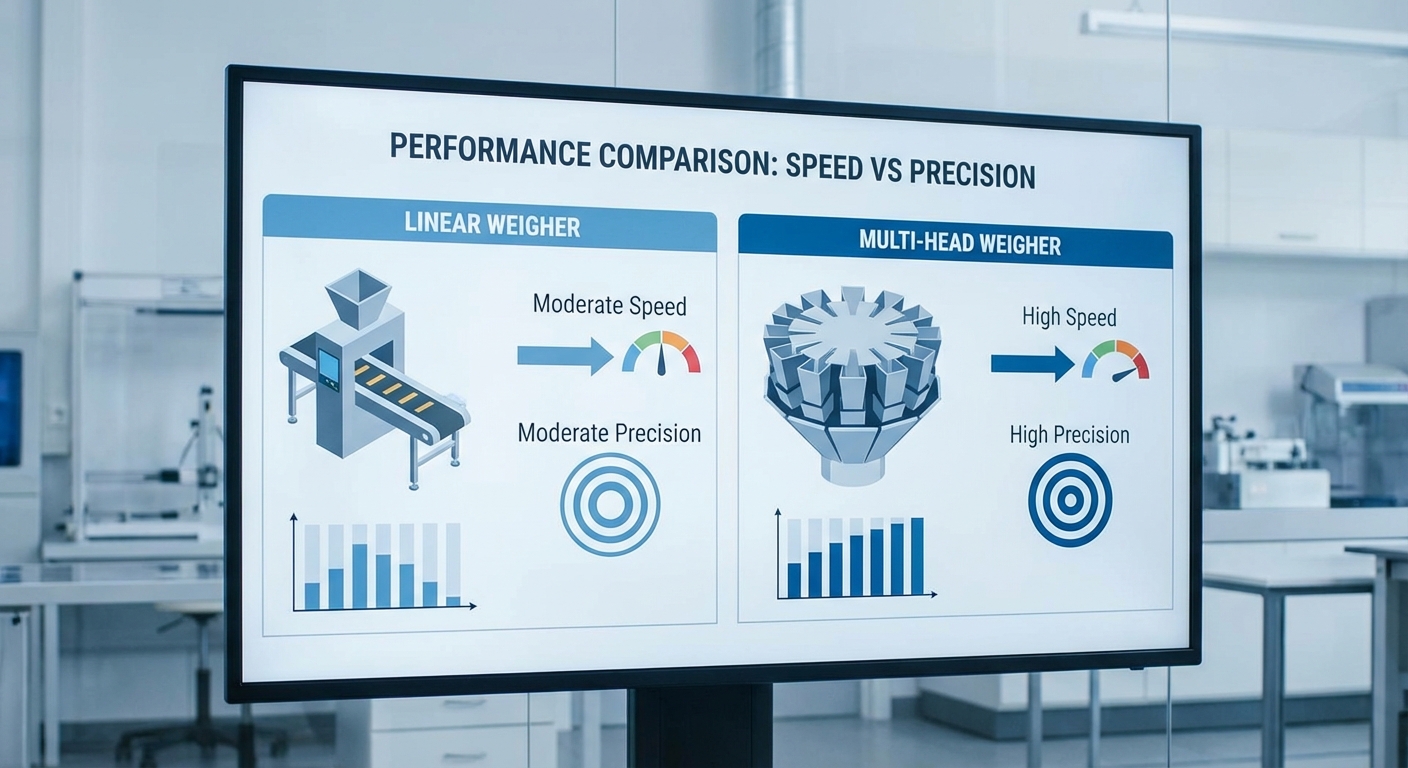
Selecting a Coffee bean weighing machine requires understanding that multi-head weighers generally outperform linear weighers in both speed and precision. While a linear system is accurate, it cannot match the mathematical perfection of combination weighing.
Look: A professional machine significantly improves accuracy by removing the variability of human judgment and the slow response times of manual scales. In the coffee industry, consistency is your greatest asset; customers expect every 12oz bag to contain exactly 12oz of beans.
How Much Is Giveaway Costing You?
The truth is: Giving away even 5 grams per bag can destroy your margins over a fiscal year. You can expect precision of ±0.1g with multi-head systems, providing real-time monitoring of total product usage to protect your bottom line.
Key Takeaway: Precision weighing ensures you get paid for every gram you roast, protecting your bottom line from invisible losses.
Precision Level
Manual Scaling
Professional Machine
Average Error
±5.0g – 10.0g
±0.1g – 1.0g
Giveaway Risk
High
Very Low
Regulatory Trust
Low
High
Can a Coffee Bean Weighing Machine Handle Fine Grounds?
A Coffee bean weighing machine can handle ground coffee effectively, but it requires specific vibratory settings to manage the less free-flowing nature of the product. Ground coffee tends to clump or create “bridges” in the hopper, which can lead to inconsistent fills.
Here is the kicker: Precision vibration is the secret to moving sticky grounds without causing clumping. By using adjustable frequency for different grinds and steeper hopper angles, you can keep your production line moving smoothly.
Is Dust Management an Issue?
The best part? Modern machines are often equipped with vacuum ports to keep your roastery clean. This ensures dust-proof electronics for long-term reliability and sealed hoppers to preserve that vital coffee aroma.
Key Takeaway: For roasters offering both whole and ground options, a versatile linear weigher with a powder-compatible kit is the ideal solution.
Coffee Type
Linear Suitability
Multi-head Suitability
Whole Bean
Excellent
Superior
Ground Coffee
Best (with Kit)
Good (Specialized)
Instant Coffee
Good
High (High Speed)
Why Should You Upgrade Your Coffee Bean Weighing Machine?
You should upgrade your Coffee bean weighing machine when labor costs begin to exceed the monthly lease of a new system or when you miss deadlines. Growth is a double-edged sword; if you can’t bag the coffee as fast as you roast it, you create a bottleneck.
Believe it or not: A slow packaging line is often the only thing standing between you and a major wholesale contract. New equipment provides the capacity to handle sudden e-commerce spikes and the scalability to add second shifts without hiring more staff.
Are Labor Costs Eating Your Profits?
Look: Manual weighing is a massive drain on resources that could be better spent on quality control. One machine can replace 2-4 manual operators and eliminates human error during long shifts.
Key Takeaway: Upgrading your weighing technology is a strategic investment that future-proofs your brand against sudden growth.
Daily Volume
Recommended Speed
Machine Choice
< 100 kg
10-15 BPM
Semi-Automatic
100 – 500 kg
15-30 BPM
Linear Weigher
> 500 kg
60+ BPM
Multi-head Weigher
Is a Coffee Bean Weighing Machine Hard to Maintain?
A Coffee bean weighing machine that is easiest to maintain is generally the linear weigher due to its simple mechanical design and fewer parts. However, modern high-end multi-head systems are now designed with “tool-less” removal features that make cleaning almost as fast.
Think about it: If you switch between flavored and non-flavored coffees, you need a machine that can be scrubbed in minutes. Linear weighers have fewer buckets to wash, and open-frame designs prevent dust buildup.
How Reliable Are Modern Components?
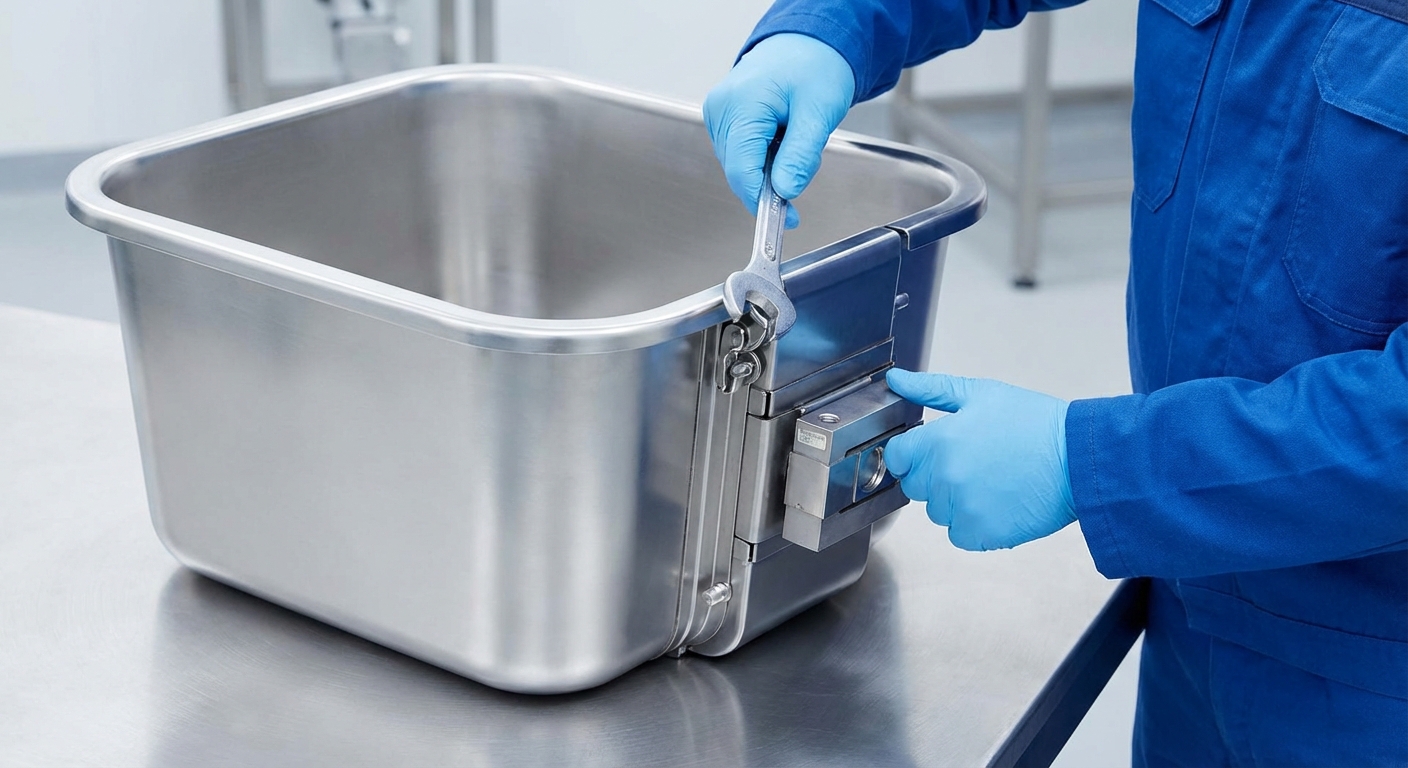
But that’s not all. Investing in high-quality materials from newideapack means fewer repairs and a longer lifespan for your equipment. We use industry-standard PLC controllers and stainless steel contact parts for food safety.
Key Takeaway: If you have limited technical staff, the simplicity of a linear weigher will save you significant headaches during daily clean-downs.
Maintenance Task
Linear Weigher
Multi-head Weigher
Full Washdown
15-20 Minutes
45-60 Minutes
Technical Skill
Low
Moderate
Common Parts
Vibrators/Loadcells
Actuators/Motors
Does the Coffee Bean Weighing Machine Protect Your Quality?
The Coffee bean weighing machine you choose must ensure that beans are not subjected to excessive drops or forces that chip the surface. Specialty roasters often work with varied bean densities that require this level of manual oversight and gentle transport.
Now: Light-roasted specialty beans are often more brittle and prone to physical damage during high-speed transport. Linear systems offer low drop heights and vibratory motion that is gentler than mechanical stirring.
Can You Change Products Quickly?
The truth is: Frequent product changes are the reality for artisan roasteries, and these systems are built for this. You get tool-less removal of weigh buckets and simple digital menus for quick profile swaps.
Key Takeaway: For ultra-premium beans where aesthetics and integrity are paramount, the gentle touch of a linear system is often better.
Bean Type
Handling Need
Best Fit
Micro-lots
High (Gentle)
Linear Weigher
Oily Dark Roasts
High (Anti-stick)
Linear Weigher
Standard Blends
Low (Speed)
Multi-head Weigher
What Is the Footprint of a Coffee Bean Weighing Machine?
A Coffee bean weighing machine typically requires between 10 to 25 square feet of floor space depending on the specific model. For small roasteries operating out of tight urban spaces, the vertical footprint is often more important than the floor area.
Look: You don’t need a factory-sized warehouse to start automating your coffee packaging. There are benchtop models available for specialty shops and modular frames that can be disassembled for transport.
Does Vertical Integration Save Space?
It gets better: By stacking your weigher on top of your bagger, you utilize “dead air” space in your building. Gravity-fed systems eliminate the need for extra conveyors and provide a centralized control area for the line.
Key Takeaway: Evaluate your ceiling height before buying; vertical integration is the best way to maximize limited floor space.
Machine Type
Typical Floor Space
Ceiling Requirement
Linear (1-Head)
4 – 6 Sq Ft
Low (Standard)
Linear (4-Head)
10 – 15 Sq Ft
Moderate
Multi-head (10+)
15 – 25 Sq Ft
High (10ft+)
Will Your Coffee Bean Weighing Machine Provide High ROI?
The ROI of a high-speed Coffee bean weighing machine is typically realized within 6 to 18 months through reduced labor and eliminated giveaway. While the initial investment might seem daunting, the cost per bag produced drops significantly.
Think about it: The more you grow, the faster the machine pays for itself through sheer volume. You will see a massive reduction in hidden overfill costs and a lower overhead per pound of coffee sold.
Does It Increase Your Market Value?
Now: A professional packaging line makes your brand more attractive to major retailers and investors. It provides consistent product appearance on the shelf and reliable lead times for bulk buyers.
Key Takeaway: Don’t look at the price tag; look at the cost of not automating while your competitors are scaling up.
ROI Driver
Linear Weigher
Multi-head Weigher
Labor Savings
Moderate
Very High
Giveaway Reduction
High
Superior
Capacity Growth
2x – 3x
10x+
How Do You Choose the Best Coffee Bean Weighing Machine?
A Coffee bean weighing machine must be chosen by balancing your current daily output against your three-year growth projections. Buying for the roastery you have today is a common mistake; you should buy for the volume you intend to reach.
The truth is: Speed is expensive upfront but cheaper in the long run if you have the sales to support it. Low-volume roasters should save capital with linear units, while high-volume roasters should invest in multi-head speed.
Does the Machine Match Your Bean Style?
Wait, there’s more. Different roasts require different surface materials and vibratory intensities to flow correctly. Ensure the scale can handle your smallest bag size accurately and check for anti-stick coatings for oily dark beans.
Key Takeaway: Scale is everything; if your growth projections are aggressive, a multi-head system is the only way to future-proof your business.
Decision Factor
Choose Linear If…
Choose Multi-head If…
Production
< 1,000 Bags/Day
> 2,000 Bags/Day
Budget
Limited / Startup
Growth-oriented / Enterprise
Variety
Many small batches
Few high-volume SKUs
Navigating the choice between linear and multi-head systems is a pivotal moment for any roastery aiming for professional excellence. Whether you prioritize the gentle, versatile simplicity of a linear system or the high-octane precision of a multi-head combination weigher, the goal remains the same: protecting your craft while maximizing your margins.
Frequently Asked Questions
Can I use a linear weigher for flavored coffee and regular beans? Yes, you can, but thorough cleaning is required between batches. Linear weighers are actually better for this because they have fewer contact parts, making the sanitation process significantly faster and reducing flavor cross-contamination.
What is the best way to handle very oily dark roasts? The best way is to use a weigher with dimpled or embossed stainless steel surfaces. This texture prevents the oily beans from sticking to the hopper walls, ensuring a consistent flow and accurate weight.
How do I know if my roastery is ready for a multi-head weigher? Usually, if your production exceeds 800 bags per day and your staff spends more than four hours bagging coffee, it is time to upgrade. The labor savings and precision will quickly offset the higher cost.
Why is dust management important for ground coffee weighing? Dust management is critical because fine particles can interfere with load cell accuracy and contaminate electronics. Professional machines use sealed hoppers and vacuum ports to protect the equipment and your workspace.
Is it possible to integrate a labeler into the weighing system? Absolutely. Most modern weighing and bagging lines allow for an integrated thermal transfer printer or a labeler to apply roast dates and barcodes automatically as the bag is filled.
Sales Pitch Component
At newideapack, we don’t just sell machines; we build the foundations for your growth.
Contact us today to find the perfect weighing solution that turns your roasting passion into a high-performance production reality. Your coffee is exceptional—it’s time your packaging was too.