How to Choose the Best Auger filler for coffee Packaging
2025年10月13日 by newideapack
For ground coffee, an Auger filler for coffee is generally the superior choice because it provides the precise dosing and dust containment required for fine, oily espresso or drip grinds. If you are watching your profit margins disappear due to product giveaway or struggling with dusty bags that refuse to seal, your choice of dosing technology is likely the culprit. Inconsistent fills lead to consumer complaints, while airborne dust contaminates your packaging area and ruins your equipment. Newideapack provides advanced solutions to these headaches by matching the right filling mechanism to your specific roast profile.
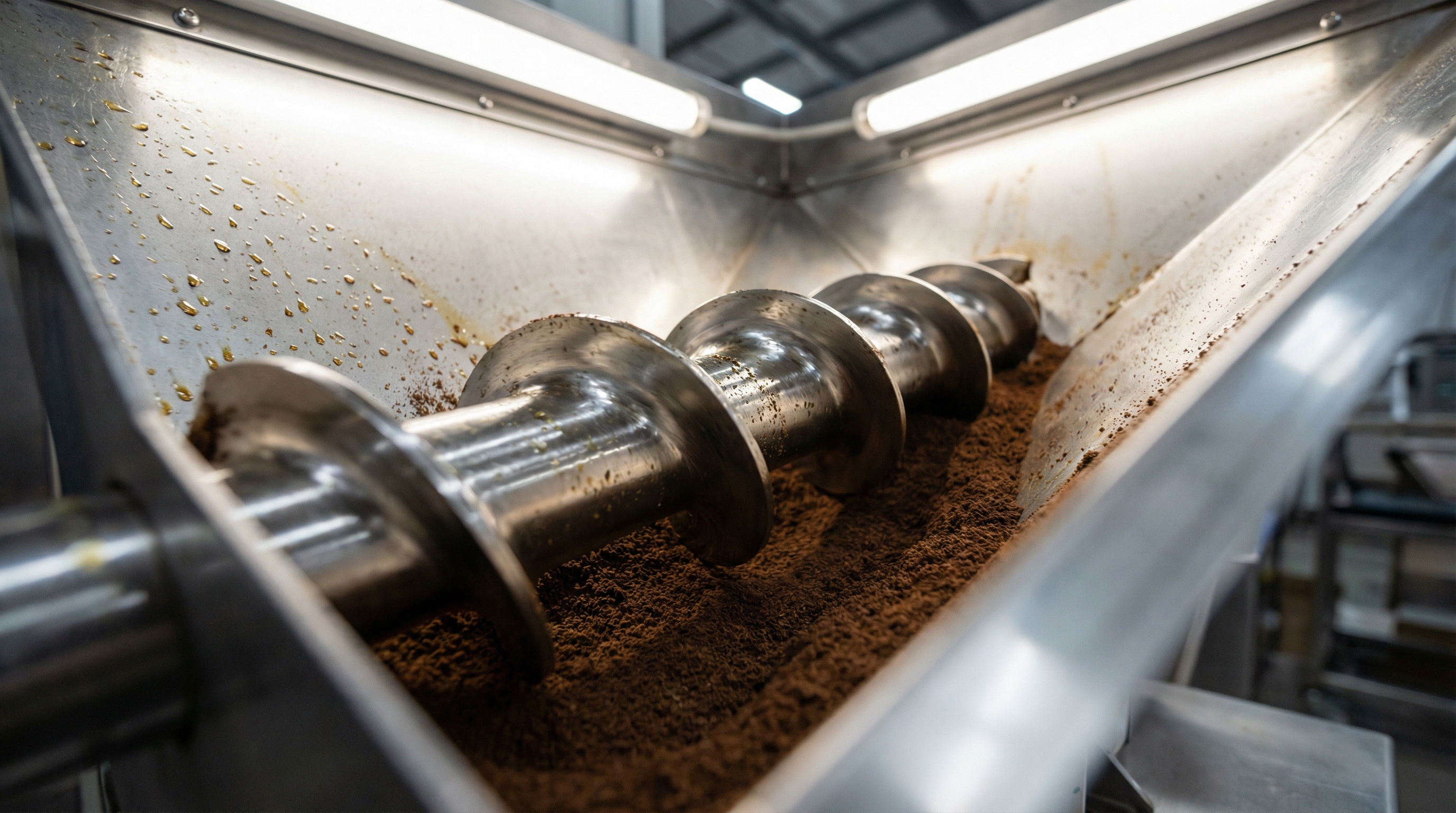
An Auger filler for coffee is the industry gold standard for ground coffee because it uses a vertical screw to dose product by rotation. This mechanism provides a positive displacement that is essential for non-free-flowing powders that might otherwise clump.
How does the screw mechanism work?
The vertical screw rotates a specific number of times to dispense a precise volume of coffee into your bag. Because the screw is enclosed within a tube, it keeps the product under control from the hopper to the pouch.
Servo motors drive the screw with sub-millimeter precision.
Agitator blades keep the coffee from “bridging” in the hopper.
Different screw sizes allow for various bag weights.
Is the screw better for fine grinds?
Here is the deal. Espresso and Turkish grinds are extremely fine and tend to be sticky, making them difficult for gravity-fed systems to handle.
The auger physically pushes the fine powder through the tube.
It provides slight compression to ensure the bag is filled densely.
Positive shut-off valves prevent the product from leaking between cycles.
Feature
Auger Filler Advantage
Precision
High (Servo-controlled)
Grind Range
Fine to Coarse
Product Type
Oily/Sticky Powders
Key Takeaway: An auger system ensures that even the most difficult fine grinds are packaged with absolute consistency.
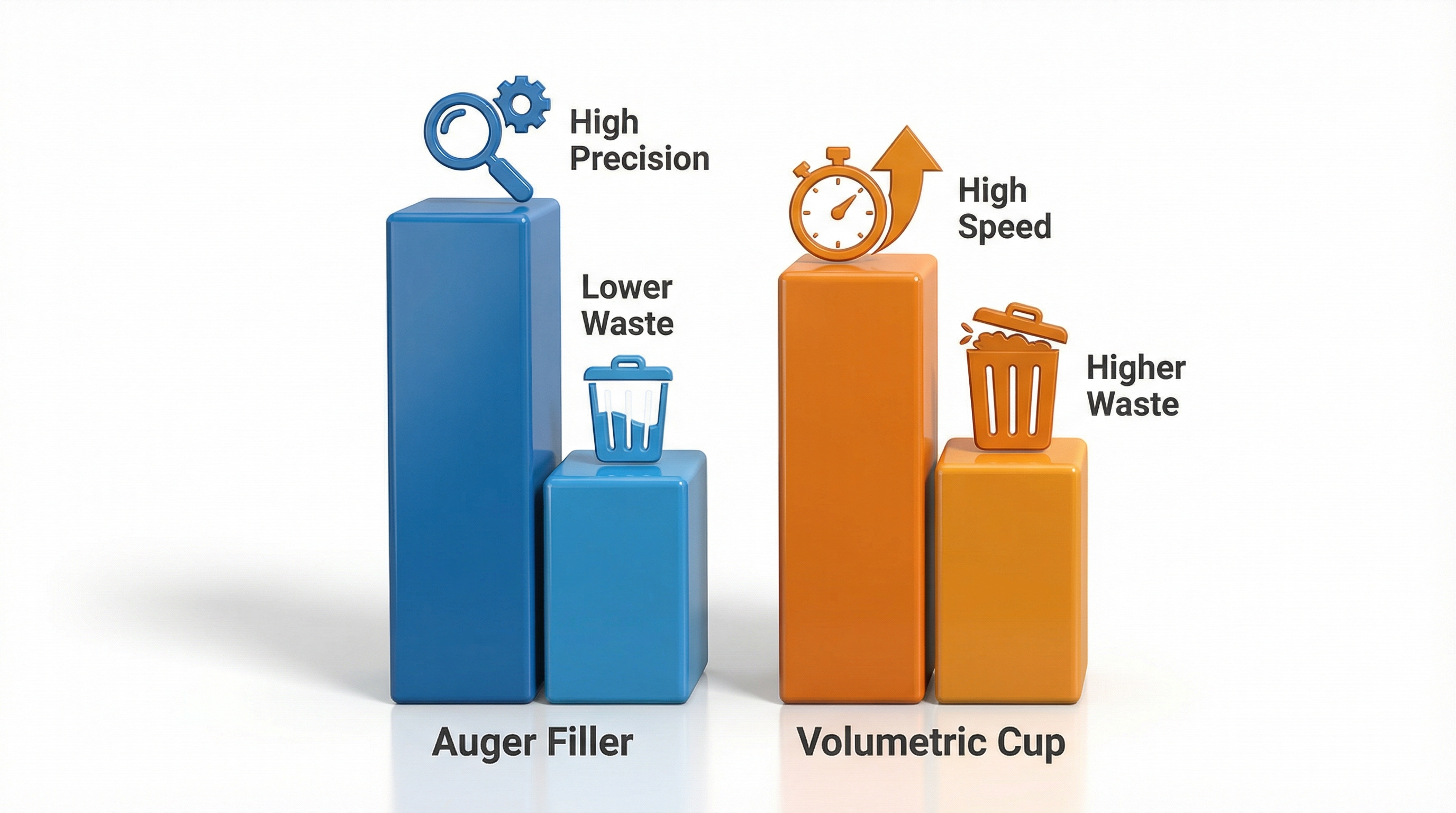
This comparison highlights why precision-driven mechanical dosing outperforms simple gravity-based systems for specialized coffee products.
Is a cup faster than an Auger filler for coffee?
An Auger filler for coffee is often perceived as slower than a volumetric cup filler, but modern servo technology has closed this gap significantly. While cup fillers rely on a simple rotary motion to drop product into a pouch, they often sacrifice accuracy for that raw speed.
When should you prioritize speed?
But wait, there is more. If you are producing large volumes of coarse, free-flowing drip coffee where extreme precision is secondary to throughput, a cup filler might be tempting.
Rotary cups can reach speeds of 120 fills per minute.
The mechanical simplicity allows for rapid cycling.
Cup fillers are generally less expensive upfront for high-speed lines.
Does speed lead to more dust?
High-speed cup filling creates a “gravity drop” effect that can generate significant dust clouds in your facility. This dust often settles on the bag seals, leading to leaks and rejected batches.
Open cup systems allow more oxygen contact.
Rapid drops can cause coffee “smoke” to escape.
Airborne particles require more frequent room cleaning.
Performance Metric
Volumetric Cup
Auger Filler
Max Speed
High (120+ BPM)
Moderate (80-90 BPM)
Dust Level
High Risk
Low/Contained
Ideal Grind
Coarse/Granular
Universal
Key Takeaway: Choose speed for granular products, but remember that the auger’s controlled speed protects your product quality and seal integrity.
The data suggests that while cups are fast, the resulting dust and lower accuracy can negate the productivity gains of a faster cycle.
How does an Auger filler for coffee ensure accuracy?
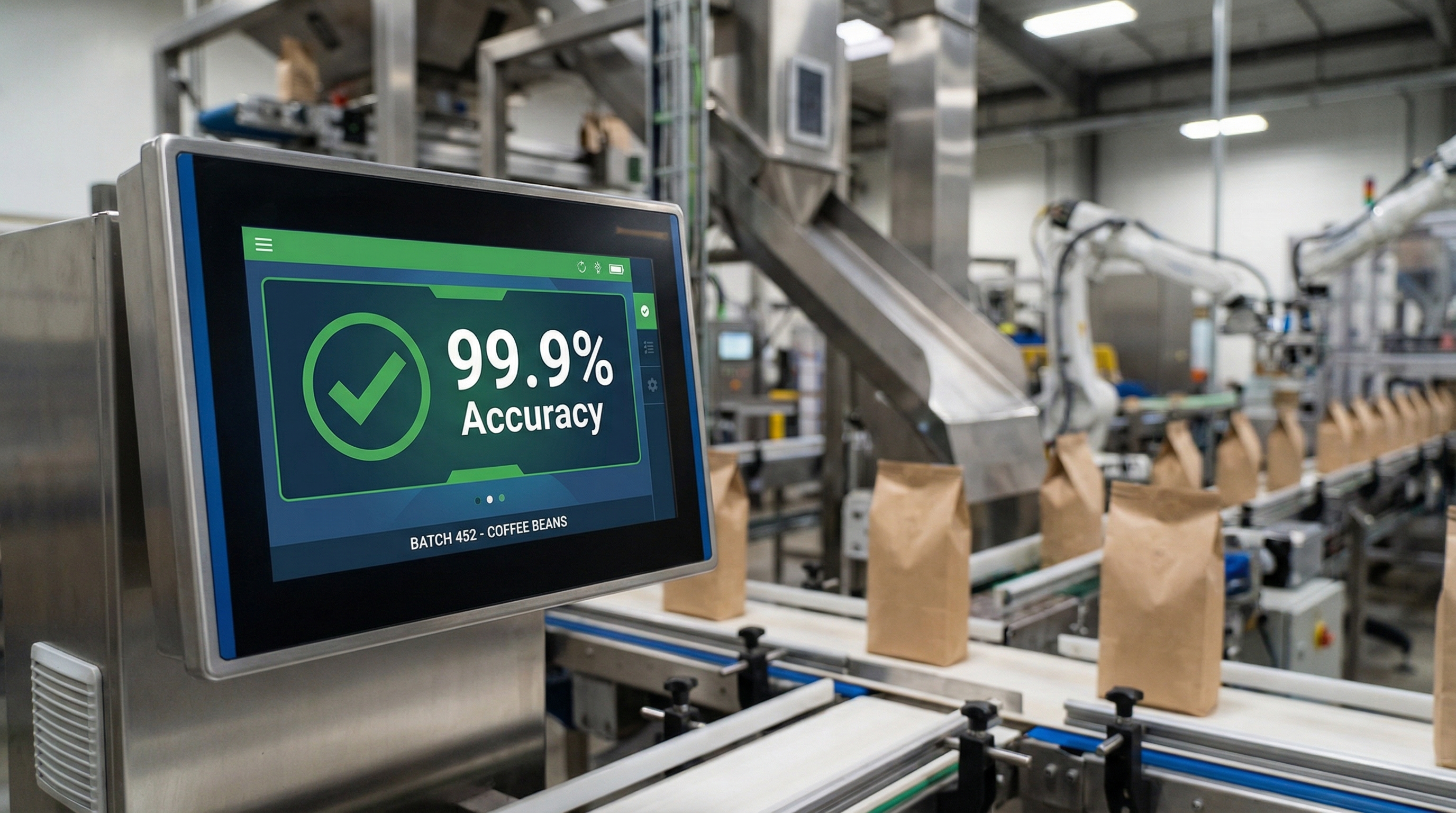
An Auger filler for coffee provides superior accuracy because it can be integrated with feedback loops from checkweighers to adjust the fill in real-time. This is critical because ground coffee density changes as the hopper empties or environmental humidity fluctuates.
What is real-time feedback?
Let’s look closer. Newideapack systems utilize electronic encoders that communicate with the weighing scale to make micro-adjustments to the screw rotation.
The system detects if a bag is slightly underweight.
It automatically adds a fraction of a rotation to the next fill.
This “self-healing” logic reduces product giveaway to nearly zero.
Why does ±0.5% precision matter?
If you are giving away just 2 grams of coffee per bag on a line running 5,000 bags a day, you are losing 10kg of product daily. Over a year, that is a massive hit to your bottom line that an auger can prevent.
It ensures a consistent customer experience with every bag.
Accurate dosing allows for tighter inventory management.
Accuracy Metric
Auger System
Volumetric Cup
Typical Variance
±0.3% to ±0.5%
±1% to ±2%
Compensation
Automatic/Servo
Manual Only
Giveaway Risk
Very Low
Moderate
Key Takeaway: Real-time accuracy tracking turns your packaging line from a cost center into a profit-protection machine.
Investment in high-precision dosing technology directly impacts your ROI by eliminating the hidden costs of overfilling.
Can an Auger filler for coffee eliminate dusty bag seals?
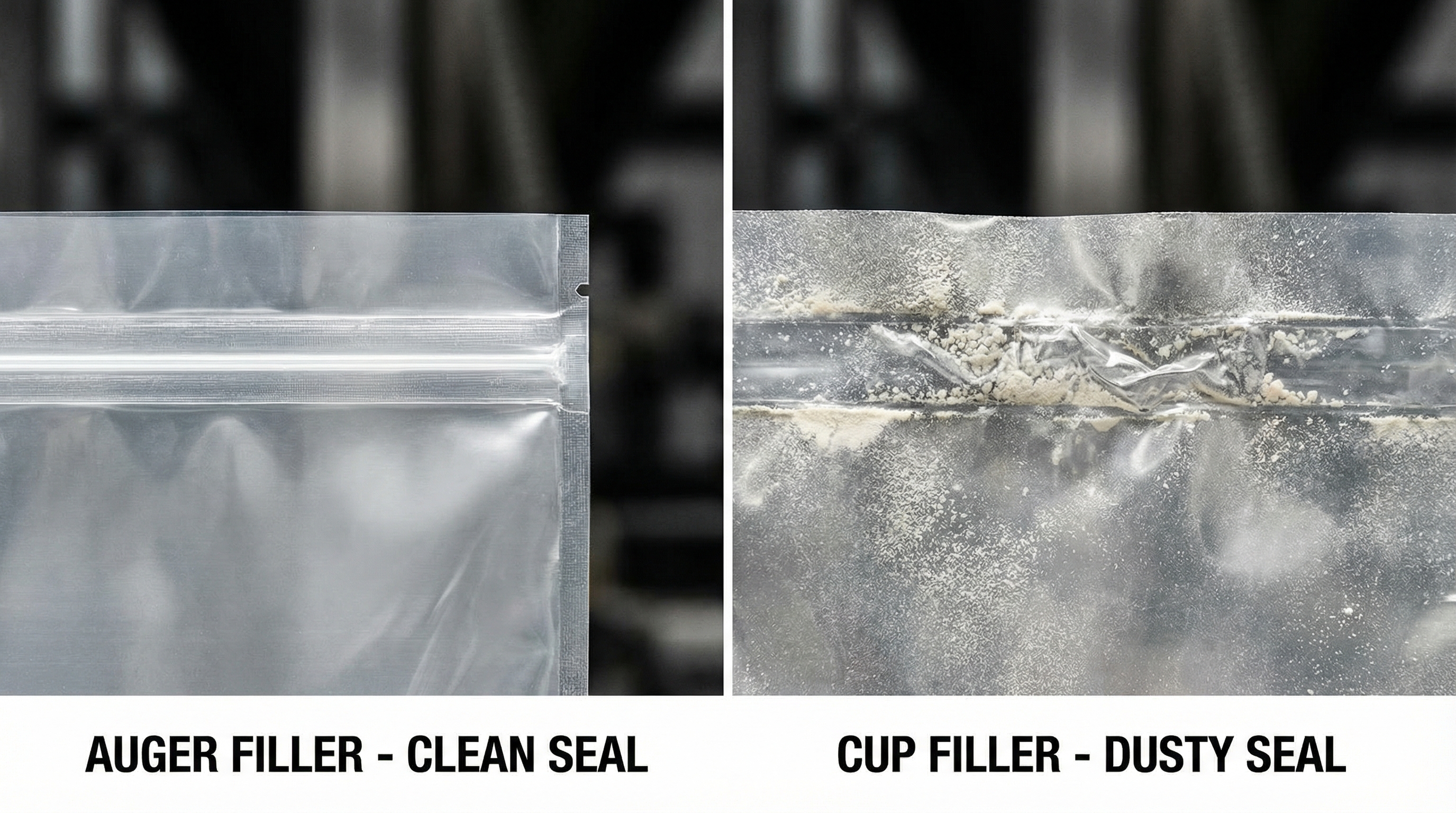
An Auger filler for coffee excels at maintaining clean seals because it features an enclosed delivery tube that places the product deep into the bag before releasing it. This “neck-down” funnel design is the best defense against the fine particles that ruin heat seals.
How does dust affect seal quality?
Think about this. When coffee dust settles on the plastic film where the heat jaws meet, it creates a weak point in the bond.
Weak seals lead to “leakers” that spoil on the shelf.
Leaking bags cause a mess during shipping.
Oxygen ingress ruins the flavor of your premium roast.
What are dust shrouds and vacuums?
To further protect your line, many auger systems include vacuum extraction ports that pull stray dust away from the sealing area. This ensures the film remains pristine for the horizontal and vertical sealing jaws.
Enclosed hoppers keep the “smoke” inside the machine.
Static bars neutralize the charge that makes dust stick to film.
Custom funnels match the bag width exactly to prevent splashing.
Protection Level
Auger Filler
Volumetric Cup
Seal Integrity
High (Clean)
Variable (Dusty)
Shelf Life
Maximized
Potential Risk
Waste Reduction
Superior
Moderate
Key Takeaway: Clean seals are non-negotiable for shelf-stable coffee, making the auger’s dust control a vital business asset.
The difference in seal quality between these two systems is often the difference between a premium product and a discount-shelf reject.
How does oily espresso texture impact an Auger filler for coffee?
An Auger filler for coffee is the only reliable way to manage oily, dark-roasted espresso grinds that tend to clump together. The mechanical force of the auger screw ensures that these sticky particles are separated and dispensed with high repeatability.
Why do oils cause clumping?
It gets even better. Coffee oils act like a natural adhesive, especially in fine grinds, which causes the product to “bridge” or form a solid mass over a discharge hole.
Gravity-fed cups often suffer from “voids” where the cup doesn’t fill.
Agitator blades in the auger hopper keep the product fluid.
The vertical screw breaks up clumps as it rotates.
Can you handle different roast levels?
Dark roasts are generally more oily and less dense than light roasts, meaning you need a system that can adapt to these physical changes quickly.
Tool-less auger changes allow you to swap screws for different roasts.
Variable speed agitation handles various levels of “stickiness.”
Key Takeaway: For dark roasts and espresso, the mechanical agitation of an auger is essential to prevent production downtime.
Understanding the physics of your coffee grind is the first step in selecting a machine that won’t leave your staff struggling with clogs.
Is it easier to clean a hopper on an Auger filler for coffee?
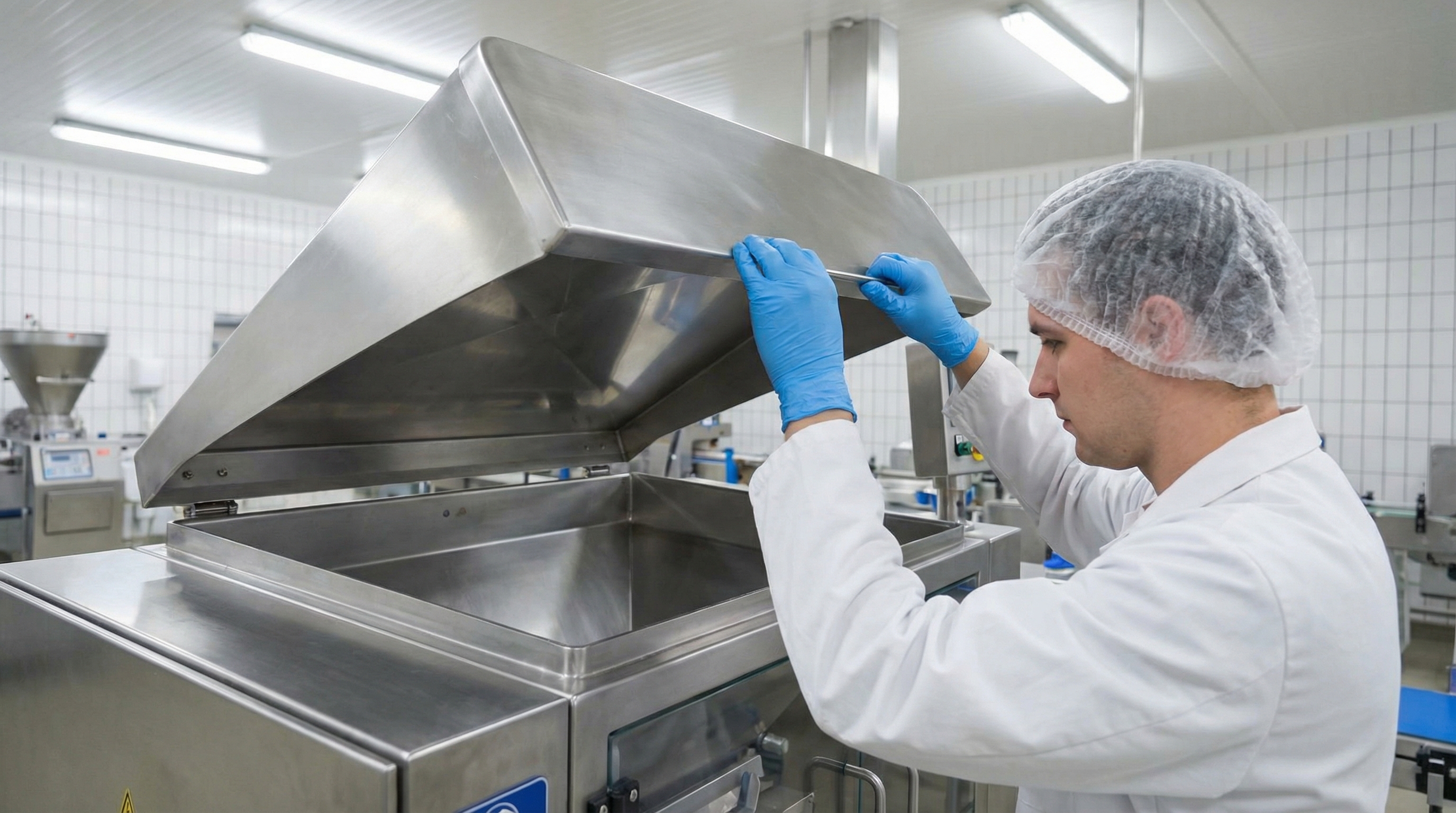
An Auger filler for coffee requires a slightly more detailed cleaning process than a simple cup filler, but modern designs have made this task significantly faster. Newideapack machines often feature “quick-release” components that allow a technician to strip the hopper for sanitation in minutes.
What are quick-release parts?
Why does this matter? Cross-contamination between different coffee flavors or roasts can ruin your brand’s reputation, making thorough sanitation a daily requirement.
Split-hopper designs open like a clamshell for total access.
The auger screw slides out without the need for specialized tools.
Polished stainless steel surfaces prevent oil buildup and staining.
How do you maintain food safety?
Since coffee is a food product, your machine must comply with strict hygiene standards to prevent rancid oils or mold from developing in hidden crevices.
Seamless welding prevents product traps.
Wash-down capable motors allow for deep cleaning.
Regular maintenance schedules keep the machine running smoothly.
Sanitation Step
Auger (Modern Design)
Volumetric Cup
Disassembly Time
5-10 Minutes
3-5 Minutes
Access Level
Full (Clamshell)
Plate Access Only
Contamination Risk
Very Low
Moderate (Seams)
Key Takeaway: A machine that is easy to clean ensures that your premium roasts never suffer from the “off” flavors of a previous batch.
Efficiency in cleaning translates directly to more production uptime and higher overall factory throughput.
How does an Auger filler for coffee integrate with VFFS systems?
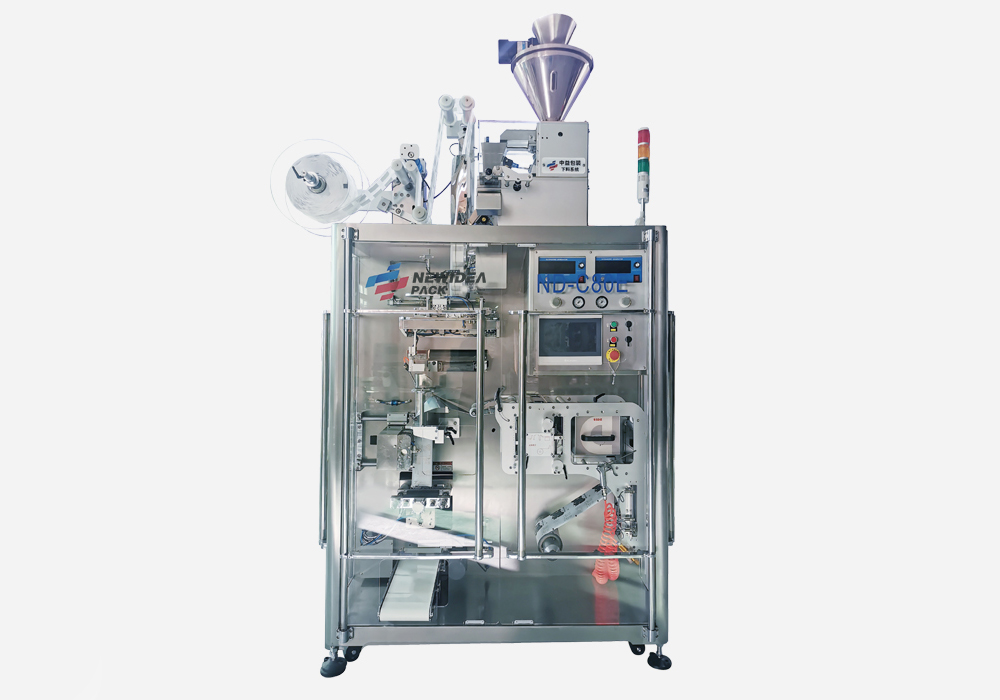
An Auger filler for coffee is perfectly suited for Vertical Form Fill Seal (VFFS) machines because its vertical profile allows it to sit directly above the forming tube. This integration creates a compact footprint that is ideal for coffee roasteries with limited floor space.
Why is VFFS the standard?
That is just the beginning. The synergy between an auger and a VFFS machine allows for the high-speed production of gusseted bags, pillow pouches, and even drip coffee bag formats.
The auger times its drop to the exact millisecond the bag is formed.
Gravity assists the product flow through the forming tube.
One centralized control panel manages both the filler and the bagger.
Can you save space in your facility?
Because the entire system is vertical, you can pack high production capacity into a very small area compared to horizontal pouch-filling lines.
Vertical systems are easier to shield for dust control.
Conveyors can be positioned to take finished bags directly to boxing.
Modular designs allow for future upgrades as you grow.
System Integration
Benefit for Coffee
Footprint
Compact/Vertical
Bag Styles
Pillow, Gusset, Flat-bottom
Communication
Seamless PLC Sync
Key Takeaway: The VFFS-auger combination is the most efficient way to scale your coffee production while maintaining premium bag quality.
Choosing a vertically integrated system minimizes the mechanical complexity of your line and reduces the potential for communication errors between different machine parts.
What is the production ROI for an Auger filler for coffee?
An Auger filler for coffee represents a higher initial investment than a volumetric cup filler, but the Return on Investment (ROI) is achieved quickly through waste reduction. When you calculate the value of saved product and reduced labor, the auger often pays for itself within the first year.
How do you calculate savings?
Check this out. Most roasters overlook the “hidden costs” of using cheaper, less accurate filling systems that lead to rework and giveaway.
Calculate the cost of 1% product giveaway per month.
Factor in the labor cost of cleaning up dust from open cup fillers.
Estimate the cost of customer loss due to inconsistent fill weights.
Is the durability worth the price?
Newideapack auger fillers are built with heavy-duty stainless steel and servo components that require less frequent replacement than the mechanical wear parts of a cup system.
Servo motors eliminate the need for complex clutch-brake assemblies.
Fewer moving parts in the drive train mean lower maintenance.
High resale value ensures your capital is protected.
Investment Factor
Auger Filler
Volumetric Cup
Initial Cost
Higher
Lower
Maintenance
Low (Servo)
Moderate (Mechanical)
Product Waste
<0.5%
1% – 3%
Key Takeaway: The “cheaper” machine is often more expensive over time due to product loss and constant mechanical adjustments.
Smart B2B decision-making requires looking past the purchase price to the total cost of ownership over the machine’s lifespan.
How do maintenance needs differ for an Auger filler for coffee?
An Auger filler for coffee requires specific maintenance of its screw and agitator systems to ensure long-term accuracy and smooth operation. While cup fillers have simpler rotary gears, the precision required for ground coffee dosing makes the auger’s maintenance routine slightly more specialized but highly rewarding.
What are the key wear parts?
Here is the truth. If you ignore the seals and bearings on your dosing head, coffee oils can migrate into the gearbox and cause catastrophic failure.
Check the auger tube seals for signs of wear.
Lubricate the agitator drive gears according to the schedule.
Inspect the screw flighting for any damage or pitting.
Can you prevent unexpected downtime?
Predictive maintenance is the key to keeping your roastery running without interruption during your peak seasons.
Monitor the servo motor’s heat and vibration levels.
Keep spare seals and O-rings in stock for quick swaps.
Use high-quality, food-grade lubricants to protect the internal gears.
Maintenance Focus
Auger Requirement
Benefit
Screw Seals
Bi-weekly inspection
Prevents oil leaks
Agitator Drive
Monthly lubrication
Ensures smooth flow
Servo Calibration
Quarterly check
Maintains accuracy
Key Takeaway: A disciplined maintenance routine protects your high-precision investment and ensures your “giveaway” stays at zero.
Regular inspections by a qualified engineer can extend the life of your packaging equipment by decades, saving you from costly emergency repairs.
Ready to consult about an Auger filler for coffee?
An Auger filler for coffee is a strategic investment that requires professional consultation to ensure the screw geometry and hopper size match your specific production environment. You might be wondering if your current volume justifies the switch, but the answer is almost always “yes” if quality is your top priority.
How do you start the process?
The best way to begin is by testing your specific coffee blends in a controlled environment to see how they behave under different auger speeds.
Send product samples to Newideapack for density testing.
Define your target bags-per-minute for the next three years.
Review your floor plan for VFFS or premade pouch integration.
What are the success metrics?
Once your new line is installed, you should see an immediate improvement in your daily production reports and overall facility cleanliness.
Track the decrease in rejected bags due to seal failure.
Monitor the stability of your fill weights via the checkweigher.
Survey your staff on the ease of cleaning and operation.
Consult Step
Goal
Density Test
Determine screw size
Speed Audit
Match VFFS capacity
ROI Analysis
Justify the upgrade
Key Takeaway: Partnering with a technical expert ensures that your packaging line is optimized for your unique coffee business goals.
Taking the initiative to upgrade your dosing technology today will position your brand as a leader in quality and efficiency for years to come.
FAQ
Can I use an Auger filler for coffee for whole beans? While you can, it is not recommended. The auger screw may crush or damage the whole beans, so a linear scale or volumetric cup is much better for maintaining bean integrity.
How do I know if my coffee grind is too dusty for a cup filler? If you see a fine “smoke” rising during the fill or if your bag seals are failing more than 1% of the time, your product is too fine for a gravity-fed cup system.
Can one auger handle both espresso and drip grinds? Yes, but you may need to swap the auger screw and tube. Different grinds have different flow rates, and using the wrong screw size can decrease your accuracy.
What is the best way to clean oily residue from the screw? Use a food-safe degreaser and a soft-bristle brush. Never use abrasive pads, as scratches on the stainless steel can become traps for bacteria and rancid oils.
How often should I calibrate my auger filler? You should perform a weight check at the start of every shift. If your density hasn’t changed, a full calibration is usually only needed once a month or when changing roast batches.
Conclusion
Navigating the technical differences between an auger and a volumetric cup is essential for any roaster looking to professionalize their operation. We have explored how the precision, dust control, and versatility of an Auger filler for coffee make it the premier choice for ground coffee packaging. By eliminating waste and ensuring clean, airtight seals, this technology protects your brand and your bottom line. At Newideapack, we are committed to providing you with the technical expertise and high-performance machinery needed to dominate your market.
Sales Pitch Component
If you are ready to stop giving away your profits and start scaling your production with confidence
Please contact us today. Our vision is to empower roasters worldwide with precision engineering that makes high-quality coffee accessible and profitable for everyone.