High-Barrier Compostable Coffee Bags: How to Ensure 12-Month Freshness
2026年2月16日 by newideapack
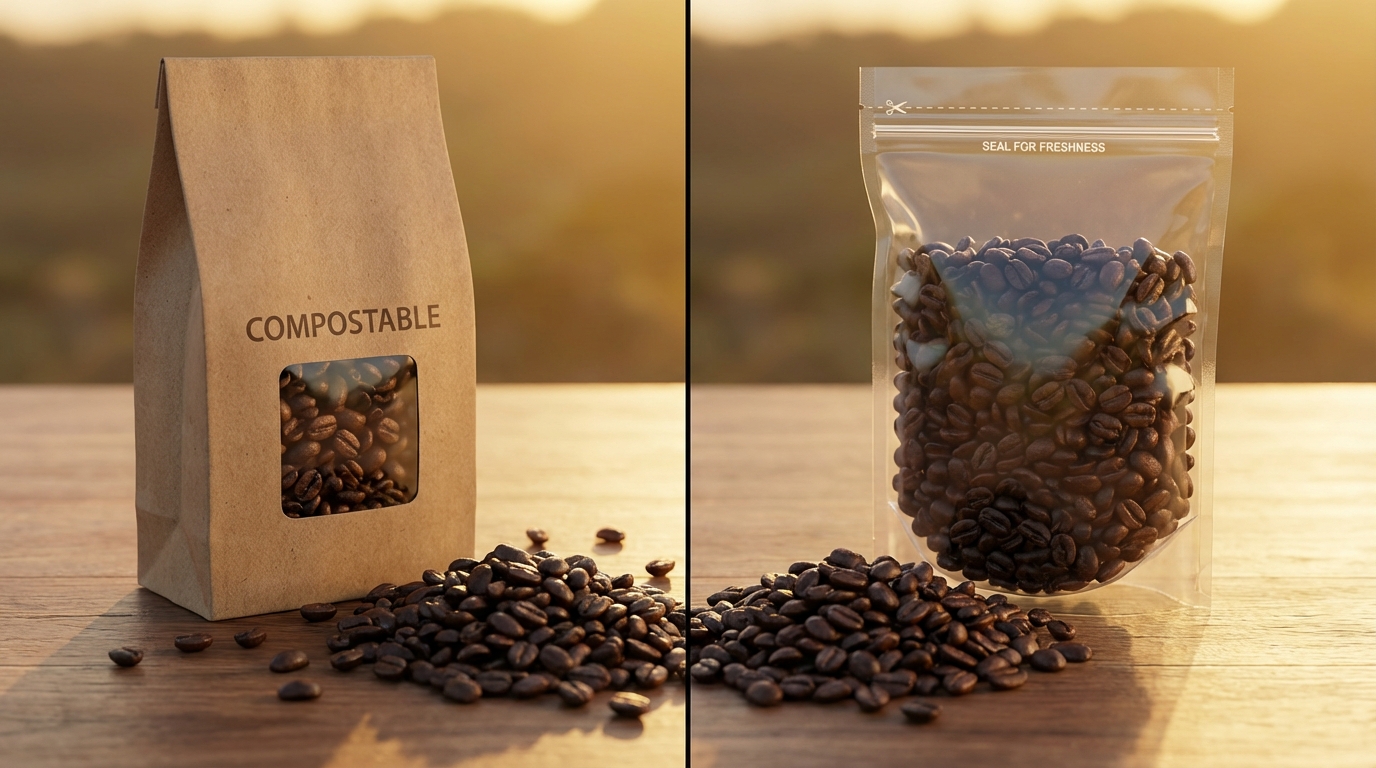
Choosing compostable coffee bags no longer means compromising on the shelf life of your specialty beans. For years, roasters faced a difficult trade-off between environmental sustainability and the 12-month freshness guaranteed by traditional plastics. However, advancements in multi-layer bio-films and plant-based resins now allow compostable coffee bags to deliver the same high-barrier protection against oxygen and moisture as petroleum-based alternatives. By understanding the synergy between PLA materials and nitrogen flushing, you can transition to eco-friendly packaging while keeping your coffee’s aromatic oils perfectly preserved.
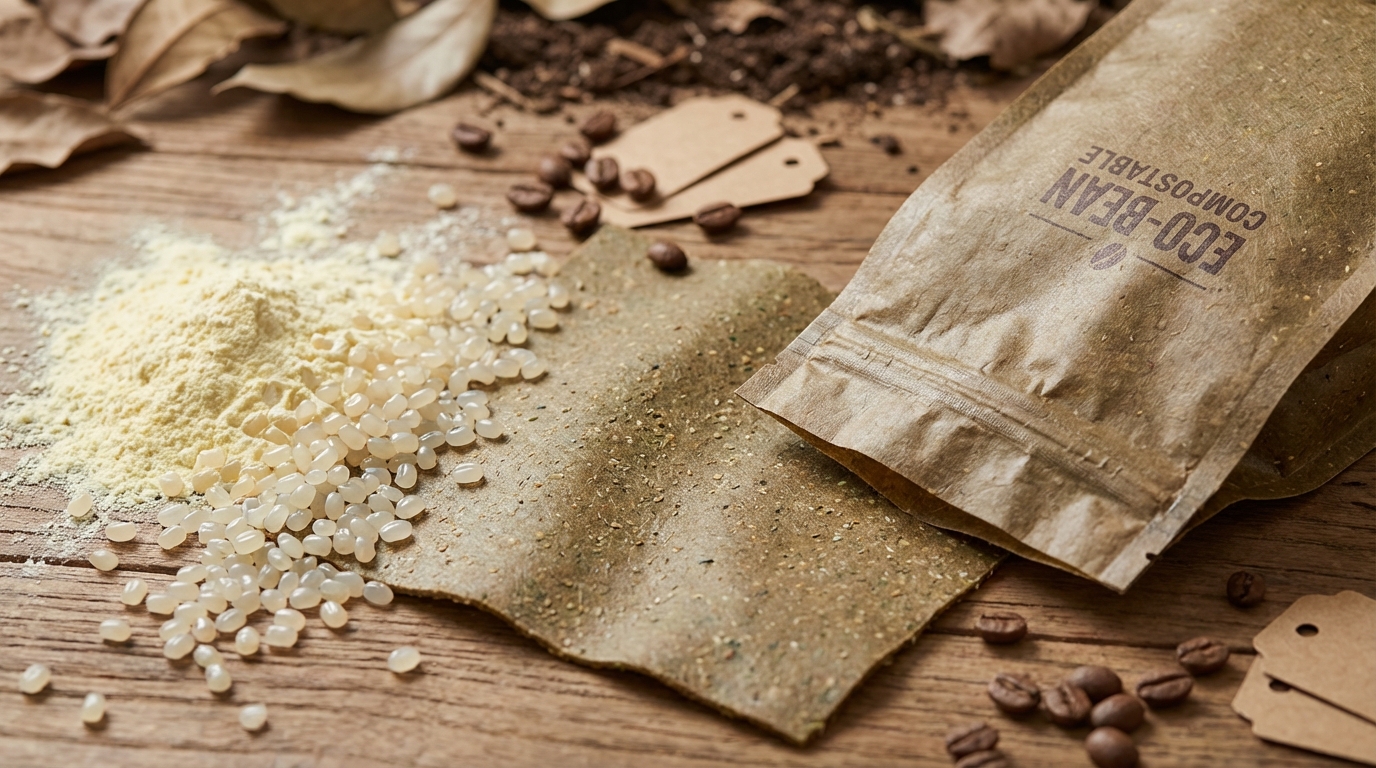
Compostable coffe bags are primarily constructed from plant-based polymers like Polylactic Acid (PLA) and natural materials such as corn starch or wood pulp. Understanding the structural makeup of Compostable coffe bags is essential for any roaster looking to replace traditional PE/AL laminates with sustainable alternatives. These materials are engineered to break down in specific environments without leaving toxic residues behind.
The Role of PLA and Corn Starch
Polylactic Acid (PLA) serves as the core internal sealing layer for most modern bio-packaging. Here is the deal: these plant-derived resins provide the necessary thermal properties required for secure heat sealing.
PLA is derived from renewable resources like corn or sugarcane.
It offers a transparent, food-safe contact layer.
The material remains stable at room temperature but degrades in compost conditions.
Better yet: manufacturers often blend PLA with corn starch to improve the material’s cost-effectiveness and biodegradation speed. This combination ensures the bag remains sturdy during transport while remaining eco-friendly.
Kraft Paper vs. Rice Paper External Layers
The exterior of the bag often utilizes natural fibers to provide structural integrity and a premium feel. Think about it: the choice between Kraft and rice paper affects both the aesthetic and the durability of your branding.
Kraft paper offers a rugged, traditional look that signals sustainability.
Rice paper provides a unique texture and high-end visual appeal.
Both materials are fully biodegradable when sourced from managed forests.
The best part: these outer layers can be printed with soy-based or water-based inks to maintain the compostable integrity of the entire package. This allows for vibrant designs without compromising environmental standards.
How PBAT Enhances Film Flexibility
PBAT is a biodegradable random copolymer that is often added to the laminate structure to prevent brittleness. In fact: without this addition, many plant-based bags would crack under the weight of whole bean coffee.
PBAT adds “stretch” and impact resistance to the packaging.
It is fully compostable in industrial facilities.
It helps maintain the hermetic seal during high-speed production.
Keep this in mind: finding the right balance of PBAT ensures your bags don’t puncture during the shipping process. This flexibility is what makes bio-materials competitive with traditional plastics.
Key Takeaway: Modern compostable bags utilize a complex blend of PLA, PBAT, and natural fibers to mimic the strength and versatility of petroleum-based plastics while remaining 100% biodegradable.
Material Component
Primary Function
Environmental Impact
PLA (Polylactic Acid)
Internal Sealant & Barrier
Plant-based / Industrially Compostable
Kraft / Rice Paper
Structural Strength
Renewable Fiber / Biodegradable
PBAT
Flexibility & Durability
Biodegradable Polymer
Corn Starch
Cost reduction & Bio-base
Rapidly Renewable Resource
How Do Compostable coffe bags Protect Freshness?
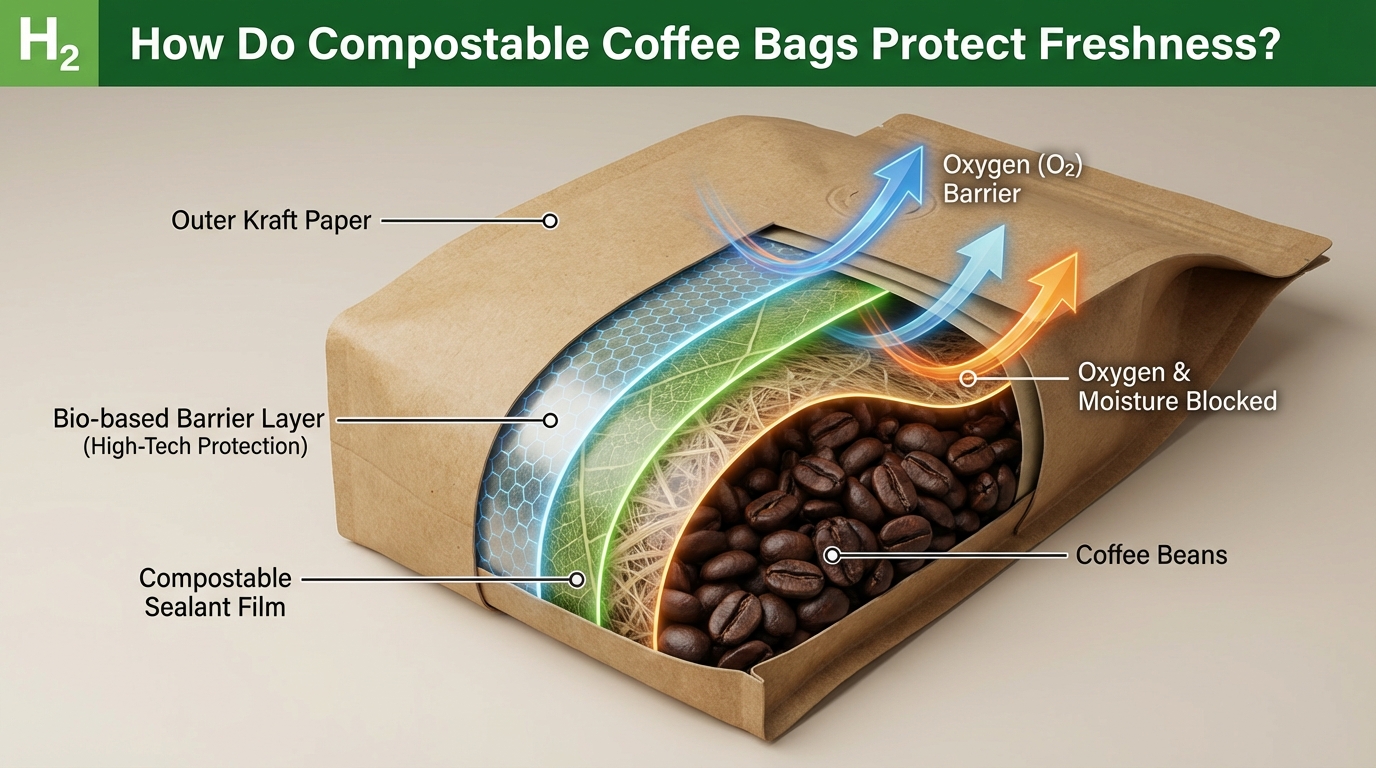
Compostable coffe bags protect freshness by utilizing multi-layer lamination technologies that create a robust barrier against oxygen and moisture. To maintain the aromatic profile of premium beans, modern Compostable coffee bags must integrate high-performance films that prevent oxidation and staling. Without these specialized layers, the delicate oils in the coffee would dissipate rapidly.
Measuring Oxygen Transmission Rates (OTR)
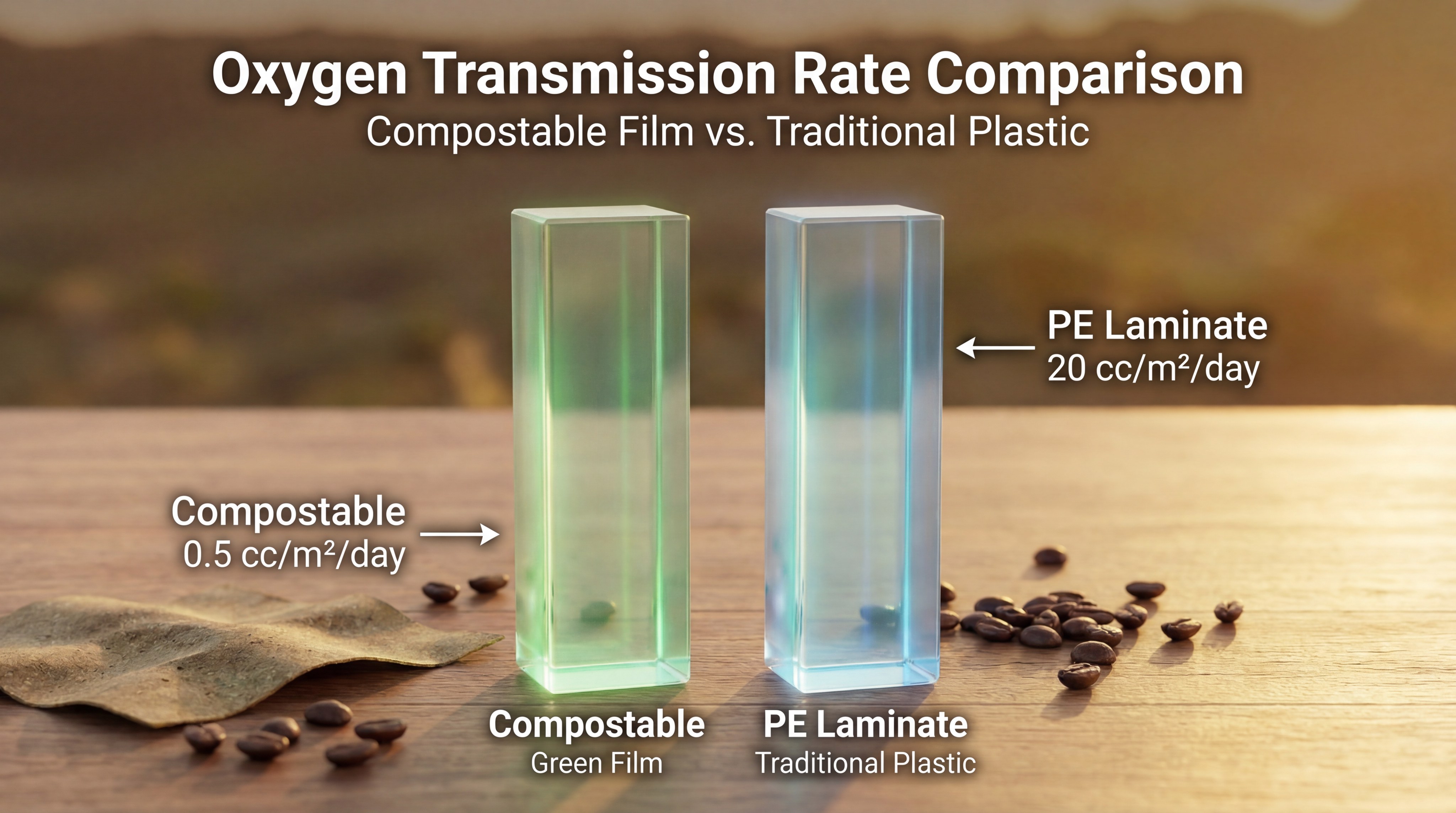
Oxygen is the primary enemy of roasted coffee, making the OTR metric critical for any packaging selection. As it turns out: high-barrier compostable films can now achieve OTR levels that rival traditional foil laminates.
Low OTR prevents the oxidation of coffee oils.
Specialized bio-coatings block gas exchange.
Metalized PLA layers are often used for extreme protection.
Here is the deal: by keeping oxygen out, you ensure that the flavor profile remains exactly as it was when the beans left the roaster. This is the only way to guarantee a “just-roasted” experience for the end consumer.
Moisture Vapor Transmission (MVTR) Challenges
Moisture can cause mold growth and ruin the texture of the beans, making moisture resistance a top priority. Better yet: advanced plant-based resins have been engineered to repel humidity even in tropical climates.
High MVTR protection prevents bean “sweating.”
It maintains the crispness of the roasted bean structure.
Multi-layer construction provides multiple defense points.
Think about it: if moisture enters the bag, the chemical stability of the coffee is compromised almost immediately. Reliable MVTR performance is what separates professional-grade bio-packaging from cheap alternatives.
Multi-layer Lamination for Superior Integrity
A single layer of bio-material is rarely enough to protect coffee, which is why multi-layer lamination is standard. The best part: these layers work together to provide a comprehensive shield against external elements.
Interior layers focus on sealing and food safety.
Middle layers provide the gas and moisture barrier.
Exterior layers protect against physical abrasions.
In fact: bonding these layers with compostable adhesives ensures that the bag does not delaminate during its shelf life. This structural integrity is vital for maintaining the internal atmosphere of the bag.
Key Takeaway: Freshness is maintained through high-tech lamination and barrier coatings that specifically target oxygen and moisture ingress to preserve delicate aromatic oils.
Metric
Compostable Film
Traditional Plastic/Foil
OTR (Oxygen Rate)
Low (Excellent)
Very Low (Superior)
MVTR (Moisture Rate)
Moderate to Low
Very Low (Superior)
Light Protection
High (with Kraft/Metalized)
High
Aroma Retention
High
Very High
Which Certifications Validate Compostable coffe bags?
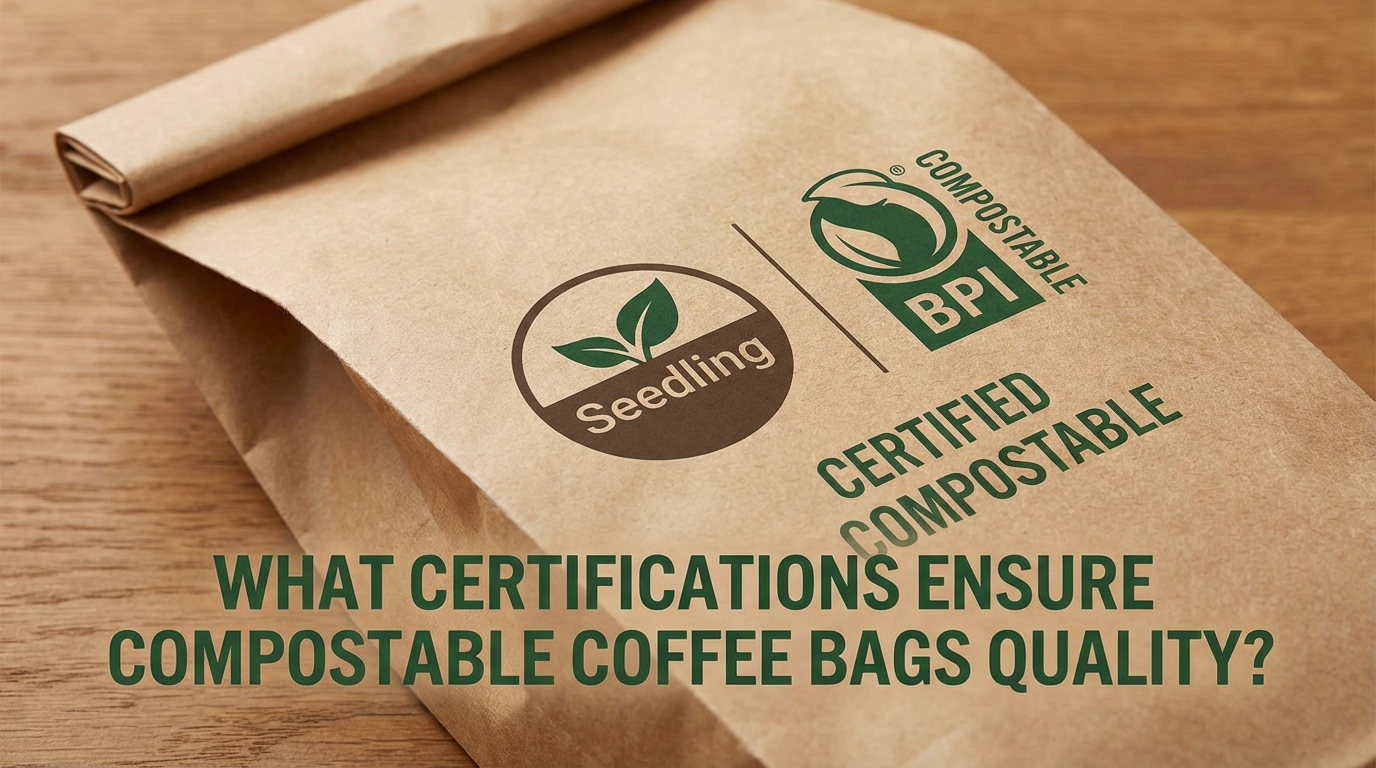
Compostable coffe bags are validated by international third-party certifications that prove the material breaks down within specific timeframes without leaving toxins. Verifying the environmental claims of Compostable coffe bags requires a deep dive into international standards like EN 13432 and ASTM D6400. These logos are the only way to ensure your packaging isn’t simply “greenwashed” plastic.
Decoding the Seedling and BPI Logos
The BPI and Seedling logos are the most recognized symbols of compostability in North America and Europe. Here is the deal: seeing these marks means the product has undergone rigorous laboratory testing to prove its safety.
BPI (Biodegradable Products Institute) certifies for US standards.
The Seedling logo indicates compliance with European EN 13432.
Both require the product to disintegrate within 12 weeks in a facility.
Better yet: these certifications also check for heavy metals and plant toxicity. This ensures that the resulting compost is actually beneficial for the soil rather than harmful.
Difference Between ASTM D6400 and ASTM D6868
Understanding the technical difference between these two ASTM standards is vital for selecting the right laminate. Think about it: one covers the raw material, while the other covers the entire finished product including coatings.
ASTM D6400 focuses on the biodegradation of the plastic itself.
ASTM D6868 is for materials that include paper or fiber components.
Both require 90% conversion to CO2 within 180 days.
The best part: knowing these numbers allows you to speak confidently with regulators and environmental organizations. It proves that your sustainability claims are backed by scientific consensus.
Why Industrial vs. Home Compostable Matters
Most high-barrier coffee bags are only “Industrial Compostable” due to the heat required to break down the barrier layers. In fact: home composting systems often lack the consistent temperature needed to process complex bio-polymers.
Home compost labels (like TUV OK Compost Home) are rarer for coffee.
Labels must clearly state where the consumer should dispose of the bag.
Keep this in mind: if a bag is labeled for industrial use, it should not be thrown in a backyard bin. Proper education prevents the bag from remaining intact for years in a low-heat environment.
Key Takeaway: Look for BPI or EN 13432 certifications to ensure your packaging meets legal requirements for compostability and won’t contaminate the waste stream.
Certification
Region
Key Requirement
BPI
North America
ASTM D6400/D6868 Compliance
EN 13432
Europe
90% degradation in 12 weeks
TUV Home
Global
Degradation at lower temperatures
AS 4736
Australia
Seedling equivalent for AU
Are Compostable coffe bags Machine Compatible?
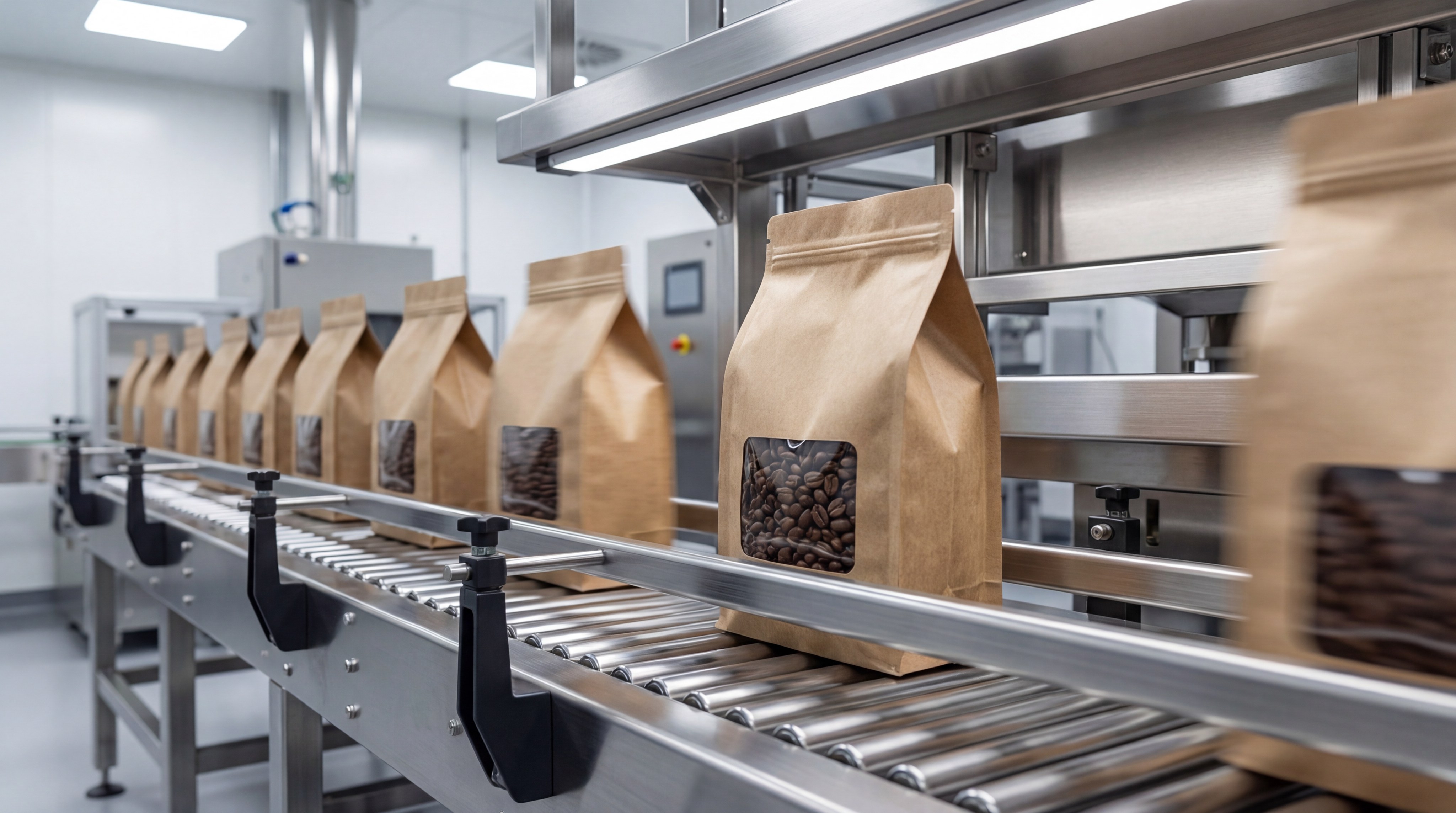
Compostable coffe bags are compatible with most standard packaging machinery, though they often require specific adjustments to temperature and speed. A common concern for high-volume roasters is whether Compostable coffe bags can run on existing Vertical Form-Fill-Seal (VFFS) equipment without causing downtime. While bio-resins behave differently than petroleum plastics, modern engineering has bridged this gap effectively.
Adjusting Heat and Dwell Time
Plant-based materials generally have a narrower “sealing window” than traditional plastics. As it turns out: if your heat bars are too hot, the bio-film will melt or shrink before it creates a bond.
Lower sealing temperatures are usually required for PLA.
Longer “dwell times” allow the heat to penetrate without burning.
Precise PID controllers on the machine are essential for success.
Here is the deal: once you find the “sweet spot” for your specific film, the seal strength is remarkably consistent. It simply takes a few trial runs to calibrate the machine’s thermal profile.
Managing the Coefficient of Friction (COF)
The way a film slides over the forming tube of a VFFS machine is determined by its COF. Better yet: many compostable films are now treated with food-safe slip agents to prevent sticking.
High COF can lead to film “chatter” or uneven bag lengths.
Anti-static treatments help the film move through the rollers.
Tension control settings must be tuned for bio-material elasticity.
Think about it: if the film doesn’t slide smoothly, your production speed will drop significantly. Modern compostable laminates are designed to mimic the “slip” of PE for high-speed operation.
Transitioning from VFFS to HFFS Systems
Whether you use vertical or horizontal systems, the transition to compostable materials is manageable. The best part: most modern equipment manufacturers now offer “sustainable material” kits for their machines.
HFFS systems often handle delicate bio-films with less stress.
VFFS is still the standard for high-speed whole bean bagging.
Upgrading to ultrasonic sealing can solve many thermal issues.
In fact: roasters can often switch between plastic and compostable rolls on the same day with just 15 minutes of recalibration. This flexibility is key for brands managing multiple product lines.
Key Takeaway: While plant-based films require lower temperatures and specific friction management, they are fully compatible with professional VFFS and HFFS packaging lines.
Parameter
Traditional Plastic
Compostable Film
Seal Temp
140°C – 180°C
110°C – 150°C
Sealing Dwell Time
Short
Slightly Longer
Material Elasticity
Low
Moderate to High
Static Build-up
High
Moderate
What Is the Shelf Life of Compostable coffe bags?
Compostable coffe bags typically offer a shelf life of 6 to 12 months for whole bean coffee when stored in a cool, dry place. Calculating the expected shelf life for Compostable coffe bags is vital for maintaining a consistent retail supply chain and ensuring customer satisfaction. While they may not match the multi-year longevity of aluminum-lined bags, they provide more than enough time for most specialty coffee consumption cycles.
Nitrogen Flushing and Oxygen Levels
To maximize shelf life, roasters must use nitrogen flushing to displace oxygen inside the bag. Keep this in mind: even the best compostable material will fail if the initial oxygen levels are too high.
Nitrogen flushing can reduce residual oxygen to below 1%.
Low O2 levels prevent the staling of delicate aromas.
High-barrier bio-films hold the nitrogen charge effectively.
Here is the deal: by starting with a low-oxygen environment, you give the compostable barrier a massive head start. This process can extend the peak freshness window by several months.
Impact of External Humidity on Biodegradable Bags
Since these bags are designed to break down in the presence of moisture, high-humidity storage can shorten their lifespan. Better yet: modern coatings have been improved to resist ambient humidity for extended periods.
Store bags in climate-controlled warehouses for best results.
Avoid direct sunlight which can trigger early degradation.
Ensure the secondary shipping boxes are moisture-resistant.
Think about it: the bag only starts to “compost” when it hits the specific conditions of a waste facility. Normal retail environments are perfectly safe for these materials.
Accelerated Aging Tests for Eco-Packaging
Professional packaging suppliers use accelerated aging to simulate months of shelf life in just a few weeks. The best part: these tests provide data-backed guarantees on how long your coffee will stay fresh.
Heat and humidity chambers simulate different climates.
Sensory panels test the coffee flavor at regular intervals.
Seal integrity is checked for “micro-leaks” over time.
In fact: most premium compostable bags pass these tests with flying colors for the standard 6-9 month retail window. This gives roasters the confidence to distribute their products across large geographical areas.
Key Takeaway: You can expect 6-12 months of freshness from compostable bags if you utilize nitrogen flushing and maintain proper storage conditions.
Yes, VFFS machines can run Compostable coffe bags efficiently provided you adjust critical parameters like sealing temperature and film tension. While plant-based resins behave differently than traditional plastics, specialized equipment from Newideapack is engineered to handle these sensitive materials without sacrificing speed. You will find that modern bio-films are designed to mimic the structural integrity needed for high-speed vertical forming.
How do you adjust heat for plant-based resins?
Here is the deal: you must lower your sealing temperature because compostable materials like PLA have a much lower melting point than petroleum plastics. If your heat bars are too hot, the film will shrink or melt before creating a strong molecular bond. You should also consider increasing the dwell time slightly to allow the heat to penetrate the multi-layer bio-structure evenly.
Set PID controllers to a narrower temperature range.
Use specialized non-stick coatings on the sealing jaws.
Monitor seal integrity during initial test runs.
Does the coefficient of friction affect your production?
If the film has a high coefficient of friction, it may “chatter” or stick to the forming tube, which ruins your bag consistency. Better yet: many modern Compostable coffe bags include food-safe slip agents to ensure they slide through the rollers as smoothly as traditional PE. You should verify that your tension control settings are fine-tuned to prevent the material from stretching or snapping during the pull phase.
Key Takeaway: VFFS efficiency is achievable by recalibrating heat profiles and ensuring material slip properties are compatible with your machine’s forming hardware.
Adjustment Parameter
Traditional Plastic
Compostable Film
Sealing Temperature
140°C – 180°C
110°C – 150°C
Sealing Dwell Time
Short
Slightly Longer
Tension Sensitivity
Low
Moderate to High
How Do You Optimize Compostable coffe bags Throughput?
You optimize throughput for Compostable coffe bags by balancing material feed speed with precise thermal sealing cycles to prevent film distortion. Achieving high-speed production requires you to understand the unique elasticity and thermal properties of plant-based laminates. By leveraging Newideapack’s advanced control systems, you can reach stable output levels that rival standard plastic packaging lines.
Should you transition from VFFS to HFFS systems?
While VFFS remains the standard for whole bean coffee, HFFS systems can sometimes handle thicker or more delicate bio-films with less physical stress. Think about it: if you are experiencing repeated film breakage on a vertical line, the horizontal path might provide the gentle handling your material needs. You should evaluate your specific bag style, such as stand-up pouches, to determine which machine architecture offers the best stability.
VFFS is ideal for high-speed pillow or side-gusset bags.
HFFS provides superior handling for complex pre-made bio-pouches.
Ultrasonic sealing modules can be integrated into both system types.
Can ultrasonic sealing increase your bagging speed?
In fact: ultrasonic sealing is often the secret to maximizing throughput because it generates heat only at the molecular interface of the film. This allows you to bypass the long dwell times required by traditional heat bars, significantly shortening your overall cycle time. You will notice that the seals are also cleaner, even if some coffee dust gets trapped in the sealing area during the fill.
Key Takeaway: High throughput is a result of matching your machine’s mechanical speed with the rapid bonding capabilities of ultrasonic or precisely tuned thermal sealing.
Aroma preservation is guaranteed in Compostable coffe bags when you utilize high-barrier multi-layer laminates and integrated nitrogen flushing systems. Protecting the delicate oils of your whole bean coffee is the primary job of any professional packaging solution. As shown in the following chart, modern bio-films can achieve oxygen transmission rates that keep your beans fresh for months.
How does nitrogen flushing help your shelf life?
As it turns out: even the best barrier material will fail if you leave oxygen trapped inside the bag with the coffee. You must use nitrogen flushing to displace ambient air, bringing residual oxygen levels down to below 1%. This process creates a stable internal atmosphere that prevents the oxidation of fats and oils, ensuring your customers enjoy a “just-roasted” flavor every time.
Flushing systems are integrated directly into Newideapack VFFS lines.
Nitrogen creates a slight positive pressure to protect bean integrity.
Residual oxygen sensors provide real-time quality verification.
Do compostable valves really work for degassing?
You might worry that a bio-valve won’t perform as well as a plastic one, but PLA-based one-way valves are highly effective at releasing CO2. The best part: these valves are designed to prevent oxygen from entering while allowing the bag to “breathe” after roasting. You must ensure that the valve is ultrasonically welded to the bag to maintain the structural integrity of the entire compostable package.
Key Takeaway: Freshness is a combination of high-tech barrier films, active nitrogen displacement, and reliable bio-based degassing valves.
Protection Layer
Material Type
Function
External Layer
Kraft or Rice Paper
Physical Protection
Barrier Layer
Metalized PLA
Oxygen/Moisture Block
Internal Layer
PLA Sealing Film
Hermetic Bonding
Can Your Brand Stand Out with Compostable coffe bags?
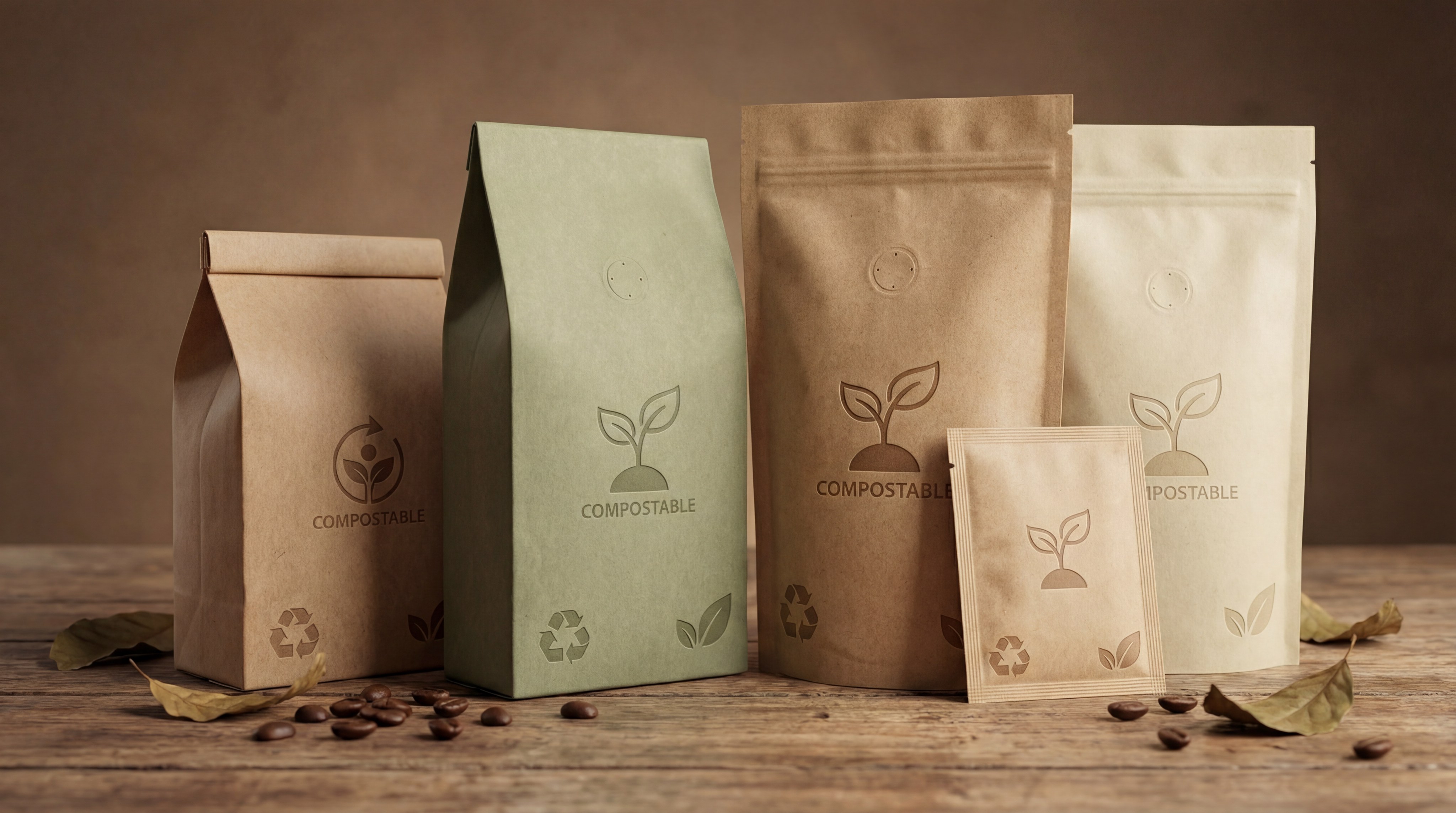
Your brand can stand out with Compostable coffe bags by appealing to the growing demographic of eco-conscious consumers who prioritize sustainability in their purchasing decisions. Marketing your commitment to “zero-waste” creates a powerful emotional connection that traditional plastic packaging simply cannot match. When you use Compostable coffe bags, you are not just selling coffee; you are selling a vision of a cleaner future.
How does tactile quality influence consumer trust?
Think about it: the rugged, natural feel of Kraft or rice paper immediately signals to your customer that the product is premium and environmentally responsible. You can enhance this perception by using water-based or soy-based inks for your branding, ensuring the entire bag remains certified compostable. You will find that customers are often willing to pay a price premium for products that align with their personal values.
Use matte finishes for a sophisticated, organic look.
Highlight “Certified Compostable” logos clearly on the front panel.
Educate your customers on proper disposal through creative icons.
Will high-quality printing work on eco-materials?
In fact: modern Compostable coffe bags are perfectly compatible with high-resolution digital and flexographic printing methods. You don’t have to sacrifice vibrant colors or intricate details just because you are using plant-based substrates. Newideapack’s machinery ensures that the film is fed with enough precision to maintain perfect print registration throughout the bagging process.
Key Takeaway: Sustainable packaging acts as a silent salesman, leveraging tactile appeal and environmental certifications to build long-term brand loyalty.
Newideapack is your best partner for Compostable coffe bags because they offer over 18 years of specialized engineering expertise in sustainable packaging machinery. Navigating the technical challenges of bio-materials requires a manufacturer that understands the nuances of heat, pressure, and film handling. By choosing Newideapack, you gain access to a technical team that will help you future-proof your roastery against changing environmental regulations.
How do custom-engineered solutions reduce your waste?
Here is the deal: using standard “off-the-shelf” machines for sensitive eco-films often results in high material scrap rates and inconsistent seals. You need a solution that is tailored to the specific COF and melting point of your chosen laminate. Newideapack provides engineer-to-engineer support to ensure your machine is perfectly calibrated for your unique Compostable coffe bags from day one.
100% component traceability for maximum machine reliability.
Flexible manufacturing to meet diverse production volumes.
Direct access to design teams for application-specific adjustments.
Why is global trust important for your roastery?
You can feel confident knowing that Newideapack serves over 500 customers across 80 countries, including industry leaders in the USA and UK. Better yet: their machines meet the highest international standards, including CE and ISO 9001:2015 certifications. This global track record means you are investing in a proven platform that has successfully handled thousands of tons of whole bean coffee in various climates.
Key Takeaway: Partnering with a specialist ensures that your transition to compostable materials is profitable, efficient, and technically sound.
| Service Feature | Benefit to Roaster | | :— | :— | :— | | 18+ Years R&D | Proven Technology | | Ultrasonic Kits | Faster Production | | Global Support | Minimal Downtime |
FAQ
Can I use these bags for long-term storage (over 2 years)? It depends. While modern laminates are highly effective, they are designed to be consumed within 12 months. After this point, the bio-resins may begin to lose their structural and barrier integrity compared to aluminum-lined plastic.
What’s the best way to dispose of the bag? It depends on the certification. If it is labeled “Industrial Compostable,” it should go to a commercial facility. If it has the “TUV Home Compost” logo, you can safely put it in your backyard bin.
How do I know if a bag is truly compostable? Yes, you can verify this by looking for official third-party logos like BPI, Seedling, or EN 13432. These certifications prove the bag has passed rigorous laboratory tests for toxicity and biodegradation.
Can I customize the printing on these bags? Yes, compostable materials are compatible with water-based and soy-based inks. You can achieve high-resolution, vibrant designs that enhance your brand while maintaining the eco-integrity of the package.
What’s the best machine for filling these bags? It depends on your volume, but a VFFS (Vertical Form-Fill-Seal) machine with a “sustainable materials kit” or ultrasonic sealing is generally the most efficient and reliable solution for whole bean coffee.
Conclusion
Transitioning to sustainable packaging solves the critical problem of reconciling premium product protection with environmental responsibility. By utilizing advanced multi-layer bio-films and precision-engineered machinery, roasters can finally eliminate plastic waste without sacrificing the “just-roasted” aroma and freshness their customers demand. We provide the technical expertise and high-performance hardware needed to make this transition seamless.
At Newideapack, we don’t just sell machines; we empower roasters to lead the global movement toward a zero-waste coffee industry. Let’s build a more sustainable future for every cup.
Sales Pitch Component
Whether you are scaling your production or just starting your green journey
we invite you to contact us today to explore how our custom-engineered solutions can future-proof your brand.