Coffee Degassing Time: The Ultimate Guide to Perfect Packaging and Flavor
2025年9月16日 by newideapack
Coffee beans generally need to degas for 24 to 72 hours before being sealed in airtight packaging, though peak flavor stability often requires up to 14 days depending on the roast. You probably know the frustration of seeing beautifully printed bags bloat and nearly burst on the retail shelf because of trapped carbon dioxide. This pressure buildup doesn’t just threaten the physical integrity of your brand’s presentation; it signifies a volatile chemical state that can produce “sour” or “bready” notes if brewed too soon. To protect your product and your reputation, mastering the coffee degassing time is the only way to ensure every bag delivered to your B2B clients meets the highest quality standards.
Coffee beans release carbon dioxide (CO2) because the roasting process creates high internal pressure that traps gases within the bean’s cellular structure. During the first few days after roasting, this gas escapes rapidly, which is why monitoring coffee degassing time is critical for roasters.
The science of CO2 release
Roasting triggers a chemical reaction called the Maillard reaction, producing significant amounts of CO2. If you seal beans immediately, this gas has nowhere to go.
CO2 constitutes up to 2% of a bean’s weight post-roast.
Initial release is fastest in the first 24 hours.
Trapped gas can create “static” in the cup, masking delicate flavors.
Why does this matter? The gas acts as a protective shield against oxygen but prevents water from penetrating the bean during brewing.
Impact on flavor profiles
Degassing allows the bean’s natural oils and aromatic compounds to settle into a balanced state. Without this period, the flavor may seem overly acidic or sharp.
Excess CO2 produces carbonic acid when in contact with water.
Proper resting leads to a smoother, sweeter mouthfeel.
Degassing reduces the “metallic” aftertaste often found in fresh roasts.
You might be wondering: Is there a way to speed this up without losing aroma?
Key Takeaway: Degassing is essential to prevent bag bloating and ensure the flavor profile has stabilized for the end consumer.
Aspect
Impact of CO2
Recommended Action
Bag Integrity
Causes bloating/bursting
Wait 24-72 hours
Brew Quality
Blocks water extraction
Rest for 5+ days
Aroma
Masks subtle notes
Allow CO2 to escape
Proper degassing prevents structural packaging failure and chemical imbalance in the final cup.
How does roast level affect coffee degassing time?
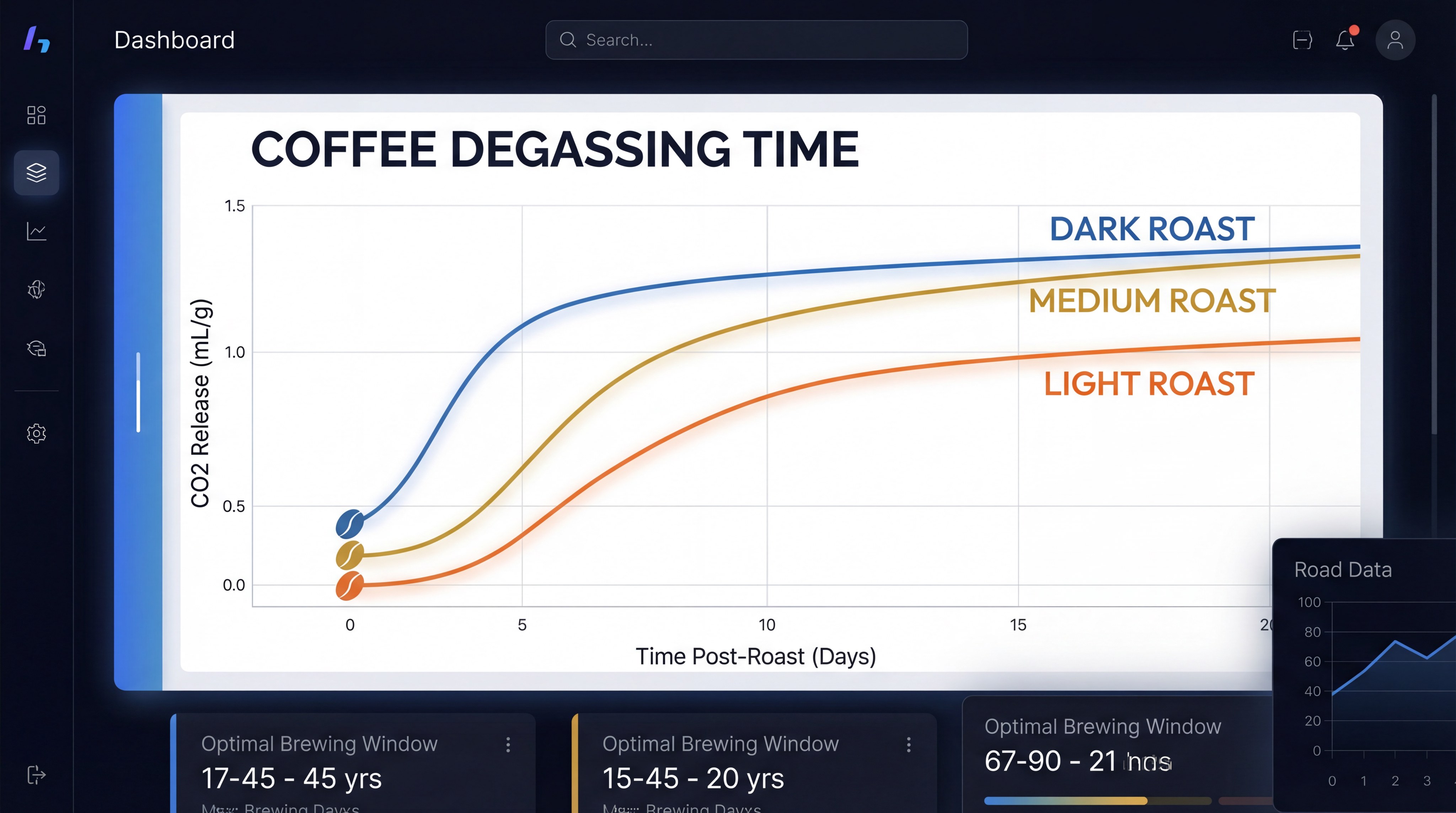
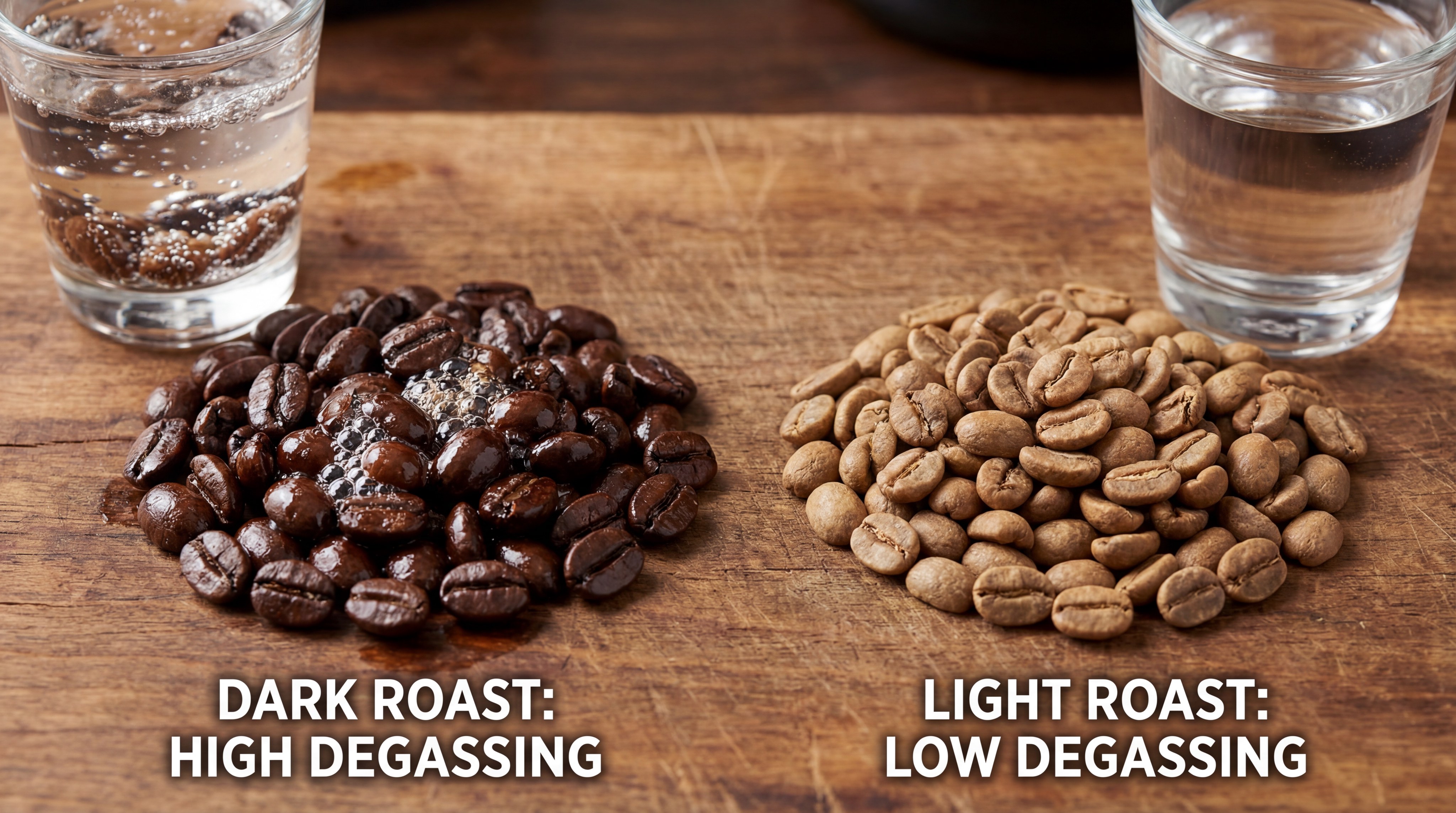
Darker roasts degas much faster than lighter roasts because the prolonged heat exposure increases the bean’s porosity and internal damage. Understanding the specific coffee degassing time for your roast profile prevents logistical bottlenecks in your packaging line.
Dark roasts and high porosity
Dark roasts undergo more structural breakdown, creating larger pores that allow CO2 to escape almost immediately. Because of this, dark beans are often ready for packaging within 24 hours if using valved bags.
Cellulose fibers become brittle and open.
Internal pressure is higher due to longer roast times.
Oils often migrate to the surface, accelerating gas exit.
Here is the kicker: While they degas faster, they also oxidize much quicker once the gas is gone.
Light roasts and cellular density
Lightly roasted beans retain more of their organic structure, which acts as a cage for the trapped CO2. You will find that these beans may require several days to reach a state suitable for consistent brewing.
Dense cell walls slow down gas diffusion.
CO2 release can continue for over two weeks.
Flavors are often at their peak 10 days post-roast.
Think about it. Standardizing your schedule for all roasts could lead to inconsistent quality across your product line.
Key Takeaway: Tailor your rest periods based on roast color to balance gas release with freshness preservation.
Roast Level
Gas Release Speed
Optimal Rest Period
Light
Very Slow
7 – 14 Days
Medium
Moderate
4 – 7 Days
Dark
Very Fast
1 – 3 Days
Roast-specific timing ensures that you neither package too early nor allow the beans to go stale.
What happens if you package beans too early?
Packaging beans too early results in “pillow” bags that are difficult to stack and risk seal failure due to internal gas pressure. Managing coffee degassing time is a logistical necessity to avoid high return rates from disgruntled retailers.
The risk of bag failure
The pressure exerted by CO2 can exceed the tensile strength of your packaging film or the integrity of the heat seal. This is especially true for foil laminates that lack elasticity.
Bloated bags take up 30% more space in shipping.
Seals can “pop,” exposing the beans to oxygen.
Customer perception of quality drops when packaging looks damaged.
Don’t let this happen to you. Ensuring a stable internal environment is the first rule of professional distribution.
Flavor “muting” in sealed environments
If the gas is trapped inside the bag without a valve, the high concentration of CO2 can actually force some aromatics back into the bean’s oils improperly. This often results in a flat or dull cup once the bag is finally opened.
Excessive CO2 inhibits the Maillard aromatics from shining.
Beans may taste “fermented” if moisture is also trapped.
Pressure can force oils to the surface prematurely, leading to rancidity.
Key Takeaway: Early packaging without pressure relief leads to physical damage and a noticeable decline in sensory quality.
Problem
Cause
Consequence
Pillow Effect
Trapped CO2
Shipping inefficiency
Seal Rupture
High Pressure
Spoilage/Oxidation
Flavor Loss
Aroma Suppression
Poor Brand Reviews
Managing the early stages of gas release is the only way to maintain a professional shelf presence.
Are one-way degassing valves necessary for all packaging?
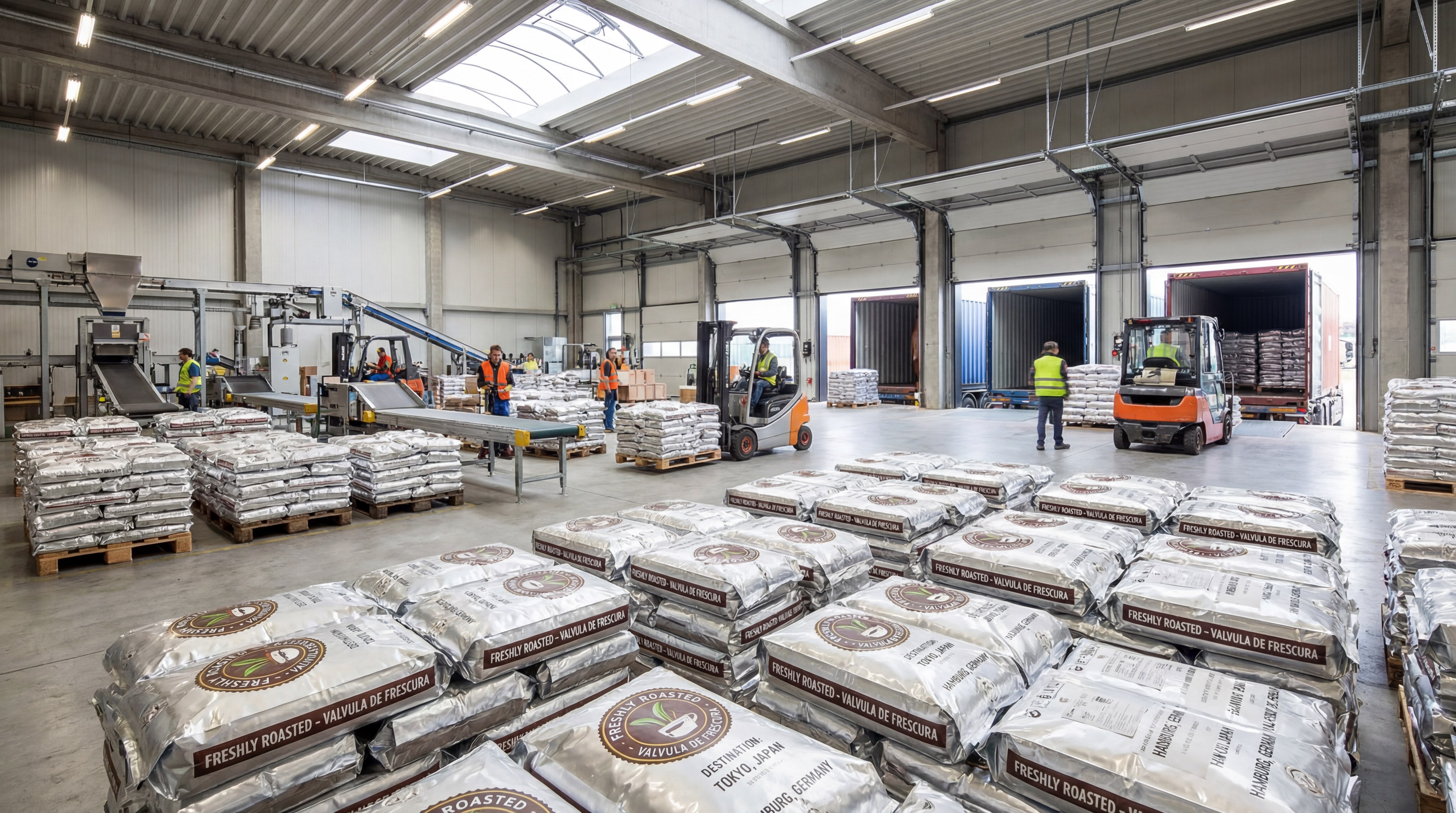
One-way valves are virtually mandatory for any coffee that is packaged within 48 hours of roasting to allow gas release while preventing oxygen ingress. By reducing the required coffee degassing time before sealing, these valves allow you to move product faster through your facility.
How valves work in real-time
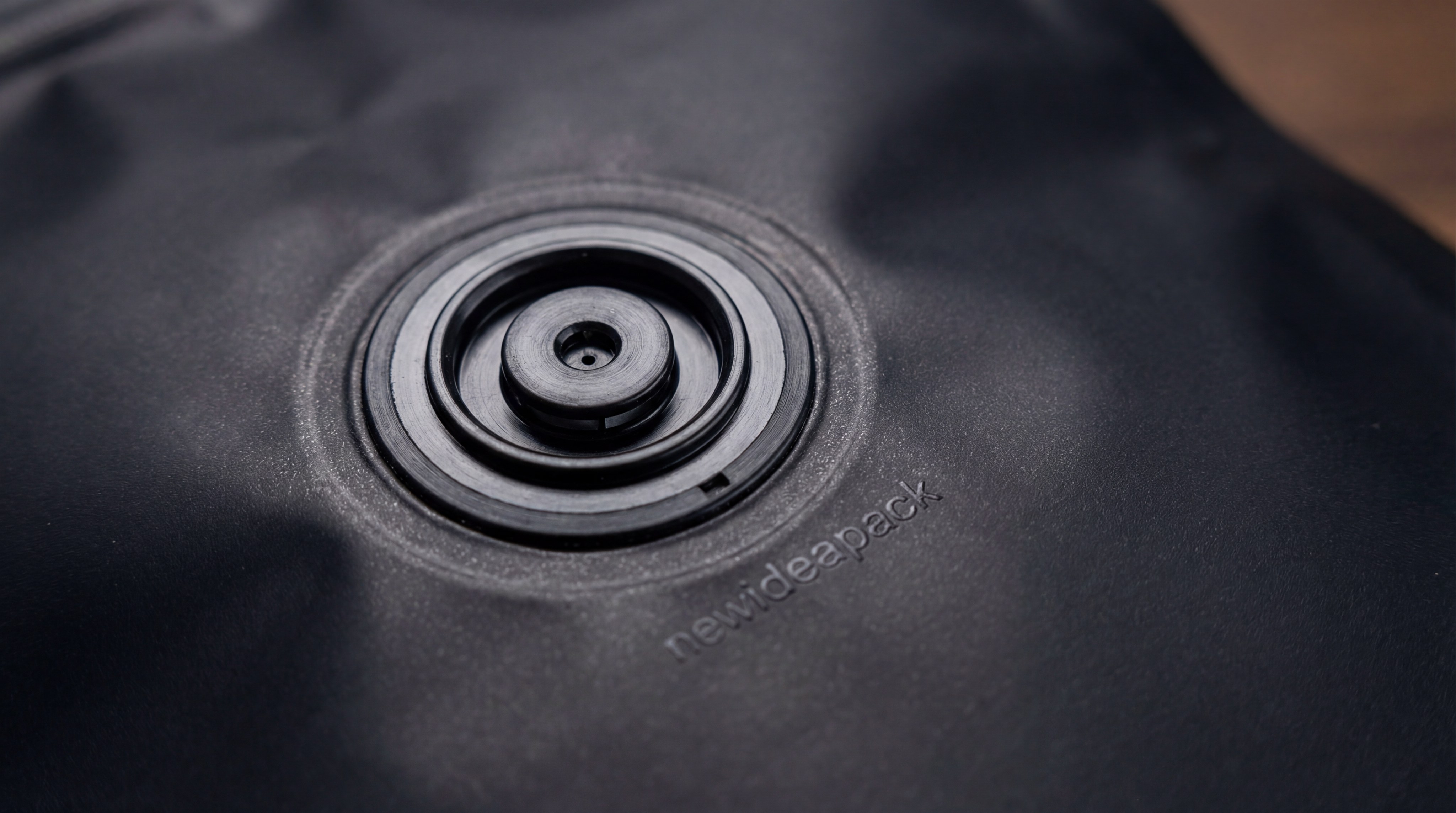
A one-way valve acts as a mechanical gate that opens only when internal pressure exceeds the external atmospheric pressure. This allows the CO2 to vent out while keeping the “staling” agent—oxygen—out.
Rubber diaphragms react to millibar pressure changes.
Essential for “Fresh Roast” marketing claims.
Allows for immediate packaging on VFFS lines.
But wait, there’s more. The valve also serves as a “scent port” for consumers, though this is a secondary benefit.
When can you skip the valve?
If you have the luxury of letting your coffee rest in silos for 7 to 10 days, the internal gas pressure may drop enough to allow for non-valved packaging. However, this is rarely efficient for high-volume commercial operations.
Suitable for pre-ground coffee (which degases almost instantly).
Possible for “aged” specialty beans.
Only safe when CO2 levels have reached equilibrium.
Key Takeaway: One-way valves are the industry standard for maintaining a “just-roasted” quality while protecting bag geometry.
Feature
Valved Packaging
Non-Valved Packaging
Packaging Window
0-24 Hours
7+ Days
Shelf Life
Long (6-12 Months)
Short (if fresh)
Cost
Slightly Higher
Lower
Valves provide the flexibility needed for fast-paced roasting and distribution cycles.
How does AI improve the degassing and packaging workflow?
AI improves the workflow by using vision systems to inspect seal integrity and predict when specific batches have reached the optimal state for packaging. Instead of guessing the coffee degassing time, modern facilities use machine learning to analyze bean surface changes and roast data.
AI visual inspection for seals
AI-driven cameras on your packaging line can detect microscopic gaps in the heat seal that the human eye would miss. This ensures that the one-way valve is the only point of gas exit.
Analyzes seal texture at 300+ units per minute.
Flags bags with uneven film tension.
Reduces waste by catching defects before shipping.
Why is this a game-changer? It eliminates the risk of “slow leaks” that lead to stale coffee months later.
Predictive analytics for roast batches
By feeding roast curve data into an AI model, you can predict exactly how long a specific batch will take to stabilize. This allows for a dynamic production schedule rather than a fixed “wait time.”
Considers ambient humidity and room temperature.
Adjusts for bean origin and density.
Optimizes silo rotation for maximum throughput.
Key Takeaway: Artificial intelligence removes the guesswork from quality control, ensuring every bag is perfectly sealed and timed.
AI Application
Technical Benefit
Business Outcome
Vision Systems
99.9% seal accuracy
Zero customer returns
Predictive Logic
Optimized silo use
20% faster throughput
Defect Sorting
Automatic rejection
Brand protection
AI integration transforms a manual “wait-and-see” process into a precise, data-driven operation.
Can IoT sensors optimize the coffee degassing time?
IoT sensors optimize the process by providing real-time data on CO2 concentrations and oxygen levels within storage silos and individual bags. This granular data allows you to precisely track the coffee degassing time and intervene the moment parameters deviate from the ideal.
Real-time silo monitoring
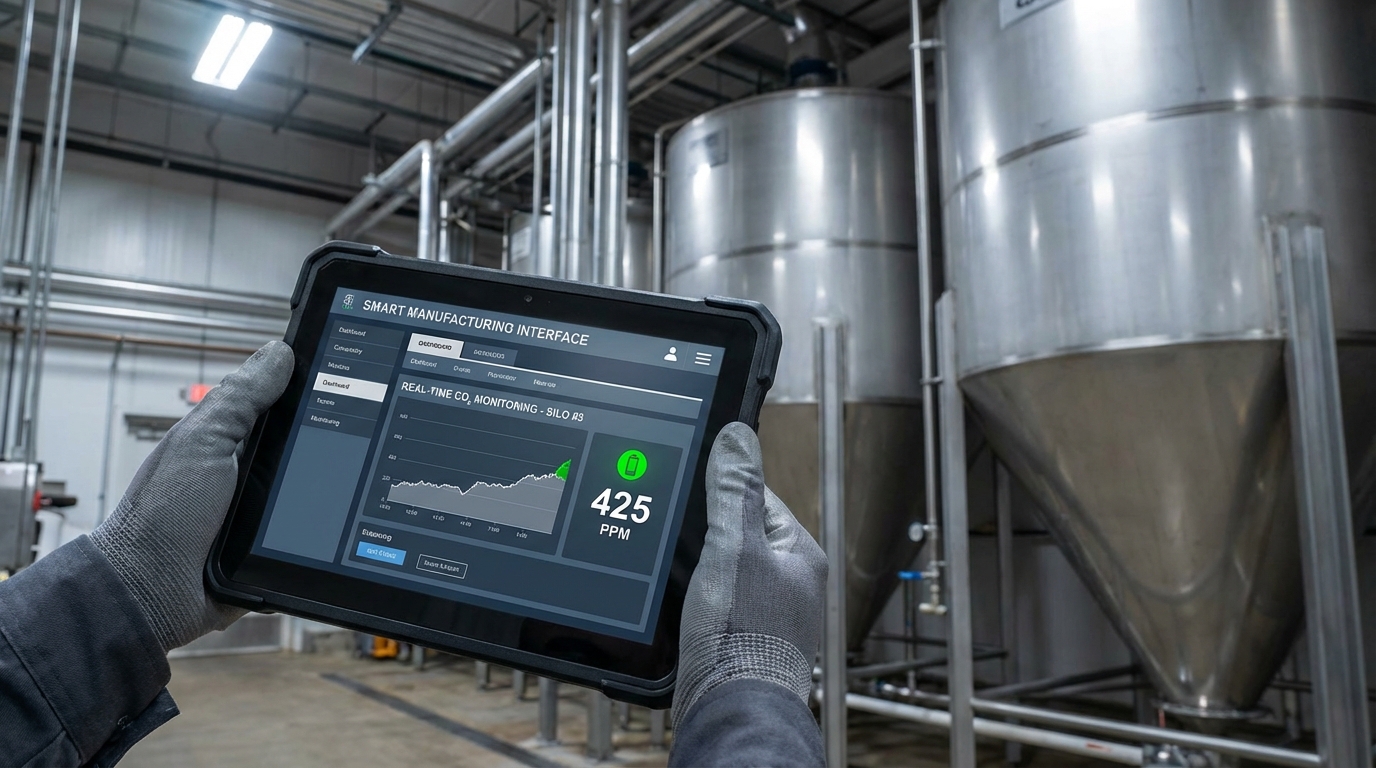
IoT-enabled gas sensors inside your degassing silos can alert you via a smartphone app when CO2 levels drop below a specific threshold. This tells you the beans are ready for the packaging machine without needing manual testing.
Monitors temperature and humidity trends.
Tracks gas concentration (ppm) 24/7.
Syncs with your ERP for inventory management.
Here is the best part: You can manage multiple facilities from a single central dashboard.
Smart manufacturing integration
Integrating these sensors into your packaging line allows the machinery to adjust its speed based on the “freshness” data of the beans entering the hopper. If a batch is degassing more aggressively, the machine can increase nitrogen flush volume.
Automated nitrogen regulation saves gas costs.
Real-time oxygen sensors prevent oxidation.
Remote diagnostics reduce machine downtime.
Key Takeaway: IoT sensors give you eyes inside your product, ensuring that “freshness” is a measurable metric rather than a marketing claim.
Sensor Type
Monitored Metric
Advantage
CO2 Sensor
Gas Release Rate
Prevents bag bloat
O2 Sensor
Residual Oxygen
Extends shelf life
Hygrometer
Moisture Content
Prevents mold/staleness
IoT connectivity ensures that you are always in control of your coffee’s atmospheric environment.
Which packaging machines are best for fresh roasted beans?
Vertical Form Fill Seal (VFFS) machines and Pre-made Pouch machines equipped with nitrogen flushing and valve applicators are the best choices for freshly roasted coffee. These systems minimize the necessary coffee degassing time by handling the high gas volumes associated with the “first 24-hour” window.
Vertical Form Fill Seal (VFFS) advantages
VFFS machines are the workhorses of the coffee industry because they create the bag and fill it in one continuous motion. This speed is essential for high-volume roasters who need to lock in aroma immediately after the initial rest.
Integrated nitrogen injection reduces O2 to <1%.
Automatic valve applicators ensure consistent gas venting.
Precision weighing scales handle bean density variations.
Is VFFS right for you? It is the most cost-effective solution for large-scale distribution.
Pre-made pouch machine benefits
For premium specialty coffee, pre-made pouch machines offer a high-end look and the ability to use complex bag structures with pre-installed valves. These machines are perfect for B2B brands focused on the “boutique” aesthetic.
Gentle handling preserves bean surface oils.
Zipper seal integration for consumer convenience.
Rapid changeover between different bag sizes.
Key Takeaway: The right machinery acts as the final gatekeeper for freshness, ensuring that gas can escape while flavor stays locked in.
Machine Type
Best Use Case
Primary Feature
VFFS
High Volume / Wholesale
Speed & Cost Efficiency
Pre-made Pouch
Premium / Specialty
Aesthetics & Versatility
Stick Pack
Instant / Samples
Individual Portions
Selecting equipment based on your distribution model is critical for operational success.
Does bean density impact the coffee degassing time?
Yes, bean density significantly impacts the rate of gas release, as denser beans from high altitudes have a tighter cellular matrix that slows down the coffee degassing time. Understanding bean physics helps you predict how different origins will behave on your packaging line.
High-altitude (SHB) beans
Strictly Hard Beans (SHB) grown at high altitudes are naturally denser. These beans trap CO2 more effectively, requiring a longer resting period before they reach flavor maturity.
Cellulose structure is highly compressed.
Gas diffusion takes 20-30% longer than low-density beans.
Flavors are more stable but slower to emerge.
Why does this matter? An Ethiopian Yirgacheffe might need twice the rest time of a Brazilian low-land coffee.
Low-density and decaf beans
Decaffeinated beans and those grown at lower elevations are more porous. The decaffeination process, in particular, opens up the bean’s structure, causing them to degas and go stale very quickly.
Porous structure allows gas to “rush” out.
High risk of oxidation within hours of roasting.
Requires immediate valved packaging for protection.
Key Takeaway: Always account for origin and density when setting your degassing schedules to avoid packaging surprises.
Bean Density
Origin Type
Degassing Behavior
High
High Altitude (Kenya/Ethiopia)
Slow & Steady
Medium
Moderate Elevation (Colombia)
Standard
Low
Decaf / Low Land (Vietnam)
Rapid & Volatile
Physics-based timing ensures that you respect the biological unique traits of every origin you roast.
How does temperature influence the rate of gas release?
Higher temperatures accelerate the kinetic energy of CO2 molecules, significantly shortening the coffee degassing time but also increasing the risk of flavor degradation. Maintaining a climate-controlled environment in your roasting facility is essential for consistent packaging results.
Heat as a catalyst
For every 10°C increase in temperature, the rate of gas diffusion nearly doubles. While this sounds like a great way to speed up production, excessive heat also causes volatile aromatics to evaporate.
Hot warehouses lead to faster bag bloating.
Beans lose “punchy” fruit notes in warm environments.
Oils become more fluid and can clog valves.
Can you use heat to your advantage? Only if it is precisely controlled within a smart manufacturing setup.
Cold storage and gas retention
Conversely, cool storage slows down degassing to a crawl. This is useful for preserving beans for long-term shipping but can lead to “under-rested” coffee if the beans are packaged immediately after a cold winter transit.
Cold beans retain more CO2 for longer.
Brewing results may be inconsistent if beans haven’t warmed.
Ideal storage is between 15°C and 20°C.
Key Takeaway: Temperature stability is the unsung hero of a successful degassing and packaging strategy.
Temperature
Degassing Speed
Aroma Preservation
Hot (>25°C)
Very Fast
Poor (Volatiles lost)
Optimal (18°C)
Controlled
Excellent
Cold (<10°C)
Very Slow
High retention
Consistency in ambient conditions ensures your packaging line runs on a predictable, repeatable schedule.
How will smart manufacturing change coffee degassing time standards?
Smart manufacturing will transition the industry from fixed waiting periods to “just-in-time” packaging based on real-time sensory feedback from the beans. Leveraging coffee degassing time data within an automated ecosystem allows for unparalleled precision in B2B supply chains.
The end of the “24-hour rule”
Traditional roasting relies on general rules of thumb, but smart manufacturing uses digital twins of your batches. These virtual models track the exact state of your beans from the roaster to the retail shelf.
Real-time CO2 curves dictate machine startup.
Automated bin sorting based on gas stability.
Personalized “resting” logs for every wholesale client.
Think about the implications. Your inventory turnover could improve by as much as 15%.
Total supply chain transparency
In the future, your packaging will include QR codes that show the consumer the exact gas release profile of their bag. This builds immense trust and positions your brand as a technology leader in the coffee space.
Traceability from green bean to final degas.
IoT sensors tracking transit conditions.
Real-time feedback loops between roasters and packaging OEMs.
Key Takeaway: The future of coffee is data-driven, where the “perfect cup” is guaranteed by smart systems rather than human guesswork.
Traditional Roasting
Smart Manufacturing
Guesswork timing
Real-time sensor data
Fixed schedules
Dynamic JIT production
Manual QA checks
AI visual inspection
Adopting smart manufacturing standards ensures your roasting operation remains competitive in a high-tech global market.
FAQ
Can I package ground coffee faster than whole beans? Yes. Grinding increases the surface area by thousands of times, allowing virtually all CO2 to escape within seconds. You should package ground coffee almost immediately with a nitrogen flush to prevent rapid oxidation.
What is the best way to tell if beans are finished degassing? The most reliable way is to monitor bag bloating or use a CO2 sensor. If a sealed bag without a valve doesn’t expand significantly after 24 hours, the majority of the volatile gas has been released.
How do I know if my one-way valve is working? Gently squeeze the bag; you should hear a faint “hiss” or smell the coffee aroma through the valve. If the bag remains rock-hard and doesn’t vent, the valve may be faulty or clogged with bean oils.
Does altitude affect degassing in the bag? Absolutely. If you package coffee at sea level and ship it to a high-altitude city, the pressure difference will cause the bag to expand more aggressively. Always use high-quality valves for products intended for cross-regional distribution.
Can I use vacuum sealing for fresh roasted beans? No, this is highly discouraged for fresh whole beans. The vacuum will pull the gases out so violently that it often pulls the aromatic oils with them, resulting in a flavorless product.
Conclusion
Optimizing your packaging workflow requires a deep understanding of bean chemistry and the right technology. By mastering the variables that influence gas release—from roast level and bean density to ambient temperature—you can eliminate the risk of bag failure and flavor inconsistency. At newideapack, we specialize in the future of coffee packaging, providing the AI-driven VFFS and pouch machines that handle the complexities of modern roasting with precision. Whether you are scaling a local roastery or managing a global B2B supply chain, our automated solutions ensure your beans stay fresh and your packaging remains flawless.
Sales Pitch Component
Ready to upgrade your production line?
Please contact us today to discover how our smart manufacturing expertise can transform your brand’s efficiency.